 By Iris
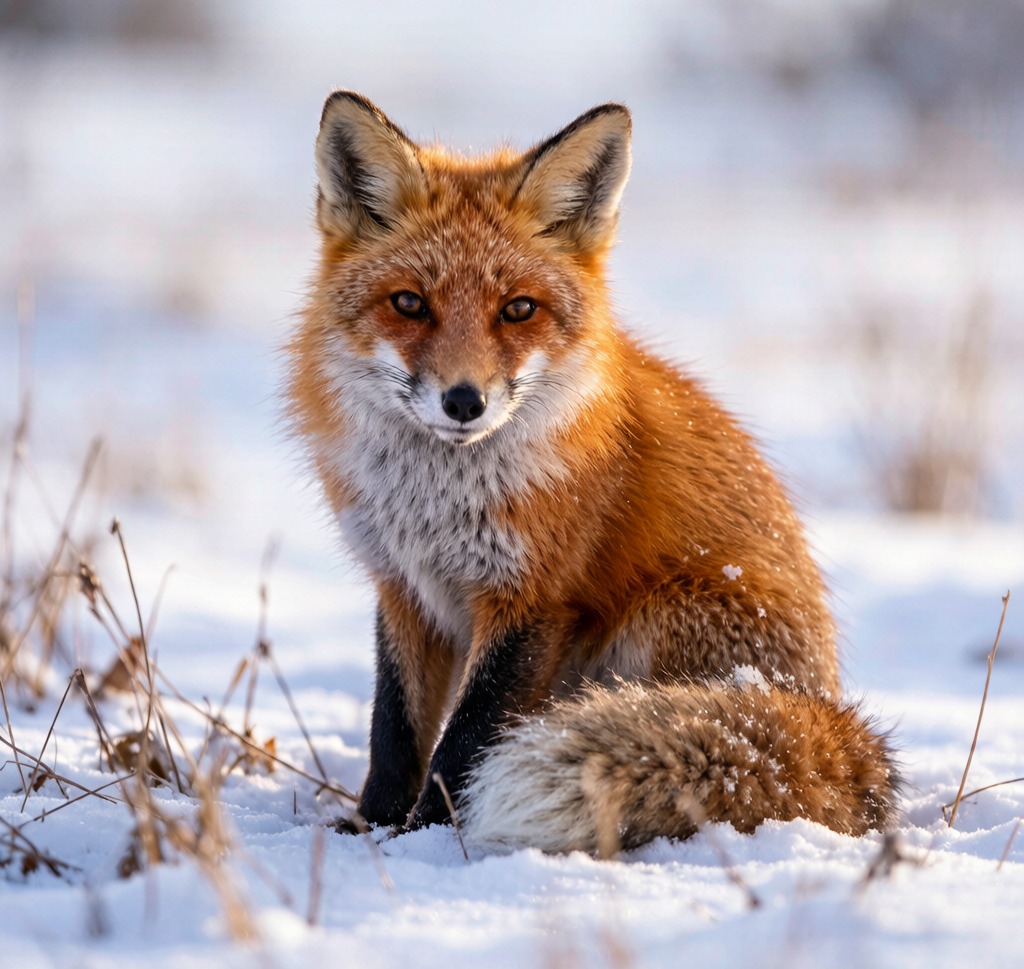
Vulpes vulpes | Red Fox
Species Profile · Canidae
Red Fox
The widest ranging wild land mammal after people, it now hunts voles in fields and raids scraps behind city flats.
Least Concern
Length
Weight
Range
Subspecies
Litter
Rating
A fox at the edge of town
The canid that followed us in
A fox slipping into a city garden at midnight has already won. Few wild animals read a human street that well. Red foxes range across the Northern Hemisphere and were carried to Australia. That spread has no rival among land mammals except people.
Radio tracking in British cities found territories of only 0.1 to 0.5 square km. Rural animals hold ground far larger. A country fox may defend 5 to 10 square km of fields and hedges. City life also shifts the clock, since urban animals hunt later and move far less during daylight hours.
Both sorts of fox eat almost anything, which explains the range. One species, two very different lives.
One genus, many cousins
Where it sits among canids
The species name is Vulpes vulpes. Its genus holds about 12 living species, among them the Arctic Fox that hunts lemmings on open tundra. Members of that genus all sit inside Canidae, and share a narrow skull and a light build.
More than 40 subspecies are named across the range, though the splits are often argued over. Northern animals run larger and paler, while southern ones are smaller and warmer in tone. Early naturalists treated each colour form as a separate species.
Genetic work later folded those forms into one wide ranging animal. Crossing a fox with a wolf has never worked, despite old stories about wild hybrids.
Brush, coat and pupils
How to tell one at a glance
Adults measure 45 to 90 cm from nose to rump, with a tail of 30 to 55 cm. Weight runs from 3 to 14 kg, and males sit near the top of that band. A bushy tail makes up about a third of the total length. Its tip is white, and hunters call the whole tail a brush.
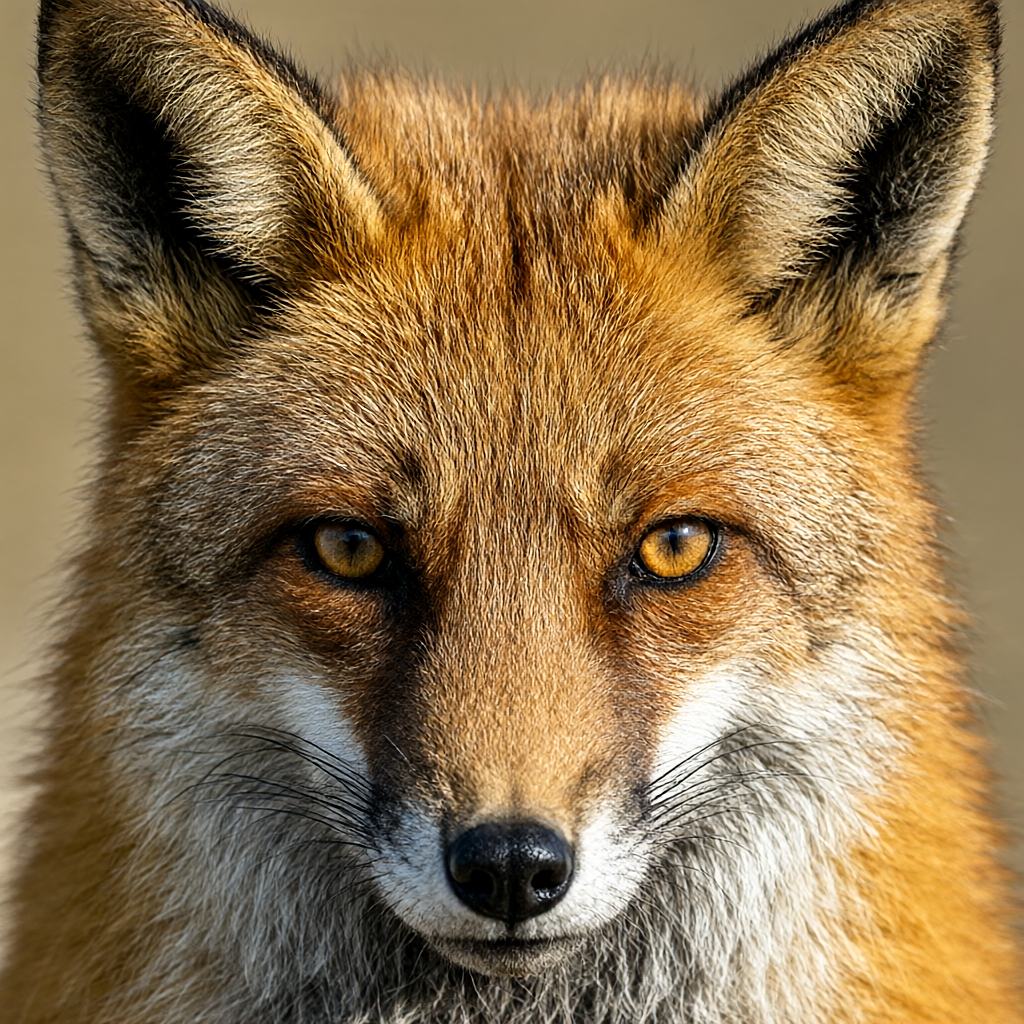
Winter fur is dense and rusty above, white below. The black stockings and ear backs stay dark all year. That coat sheds in spring, so summer animals look thin and dark. Ears stand tall and turn to catch sound from any side.
Each ear can swing toward a noise without the head moving. Eyes carry a vertical slit pupil, a shape shared with cats and very rare among other wild dogs. The pupil widens at dusk and narrows hard in bright sun. Long legs and a light frame let a fox trot for hours without tiring.
1
2
3
Fields, moors and streets
The ground it can use
Almost any cover with food nearby will do. Woodland, moor, dune, farmland and city all hold animals. A den is often an old rabbit burrow or a hollow log. A dry gap under a shed will do as well.
Females dig a natal den in spring, and the same earth may be reused by several generations of vixens. Deep snow is no barrier, because the animal can hear prey moving underneath it. Territory size follows food, so a rubbish rich suburb supports a dense population. Few predators trouble an adult, though eagles and wolves take cubs and stragglers.
Farms suit the species best, since hedges give cover and spilt grain feeds rodents. A hand fed fox still bites.
Voles, fruit and scraps
What it eats
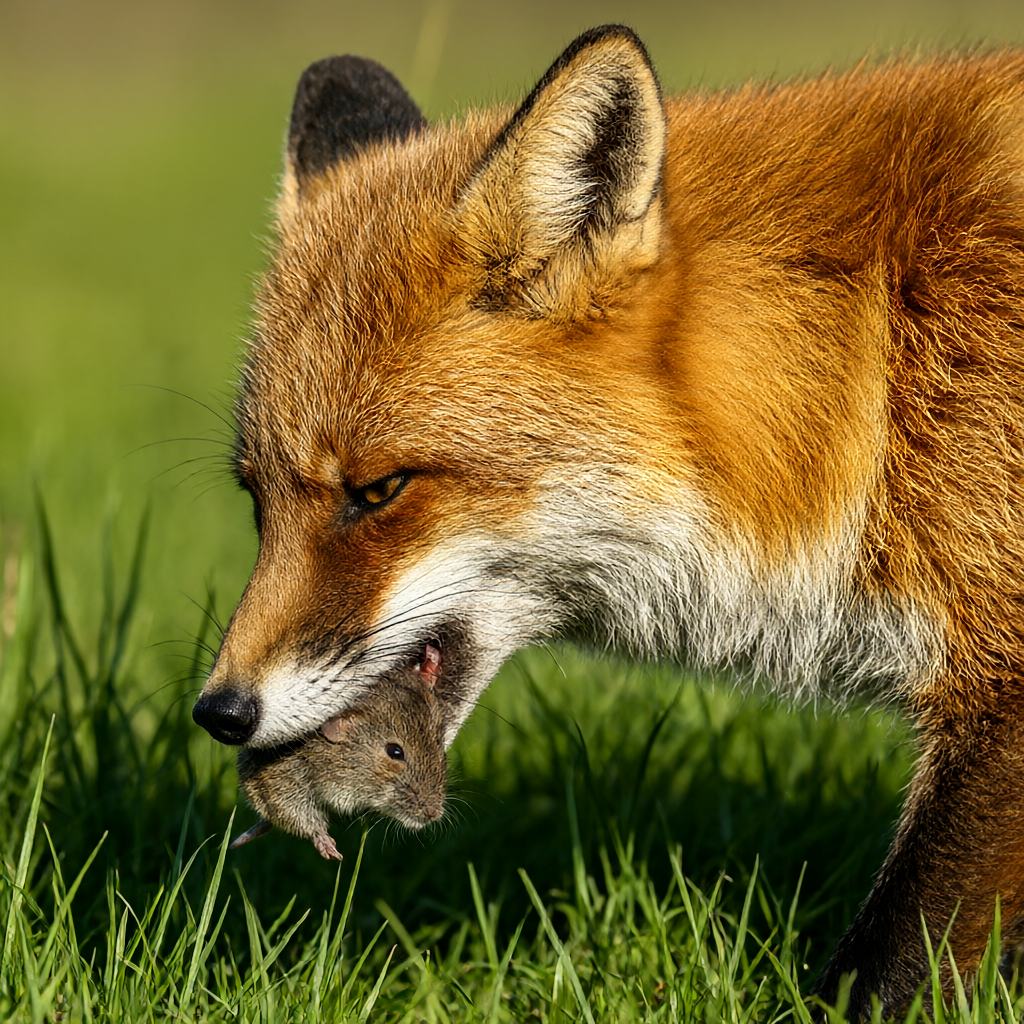
The fox is the most carnivorous of the true foxes, yet it still eats a lot of fruit. Voles and mice form the core of the diet in most months. Hearing sets the hunt, since an animal can pick up a mouse footfall under 30 cm of packed snow. The famous attack is a high forward pounce, front paws together and nose down.
That move, called mousing, ends with the prey pinned under both forelegs. It seldom fails. Autumn shifts the menu toward blackberries, fallen apples and plums. Birds, eggs, insects, worms and carrion fill the gaps, and a fox will swim for a duckling when the chance appears.
Household scraps support many urban animals, and a bin is easier than a vole. Gray Wolf packs kill foxes wherever the two share ground. So a fox keeps to thick cover and moves at night. Nothing in that list is fixed, because a fox will test whatever smells edible.
A short spring season
The breeding cycle
Mating falls in January and February. Gestation lasts about 52 days, and a litter of 4 to 6 cubs arrives in spring. The male brings food to the den and guards the entrance. Some vixens keep a non-breeding daughter as a helper, although such groups rarely last more than a season.
Cubs open their eyes at about two weeks and start to fight for rank within the litter soon after. Both parents feed the young, though the mother does most of the nursing. Young animals leave home in autumn. Most die in their first year.
Roads and disease take the rest. Wild foxes rarely pass 4 years, while a captive one can reach 10 or more.
Poison, roads and rabies
Conservation
The Red List rates the species Least Concern, and numbers are stable or rising. Rabies once emptied much of Europe. Oral vaccine baits dropped from aircraft broke the cycle of infection. Central European populations climbed back within a decade of that campaign.
Britain banned hunting with dogs in 2004, and the national count has held near 350,000 since. Australia tells a different story, because foxes arrived there with settlers. Baiting and shooting now cost the country a great deal each year. Native mammals and ground nesting birds carry the loss.
A fox adapts faster than any control program can respond. That talent is why the species keeps winning.
Side by side
How It Compares
| Trait | Red Fox | Arctic Fox |
|---|---|---|
| Length | 45-90 cm | 46-68 cm |
| Weight | 3-14 kg | 3.2-9.5 kg |
| Coat | rusty above, white below | white in winter, brown in summer |
| Ears | large, black backed | small and rounded |
| Prey | voles, rabbits, fruit, scraps | lemmings and seabirds |
| Rating | Least Concern | Least Concern |
Common misreadings
What People Get Wrong
- Many accounts call the fox a pure carnivore, yet it eats a great deal of fruit. Berries and fallen apples fill much of the late summer diet in most regions.
- Popular writing gives the fox a cat like slit pupil, which is at least half true. The pupil is a vertical slit, though the eye works like a dog’s.
- Some guides say the tail tip is white in every fox, yet a few lack it. Most adults show a white brush, and hunters once used it as a mark.
Going further
Sources and Further Reading
Five things to remember
Quick hits
- Slit pupils are a fox trait, not a cat monopoly.
- A pounce through snow is known as mousing.
- Captive animals can pass 10 years of age.
- Australia counts the species as an invader.
- Litters hold 4 to 6 cubs.
mongoose is primarily terrestrial but climbs well when pursuing prey or evading threats such as the red fox. Its tolerance of disturbed landscapes has allowed it to persist even as natural habitats shrink
been aided by a warming climate and the shelter offered by human settlements that also attract the red fox and the gray
[…] engagement programs, and increased penalties for trafficking are beginning to show results. The Red Fox and other carnivores in the Chinese pangolin range face similar pressures from habitat loss, […]
[…] grooming prevents matting and keeps them comfortable. Their appearance differs dramatically from Red Fox predators they would face in the […]
cool underground refuges during hot, dry periods. Their forest habitats overlap with those of the red fox, though the two species rarely interact. Fire Salamanders are relatively sedentary and often remain
[…] existed during the Pleistocene, but D. rotundus is the sole surviving member today. Like the red fox and other successful predators, it has diversified across its range, filling a unique ecological […]
soil health and create habitat for other species, making them important ecosystem engineers. The Red Fox often shares badger setts, demonstrating commensal relationships around these extensive burrow
[…] chrysaetos belongs to the genus Aquila within the family Accipitridae, which includes hawks, kites, and other eagles. The species was first described by Carl Linnaeus in 1758. The genus […]
[…] per hour and can leap several metres in a single bound. They are also a favoured prey of the red fox and share the countryside with species such as the wild boar, making them an integral part of […]
[…] analysis confirms its placement within the genus Vulpes alongside other true foxes such as the red fox and arctic fox, though some researchers have advocated for a separate genus, Fennecus, based on […]
[…] and reptiles are abundant. In its home region it is also hunted by larger carnivores such as the red fox and the gray wolf, though its agility usually helps it […]
[…] regional declines are severe. In the British Isles it has been largely displaced by the introduced red fox competing indirectly and, more decisively, by the grey squirrel, which carries a parapoxvirus […]
[…] often arriving unnoticed with cargo. In its native and introduced ranges alike it is hunted by the red fox and other small carnivores, though its musk and agility help it evade many attackers. Warm climates […]
[…] Across Eurasia and North America they are themselves preyed upon by larger carnivores such as the red fox, which helps keep their numbers in balance with local […]
[…] continuously but enters periodic torpor, waking every few weeks to feed on stored reserves. Red fox and rabbit share many of the same habitats and are prey for the same suite of woodland […]
[…] It is the wild ancestor of the modern domestic cat and shares its range with predators such as the red fox and the gray […]
[…] colonies can cause catastrophic breeding failure, and grounded fledglings may fall prey to the red fox on larger islands. In Scotland the St Kilda population has declined in recent decades for unknown […]
[…] in late summer or early autumn. Sexual maturity is reached at 3 to 5 years. Predators include the red fox, hedgehogs, and birds of prey. When threatened, grass snakes perform a dramatic death-feigning […]
[…] at 28 to 35 days and are fed by parents for several weeks more. Predation of eggs and chicks by the red fox is a significant cause of breeding failure on lowland coastal […]
[…] 23 days and are fed by both parents for a further 2 to 3 weeks. Nest failure from predation by the red fox and corvid predation is a significant source of losses. The peregrine falcon is a major aerial […]
[…] raid birds nests in the canopy, and on the ground they hunt in a characteristic bounding gait. The red fox competes with them for food and in areas of overlap martens are known to kill […]
[…] their larvae, fruits, bulbs, roots, small mammals, eggs, and carrion. Unlike the purely carnivorous Red Fox, badgers are omnivores that shift foods with the seasons. They will take European Rabbits and their […]
[…] European hare belongs to the family Leporidae, which also includes rabbits and the red fox, a common predator. Its scientific name Lepus europaeus was established by Karl Linnaeus in 1758. […]
[…] living member of the genus Oryctolagus. It sits in the family Leporidae alongside hares and the red fox, one of its principal natural enemies. The species was described by Linnaeus in 1758. Genetic […]
[…] a complex of several closely related crested newt species across Europe. It is unrelated to the red fox, though foxes may occasionally take newts on land. The genus Triturus contains the crested and wavy […]
[…] to pale sandy forms elsewhere. It is only distantly related to the harmless grass snakes and to the red fox, which occasionally preys on […]
[…] being the North American beaver. Although it shares European woodlands with predators such as the red fox and the brown bear, the beaver is a peaceful herbivore that rarely meets these carnivores in its […]
[…] pure wild populations. It shares the European wilderness with larger predators such as the red fox and the brown bear, though the wildcat is a solitary hunter of much smaller prey and keeps to dense […]
[…] woodlands with many other small birds, and its nests are sometimes raided by predators such as the red fox, which occasionally takes young birds, though the robin itself is a nimble insect hunter rather […]
[…] tied to water than most European snakes. It shares riverbanks with generalist predators such as the red fox, though the snake relies on speed and swimming to escape rather than […]
[…] rather than sheer speed. They share the carnivore niche with smaller relatives like the Red Fox, but wolves take far larger game and dominate any encounter. In northern forests they may overlap […]
[…] for large-scale habitat conservation. The red deer shares its forest and moorland habitat with the red fox, and the aesculapian snake occupies similar woodland […]
[…] spines, modified hairs made of keratin, provide excellent protection against predators such as the red fox and the European badger. The face, legs, and belly are covered in soft fur, usually brown or gray. […]
[…] Young minks are weaned at about two months and begin hunting independently by late summer. The red fox is a potential predator of young […]
[…] and distinctive black ear tufts. The short tail with a black tip is a key identifying feature. The red fox shares some habitat but is far […]
[…] the red fox and the northern bat, the water shrew is an effective predator that shapes local food webs across […]
[…] to challenging environments, from high-altitude foraging to seasonal hibernation or migration. the red fox and the european hare frequently coexist with the alpine marmot across shared landscapes, creating […]
[…] to challenging environments, from high-altitude foraging to seasonal hibernation or migration. the red fox frequently coexist with the beech marten across shared landscapes, creating complex ecological […]
[…] to challenging environments, from high-altitude foraging to seasonal hibernation or migration. the red fox and the arctic fox frequently coexist with the mountain hare across shared landscapes, creating […]
[…] to challenging environments, from high-altitude foraging to seasonal hibernation or migration. the red fox, the European badger, and the European hedgehog frequently coexist with the martes martes across […]
[…] to challenging environments, from high-altitude foraging to seasonal hibernation or migration. the red fox and the arctic fox frequently coexist with the european lemming across shared landscapes, creating […]
[…] observers for centuries, featuring in folklore, art, and scientific illustration across Europe.the red fox, the European hedgehog, and the common pipistrelle frequently coexist with the lesser noctule […]
[…] observers for centuries, featuring in folklore, art, and scientific illustration across Europe.the red fox, the European hedgehog, and the common pipistrelle frequently coexist with the daubenton’s […]
[…] food webs, serving as both predators and prey in their natural habitats alongside species like the Red Fox and other wildlife throughout the […]
[…] for the species’ success across its European range, similar to adaptations seen in the Red Fox and other co-existing […]
[…] food webs, serving as both predators and prey in their natural habitats alongside species like the Red Fox and other wildlife throughout the […]
[…] food webs, serving as both predators and prey in their natural habitats alongside species like the Red Fox and other wildlife throughout the […]
[…] food webs, serving as both predators and prey in their natural habitats alongside species like the Red Fox and other wildlife throughout the […]
[…] food webs, serving as both predators and prey in their natural habitats alongside species like the Red Fox and other wildlife throughout the […]
[…] food webs, serving as both predators and prey in their natural habitats alongside species like the Red Fox and other wildlife throughout the […]
[…] food webs, serving as both predators and prey in their natural habitats alongside species like the Red Fox and other wildlife throughout the […]
[…] food webs, serving as both predators and prey in their natural habitats alongside species like the Red Fox and other wildlife throughout the […]
[…] food webs, serving as both predators and prey in their natural habitats alongside species like the Red Fox and other wildlife throughout the […]
[…] food webs, serving as both predators and prey in their natural habitats alongside species like the Red Fox and other wildlife throughout the […]
[…] food webs, serving as both predators and prey in their natural habitats alongside species like the Red Fox and other wildlife throughout the […]
[…] food webs, serving as both predators and prey in their natural habitats alongside species like the Red Fox and other wildlife throughout the […]
[…] food webs, serving as both predators and prey in their natural habitats alongside species like the Red Fox and other wildlife throughout the […]
[…] food webs, serving as both predators and prey in their natural habitats alongside species like the Red Fox and other wildlife throughout the […]
[…] food webs, serving as both predators and prey in their natural habitats alongside species like the Red Fox and other wildlife throughout the […]
[…] food webs, serving as both predators and prey in their natural habitats alongside species like the Red Fox and other wildlife throughout the […]
[…] food webs, serving as both predators and prey in their natural habitats alongside species like the Red Fox and other wildlife throughout the […]