 By st20113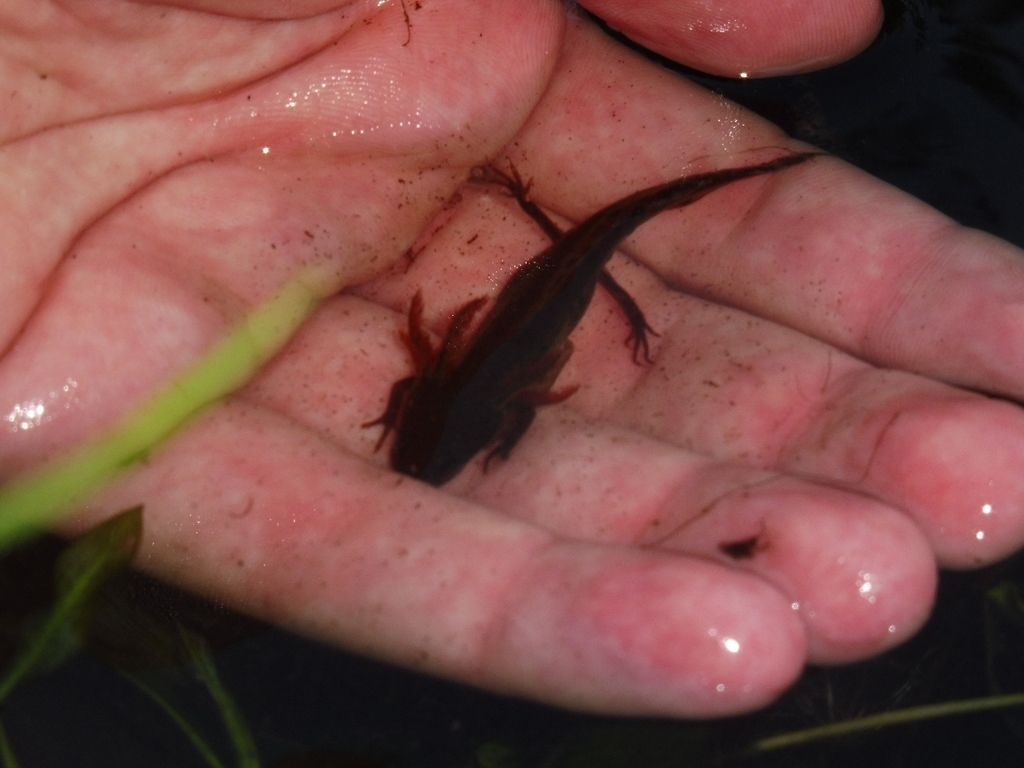
Introduction
The great crested newt (Triturus cristatus) is the largest and most striking newt in Europe, reaching up to 16 centimeters in length. Outside the breeding season it lives a secretive life on land, but in spring it returns to ponds where males display a dramatic jagged crest along the back and a silver-blue striped tail. Its body is dark with rough skin and bright orange belly spots that warn predators of its mild toxins. Once common across lowland Europe, it has become a flagship species for pond conservation because of serious declines from habitat loss. Its dependence on both clean ponds and undisturbed terrestrial habitat makes it a sensitive barometer of landscape health.
Taxonomy
The great crested newt belongs to the family Salamandridae, the true salamanders and newts. Its scientific name Triturus cristatus was established by Laurenti in 1768. It was long considered a single species, but genetic work revealed a complex of several closely related crested newt species across Europe. It is unrelated to the red fox, though foxes may occasionally take newts on land. The genus Triturus contains the crested and wavy newts of Eurasia, all of which share the seasonal shift between aquatic breeding and terrestrial living that defines their life cycle.
Physical Characteristics
Great crested newts have a bulky body, a large head, and a long tail that is flattened for swimming. Their skin is warty and dark olive or black above, with vivid orange spots on the underside that signal toxicity to predators. In the breeding season males develop a continuous, toothed crest running from head to tail and a white band along the tail fin. Females are larger and lack the full crest. Their feet are not webbed, so they swim with an eel-like body undulation rather than paddling. The eyes have vertical pupils. Adults weigh up to 40 grams. After the breeding season the crest is reabsorbed and the newt returns to a drab, land-dwelling form.
Habitat
These newts need two distinct habitats through the year. In spring and early summer they occupy ponds, especially ones with submerged vegetation, soft edges, and few fish. For the rest of the year they live on land in damp grassland, woodland, hedgerows, and gardens, hiding under logs, stones, and leaf litter. They prefer ponds within a few hundred meters of good terrestrial cover, because they must travel safely between the two. Wetland margins and rough grassland support the invertebrates they eat. They avoid polluted or heavily shaded water and ponds stocked with predatory fish.
Diet
Great crested newts are carnivorous, feeding on a variety of aquatic and terrestrial invertebrates. In water they take tadpoles, insect larvae, small crustaceans, and worms; on land they eat earthworms, slugs, and beetles. They are sit-and-wait predators, lunging at prey with a quick snap of the jaws. During the breeding season they may eat the tadpoles of other amphibians, including those of common frogs. Feeding intensity peaks in warm months and slows as they prepare for winter hibernation. A varied invertebrate diet helps them build the reserves needed for breeding and dormancy.
Reproduction
Breeding takes place in ponds from late winter into early summer. Males perform an elaborate courtship display, waving the tail to fan scent toward the female before depositing a sperm packet she picks up. Unlike frogs, great crested newts do not lay eggs in masses; the female wraps each egg individually in the leaf of an aquatic plant, protecting it from predators. Larvae hatch with external gills and develop into miniature newts over two to four months. They leave the water as air-breathing juveniles. Adults typically breed every year but may skip a season if conditions are poor. Because eggs and larvae are vulnerable, females spread them among many plants rather than clustering in one spot.
Conservation
The great crested newt is protected under strict European and national laws because of steep historic declines from pond drainage, pollution, and development. It is listed as Least Concern globally but is regionally threatened, and many populations survive only in protected ponds. Conservation involves creating new ponds, managing existing ones without fish, and preserving terrestrial corridors. “Newt fencing” and relocation are used carefully during development, though the species’ loyalty to birth ponds makes translocation difficult. Volunteer pond surveys each spring count crested newts using bottle traps, providing vital data.
Fun Facts
The great crested newt’s orange belly spots are a warning: its skin secretes toxins that make it taste foul to predators. Males grow a fantastical crest only for the spring mating season, then reabsorb it. Each egg is individually folded into a leaf like a tiny package. A single newt may travel hundreds of meters between its summer feeding ground and its birth pond. Despite their fearsome look, they are harmless to humans. They can wrinkle their skin to appear even wartier when threatened, enhancing the illusion of danger.