 By Iris
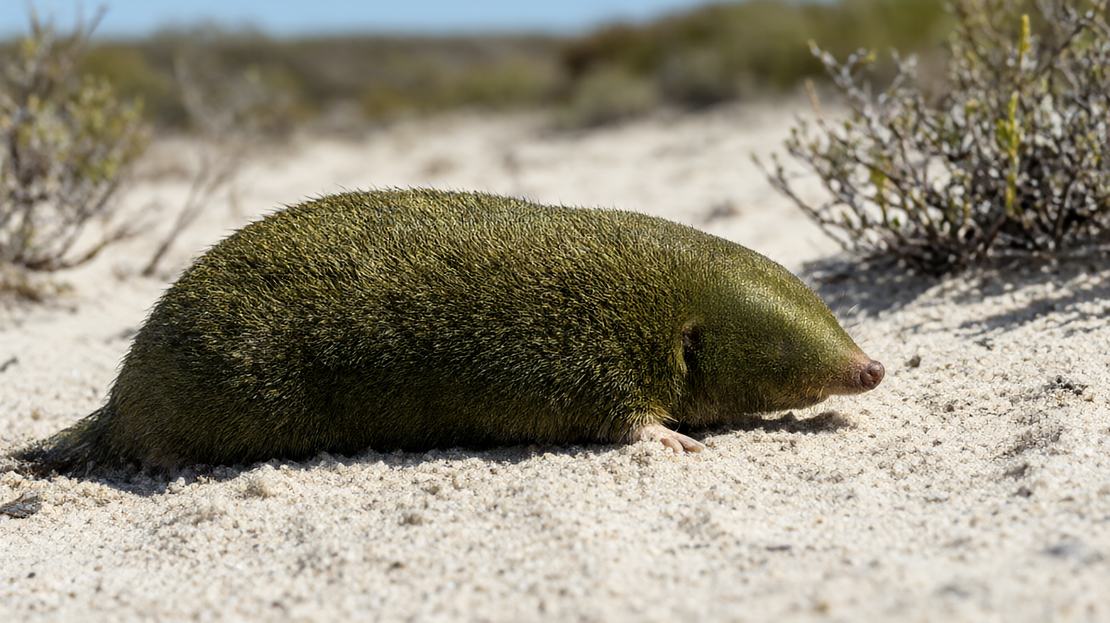
Chrysochloris asiatica | Cape Golden Mole
Species Profile · Chrysochloridae
Cape Golden Mole
Sand lifts along a garden path, and no animal shows above it.
Least Concern
Length
Weight
Eyes
Claws
Young
Rating
The Cape Golden Mole
An animal that swims through sand
Sand moves on a quiet path, and nothing shows above it. Underneath, a small animal swims through the grains. Its fur shines bronze and green whenever a shaft of light reaches it.
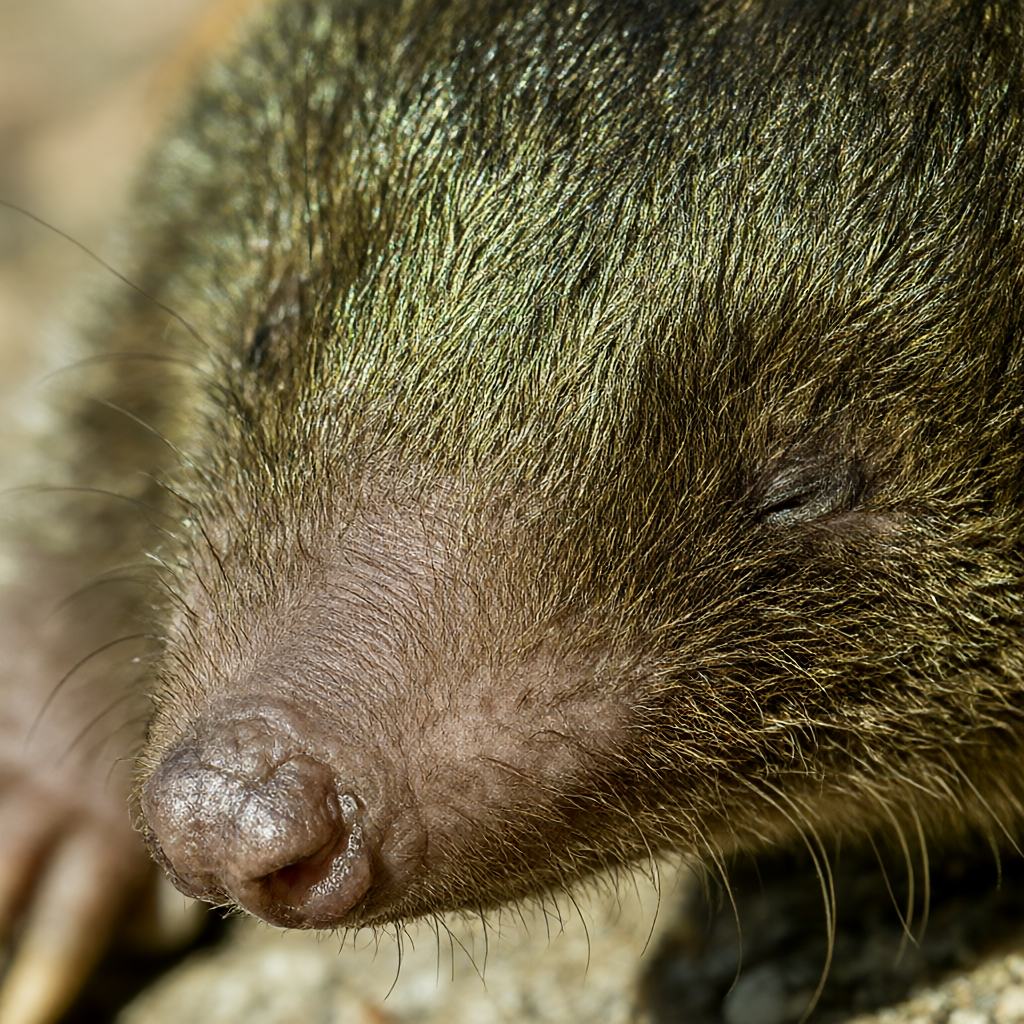
No eyes show on the face at all, since a fold of skin covers them completely. A leathery pad sits on the nose, and it pushes sand aside. Because the animal never comes to the surface, most people never see one at all.
Gardeners find them when a spade turns one up in a flower bed. The Cape golden mole lives only in the southwest of South Africa.
Family tree
Chrysochloridae, the golden moles
Its proper name is Chrysochloris asiatica, one of about twenty golden moles. The family sits in Africa, and its members share no kin with true moles. Instead they belong with tenrecs and elephant shrews, which is a surprise to most people. Because the ancestors came from Africa, the group never left the continent.
The name asiatica came from an early mistake about where the first specimen was caught. True moles dig with the front feet too, and the resemblance stops there. Field workers now separate the species by skull shape and by habitat.
Fur, nose and claws
How to tell one
Adults measure 10 to 12 cm from nose to tail. Weight falls between 30 and 50 g, which is light for a digger. Iridescent fur shifts from bronze to green, and it sheds both sand and water. That shine comes from flat hair scales, since the coat must slide through wet grit all day.
No eyes appear at all. A fold of skin covers the sockets. The nose carries a leathery shield, and it works like a small spade. Front claws are broad and strong, and the third digit does most of the digging.
Because the animal lives underground, hearing does all of the hunting work for it. The body runs long and low, which suits a tunnel that is barely wider than the animal itself. Legs stay short, and the hind feet push loose sand backward.
1
2
3
Sand, gardens and dunes
Where it lives
Sandy soils hold the species, and so do coastal dunes. Fynbos, gardens and farmland all support moles where the ground stays soft. Because the animal needs loose sand, clay and rock stop it outright. Tunnels run just below the surface, and a line of raised soil marks the whole route across a lawn.
Deeper tunnels serve as shelter during the dry months. Moles stay inside one small area, and they almost never cross open ground above the grass. A millipede shares the same soil, and both animals live within a hand’s depth of the surface.
Worms and insects
What it eats
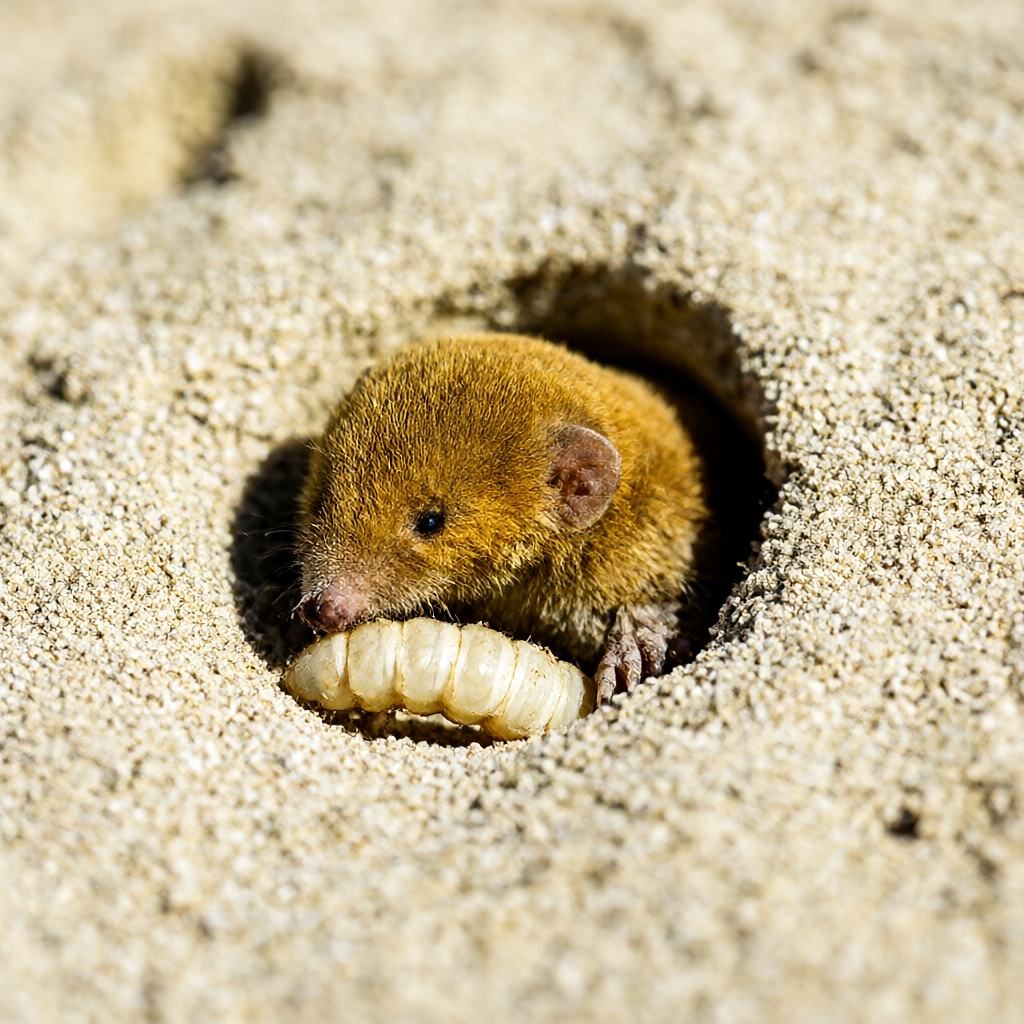
Insects make up most of the food. Earthworms, larvae and pupae get taken wherever the tunnel meets them. A mole grips prey with the front claws and bites quickly. Because the animal cannot see anything at all, it detects movement through vibration in the loose sand around it.
Feeding stops within seconds of a catch, and the mole then moves on down the tunnel. Some prey gets stored in a side chamber for later. Golden moles need little food compared with their size, since their metabolism runs very low even while digging.
Almost unknown
The breeding cycle
Very little is known about breeding in this species. Two to four young get born in a nest chamber lined with plant material. The young arrive blind and hairless, and they stay with the female for weeks. Because the animals never surface, nobody has watched a full cycle in the wild.
Breeding probably follows the winter rains, when insects are plentiful. Males and females meet inside the tunnel system, and nothing else is clear. Most of what is known comes from animals dug up by accident.
Lawns and pesticides
Conservation
The Red List calls the species Least Concern. Coastal development removes dunes across the Western Cape. Because the animal lives in small isolated patches, a single housing estate can erase a whole population. Pesticides in gardens and farmland cut the insect supply.
Domestic cats kill moles that surface after heavy rain. Nothing suggests a rapid decline yet, and gardens still hold animals. Protection depends on soil, which no reserve can easily guard.
Side by side
How It Compares
| Trait | Cape Golden Mole | European Mole |
|---|---|---|
| Family | Chrysochloridae | Talpidae |
| Length | 10-12 cm | 11-16 cm |
| Eyes | covered by skin | tiny but open |
| Digging | head thrust, strong front claws | broad forepaws, sweeping sideways |
| Fur | iridescent bronze | velvet black |
| Rating | Least Concern | Least Concern |
Common misreadings
What People Get Wrong
- Not a mole. It belongs to an African family of its own. Its closest relatives sit far from the true moles, though the resemblance comes from the same tunnel and the same job.
- No real eyes. An eye sits under the skin behind a covering fold. Light never reaches it, and the socket that once held a working eye has shrunk to a spot no bigger than a seed.
- Not grease. The coat slides through grit because the hair scales lie flat. Water runs off the same surface, so the animal stays dry in wet sand that would clog an ordinary coat.
Going further
Sources and Further Reading
Quick hits
Five things to remember
- It has no visible eyes.
- Its fur shines bronze and green.
- It swims through sand rather than digging.
- It is not related to true moles.
- It lives only in South Africa.