 By Iris
Cercopis vulnerata | Red-and-black Froghopper
Species Profile · Cercopidae
Red-and-black Froghopper
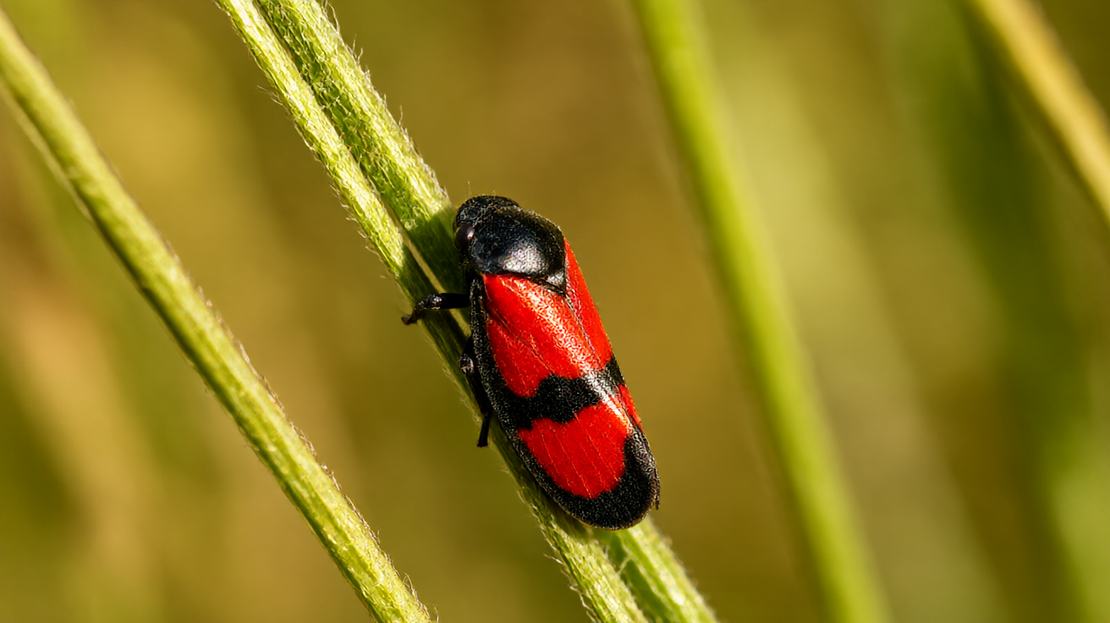
A small insect sits on a grass stem, and bright red wing cases end in black tips.
Not assessed
Length
Wings
Jump
Nymph
Eggs
Rating
The Red-and-black Froghopper
Red wings on a grass stem
A small insect sits on a grass stem with its wings folded like a tent. Bright red wing cases carry black tips, while the head stays black. Because the colours stand out against green, the insect makes no attempt to hide.
A bird that takes one learns to leave the rest alone. It jumps rather than flies when disturbed, and it clears a hand span in one spring. Adults appear in May, while the nymphs have fed since the previous summer.
Family tree
Cercopidae, the spittlebugs
Its proper name is Cercopis vulnerata, one of the froghoppers. Its family holds the spittlebugs, and every nymph in the group makes foam. An Ash Cicada sings from a tree in summer, while this insect stays silent and feeds on sap. Because the two share a beak built for plant sap, they sit in the same suborder.
No subspecies are named, since the pattern stays constant across the range. Early writers placed the species with the leafhoppers. Later work gave it a family of its own, and the old placement went.
Wings, head and legs
How to tell one
Adults reach 8 to 10 mm in length. Wing cases run red over most of the surface, while the tips turn black. Because the hind legs carry thick muscles, the insect can jump without warning.
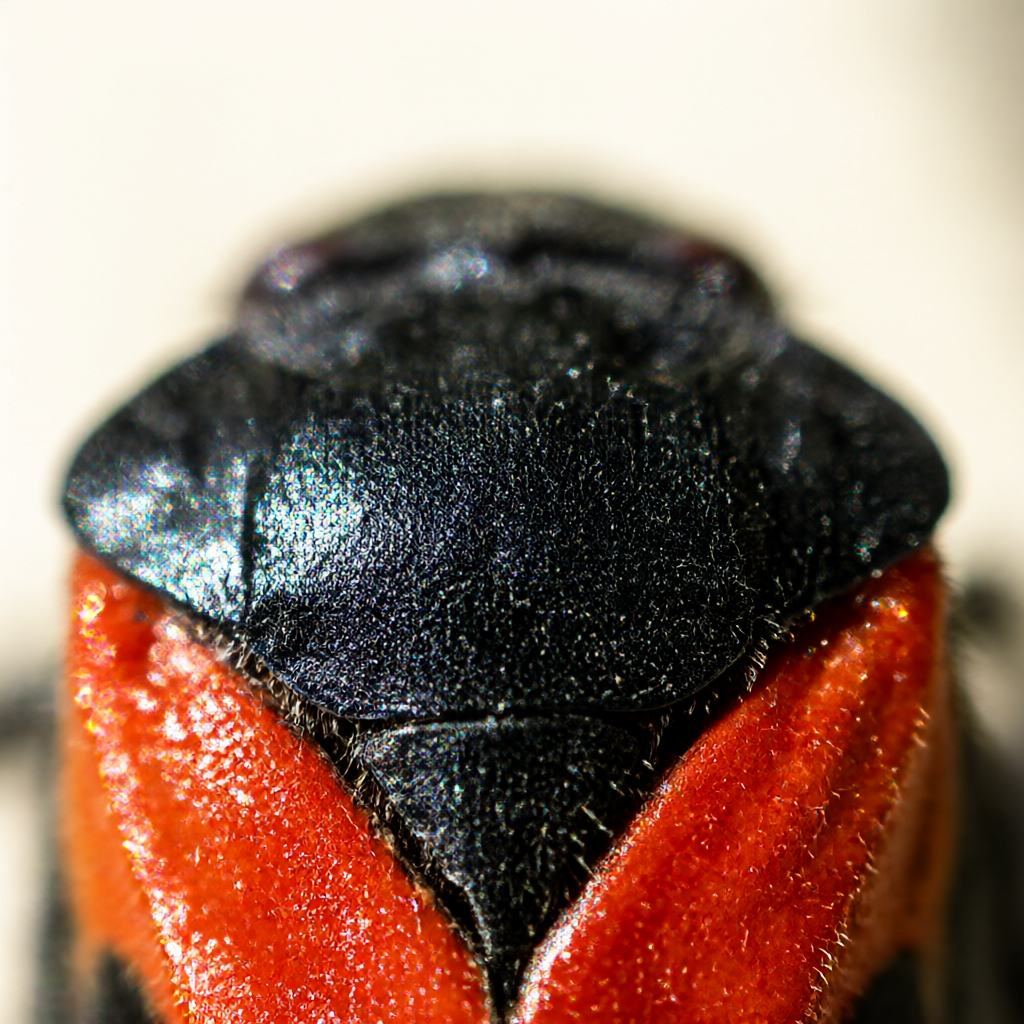
Its head stays black, with two pale spots near the eyes. Wings fold into a steep tent, and the shape looks almost triangular. Its beak runs from the underside of the head, and it reaches the plant stem.
Bodies stay compact, while the legs stay short. Females run slightly larger than males, though the difference stays small.
1
2
3
Rough grass
Where it lives
Rough grassland, woodland ride and hedge bank hold the species. Nymphs feed on roots below ground, while adults climb stems. Because the adult needs tall grass, a mown verge loses it within a season.
Flower-rich edges suit the insect, since it moves between plants. Meadows left uncut through June carry the strongest groups. A Periodical Cicada spends years underground before it emerges, and both insects feed on sap drawn from roots.
Sap from stems
What it eats
Plant sap makes up the whole diet. It taps the xylem rather than the phloem, since that flow carries water and minerals. Because sap holds little food, the nymph must feed for hours each day.
The adult takes the same food from stems and from leaves. Heavy infestations can stunt a plant, though the damage rarely shows. It draws water rather than sugar.
Plants that lose sap still grow, and the damage shows only in a dry year. The insect never takes solid food, and it needs no other source.
Foam and roots
The breeding cycle
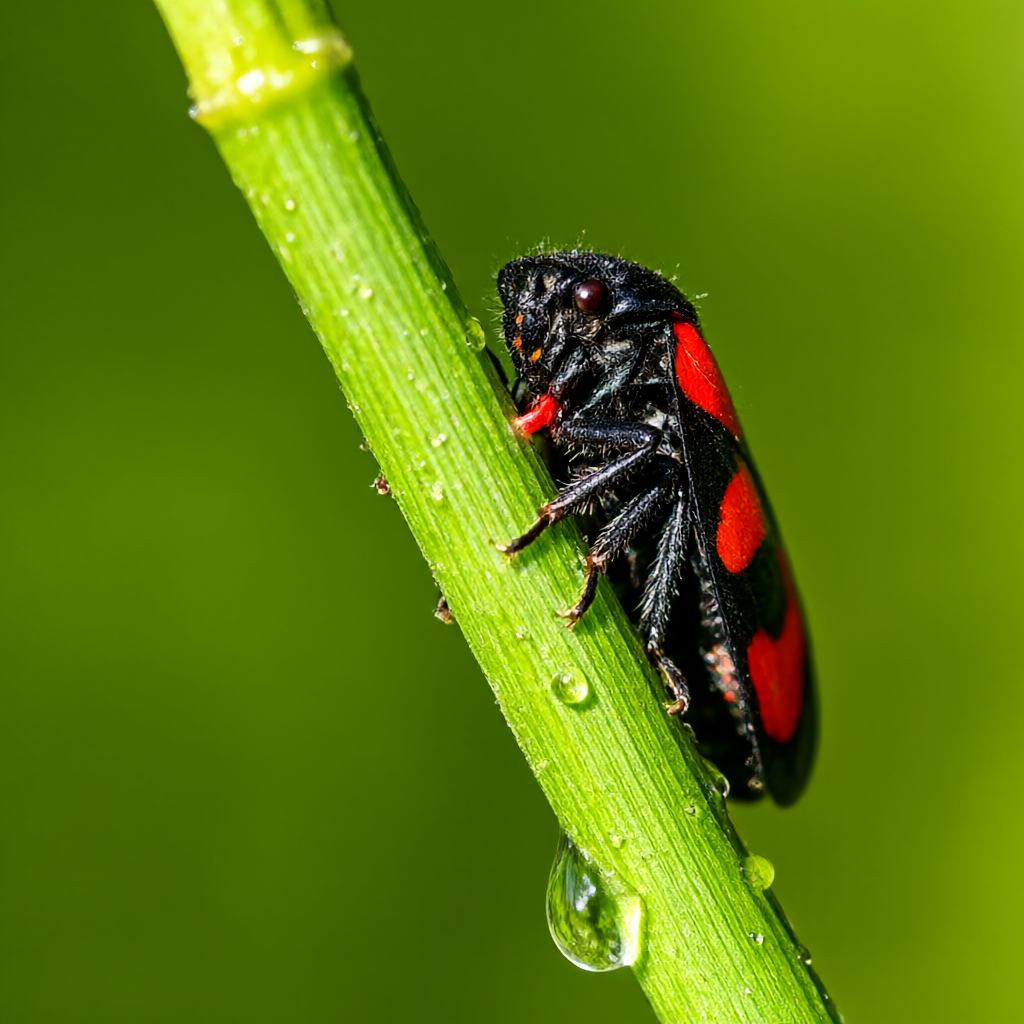
A female lays eggs in late summer, and she places them in plant tissue. The nymphs hatch and drop to the soil, while the adults die before winter. Each nymph makes a ball of foam from its own waste, and it hides inside.
Because the foam keeps the body damp, the nymph survives sun and dry air. Nymphs pass through several stages underground, and they feed on roots. Adults emerge in spring, and they mate within days.
Not assessed
Conservation
The Red List has not assessed the species. No survey finds a fall, since the insect uses rough grass across most of Europe. Because the nymph needs undisturbed roots, ploughing removes a population at once.
Roadside verge cutting takes adults in June, though the roots survive. Nothing suggests a decline across the range. Field margins left rough now hold the species, and the trend stays steady.
Side by side
How It Compares
| Trait | Red-and-black Froghopper | Ash Cicada |
|---|---|---|
| Order | Hemiptera | Hemiptera |
| Length | 8-10 mm | 30-40 mm with wings |
| Colour | red with black tips | dark with clear veins |
| Sound | none | a loud summer call |
| Nymph | in foam on roots | underground for years |
| Rating | Not assessed | Not assessed |
Common misreadings
What People Get Wrong
- Not a beetle. The wing cases cross in a tent. A beetle folds hard wing cases flat over the back, while the froghopper holds its own in a steep tent, and the beak under the head marks it as a sap feeder.
- Not a flyer first. The insect jumps instead. Thick muscles in the hind legs throw it a hand span without warning, and because the leap comes before any wing beat a hand rarely catches one.
- Not a pest of crops. It stays on rough grass. The nymph feeds on roots below the surface, and because ploughing removes those roots a single pass can clear a whole field margin.
Going further
Sources and Further Reading
Quick hits
Five things to remember
- Its nymph lives in foam.
- It jumps rather than flies.
- Its colours warn birds away.
- It feeds only on plant sap.
- Adults appear in May.