 By st20113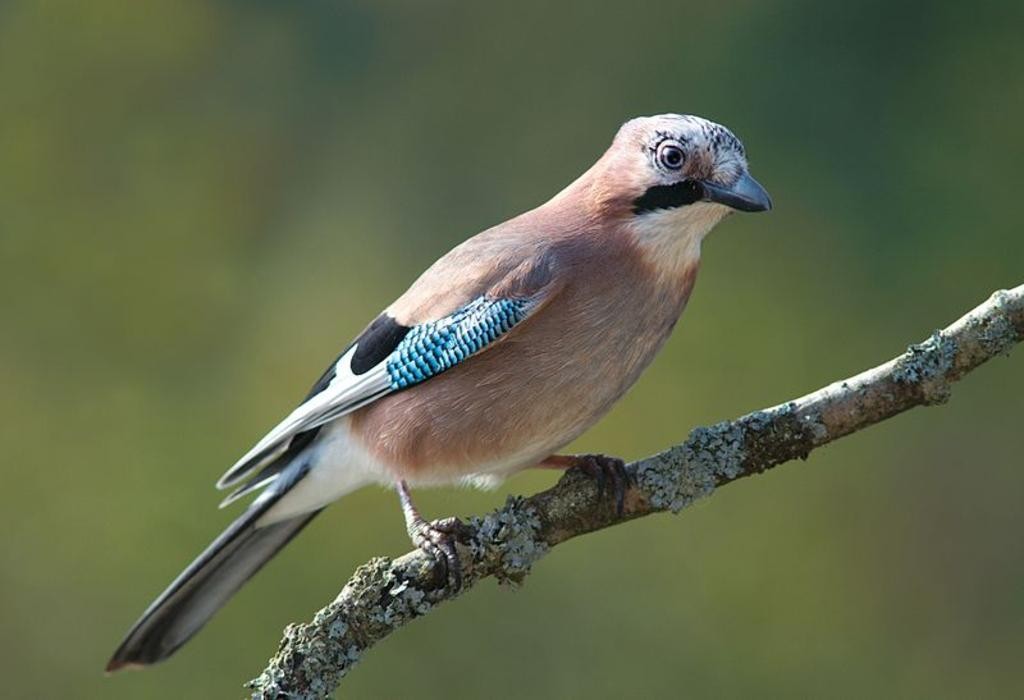
Introduction
The Eurasian Jay (Garrulus glandarius) is a strikingly colorful member of the crow family inhabiting the woodlands of Europe and into Central Asia. Its plumage is a vivid combination of coral-pink body, white throat, black-and-white wing pattern with a bright electric-blue flash, and black-and-white streaked crown. Far more than a beauty, it is one of natures most important foresters, transporting and burying tens of thousands of oak acorns each autumn that germinate and grow into new oak woodland, earning it the nickname forest gardener.
Taxonomy and Evolution
The Eurasian Jay belongs to the family Corvidae within the order Passeriformes. Linnaeus described it as Corvus glandarius in 1758. It is one of about 35 species in the genus Garrulus, which also includes the closely related Japanese and Lanceolated Jays. Molecular studies show it forms a clade with the magpies and true crows, diverging from the ancestor of the magpie some 12 to 15 million years ago. Several subspecies are recognized across the range differing in plumage tone and wing-patch size.
Physical Characteristics
The jay measures 32 to 35 cm in length with a 43 to 50 cm wingspan and weighs 140 to 200 g. The plumage is predominantly pinkish-cinnamon on the head, breast, and back with a white throat bordered by a black malar stripe. The wing coverts are boldly patterned black, white, and deep cobalt blue with a prominent white primary patch visible in flight. The crown is streaked black and white, erectile as a crest when the bird is agitated. Males and females look similar though males average slightly larger.
Habitat and Distribution
Eurasian jays are strongly associated with oak-dominated deciduous and mixed woodland but also inhabit parks, orchards, and gardens where oak or other suitable trees provide acorn crops. Their range spans from the British Isles and Iberia across Europe to the Urals, the Middle East, and east to the Himalayas. They are partially migratory in northern and eastern parts of the range while western and southern populations are largely resident. They prefer mature woodland with a mix of tall oaks, thick hedgerows, and clearings for foraging.
Diet and Feeding Behavior
Acorns are the defining food of the jay, consumed throughout the year and cached in autumn when most abundant. A single jay may cache 3,000 to 11,000 acorns each autumn, buried in soil, leaf litter, or crevices in bark, many of which are never retrieved and grow into oak seedlings, a remarkable act of forest regeneration. In spring and summer the diet shifts to insects, caterpillars, worms, snails, and nestlings. The jays role as an oak disperser is one of the most important examples of mutualism between a bird and a tree in the temperate world.
Reproduction and Life Cycle
Jays nest early in spring, building a cup nest of twigs, roots, and hair in a hedge or tree fork, usually 3 to 6 meters above ground. The clutch of 4 to 7 eggs is laid in April or May and incubated for 16 to 19 days by the female alone fed by the male. Chicks fledge at 19 to 23 days and are fed by both parents for a further 2 to 3 weeks. Nest failure from predation by the red fox and corvid predation is a significant source of losses. The peregrine falcon is a major aerial predator of adult jays and fledglings.
Conservation Status
Classified as Least Concern with a European population of 7 to 14 million breeding pairs, the Eurasian jay is one of the most successful woodland birds in Europe. However, populations are declining in some regions including Britain where loss of mature oak woodland and hedgerow removal have reduced suitable habitat. Intensified forestry that reduces understorey diversity can lower invertebrate prey availability for jays. In parts of Europe the jay is considered a pest of agriculture and is shot as a crop raider.
Fun Facts
The jays cobalt blue wing feathers were once prized by medieval royal falconers as decorative feathers for their birds, and jays were sometimes kept in captivity for this purpose. Each jay has an individually unique pattern of black and white crown streaking allowing researchers to identify individuals in the field without marking. They are skilled mimics and occasionally incorporate sounds from their environment including chainsaws and car alarms into their calls. A single jay can carry up to 9 acorns at a time, 3 in the bill and 6 in a specialized throat pouch, and may travel several kilometers to cache them.
[…] magpies of the Northern Hemisphere. Despite its common name, it is not closely related to the Eurasian jay, though both are clever corvids that cache food. The species has several regional forms across its […]
[…] a stiffened tail for support, and zygodactyl feet with two toes pointing forward and two back. The Eurasian jay shares oak woodland […]
[…] to challenging environments, from high-altitude foraging to seasonal hibernation or migration. the Eurasian jay, the European hedgehog, and the common blackbird frequently coexist with the pica pica across […]
[…] mixed woodland it may share territory with the Eurasian Jay, and in more open country it overlaps with the Common Magpie. Its ant-rich grassland feeding […]