 By Iris
Beatragus hunteri | Hirola
Species Profile · Bovidae
Hirola
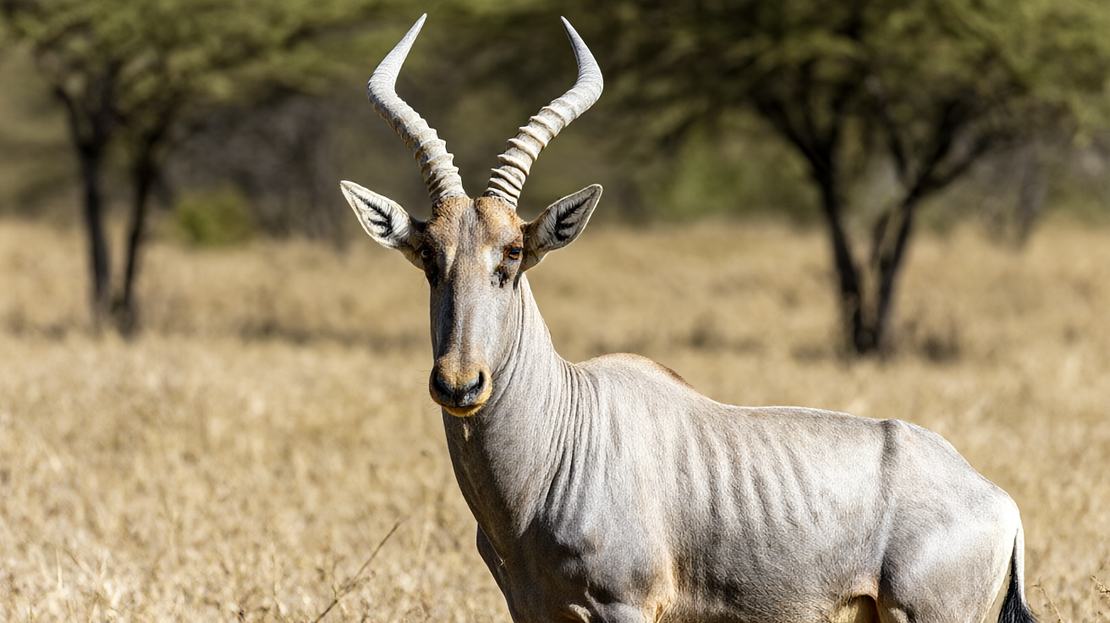
A pale antelope stands in dry grass and stares back with four eyes.
Critically Endangered
Shoulder
Weight
Horns
Calves
Eyes
Rating
The Hirola
Four eyes, and only two are real
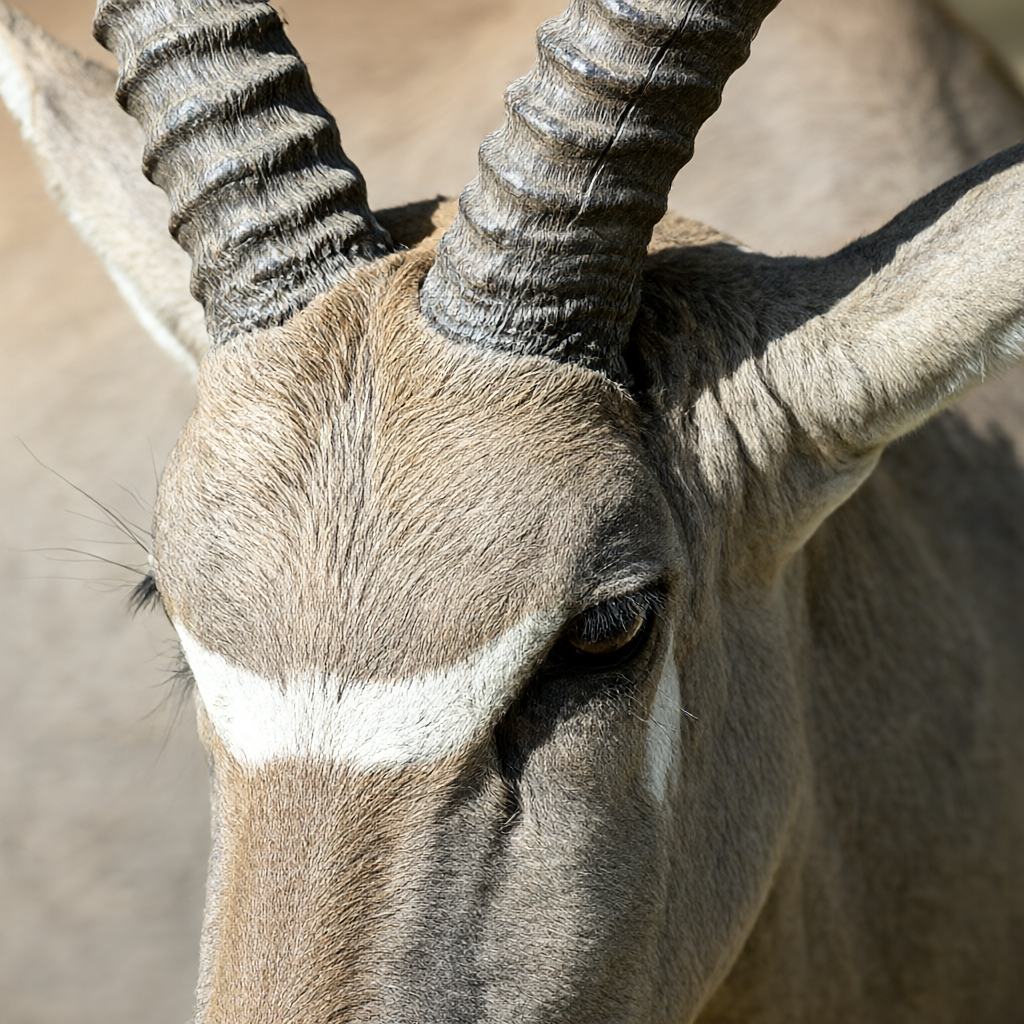
A pale antelope stands in dry grass and stares back with four eyes. Two are real. The other two are white rings that happen to sit in the right place.
Fewer than five hundred hirola survive, all of them along one border. Herds once crossed a wide stretch of East Africa, and now they hold a narrow strip. Because it is so rare, most people have never heard the name.
That may be part of the trouble. Rarity hides a species.
Family tree
Bovidae, alone in its genus
Its proper name is Beatragus hunteri, and it is the only member of its genus. The family is Bovidae, in the same group as hartebeest and wildebeest. Its line split from those relatives many million years ago, and nothing close to it lives today.
A Saiga Antelope shares the dry grassland world, though its odd nose belongs to a different lineage. The two shared a continent of open plains before farming broke the plains apart. Hunters named the species after a collector, and the Somali name hirola stuck instead.
Horns on males only
How to tell one
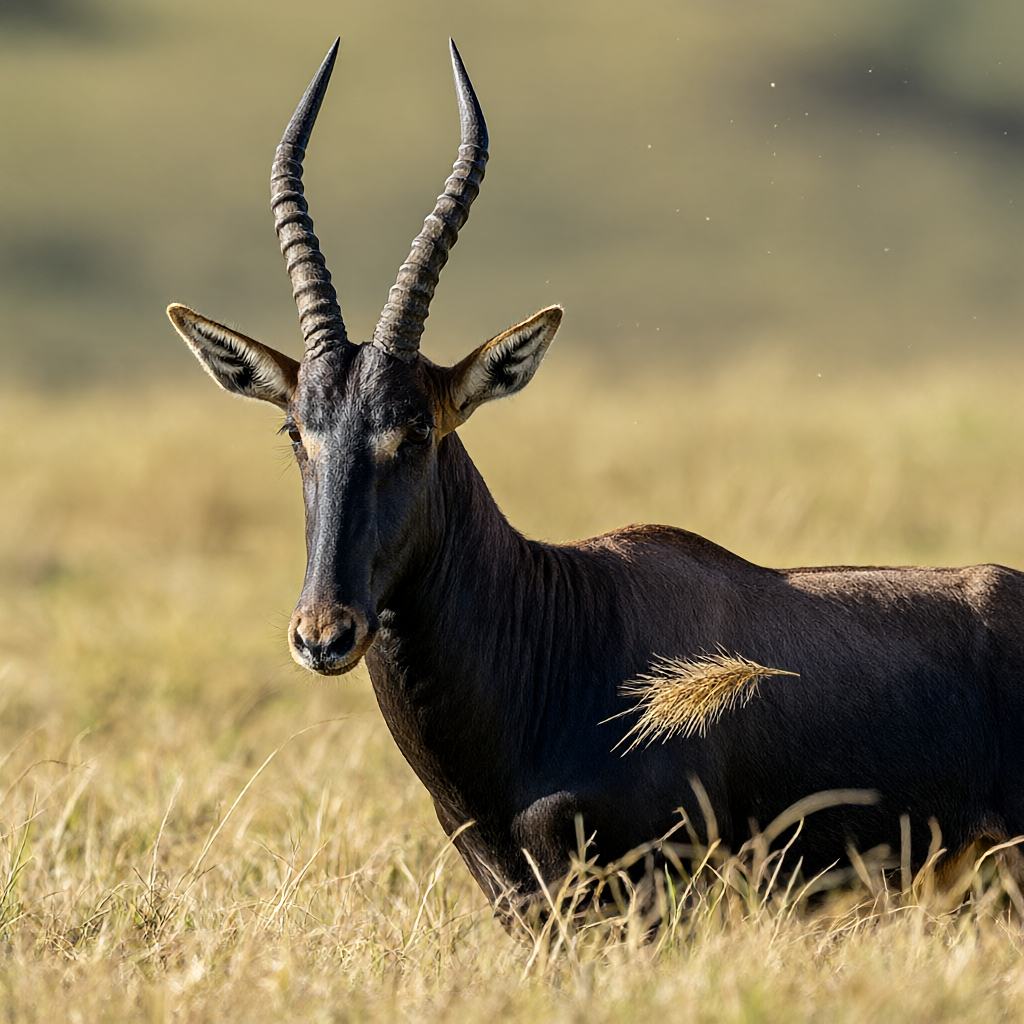
Shoulder height runs 100 to 125 cm. Weight falls between 80 and 118 kg. Only males carry horns, and those curve outward then back in a lyre shape. Ridges run along each horn from base to tip.
The coat is pale grey-tan, and it lightens further in dry weather. White bands above the eyes create the four-eyed look, and a dark line often marks the ear tips. Because the face runs long and narrow, it can crop grass while keeping its head high enough to watch for danger.
1
2
3
Short grass, open sky
Where it lives
Open grassland in southeastern Kenya and southwestern Somalia holds the last few. Almost all of them sit inside one small patch. Scattered acacia and commiphora bush suits it, as long as the grass stays short.
Bush helps, though. Dense thicket does not, since it needs room to run. Because the plains dry out fast, herds move toward whatever green grass remains.
Those movements once covered large distances across open plains, and they now run into fences, farms and roads at each edge. Rain comes in two seasons, and the grass responds within days. Timing decides everything.
Grass, almost nothing else
What it eats
Grass supplies nearly the whole diet. Short green blades come first, and dry stems get ignored. Tough stems stay untouched.
Because a grazer cannot store much water, the herd stays within reach of a drink. Groups feed in the early morning and again in the late afternoon. Midday heat pushes them into shade, and the herd often stands still for hours.
Heat rules the day. Herds once moved with the rain, and the habit still shows in how quickly they move when grass fails.
One calf, hidden
The breeding cycle
A single calf comes after about eight months. Births cluster in the wet months, when the grass holds enough cover for a newborn. The calf lies hidden for the first weeks. Cover does the work.
Because a hidden calf stays still, a predator often walks straight past it. Females form herds with calves, and males hold territories that the herds move through. Young males leave once they mature, and few find open ground left to occupy.
Fewer than five hundred
Conservation
The Red List calls the species Critically Endangered. Numbers fell from roughly fourteen thousand in the nineteen seventies to fewer than five hundred today. Rinderpest removed many before vaccination ended the disease. Because cattle eat the same grass, competition now limits each herd.
Predators take calves, and the loss matters more when so few are born. Sanctuaries ringed with fencing have kept some alive, though those same fences cut old routes and split herds that once mixed freely. Community conservancies offer the best hope, and rangers there track each herd closely.
Side by side
How It Compares
| Trait | Hirola | Saiga Antelope |
|---|---|---|
| Family | Bovidae | Bovidae |
| Horns | males, lyre shaped | males, pale and ringed |
| Nose | plain muzzle | inflated, downward |
| Range | Kenya and Somalia | Kazakhstan and Russia |
| Weight | 80-118 kg | 26-49 kg |
| Rating | Critically Endangered | Critically Endangered |
Common misreadings
What People Get Wrong
- Not four eyed, despite the look. Two eyes do all the seeing. White bands sit above each eye and read as a second pair, so it carries a name that describes a pattern rather than anatomy.
- Not a hartebeest with a new label. The genus stands alone. Beatragus separated from the other alcelaphines several million years ago, and no close relative survives anywhere on the same plains.
- Not a migrant any longer. Fences ended most of it. Herds once followed the rain across open grass, and they now stay inside small reserves where movement stops at a wire line.
Going further
Sources and Further Reading
Quick hits
Five things to remember
- The white eye rings gave it its other name, the four-eyed antelope.
- Horns grow only on males, and the ridges make each pair easy to tell apart.
- A hirola herd can disappear into knee-high grass within seconds.
- The species was named after a nineteenth-century collector, not after the Somali name.
- Calves lie flat and motionless while their mothers feed nearby.