 By st20113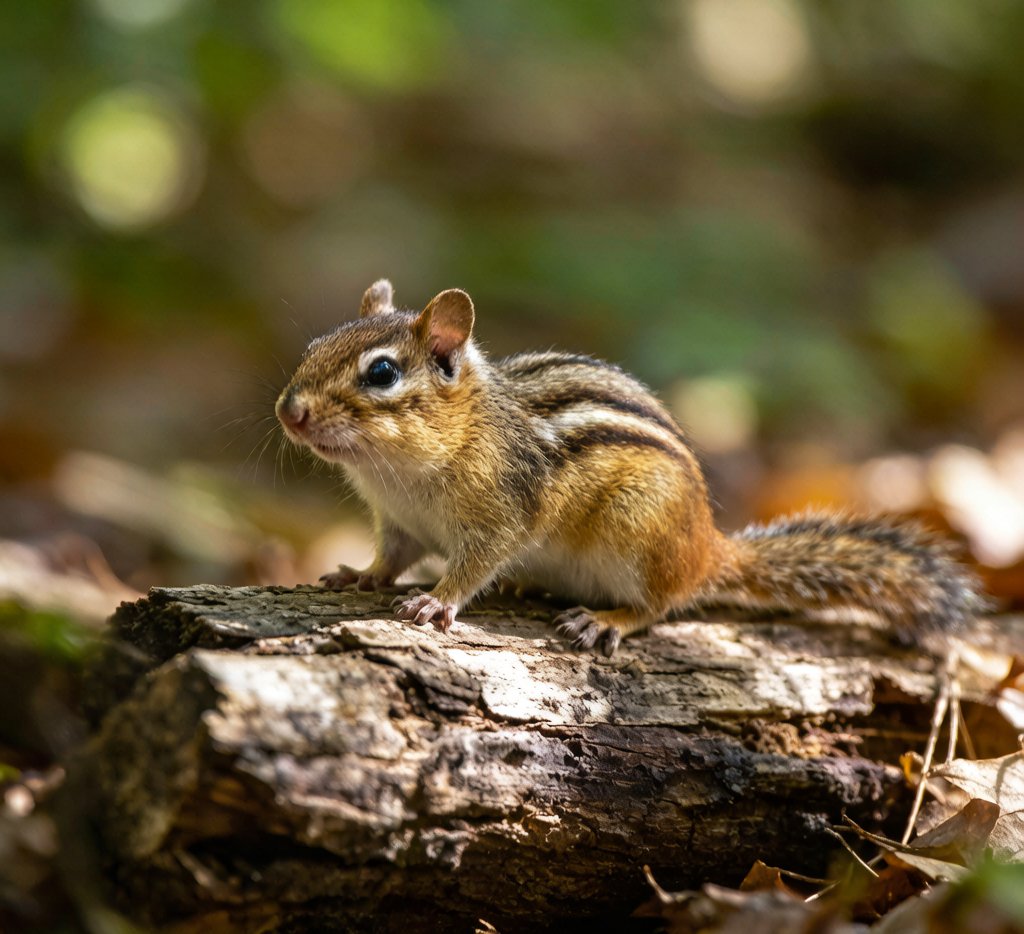
Introduction
The eastern chipmunk is a small, striped rodent that brings colour and character to the deciduous forests and suburban gardens of eastern North America. Instantly recognisable by the five dark stripes running the length of its body against reddish-brown fur, this species is one of the most familiar wild mammals in its range. Its cheek pouches, rapid movements, and distinctive chip-chip call have made it a favourite of naturalists and casual observers alike.
Taxonomy
The eastern chipmunk belongs to the order Rodentia, the family Sciuridae, and the genus Tamias. Its scientific name, Tamias striatus, was established by Linnaeus in 1758. The genus Tamias includes approximately 25 species across North America, but the eastern chipmunk is the sole member of the subgenus Tamias, making it a taxonomic singleton of particular evolutionary interest. Its closest relatives are the eastern and western rock squirrels, from which it diverged several million years ago. The genus name derives from the Greek word for a steward, a reference to the animal’s hoarding behaviour.
Physical Characteristics
The eastern chipmunk is a compact, agile rodent with a body length of 14 to 19 centimetres and a fluffy tail adding a further 8 to 11 centimetres. Its most distinctive feature is the series of five dark dorsal stripes against warm reddish-brown fur: the outermost pair runs from the rump to just behind the ears, while the central stripe is shorter and less prominent. The cheeks are equipped with expandable, fur-lined pouches that can stretch to accommodate a remarkable volume of food—up to three times the volume of the animal’s head. Weight varies dramatically with season, from approximately 70 grams in spring to 125 grams or more in autumn. The feet are slender and adapted for climbing, with sharp claws enabling the animal to scale tree trunks and rocky faces.
Habitat
The eastern chipmunk occupies a wide range of habitats across eastern North America, from southern Canada to the Gulf Coast and from the Atlantic seaboard west to the Great Plains. It shows a strong preference for rocky slopes, stone walls, fallen logs, and the edges of deciduous forests where cover is abundant and soil is suitable for burrowing. The species has adapted remarkably well to human-modified landscapes and is commonly found in suburban gardens, parks, and campus grounds. A single chipmunk may maintain several burrows, including a main nesting chamber lined with dried leaves and food-storage chambers holding several kilograms of cached seeds. The eastern chipmunk does not hibernate continuously but enters periodic torpor, waking every few weeks to feed on stored reserves. Red fox and rabbit share many of the same habitats and are prey for the same suite of woodland predators.
Diet
The eastern chipmunk is a generalist feeder whose diet reflects seasonal abundance. In spring it consumes tender shoots, flowers, and buds of early-blooming plants. Summer brings berries, fruits, fungi, and the occasional insect or earthworm. Seeds and nuts become increasingly important in late summer and autumn, and the chipmunk spends a large proportion of each day gathering and caching food in underground larders. Oak acorns are a particularly important food source, and the chipmunk’s habit of caching more than it can eat makes it one of the most effective dispersers of tree seeds in the eastern forest.
Reproduction
Eastern chipmunks breed twice per year, with mating periods in early spring and mid-summer. After a gestation of approximately 31 days, the female gives birth to a litter of two to five altricial pups in the underground nest chamber. Young are born blind and naked; eyes open at around three weeks, and they begin venturing above ground by five to six weeks. Weaning occurs at approximately eight weeks, after which juveniles disperse to establish their own territories. Sexual maturity is reached the year following birth, and adults typically live two to three years in the wild. The principal predators include weasel, hawks, and owls.
Conservation
The eastern chipmunk is classified as Least Concern by the IUCN, reflecting its large, stable, and apparently growing population across a wide geographic range. The species has benefited significantly from the expansion of suburban and urban green space, which has provided new habitat in previously agricultural landscapes. Localised threats include habitat fragmentation, which can isolate populations and reduce genetic diversity, and predation by domestic cats, which can have a significant impact in suburban areas.
Fun Facts
The eastern chipmunk produces a distinctive, repetitive chip-chip call that serves as both a territory marker and an alarm signal—a sound from which its common name is derived. Despite being primarily ground-dwelling, the eastern chipmunk is an accomplished climber and will readily ascend trees and rocky outcrops to escape predators or access food. A single individual can cache as many as 8,000 seeds and nuts over the course of an autumn—a feat of memory and organisation essential for its winter survival and significant for forest regeneration.