 By Iris
Otocyon megalotis | Bat-eared Fox
Species Profile · Canidae
Bat-eared Fox
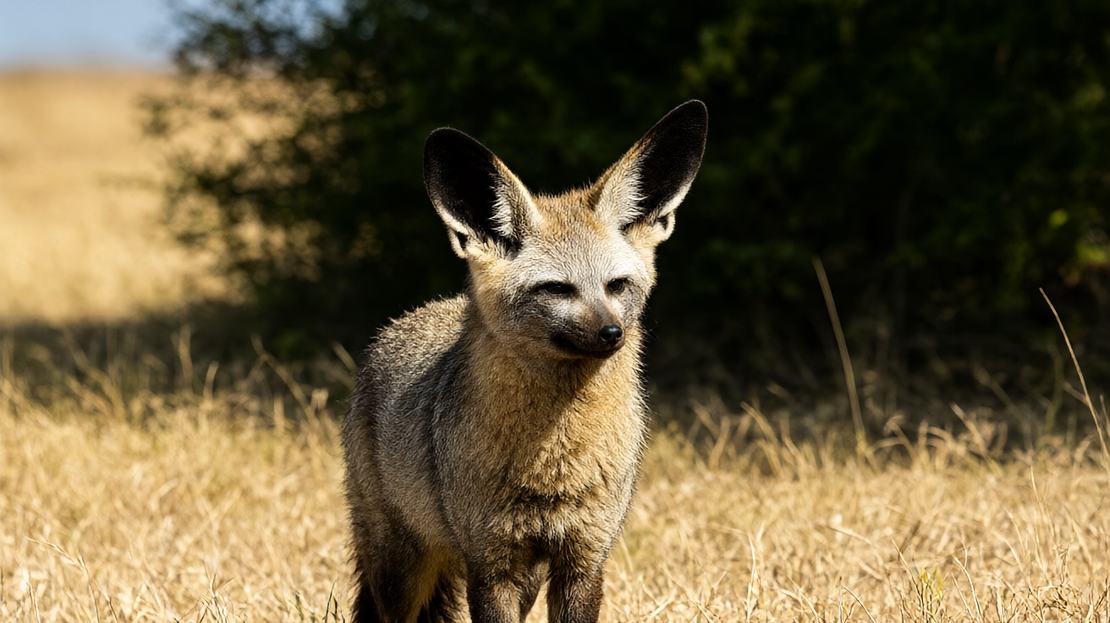
Two huge ears rise above the grass before anything else shows.
Least Concern
Length
Tail
Weight
Ears
Gestation
Rating
The Bat-eared Fox
The fox that listens for termites
Two huge ears rise above the grass before anything else shows, and they look too big for the animal behind them. A bat-eared fox stands about the size of a small dog, and it hunts at night, listening more than it looks. Termites make up most of the diet, and the ears find them underground.
Because the ears catch every small sound, the animal does not need its eyes. Two separate groups live across Africa, one in the south and one in the east. Both feed on the same insect and both look alike.
Family tree
Canidae, the dog family
Its proper name is Otocyon megalotis, and it stands alone in its genus. The name means ear dog, which describes the animal exactly, and two subspecies are separated by a gap of a thousand kilometres. Because the groups split long ago, they now differ in small ways, and the species carries more teeth than any other canid at up to 50.
Small cheek teeth gave the genus characters no other dog shares. Old classifications placed it with the true foxes, which was wrong.
Ears and teeth
How to tell one
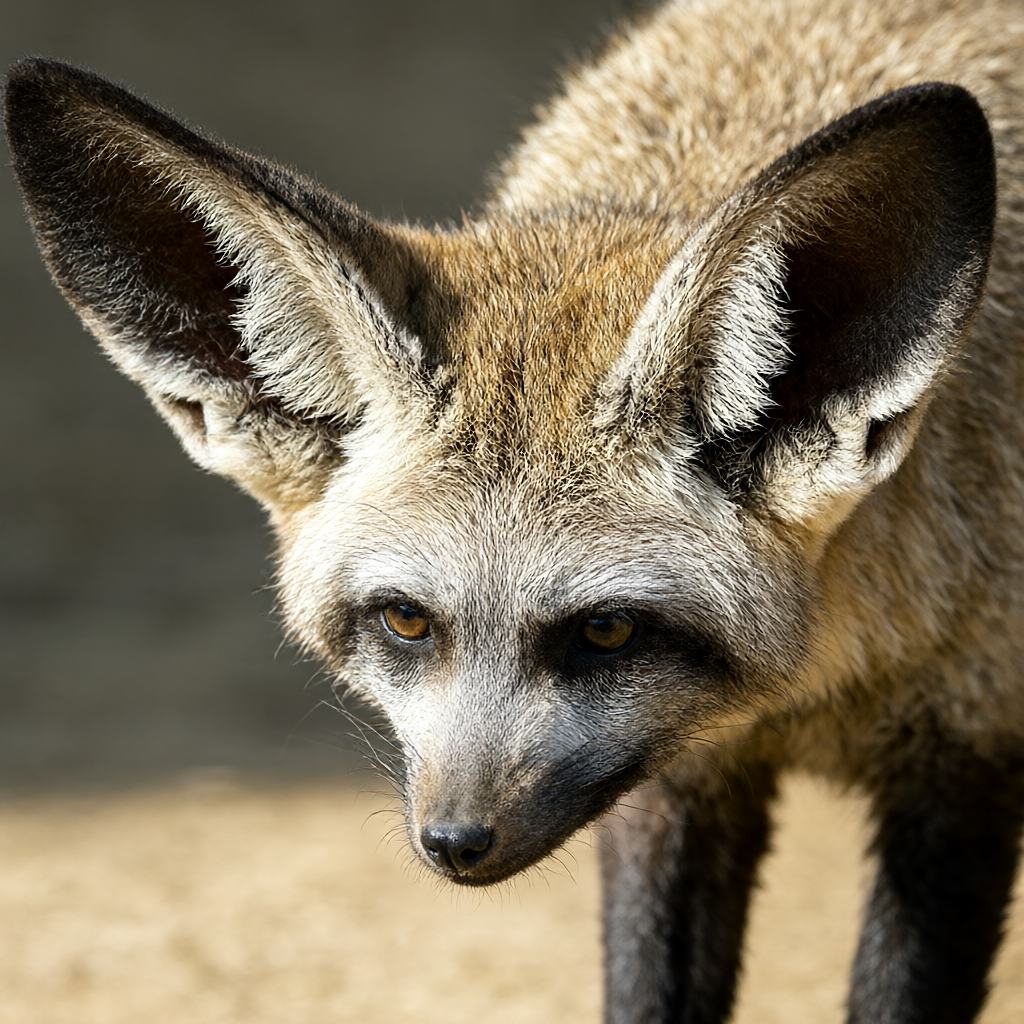
Adults run 46 to 66 cm from nose to tail base. The tail adds 23 to 34 cm, and it ends in a dark brush. Weight falls between 3 and 5.4 kg. Ears reach 11 to 13 cm, and they exceed the length of the head.
Because the ears radiate heat, the animal loses warmth through them on hot nights. Fur runs pale grey and buff, and the legs, ears and face carry black. A black mask covers each eye, and it breaks up the outline of the face. Teeth are small and many, and they suit insects rather than meat.
Females run slightly smaller than males. Its muzzle is narrow and pointed, which helps in tight spaces.
1
2
3
Short grass
Where it lives
Short grass and open scrub are the main habitat. Because the animal needs termites, it lives where termite mounds stand. Burned ground attracts it, since insects surface after a fire. Both groups avoid dense forest and tall wet grass.
Grassland grazed by livestock suits the species well. It digs no den of its own, and it uses old holes dug by other animals. A maned-wolf shares that open country, and both canids hunt small prey under cover of darkness.
Termites, mostly
What it eats
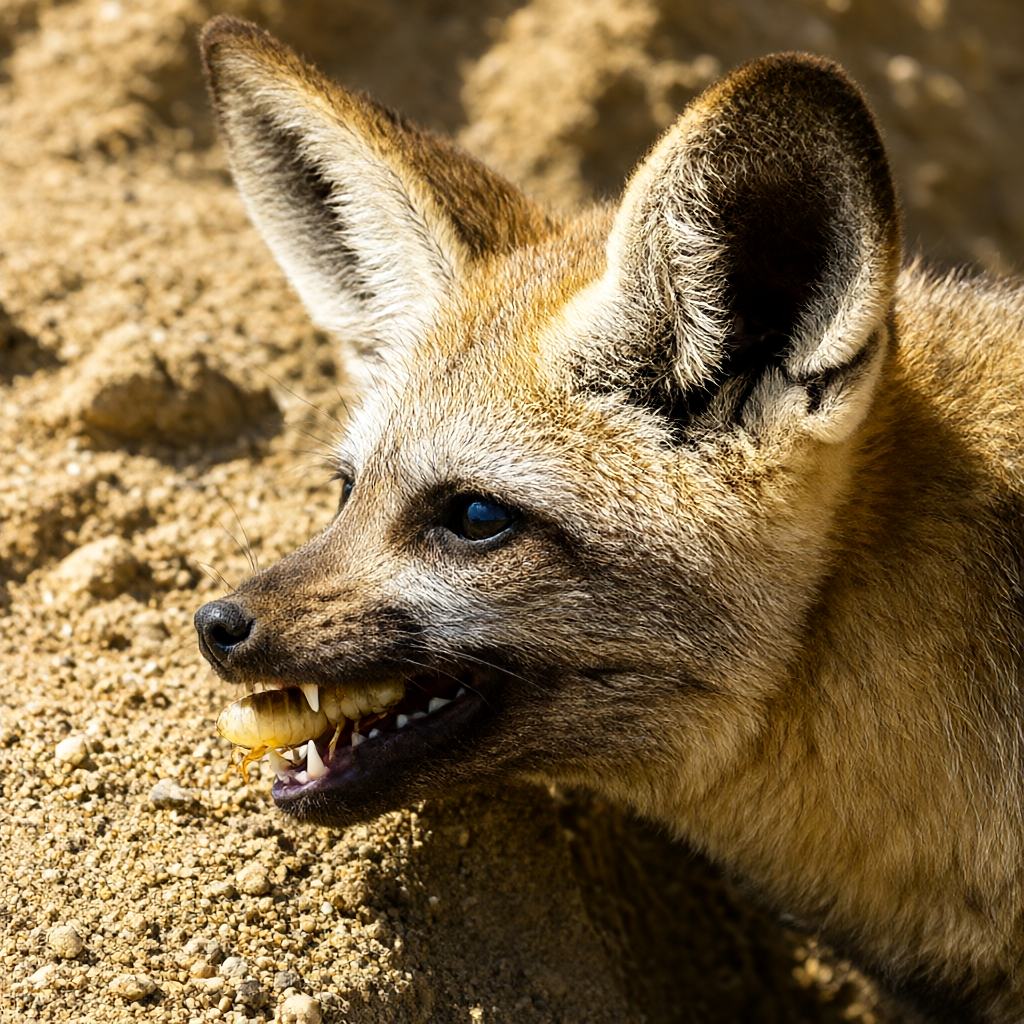
Harvester termites make up most of the food. Beetles, scorpions, crickets and larvae get taken as well. Because the animal needs many insects, it feeds for hours through the night.
Fruit and small lizards add variety in the wet season. Ears locate a termite inside its tunnel, and the paws dig it out. Foraging takes place on foot, and the animal rarely sits still.
A pair often feeds close together, and both parents bring food to the young. The millipede falls prey to it in the wet months, though termites stay the staple.
A pair that stays
The breeding cycle
A male and a female form a lasting pair. Two to five cubs are born after a gestation of about 70 days. The female feeds them, and the male guards the den. Because the male does most of the playing and grooming, the young stay close to him.
Cubs leave the den at about a month and follow the parents on hunts. Independence comes at six months, and the pair breeds again the next year. Young from the previous litter often stay to help.
Poison and ploughing
Conservation
The Red List calls the species Least Concern. Numbers look stable across both groups. Because the animal eats insects, it lives on land too dry for other canids.
Poison set for jackals kills foxes that feed on contaminated insects. Roads kill many animals at night. Nothing suggests a serious decline yet, and the species stays widespread.
Side by side
How It Compares
| Trait | Bat-eared Fox | Red Fox |
|---|---|---|
| Family | Canidae | Canidae |
| Length | 46-66 cm | 45-90 cm |
| Ears | 11-13 cm, longer than the head | 7-12 cm |
| Food | mainly harvester termites | rodents, birds and scraps |
| Hunting | listens, then digs | stalks and pounces |
| Rating | Least Concern | Least Concern |
Common misreadings
What People Get Wrong
- Not a big eater. The animal weighs less than a house cat. Its diet is mostly termites, and the teeth stay small because the prey needs digging rather than biting.
- Not a lone hunter. A pair stays together and raises the cubs as a team. The male guards the den and does most of the grooming, and the cubs follow him closely once they leave it.
- Not a forest animal. Tall wet grass and dense cover hold nothing for it. It needs short grass where termites surface, and burnt ground draws it because the insects come up into the open.
Going further
Sources and Further Reading
Quick hits
Five things to remember
- Its ears are longer than its head.
- It has more teeth than any other dog.
- It eats mostly termites.
- It does not dig its own den.
- Both parents raise the cubs.