 By Iris
Bradypus pygmaeus | Pygmy Three-toed Sloth
Species Profile · Bradypodidae
Pygmy Three-toed Sloth
The smallest sloth on earth, and it lives on one island of mangrove.
Critically Endangered
Length
Weight
Claws
Forest
Young
Rating
One island of red mangrove
A sloth the size of a cat
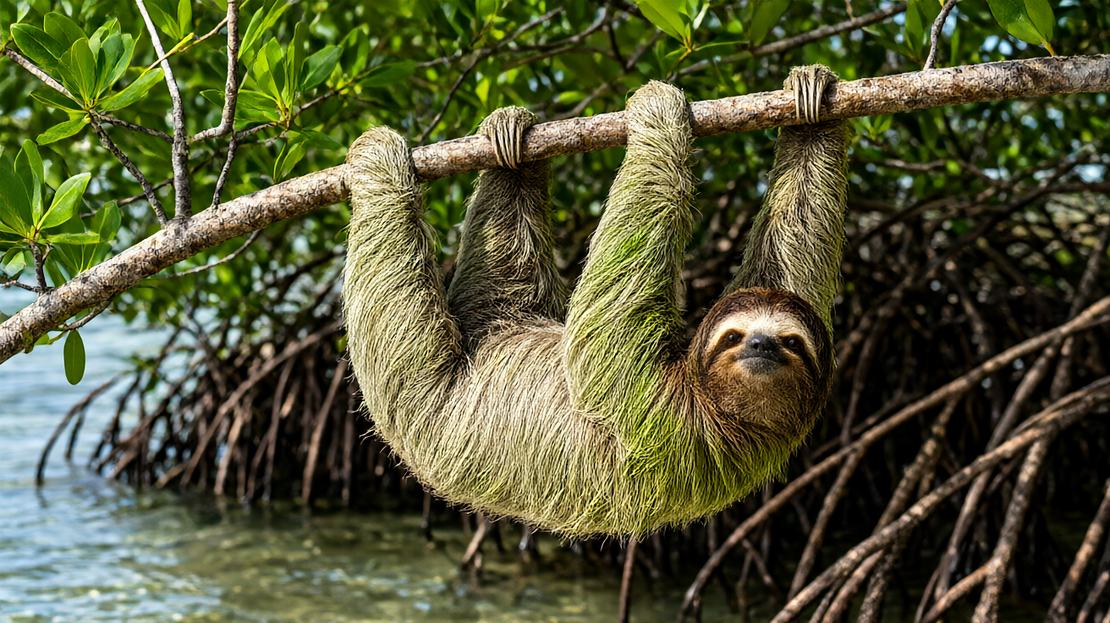
A small shaggy animal hangs from a red mangrove branch above salt water. It lives on one island and nowhere else. Nobody knows how many remain. Pygmy three-toed sloths are the smallest of their kind.
Adults run 48 to 53 cm long, and they weigh around 3 kg. Fur looks brown, with a green tinge from algae. A long mane hangs over the shoulders. That mane gives the animal its other name, the hooded sloth.
Island life shaped the body, since food and space both run short on a narrow strip of mangrove. Most of the island floods at high tide. Drinking happens rarely. Movement stays slow.
Family tree
Bradypodidae, the three-toed sloths
Bradypus holds four living sloths, and this one is the smallest. Sloths split from anteaters long before the ice ages. A brown-throated Sloth from Central America shares the same body plan. Both hang by three claws, and both eat leaves.
The island form split from mainland animals when rising seas cut the coast away, and the gap has held ever since. That isolation lasted thousands of years, which let the body shrink while the mainland animals stayed large. Gene work now treats it as a full species. Earlier books called it a variety instead.
Size separates the two best, since an island adult weighs about half a mainland adult. Skulls differ too, and the island form carries a shorter, deeper face than the mainland animal. Names caused trouble for years. Two published accounts used different labels for the same animal.
Four sloths, this one smallest
How to tell one
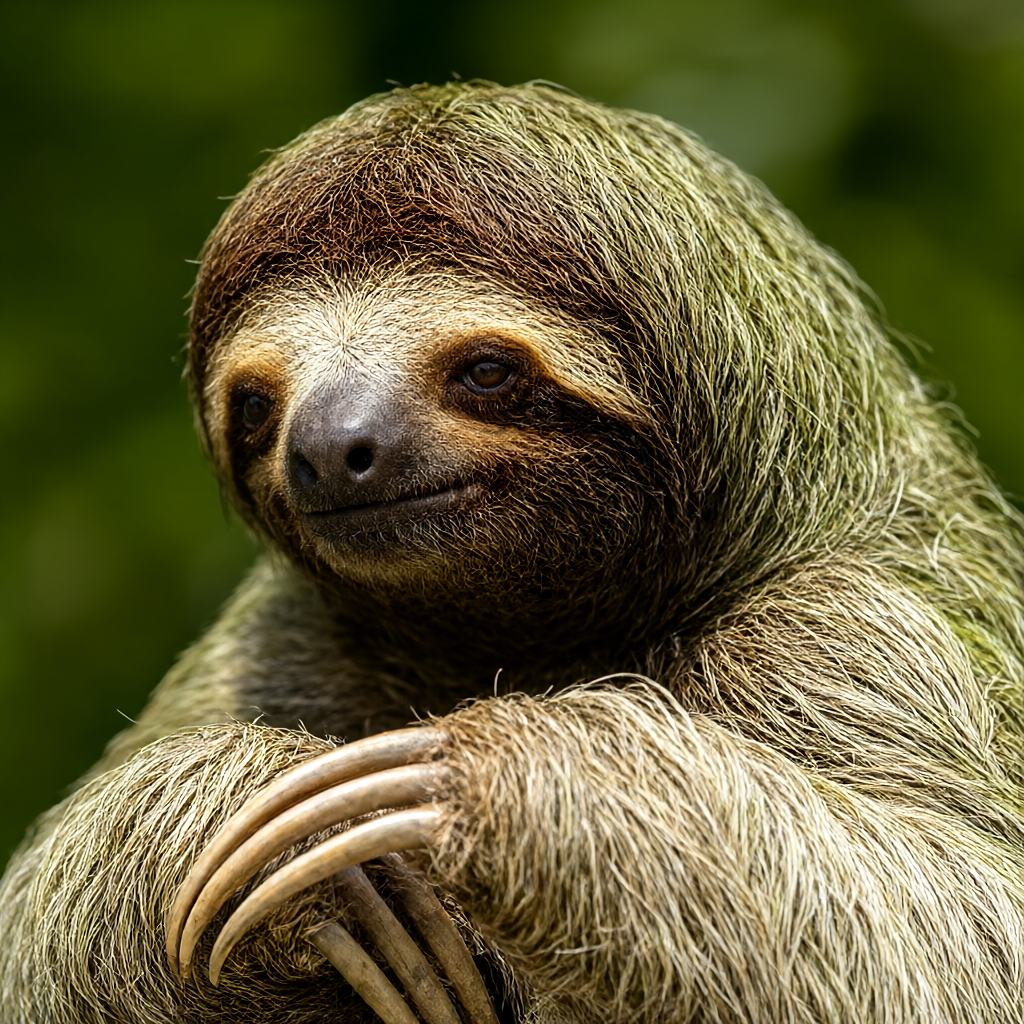
Fur covers a rounded body, and it grows longer than the mainland coat. A mane of dark hair hangs over the shoulders and the neck, although nobody has explained what it does. Three curved claws end every limb. Front limbs reach longer than the hind pair, which lets the animal hook two branches at once.
Grooves along each hair hold water, which lets algae grow there. Green algae gives the coat a mossy tint. That tint hides the animal among leaves, since a still sloth looks like a knot of foliage. Teeth grow without enamel and keep grinding the leaves down.
Eyes sit inside a dark face mask. The tail stays short. Muscle makes up far less of the body than in most mammals. Curved claws hold the weight of the body without any effort at all, even while the animal sleeps.
1
2
3
Mane, claws and green fur
Where it lives
Red mangrove grows along the island edge, and the sloth stays inside it. Trees stand in salt water at every high tide. The whole forest covers about 1.3 square kilometres. Roots arch above the mud and trap sediment.
Leaves stay green through the year, so food never stops, even in the dry months when everything else browns. Storms tear at the island, yet the mangrove regrows. Cutting trees for charcoal removes the only habitat, and that loss cannot be undone. Fishermen land on the beaches, and some of them hunt the animal.
Tourism brings boats and noise. No predator lives on the island except people. Swimming comes easily, so animals cross small channels. Open water stops any spread to the next island, since the animal cannot swim that far.
Red mangrove on one island
What it eats
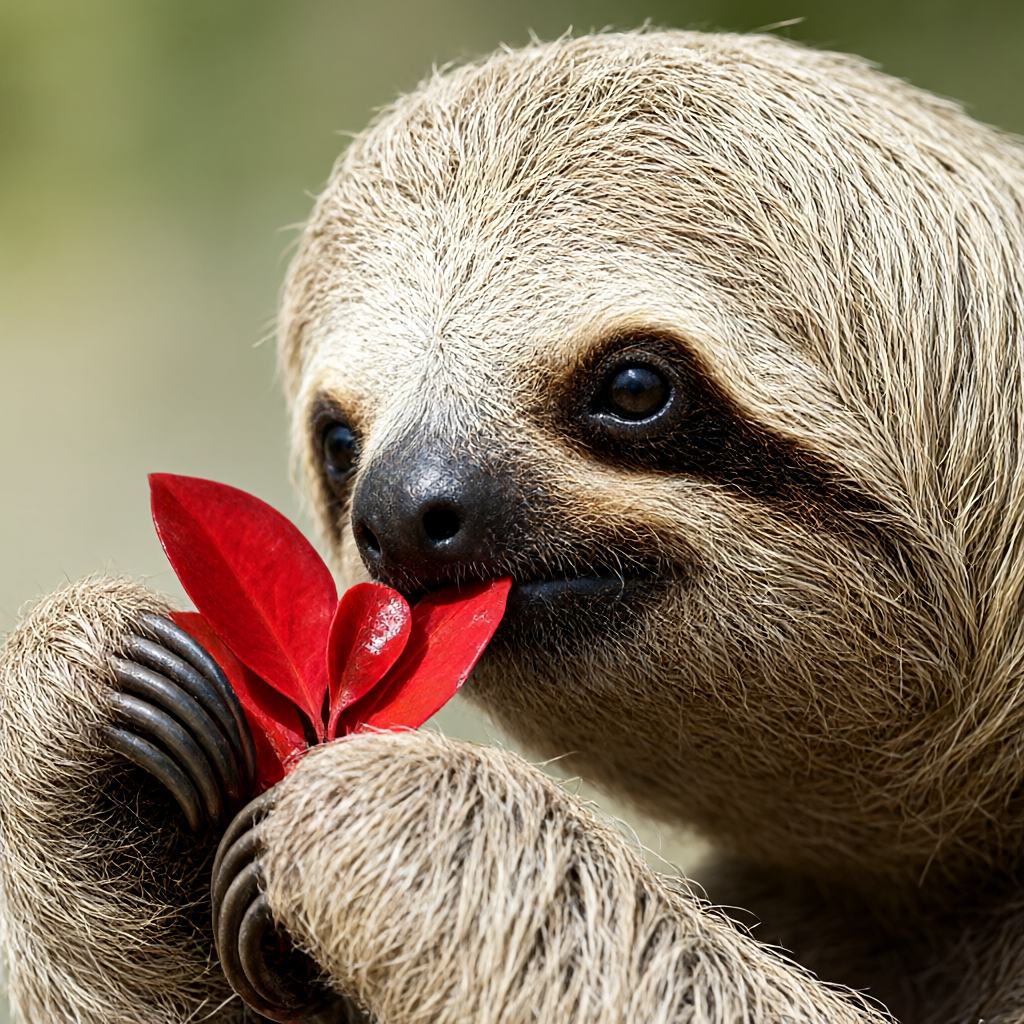
Red mangrove leaves form almost the whole diet. Buds and young shoots get taken too, although leaves still make up most of the meal. Digestion depends on gut microbes, and the whole process takes several days to finish. A leaf meal yields little energy.
Bodies run cool and slow, which matches such poor food. Feeding happens in short bouts through the day and night. An animal may eat only a few leaves an hour, and it spends most of the day asleep. Water comes from dew and from juicy leaves.
Sea water would kill it, so fresh water matters. Mango and other trees get used now and then. Nobody has watched a full day of feeding. Captive animals refuse most leaves offered to them.
Mangrove leaves, chewed slowly
The breeding cycle
A female gives birth in the canopy after about six months. One young is usual. The newborn clings to the mother’s chest from the first hour. Fur on the chest gives the young something to grip, which matters when the mother climbs.
Young animals start tasting leaves at a few weeks old. Independence comes at about six months, when the mother moves away. Females may breed once a year at best, and slow breeding limits any recovery. Nobody has measured how long a wild animal lives.
Captive sloths have reached twenty years. Mating happens high in the canopy, and almost none of it has ever been watched. Males live alone, and they meet females only to breed. One young a year cannot replace heavy losses.
Critically Endangered, and cut off
Conservation
IUCN lists the species as Critically Endangered. Fewer than a hundred animals may survive. The whole range covers one island and one forest type. Hunting takes animals every year, although the law has banned it since the island became a reserve.
Charcoal burning clears mangrove, and cleared ground does not come back fast. Rising seas threaten the forest, since mangrove needs a shoreline that shifts slowly uphill. Storms strip leaves and break branches, which leaves animals short of food. A single dry year could kill most of the group, because the food supply is so narrow.
Protected status covers the island on paper. Patrols stay rare, since the island sits a long boat ride from any town or station. Tourism money now pays for wardens, which helps a little. Long-term survival depends on the mangrove staying intact, since these animals have no second home.
Side by side
How It Compares
| Trait | Pygmy Three-toed Sloth | Brown-throated Sloth |
|---|---|---|
| Length | 48 to 53 cm | 42 to 80 cm |
| Weight | around 3 kg | 2.2 to 6.3 kg |
| Home | mangroves on Isla Escudo de Veraguas | canopy forest from Honduras to Brazil |
| Diet | red mangrove leaves | cecropia and other soft leaves |
| Habit | swims between mangrove roots | crosses gaps from crown to crown |
| Rating | Critically Endangered | Least Concern |
Common misreadings
What People Get Wrong
- Most people think all sloths live in mainland forest, yet this one never leaves a single island.
- Popular accounts call the animal lazy, although it simply moves slowly to save energy.
- Field guides often list three toes as a family trait, though two-toed sloths sit in another family.
Going further
Sources and Further Reading
Quick hits
Five things to remember
- Smallest of all sloths, and it lives on one island.
- Algae in the fur gives the coat a green tint.
- A mane of dark hair covers the shoulders.
- Swimming comes easily to the animal.
- Fewer than a hundred animals may remain.