 By Iris
Conepatus leuconotus | American Hog-nosed Skunk
Species Profile · Mephitidae
American Hog-nosed Skunk
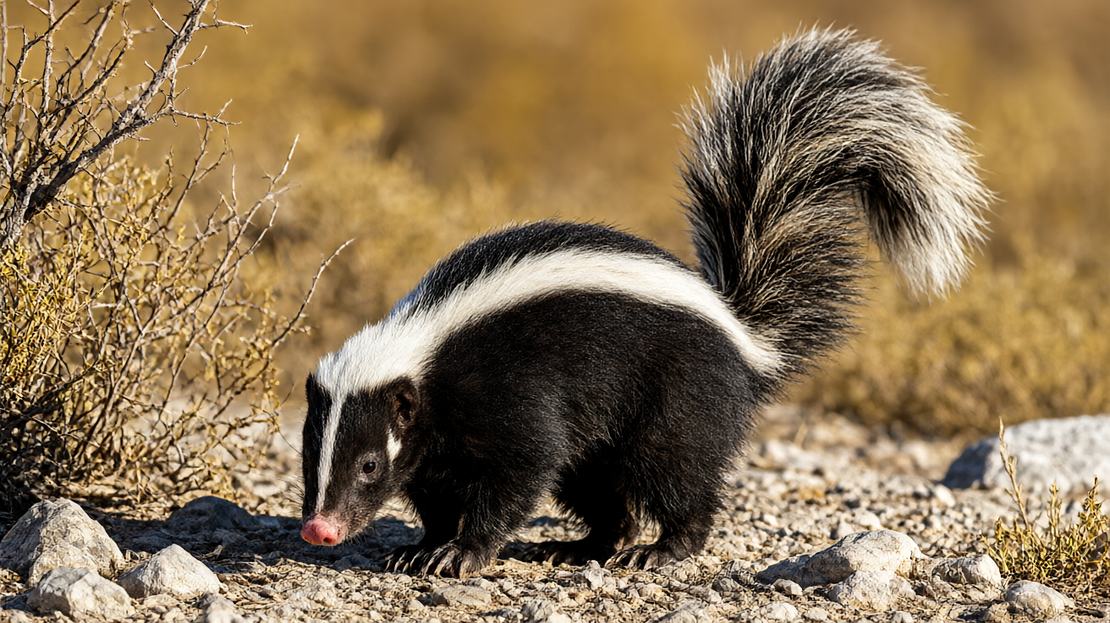
A heavy skunk walks with its bare pink snout down and its white tail lifted.
Least Concern
Length
Tail
Weight
Young
Snout
Rating
The American Hog-nosed Skunk
The skunk that digs
A stocky animal walks through dry brush with its nose held close to the ground. Its snout stays bare and pink, while the rest of the head carries fur. One white stripe runs from the crown to the tail. It splits into two along the back, and the split starts at the shoulders.
Because the front claws stay long, the animal digs rather than scratches. Its tail rises when the animal feeds, and it acts as a warning flag. Threatened skunks turn, stamp and then spray.
Family tree
Mephitidae, the skunk family
Its proper name is Conepatus leuconotus, one of the hog-nosed skunks. Its family holds a dozen species, while the group split from the weasels long ago. A Striped Skunk carries two white stripes down the back, while this species carries one broad band.
Because the two live side by side in Texas, the difference in pattern matters for identification. Four subspecies are named, and they differ in size and in the amount of white. Early writers placed every skunk in one genus, while later work split the group apart.
Snout, stripe and tail
How to tell one
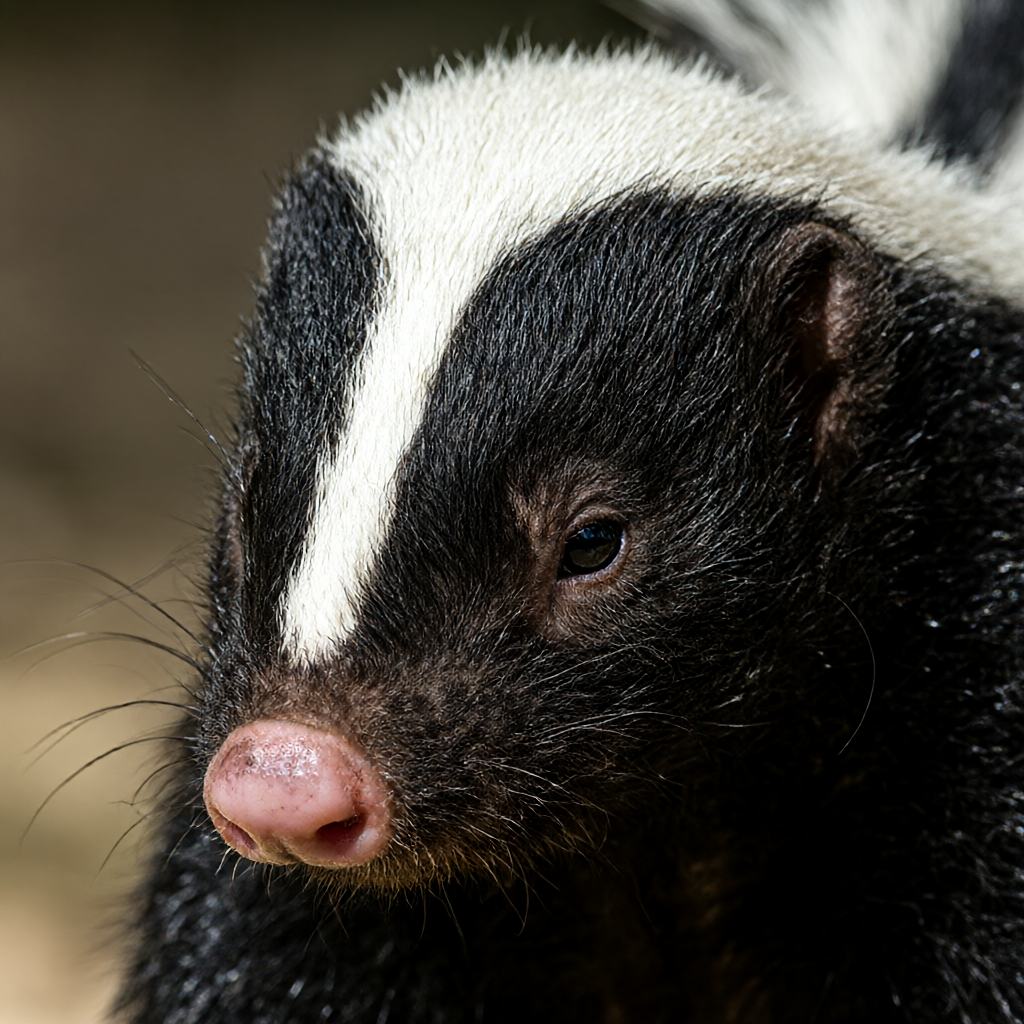
Adults reach 55 cm from nose to tail base, while the tail adds another 30 cm. Weight falls between 2 and 4.5 kg, and males run heavier than females. Bare skin covers the tip of the snout, and it works like a small pig nose.
Because the claws on the front feet stay long, the animal breaks soil without effort. One white band covers the crown and the nape, while the back carries a broad stripe. Fur runs coarse and black, while the white parts stay bright.
Long hair covers the tail, and it spreads when the animal turns. Males run larger than females, and their necks grow thicker.
1
2
3
Dry brush and rock
Where it lives
Dry brush, open woodland and rocky slope hold the species. Mexico carries most of the range, while Texas and Central America hold the edges. It digs in loose soil, and it shelters in a burrow or a rock crevice.
Because the species needs soft ground for digging, bare rock stops it. Farmland suits the skunk, since ploughing turns up insects. A European Badger digs in the same way in a northern wood, and both animals live in burrows they excavate themselves.
Grubs and insects
What it eats
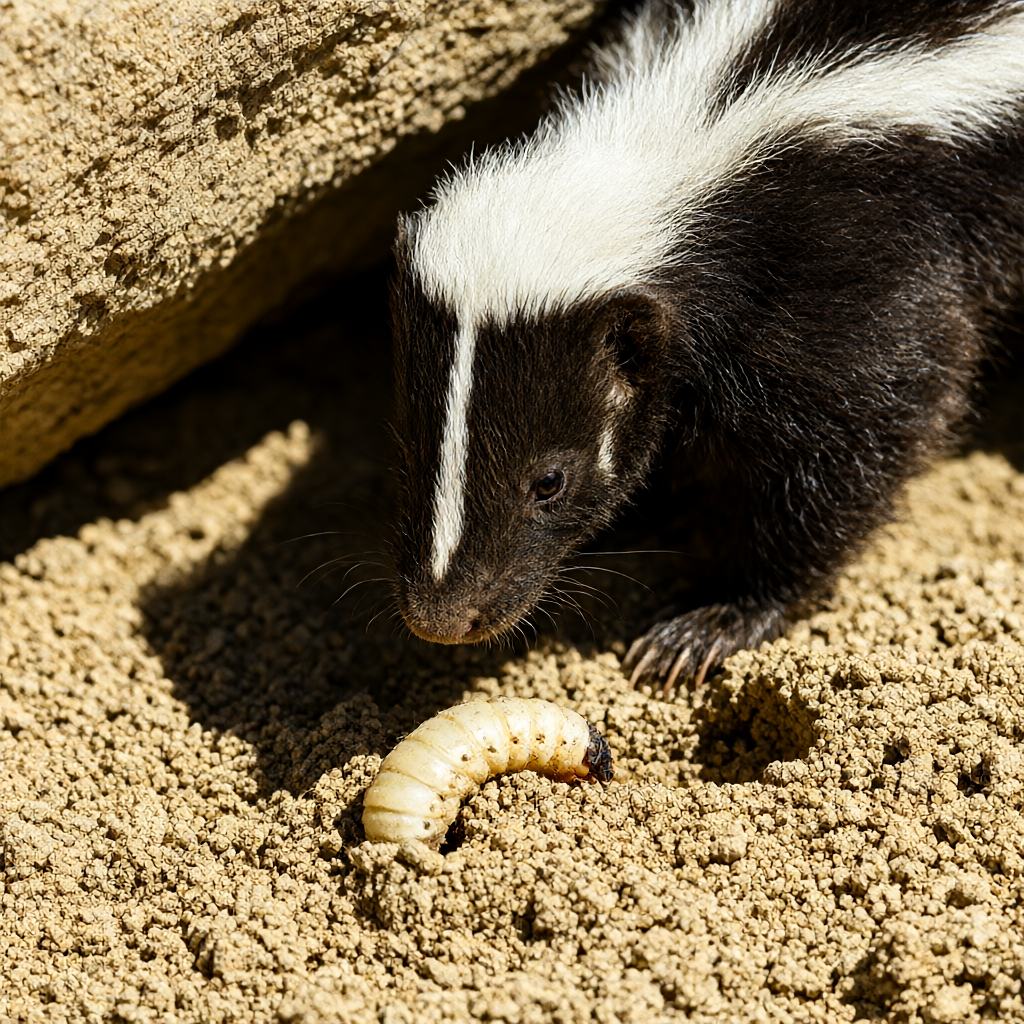
Insects make up most of the food. It takes beetle grubs, ants and termites, while it also eats lizards and small rodents. Because the nose reaches into a crack, prey that hides still gets found. Feeding skunks push the bare snout into soil, then pull out whatever moves.
Fruit and carrion get eaten when the chance comes. It digs a shallow pit at each stop. A line of pits marks its route, and the trail shows where it fed.
Two to four young
The breeding cycle
Males and females meet in late winter. The pair stays together for weeks, and they hunt side by side. The female bears two to four young after about two months.
Because the young stay blind for three weeks, the mother keeps them in a den. Young follow her at about two months. They spray before they can aim well, and the first attempts go wide.
One litter arrives each year, while a second may follow in a good season. Young animals disperse in autumn, and they dig dens of their own.
No great threat
Conservation
The Red List calls the species Least Concern. No survey finds a steep fall, since the animal uses farmland and brush alike. Because the species digs for insects, ploughing helps it in the short term.
Road traffic kills a number at night, while the population absorbs the loss. Nothing suggests a decline across the range. Protected brush holds stable groups, and the species also lives close to towns.
Side by side
How It Compares
| Trait | American Hog-nosed Skunk | Striped Skunk |
|---|---|---|
| Length | 55 cm plus a 30 cm tail | 40-70 cm with tail |
| Weight | 2-4.5 kg | 2-5 kg |
| Snout | bare and pig like | furred and pointed |
| Stripe | one white line head to rump | two white lines on the back |
| Claws | long, for digging | short, for scratching |
| Rating | Least Concern | Least Concern |
Common misreadings
What People Get Wrong
- Not the striped skunk. The stripe count differs. A striped skunk carries two white lines down the back, while the hog-nosed species shows a single white band that runs from the crown to the tail.
- Not a climber. The animal digs instead. Long front claws turn loose soil in seconds, and because the bare snout pushes into the hole the skunk finds grubs that stay out of reach.
- Not a good aim at first. Young spray before they can point. A kit discharges while still learning, and because the mother keeps them in a den for weeks the first attempts happen where the smell does least harm.
Going further
Sources and Further Reading
Quick hits
Five things to remember
- Its snout stays bare.
- It digs with long front claws.
- It sprays from two glands.
- It carries one broad stripe.
- Young spray before they aim well.
[…] slime and size make it less easy prey than smaller slugs, yet it is still heavily hunted. The common-hedgehog-erinusaceus-europaeus, along with frogs, toads and ground-feeding birds, takes slugs readily, and the Black Slug’s […]