 By Iris
Volucella zonaria | Hornet Mimic Hoverfly
Species Profile · Syrphidae
Hornet Mimic Hoverfly
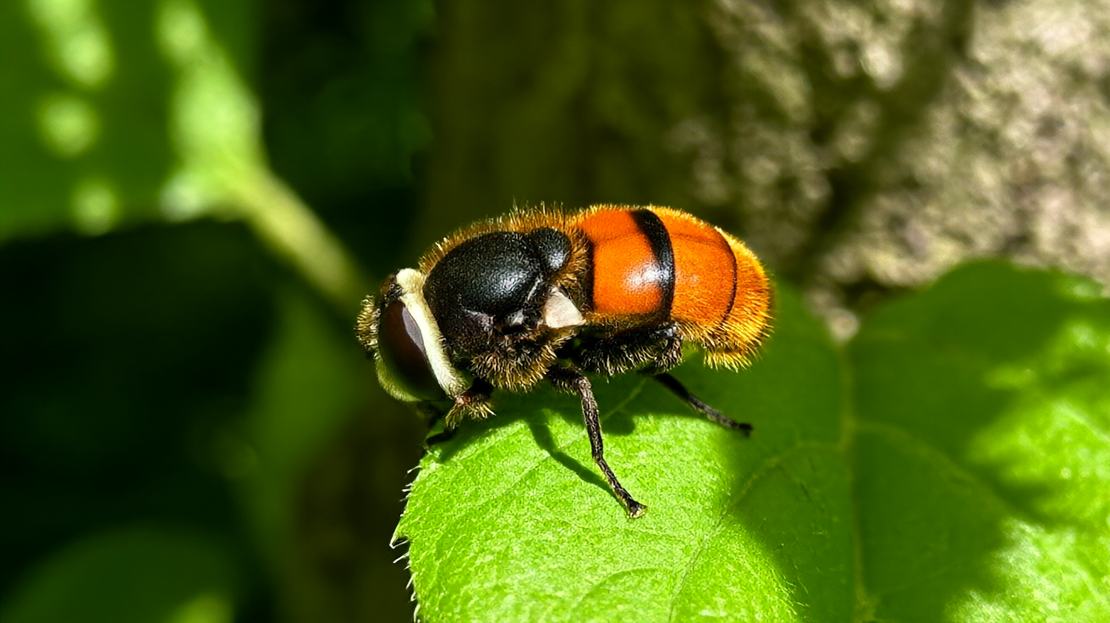
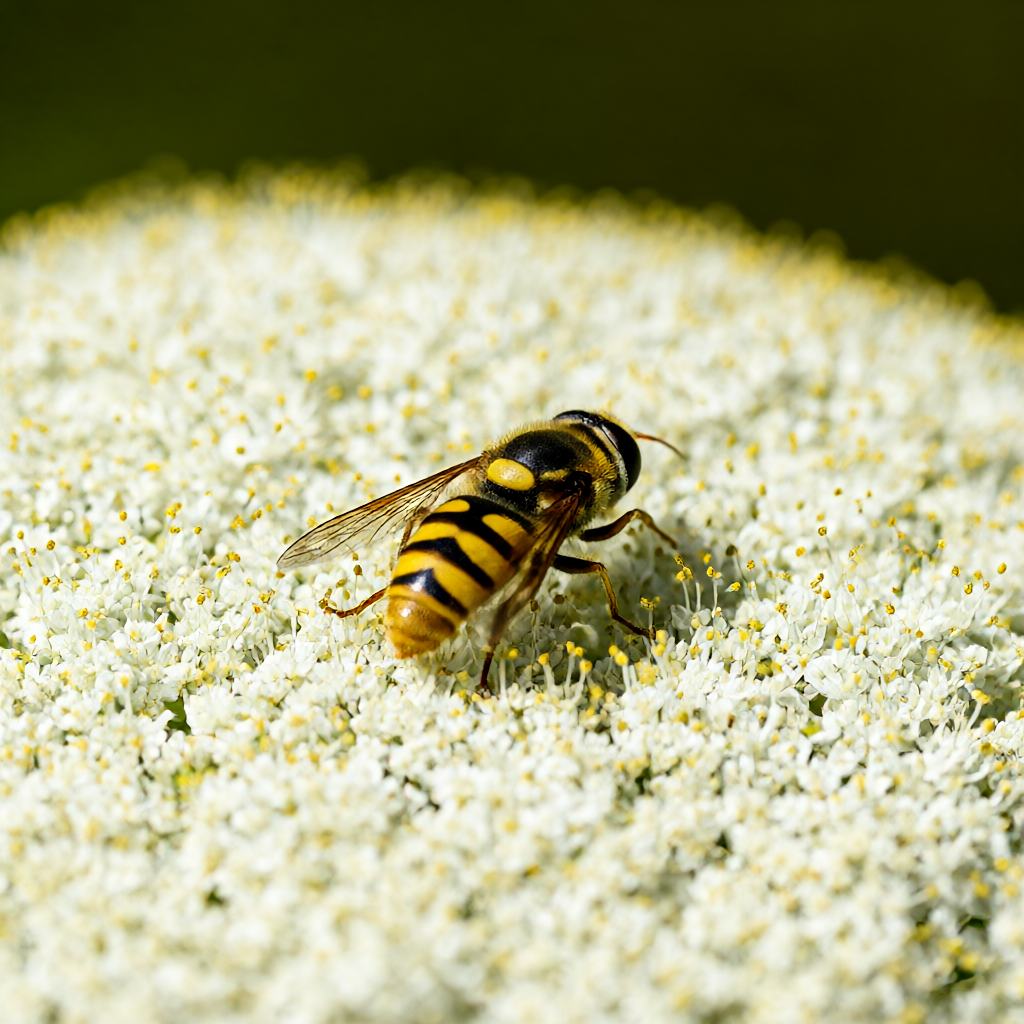
A large insect spreads its wings on a white umbel, and the orange bands match a hornet.
Not assessed
Length
Wingspan
Larva
Broods
Eyes
Rating
The Hornet Mimic Hoverfly
The biggest mimic in Europe
A large insect settles on a white umbel and spreads its wings. Orange bands cross the abdomen, while the thorax stays dark. Its pattern matches a European hornet closely, though the insect carries no sting.
Because the fly is the largest hoverfly in Europe, the resemblance works at a glance. A broad head carries two large eyes, and they meet across the top in the male. It now flies over southern England, since warmer summers have carried it north.
Family tree
Syrphidae, the hoverflies
Its proper name is Volucella zonaria, one of the large hoverflies. Its family holds thousands of species, while only a few reach this size. A European Hornet nests in tree cavities, while this fly lays its eggs in those nests. Larvae grow inside a wasp colony.
The adult must find a nest before it can breed, and a nest that fails leaves her with nothing. No subspecies are named, since the species stays the same across its range. Early writers placed the species with the wasps, while later work corrected the record.
Bands, collar and eyes
How to tell one
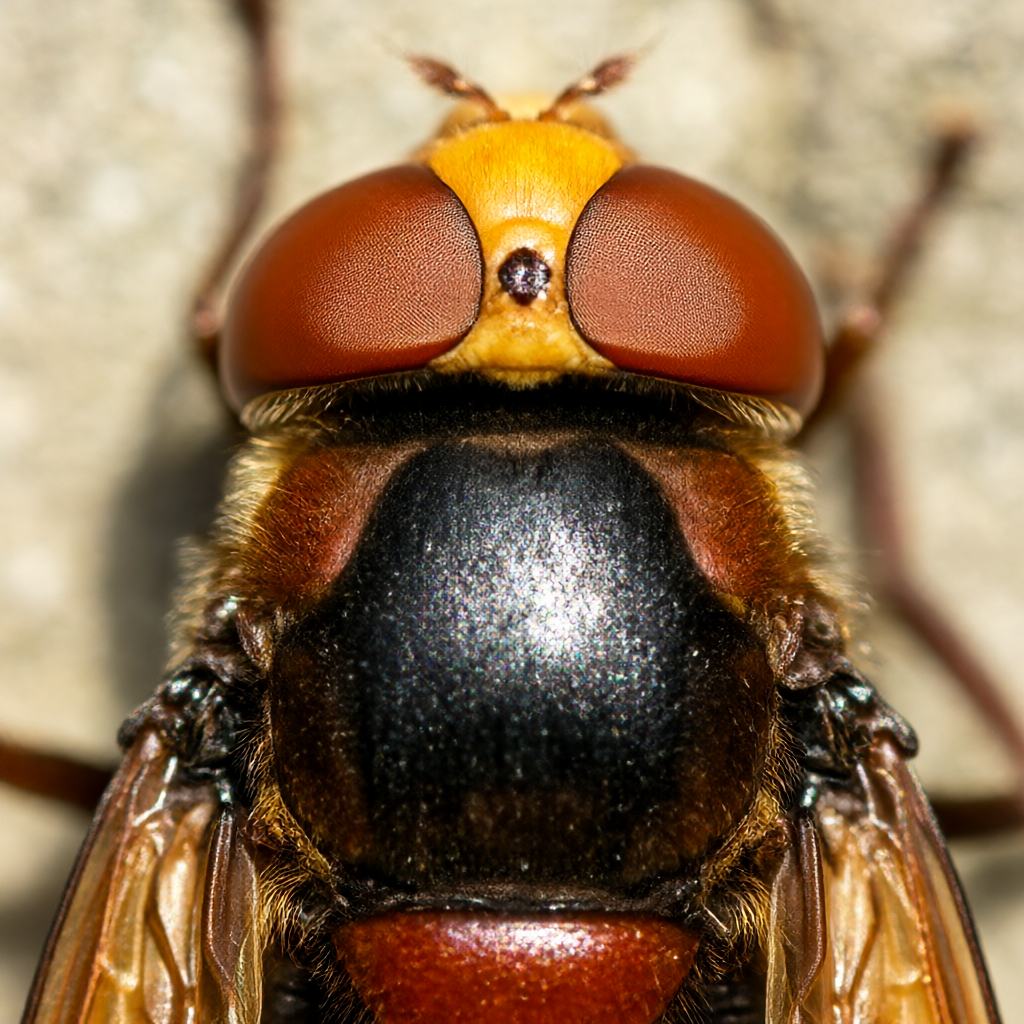
Adults reach 15 to 22 mm in length, while the wingspan runs wider still. Wide orange bands cross the abdomen, and a pale collar marks the front of the thorax. Because the eyes meet at the top of the head, a male can be told at a glance.
A dark stripe marks the face, while the antennae stay short and orange. Wings stay clear and wide, and they spread at rest rather than folding flat. Hair covers the whole body, and the colour follows the banded pattern.
Females run larger than males, while their eyes stay apart. Legs stay dark, and the hind pair carries flattened joints.
1
2
3
Warm sheltered edges
Where it lives
Woodland edge, hedgerow and garden hold the species. Adults need open flowers, while larvae need a wasp nest. Because the female searches for a nest entrance, a garden with a hornet colony draws her in.
Warm sites suit the fly, since the species spreads north only in mild years. Parks and churchyards now carry it, while dense forest stays empty. A Asian Hornet builds a large nest each year, and both insects share the same warm woodland edge.
Nectar, larvae in nests
What it eats
Nectar makes up the adult food. It visits umbellifers, buddleia and thistle, though it takes little pollen. Because the mouthparts stay short, the insect feeds on open flowers rather than deep tubes. The larva eats detritus inside a wasp nest, and it takes food that the wasps discard.
A larva that grows too large may turn to the wasp brood itself. Adults fly from July into September, while the nest stays active. Few live long.
One brood a year
The breeding cycle
A female enters a wasp nest when the workers stay busy elsewhere. She lays eggs among the debris at the bottom of the comb. The eggs hatch within days, and because the wasps keep the nest warm, the larvae grow faster than they would outside.
Because the larva lives as a scavenger, the wasps leave it alone. The larva pupates in the soil below the nest, while the colony dies back in autumn. One generation follows each year in the north.
One brood only. Adults emerge the following summer, and they feed before mating.
Moving north
Conservation
The Red List has not assessed the species. No survey finds a fall, since the insect has spread north over recent decades. Because the larva depends on wasp nests, a garden that removes hornets removes the fly too.
Wasp control therefore costs the species breeding sites, though the effect stays local. Nothing suggests a decline anywhere in the range. Flower-rich gardens now hold the species, and the trend runs upward.
Side by side
How It Compares
| Trait | Hornet Mimic Hoverfly | European Hornet |
|---|---|---|
| Order | Diptera | Hymenoptera |
| Length | 15-22 mm | 25-35 mm |
| Waist | broad | narrow |
| Sting | none | present |
| Larva | a scavenger in wasp nests | a worker raised in the colony |
| Rating | Not assessed | Not assessed |
Common misreadings
What People Get Wrong
- Not a hornet. The waist settles it. Hornets carry a narrow waist between thorax and abdomen, while the hoverfly runs broad the whole way, and the eyes also meet in the male fly.
- Not a parasite that harms the colony. The larva cleans up. It lives among the debris at the bottom of the comb, and because the wasps ignore a scavenger the fly raises its young inside a guarded nest.
- Not a southern insect only. Its range keeps moving north. Warmer summers have carried it across southern England, and because gardens now hold both the fly and its host the species keeps spreading.
Going further
Sources and Further Reading
Quick hits
Five things to remember
- It is Europe’s largest hoverfly.
- It mimics a hornet.
- Its larva lives in wasp nests.
- Its eyes meet at the top.
- It has spread north with warm summers.