 By Iris
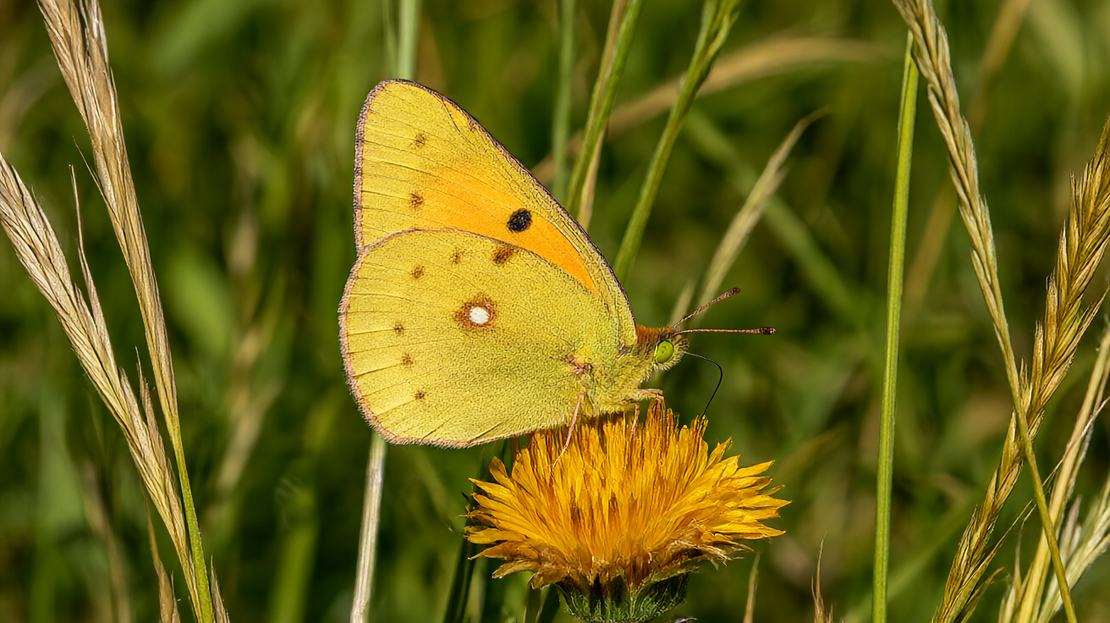
Colias croceus | Clouded Yellow
Species Profile · Pieridae
Clouded Yellow
A strong yellow butterfly crosses a meadow with its wings held shut and never settles for long.
Least Concern
Wingspan
Border
Broods
Eggs
Underside
Rating
The Clouded Yellow
The migrant that never stays
A strong flier crosses a meadow with yellow wings held shut. Its upper surface shows orange yellow, while a dark border runs along each wing. It never stays still. An observer sees colour more than pattern, and a still frame hides the border.
It arrives from the south each spring, and it never survives a cold northern winter. Breeding runs through the summer, and the last brood flies south again. A male reflects ultraviolet light from the wing surface, and a female reads that signal from a distance.
Family tree
Pieridae, the whites and sulphurs
Its proper name is Colias croceus, one of the clouded yellows. Its family holds the whites and the sulphurs, and most of them carry pale wings. A Common Blue Butterfly shares the same grassland, and both species depend on legume plants.
Because the family feeds on plants in one group, a field of clover draws both. Two close forms are named, and one of them stays pale in the female. Early writers grouped every yellow butterfly together, which later work split apart.
Wings, border and spots
How to tell one
Wingspan runs 5.2 to 6 cm. Upper wings carry orange yellow, and a broad dark border edges each one. Because the border holds a row of pale spots, the pattern breaks up the outline in flight.
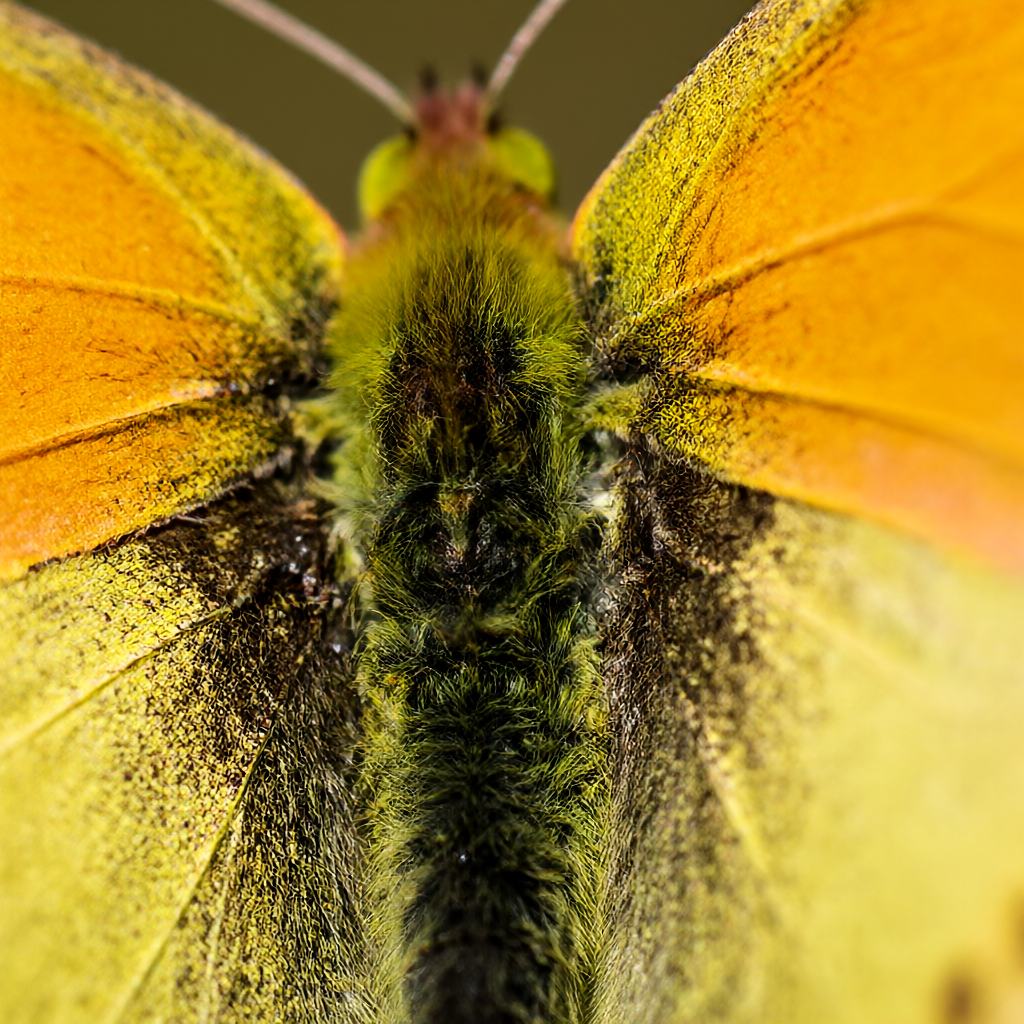
The underside shows greenish yellow, and it hides the insect against leaves. One dark spot sits on the forewing, and it differs in size between the sexes. Its body carries dense hair, and the colour matches the wings.
Antennae end in a small club, and they stay short. Females run larger than males, and pale females occur in most broods.
1
2
3
Open flowery ground
Where it lives
Flowery grassland and coastal cliff hold the species in summer. The butterfly needs clover and lucerne, and it lays on both. Because the larvae feed on legumes, a field of planted fodder draws the species inland.
Migrants arrive along the coast in May, and they spread north with warm air. Most keep moving. Its last brood moves south in autumn.
It crosses the sea to the Mediterranean, and the crossing takes several days. A Glasswing Butterfly flies in Neotropical forest, and both species rely on wing colour rather than on size for defence.
Clover and trefoil
What it eats
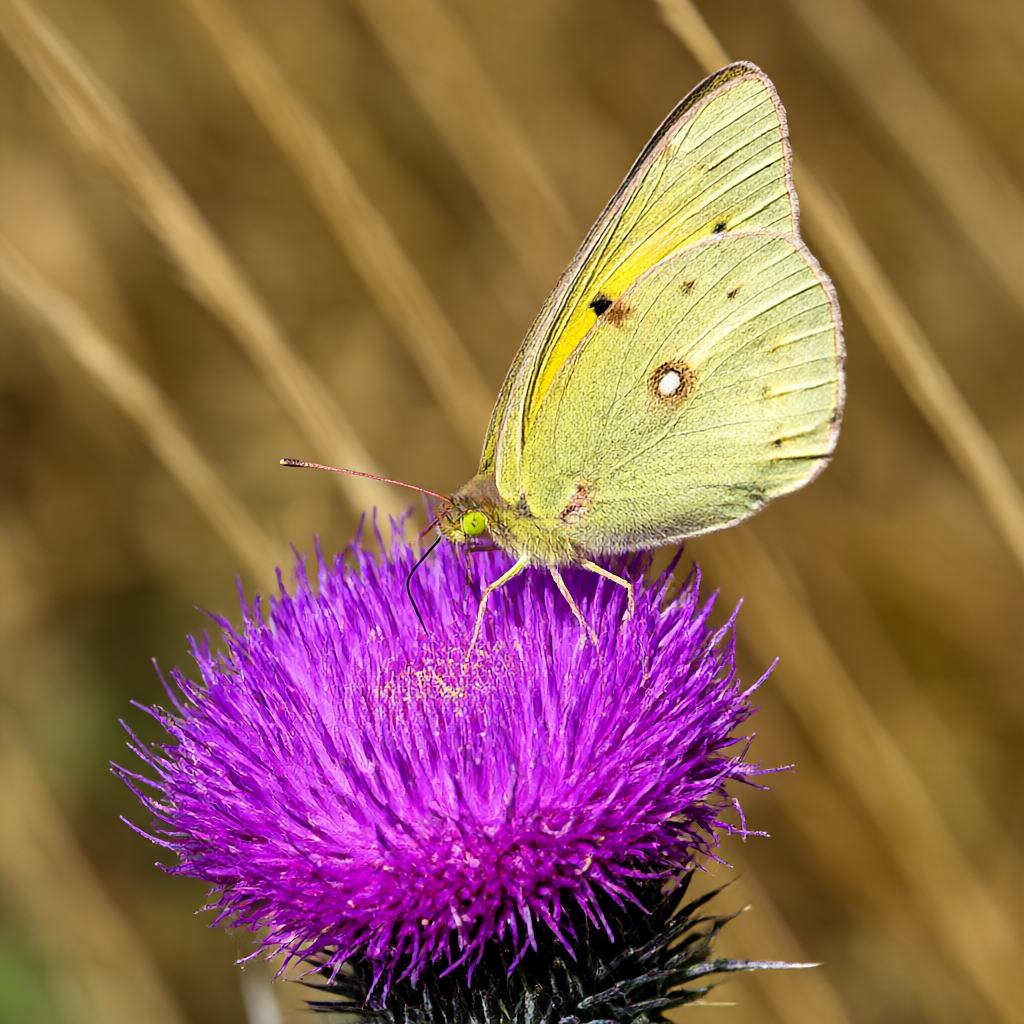
Nectar makes up the adult food. It visits thistle, knapweed and clover, and it feeds with wings closed. Because the tongue runs long, the insect reaches nectar that short tongued species cannot.
Larvae take clover leaves, since they strip a plant within days. A female lays single eggs on the underside of a leaf. Caterpillars feed at night in warm weather, and they rest along a stem by day.
Two or three broods
The breeding cycle
A male patrols a patch of flowers and meets a female in flight. The pair settles in grass, and the female then lays alone. Eggs go down one at a time.
Larvae never crowd a single plant, and each one finds enough leaf. Two or three broods follow through the summer. Broods overlap.
The last brood produces adults that fly south rather than breed. Cold winters kill every stage. The northern range depends on fresh arrivals, and each spring brings new ones.
Weather, not people
Conservation
The Red List calls the species Least Concern. No survey finds a steep fall across the range. Because the butterfly migrates, a bad year in one country says little about the whole group.
Farmland loses clover as fodder crops change, and that removes larval food, though the species also breeds on wild legume. Chemical spray kills larvae on field margins. Nothing suggests a decline large enough to worry about.
Side by side
How It Compares
| Trait | Clouded Yellow | Common Blue |
|---|---|---|
| Family | Pieridae | Lycaenidae |
| Wingspan | 5.2-6 cm | 2.5-3.5 cm |
| Colour | orange yellow | violet blue |
| Border | broad and dark | thin and dark |
| Migration | crosses from the south | stays put |
| Rating | Least Concern | Least Concern |
Common misreadings
What People Get Wrong
- Not a resident. The northern range refills each spring. Adults arrive from the south through the warm months, and because no stage survives a cold winter the population north of the Alps starts again every year.
- Not a still insect. The butterfly rarely settles. It keeps the wings shut at rest and moves between flower heads without a pause, and because the flight stays fast an observer sees colour rather than pattern.
- Not a common sight every year. Numbers swing widely. A good summer brings the species north in thousands, and because a bad year leaves almost none the counts rise and fall without warning.
Going further
Sources and Further Reading
Quick hits
Five things to remember
- It migrates north each spring.
- It cannot survive a cold winter.
- Males reflect ultraviolet light.
- Larvae eat clover.
- It flies with wings closed.
[…] type species of Cordulegaster. It is a relative of the broader dragonfly fauna that includes the Emperor Dragonfly, though the golden-ringed is tied to flowing water rather than still ponds. It is also share of the […]
[…] the black markings on the abdomen. It shares ponds with the broader dragonfly fauna, including the Emperor Dragonfly, and with the Banded Demoiselle, another damselfly of waterside plants. No subspecies are formally […]