 By Iris
Uromastyx aegyptia | Egyptian Spiny-tailed Lizard
Species Profile · Agamidae
Egyptian Spiny-tailed Lizard
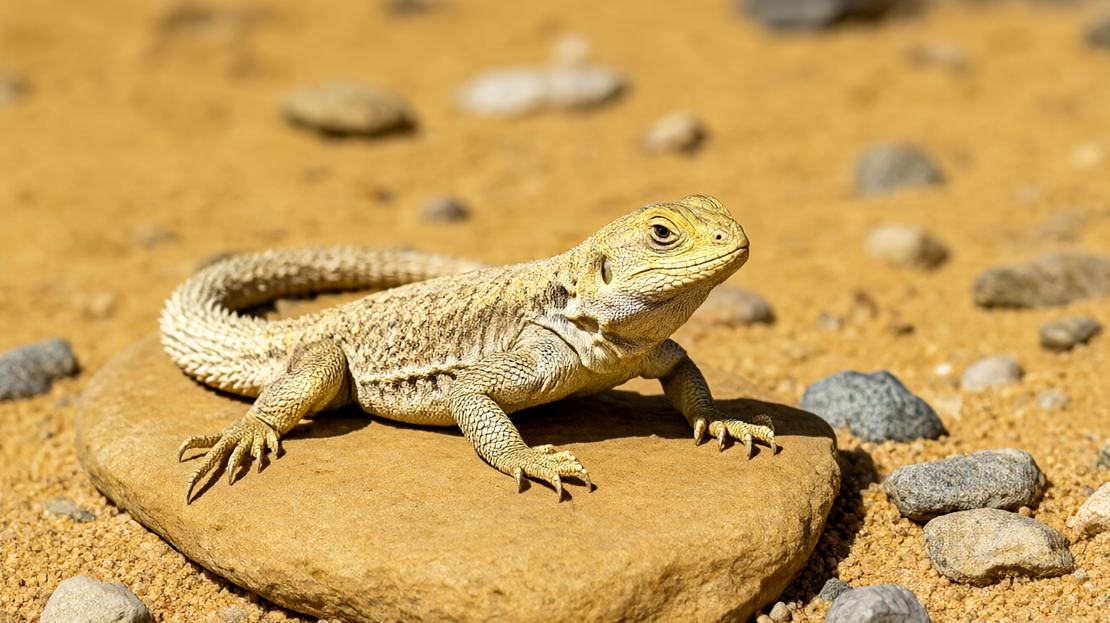
A pale lizard basks on a flat rock, and its thick tail carries rings of spines.
Least Concern
Length
Tail
Eggs
Incubation
Diet
Rating
The Egyptian Spiny-tailed Lizard
The lizard with a spiked club
A heavy lizard lies flat on a rock with its head raised. Its tail carries rings of stout spines, while the body stays pale and loose skinned. Because the tail holds fat, a well fed animal shows a thick base.
It basks until the body reaches a temperature that would kill most reptiles. Burrows run deep below the rock, and the animal retreats there at midday. This lizard eats plants rather than insects, which sets it apart from most of its size.
Family tree
Agamidae, the agama family
Its proper name is Uromastyx aegyptia, one of the spiny-tailed lizards. Its family holds the agamas, while the genus stays restricted to dry country. A Red-headed Agama runs over African rock, and both lizards belong to the same family.
Because the group split long ago, one line turned to plants while the other kept to insects. Two subspecies are named, and they differ in the amount of yellow on the head. Early writers placed the species with the iguanas, while later work corrected the family.
Tail, head and skin
How to tell one
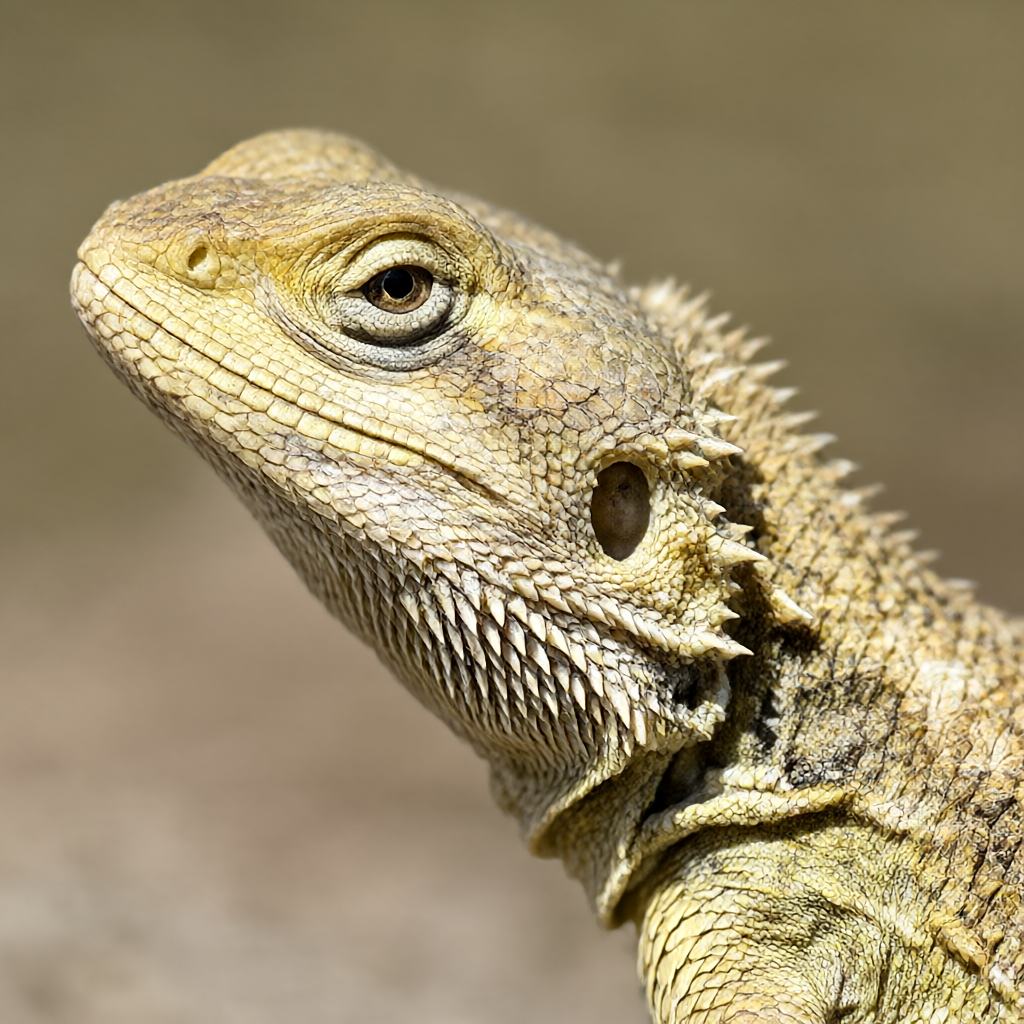
Adults reach 40 cm from snout to tail tip, while large males pass 70 cm. Twenty or more rings of spines cover the tail, and each one overlaps the next. The tail works as a club.
The lizard swings it at anything that follows it into a burrow. Heads run pale yellow in old males, while females stay duller. Skin hangs loose at the neck, and the folds swell when the animal inflates.
Legs stay stout, and the toes carry strong claws. Fine scales cover the body, while the tail carries the heavy ones. Males run larger than females, and their tails grow thicker.
1
2
3
Rock and desert
Where it lives
Stony desert and dry wadi hold the species across northeast Africa. Egypt, Sudan and Saudi Arabia make up most of the range. It digs a burrow in hard ground, while it basks on rock beside the entrance.
A deep burrow stays cool through the day. It never overheats, since the animal retreats there. Because the species needs both rock and soil, a flat gravel plain rarely carries it.
Burrow systems run deep, and several animals may share one. The burrow stays cool. A Mojave Desert Tortoise lives in North American desert, and both species rely on flat ground and dry air.
Plants, not insects
What it eats
Plants make up almost the whole diet. The lizard takes leaves, seeds and flowers, while it rarely touches insects. Because desert plants hold water, the animal can live without drinking.
A feeding lizard clips a stem with its jaws. It chews with slow side to side movements, and the stem goes down. The species feeds in the morning, while it rests through the hottest hours.
Young animals take more insects than adults, since they need protein to grow. A young lizard that finds a termite trail returns to it daily, and because the food moves, it must search again each morning.
Twenty eggs underground
The breeding cycle
A male claims a burrow system and defends the entrance. She lays about twenty eggs in a chamber underground. The clutch stays buried, and the soil holds the warmth.
Because the eggs stay buried, the sun never touches them, and the soil holds a steady warmth. Incubation runs for about two months, while the female guards the burrow. Hatchlings emerge at about 8 cm, and they dig small burrows of their own.
It matures slowly, and it may live past thirty years. Growth stays slow.
Hunted for meat
Conservation
The Red List calls the species Least Concern. Collection for the pet trade takes animals from the wild, while the law covers the species in most countries. Because the lizard breeds slowly, a removed adult leaves a gap that lasts years.
Habitat loss follows grazing and off road traffic, though the desert stays vast. Nothing suggests a rapid fall across the range. Protected areas hold stable groups, and captive breeding now supplies some of the trade.
Side by side
How It Compares
| Trait | Egyptian Spiny-tailed Lizard | Red-headed Agama |
|---|---|---|
| Family | Agamidae | Agamidae |
| Length | 40 cm, males past 70 | 30-38 cm with tail |
| Diet | plants | insects |
| Tail | thick and spined | thin and whippy |
| Eggs | about twenty | 5-10 |
| Rating | Least Concern | Least Concern |
Common misreadings
What People Get Wrong
- Not an insect eater. Adults take plants almost entirely. The species is the only agama that lives on vegetable matter, and because desert plants hold water the lizard can go months without drinking anything at all.
- Not a fast runner. It relies on the burrow. Flat rock gives it a basking spot and a burrow gives it cover, and because the spined tail blocks the entrance a pursuer cannot pull it out.
- Not a daytime forager in heat. It retreats at midday. It feeds in the cool hours and stays underground through the worst of the sun, and because the burrow holds a steady warmth the eggs develop without any help.
Going further
Sources and Further Reading
Quick hits
Five things to remember
- Its tail carries spiny rings.
- It eats plants, not insects.
- It stores fat in the tail.
- It basks at 40 degrees.
- It may live past thirty years.
[…] genus. Phasianidae is the family, the same group that holds pheasants, partridges and chickens. A Common Pheasant occupies the same kind of ground at low altitude, though it never reaches the heights this bird […]