 By Iris
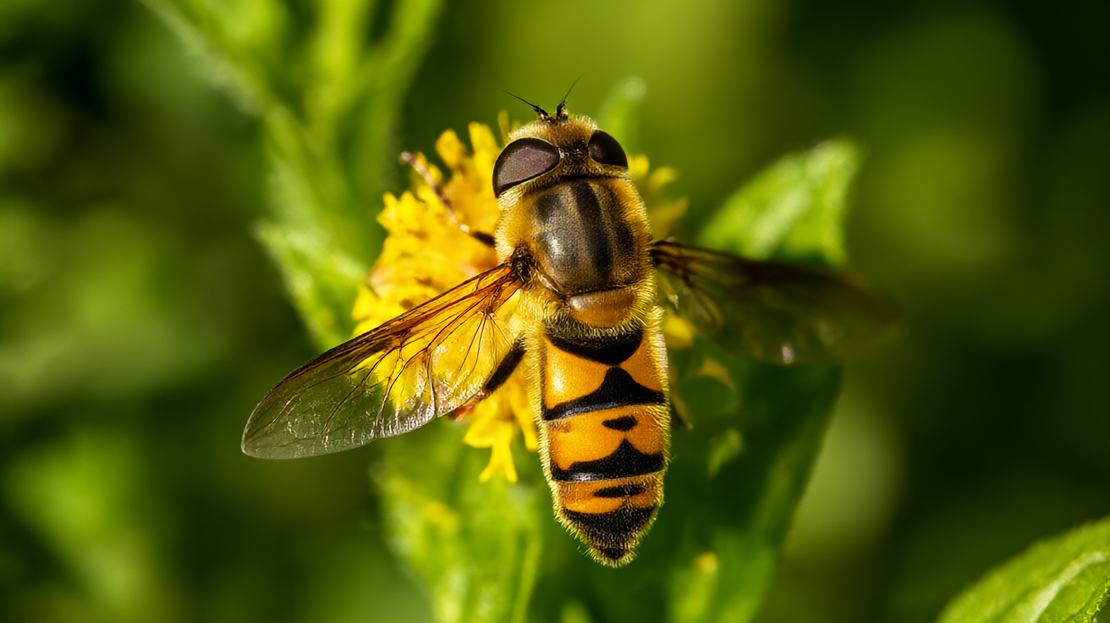
Eristalis tenax | Drone Fly
Species Profile · Syrphidae
Drone Fly
A stocky fly hovers in front of a flower, and its orange bands look exactly like a honeybee.
Not assessed
Length
Pattern
Eyes
Larva
Sting
Rating
The Drone Fly
A bee with no sting
A stocky fly hovers in front of a flower and then settles on the head. Orange bands cross the body, and the pattern matches a honeybee closely. Because the fly carries no sting, the disguise does the work for it. A bird that has met a bee leaves this insect alone.
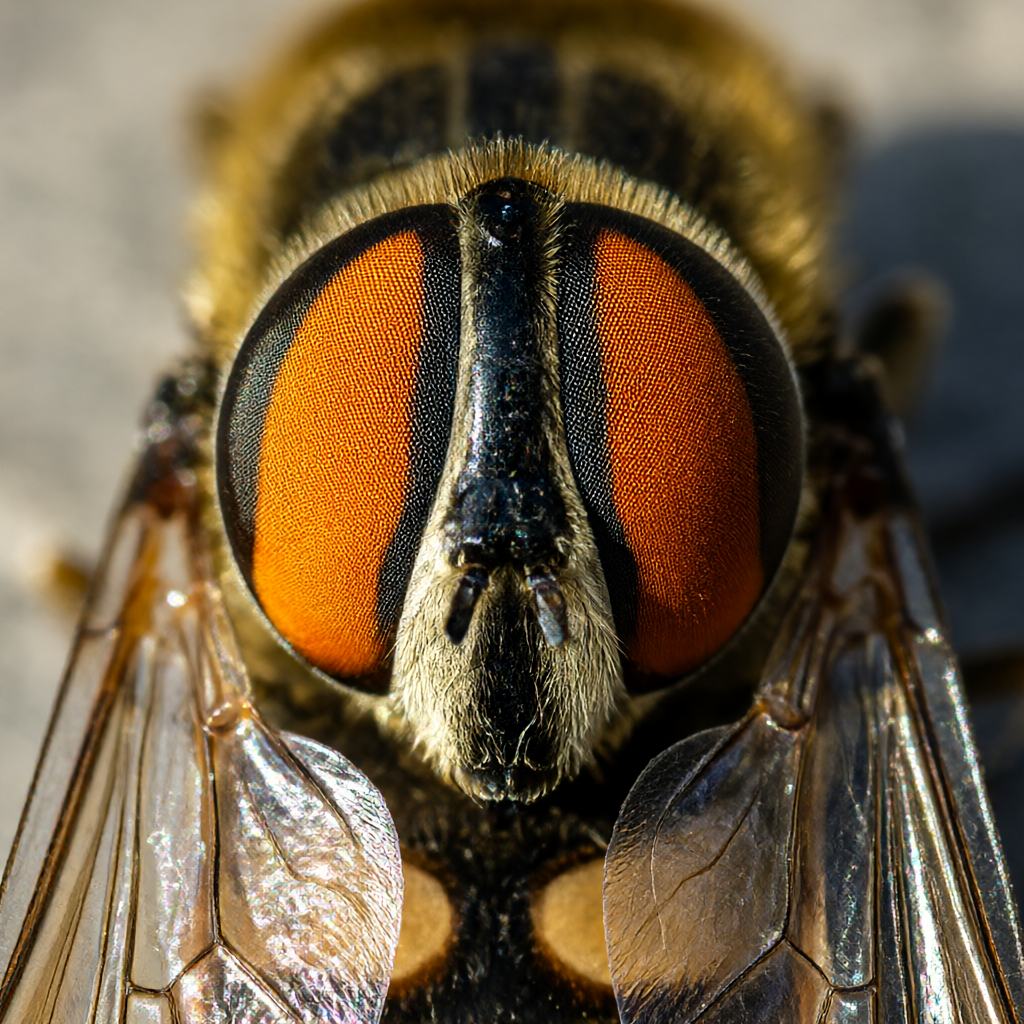
The lesson sticks, because the pattern holds at a glance. Two dark bands of hair cross each eye, and they mark the male. It appears in gardens through the year, since adults survive mild winters.
Family tree
Syrphidae, the hoverflies
Its proper name is Eristalis tenax, one of the drone flies. Its family holds the hoverflies, and most of them feed on nectar as adults. A Honey Bee carries a sting that this fly lacks, and the resemblance therefore pays only in one direction.
Because the two share a shape and a colour, birds learn one lesson and apply it to both. Two subspecies are sometimes named, though the difference stays slight. Early writers put the species with the bees, while later work placed it among the flies.
Bands, eyes and wings
How to tell one
Adults reach 14 to 17 mm in length. Orange and black bands cross the abdomen, while the thorax stays dark and hairy. Eyes meet at the top of the head in males, since the two halves touch.
Because a dark stripe crosses each eye, the insect looks marked rather than plain. Wings stay clear, and they spread wide at rest. Legs run dark, and the hind pair carries flattened segments.
Dense hair covers the body, and it traps pollen. Females run larger than males, while their eyes stay apart.
1
2
3
Gardens and wet ground
Where it lives
Gardens, hedgerows and field margins hold the species. Adults need flowers, while larvae need still water. Because the larva lives in foul pools, a farmyard drain suits it as well as a marsh.
Cattle troughs and puddles of slurry carry the young stages. Adults range widely, since they fly several kilometres in a day. It lives on every continent except Antarctica, and shipping carried it to the rest.
Nectar, then dung
What it eats
Nectar makes up the adult food. It also takes pollen, while the larva feeds on bacteria in rotting water. Because the larva lives where oxygen runs short, it carries a long tube to the surface.
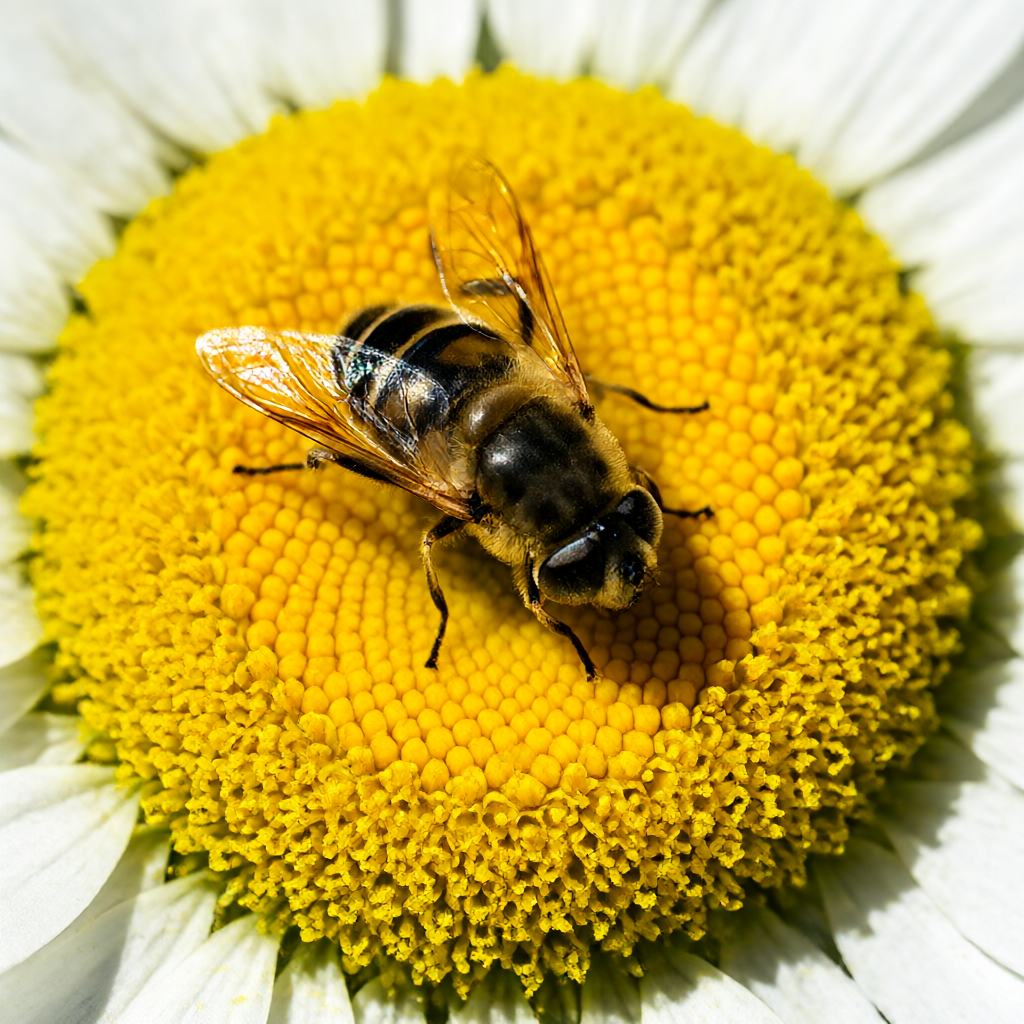
The adult hovers in front of a flower, then settles and feeds. A female needs pollen for the eggs, and she visits many flowers in a day. Bees and hoverflies both carry pollen, while only the bee stores it in a nest that the colony defends.
Larvae in dirty water
The breeding cycle
A male holds a patch of flowers and chases other males from it. She lays single eggs near foul water, while the larvae hatch within days. Because the larva breathes through a long siphon, it survives in water that would drown most insects.
Pupation happens in damp soil above the waterline. Adults emerge through the summer, and they feed before winter. It overwinters as an adult, and it shelters in sheds and hollow trees.
Not assessed
Conservation
The Red List has not assessed the species. No survey finds a steep fall, since the insect uses farms and gardens alike. Because the larva tolerates dirt, a clean pond matters less than a dirty drain. Spray kills adults on field margins, while the larvae survive in standing water.
Nothing suggests a decline across the range. A hoverfly that visits many flowers moves pollen further than a bee on one patch. Growers now count on it, and the service comes free.
Side by side
How It Compares
| Trait | Drone Fly | Honey Bee |
|---|---|---|
| Order | Diptera | Hymenoptera |
| Length | 14-17 mm | 12-15 mm |
| Wings | one pair | two pairs |
| Sting | none | barbed in workers |
| Young | a larva in foul water | a larva in a wax cell |
| Rating | Not assessed | Not assessed |
Common misreadings
What People Get Wrong
- Not a bee. The fly carries one pair of wings. A bee flies on two pairs hooked together, while the drone fly manages on a single pair, and the two flat pads behind the wings give the difference away.
- Not a social insect. This one lives alone. The female lays her eggs and leaves, and because the larva feeds in foul water it never meets another of its kind until it matures.
- Not a rare garden insect. The species uses almost any wet spot. Dirty drains and farm troughs will do, and because the larva breathes through a long tube it survives water that would drown most insects.
Going further
Sources and Further Reading
Quick hits
Five things to remember
- It mimics a honeybee.
- Its larva lives in foul water.
- The larva breathes through a tube.
- Its eyes carry two dark bands.
- It pollinates crops.