 By Iris
The Kingdom of Kandy | The Last Kingdom of Sri Lanka
Historical Profile · Sri Lanka
The Kingdom of Kandy | The Last Kingdom of Sri Lanka
A kingdom in the central hills held out against three European empires for three hundred years, and lost to a lawyer’s paragraph rather than a battle.
AD 1469-1815
Founded
Relic
Sieges
Treaty
End
The big picture
Introduction
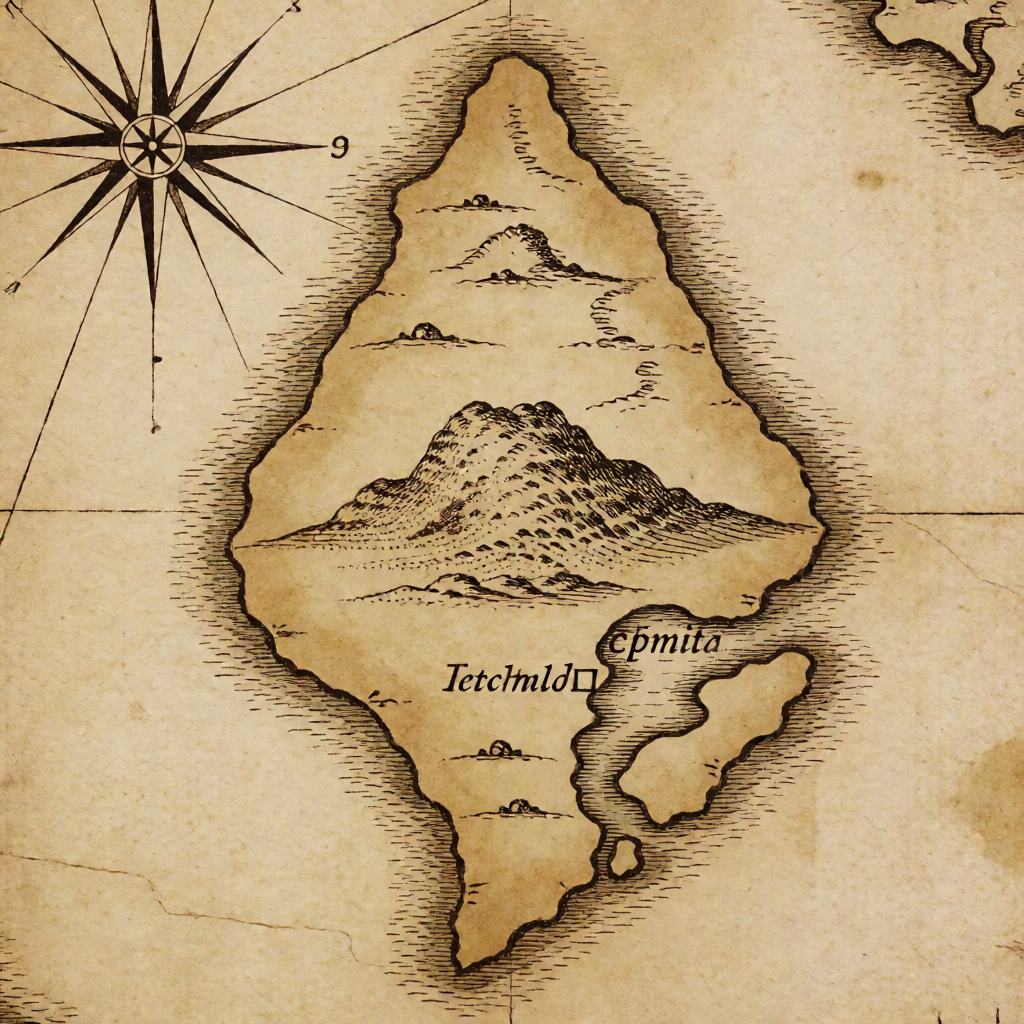
One small kingdom in the hills of Sri Lanka outlasted every coastal state. Kandy held the last free ground in South Asia until 1815. Mountains did most of the work. Steep passes and a town no ship could reach made the place costly to take.
Three foreign armies tried, and none took it by storm. High ground bought time. One signature ended the kingdom in an afternoon. That contrast is the story of Kandy, and it explains why a small state lasted longer than empires ten times its size.
Rulers who held the passes, fed their own men and outlasted the fever season could keep an army out for years. Distance helped as well, since no fleet could sail to a hill town.
Setting
Historical Context
Trade made the island rich for a thousand years before any European ship came. Arab, Indian and Chinese traders called for pearls, gems and spice. Power had moved inland long before, though the ports stayed rich. Early capitals ruled the dry plains, and their tanks fed huge crowds. Raids from south India broke both of them.
Rule moved southwest to Kotte, then inland again in the fifteenth century. Its capital began as a refuge. Its founders chose a valley ringed by ridges, with rivers on three sides. Fleets could take a port in a week. Reaching the valley took an army a month, and the army arrived sick.
Ships from Majapahit had called for gems long before the Portuguese came. Two roads met near the valley, and both could be blocked. Rain turned the slopes to mud. Water, good soil and room for grain let a court sit there, so that no food had to be shipped in.
Turning points
Key Events
Lisbon’s ships reached Colombo in 1505. Within a century they held the coast and had burned Kandy twice. Neither burning changed the balance. Kandy answered with hill fighting and with allies who shifted as needed. Dutch envoys signed a treaty in 1638, trading help for the coast. Dutch power then replaced Lisbon’s power on the shore. Tribute terms were quietly rewritten, though nobody in Kandy signed them.
By 1766 the Dutch held the coast outright. Britain took those holdings in 1796. British troops pushed into the hills in 1803 and failed badly. Twelve years later, a quarrel over the crown split the court. One claimant asked for British help, and the rest watched. The Kandyan Convention of 1815 handed the kingdom to Britain, and it promised to guard local law. Rebellion came in 1818 and was crushed within a year.
Ceylon became a crown colony, so that a hill kingdom turned into a province. No one signed a peace in 1818. Dutch help arrived late in 1638, and thus a coastal war became an inland one. Each treaty gave the coast away in exchange for help that never came in time, and each round left Kandy weaker. Those terms looked generous, yet every clause gave Britain a lever.
1
2
3
Who held power
People and Powers
Kingship rested on two pillars: descent and the relic. The Temple of the Tooth held a tooth said to be the Buddha’s. Whoever guarded that shrine held a claim no rival could match. Ceremony could settle what war could not. Below the king sat landed lords holding districts for service.
Village headmen ran local affairs and settled most disputes, since courts sat far away. Caste shaped labour, and land, water and duty came bundled together. Nobles who lost a case could lose a district, and water rights with it. Foreign powers found the same weakness each time. Grievances made useful allies, and every court had one.
Treaties signed in a temple were still treaties. Nobody in Kandy thought a foreign power would read the fine print. Anyone who held the relic held the ritual year, and the ritual year set both planting and taxes. Priests blessed the fields before sowing, because a bad harvest could shake a throne. Both sides read the same treaty in different tongues, and as a result both remembered different promises.
Everyday world
Daily Life and Society
Grain framed the year. Wet fields grew the main crop, while dry slopes grew less. Every household owed labour to the king or to a temple. Water came first in any dispute. Village channels fed terraced fields. Families that lost their share lost their harvest.
Losing water hurt more than losing land, because water could not be bought back. Houses were timber and mud, roofed with thatch. Marriage joined two villages as much as two people. Guest lists mapped duty, and a missing name was a message. Lessons ran through the temple, where monks taught letters and sums. Boys of rank learned to read on a flat rock.
Girls learned household accounts and the names of every kin duty. Dress marked rank more clearly than wealth did. Households that fell out of favour could lose a share of the channel, and that loss meant a thin year. Work in the fields was shared, still the shares were never equal.
Craft and ideas
Trade, Technology and Ideas
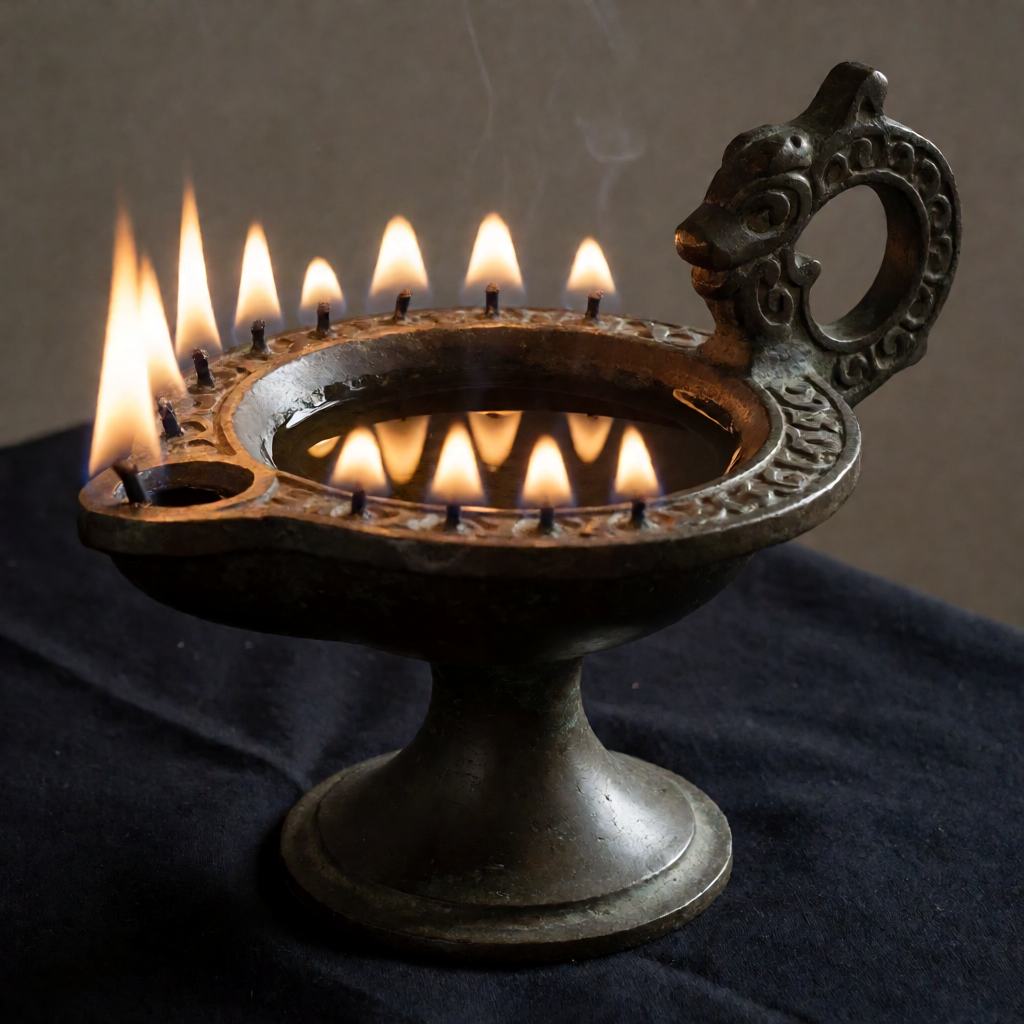
Hills here gave spice, gems and graphite. Cinnamon grew wild in the wet zone and became the richest export. Kings held that trade in their own hands and used it as a lever. Whoever gave away cinnamon gave away revenue. Smiths cast temple bells and bronze lamps. Builders raised the wooden halls of the palace without nails. Their joints flexed in tremors, and the halls stood.
Temple workshops trained their own learners, and those skills stayed in families. Monk orders were restored from Ayutthaya in the eighteenth century. Older ties reached further west. Monk orders arrived with travel, and travel took months. Gupta Empire habits of monk study lay behind those links. Even so, the traffic ran both ways. Students went abroad as often as teachers came in.
Writing was done on prepared leaves, and the temples kept the only books. Scribes copied old texts and added notes in the margin. Spice was cut, dried and packed by hand, and only a few families along the wet slope knew the craft. Such know-how moved with the workers in turn. Kandy grew most of its own food, and in fact sold little beyond spice. No king planned it that way, yet the pattern held for centuries.
What lasted
Legacy
The Temple of the Tooth still sets the island’s ritual year. Each year a parade fills the streets of Kandy with dancers and drums. Once a year the relic leaves its shrine and circles the lake. Lawyers still cite the treaty of 1815, since it promised to guard local law. Hill farms now supply most of the island’s food.
Tea came later and reshaped the slopes, while the old steps survived above. Kandy is a country town now, crowded and plain, with a lake at its centre. What survives is a calendar, a temple and a habit of dispute about treaties. Tourists climb the hill above the lake for the view. From that height the passes are visible and the coast is not.
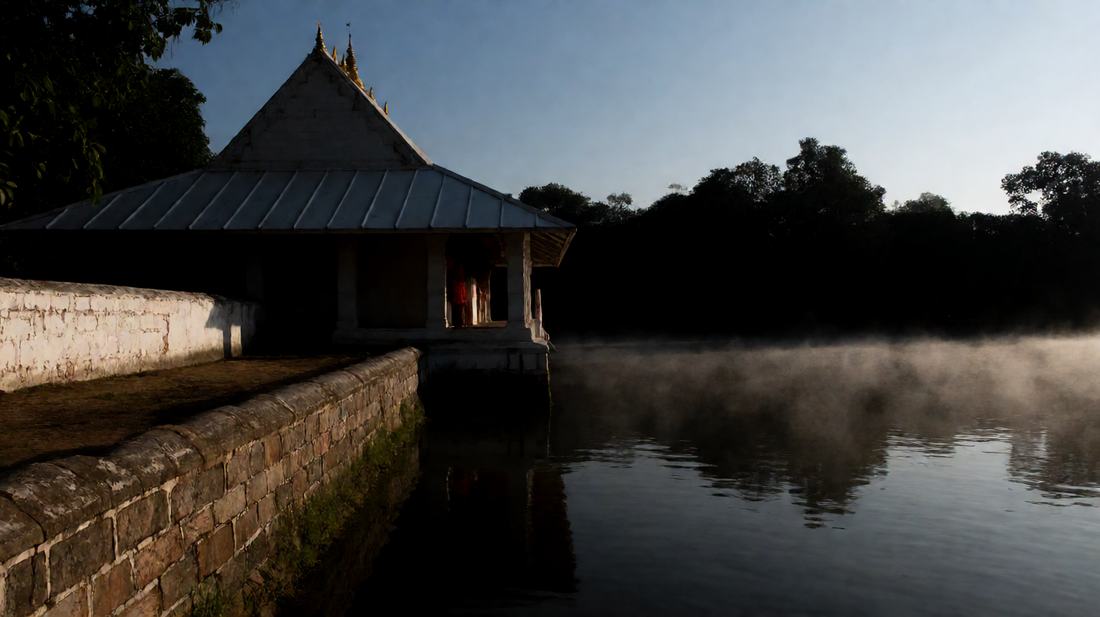
Rail reached the hills later, and a road climbed to the town soon after. Visitors who walk the lake road see a walled temple, a white wall and a town that has outgrown its old edge. Tourism is now the main trade, indeed the lake front is lined with hotels. Even so the old town keeps its shape.
Side by side
How It Compares
| Point | Kandy | Coastal Ceylon |
|---|---|---|
| Dates | AD 1469-1815 | AD 1505-1815 |
| Power | A king with a court | A company with a fleet |
| Seat | The hill capital | Colombo and the ports |
| Faith | Buddhist, with the relic | Christian missions on the coast |
| Army | Hill levies in jungle country | Regulars, ships and cannon |
| Money | Spice, gems and land | Freight and the spice monopoly |
Common misreadings
What People Get Wrong
- Kandy is usually called a kingdom that never fell. It fell in 1815, and it fell by treaty.
- The convention of 1815 is usually read as a surrender. It was written as a contract, and lawyers have argued over the wording ever since.
- The Dutch are usually said to have replaced the Portuguese. They replaced them on the coast and paid the same tribute for the same spice.
Going further
Sources and Further Reading
- Wikipedia, Kingdom of Kandy
- Encyclopaedia Britannica, Kandy. Encyclopaedia Britannica, Inc.
- de Silva, K.M. 1981. A History of Sri Lanka. Oxford University Press.
- Gooneratne, Y. 1968. English Literature in Ceylon. Tisara Prakasakayo.
Quick hits
Five Things to Remember
- Kandy held out until 1815, the last free kingdom in South Asia.
- Mountains and distance made the town almost impossible to storm.
- Portuguese, Dutch and British armies all failed at first.
- The Kandyan Convention of 1815 ended the kingdom by signature, not by siege.
- Rebellion in 1818 was the last armed bid to restore it.