 By st20113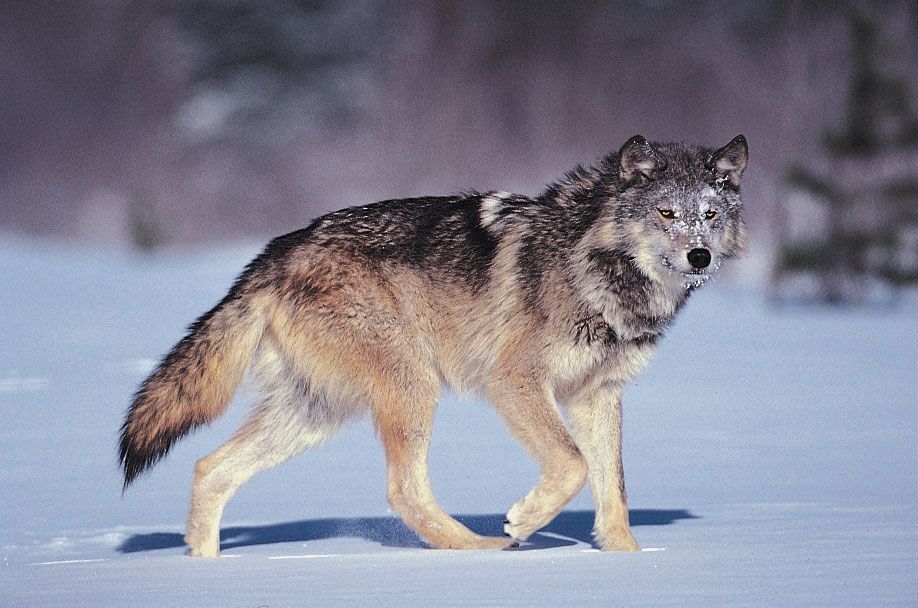
The gray wolf is the largest wild member of the dog family, a supremely adaptable carnivore that once ranged across most of the Northern Hemisphere, from tundra and forest to grassland and desert. An adult typically weighs between 25 and 45 kilograms, though the biggest individuals are larger, with a body built for travel: long legs, a deep chest, and large feet that act like snowshoes. Its coat, most often gray but varying to black, white, or reddish, insulates it against bitter cold, and its keen senses of smell, hearing, and sight make it a formidable hunter.
What most sets the gray wolf apart is its social life. Wolves live in packs, usually families made up of a breeding pair and their offspring from one or more years. The group is led by an alpha pair, the dominant male and female who are typically the only wolves in the pack to raise pups, though older siblings help feed and guard the young. Far from the ruthless tyrants of older stories, the alpha pair earns leadership through experience and bonding, and the pack functions through cooperation: members hunt together, share food, and greet one another with elaborate body language and facial expressions. When young wolves mature they may leave to find a mate and form new packs, spreading the species across the landscape.
Howling is the wolf’s signature means of long-distance communication. A howl can rally the pack, warn rival groups away from a territory, or help a lost member find its way home, and choruses of several wolves can sound like many more. Combined with scent marks left along the boundaries of their range, howling lets packs avoid costly fights by advertising their presence. Within the family, softer sounds, growls, and postures manage daily life and strengthen the bonds that hold the group together.
The ecological importance of the wolf became famous through the events at Yellowstone National Park. Wolves had been eliminated from the park by the early twentieth century, and in their absence populations of elk grew unchecked, over-browsing young trees and streamside plants. In 1995 wolves were reintroduced, and over the following years their hunting changed the behavior of the elk, which began to avoid open valleys and riverbanks. That shift allowed willows and aspens to recover, stabilizing stream banks and creating habitat for beavers, birds, and fish. This chain of effects, in which a top predator reshapes an entire community, is called a trophic cascade, and it shows how the wolf belongs at the heart of a healthy ecosystem.
The gray wolf is also the ancestor of the domestic dog, the first animal humans tamed. Thousands of years ago, wolves that tolerated human camps were drawn into a partnership that produced the astonishing variety of dogs we know today, from herding collies to tiny companions. That shared history links the wild predator to human life more closely than almost any other animal. Like the brown bear, the wolf was long persecuted and driven from most of its former range, yet it has recovered across parts of Europe, North America, and Asia where people have chosen coexistence. As both a wilderness symbol and a keystone predator, the gray wolf illustrates how the return of a single species can heal the lands it once roamed.