 By Iris
Geronticus eremita | Northern Bald Ibis
Species Profile · Threskiornithidae
Northern Bald Ibis
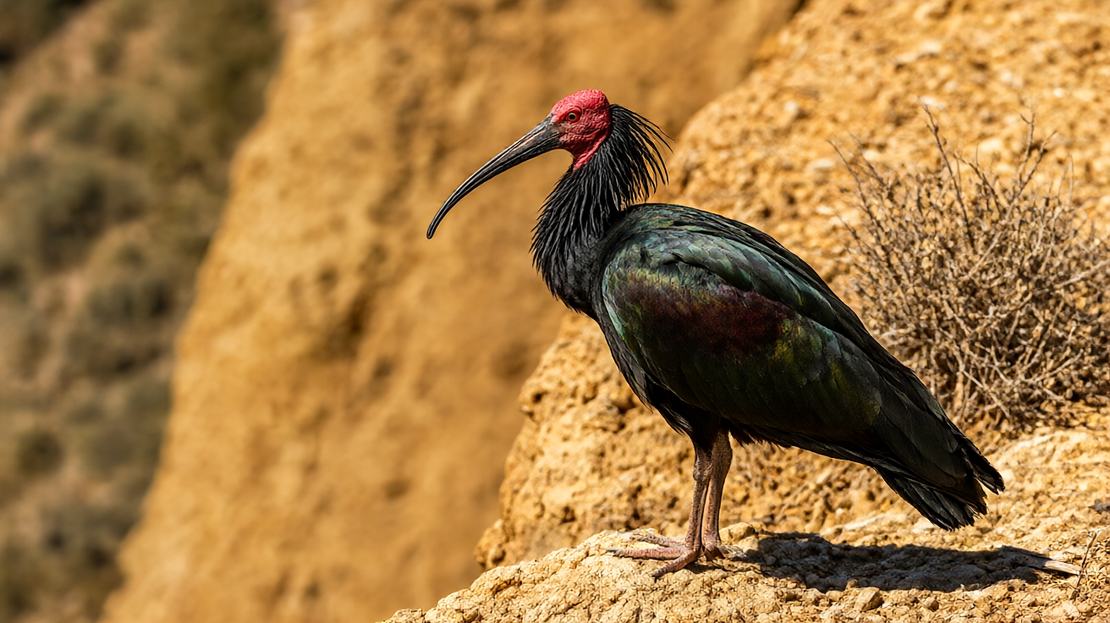
A dark glossy bird stands on a cliff ledge, and its bare red head carries no feathers at all.
Endangered
Length
Weight
Eggs
Fledge
Head
Rating
The Northern Bald Ibis
A wading bird that avoids water
A dark bird stands on a cliff ledge and turns a bare red head. Its head carries no feathers, and the skin wrinkles with age. Its bill curves down, and it probes cracks in the rock. Glossy plumage shifts from black to green in the sun.
Because the bird nests on cliffs, it needs no tree. A ruff of long feathers hangs from the neck, and it lifts in wind. It once nested across Europe and North Africa
Family tree
Threskiornithidae, the ibises
Its proper name is Geronticus eremita, one of two bald ibises. The family holds about thirty species, and most of them wade in marsh. A Scarlet Ibis feeds in South American wetland, and both birds carry the same curved bill.
Because the bird nests on cliffs rather than in reeds, it differs from every close relative. No subspecies are named, since the remaining groups stay close in form. Early writers placed it with the herons, which later work corrected.
Bill, head and ruff
How to tell one
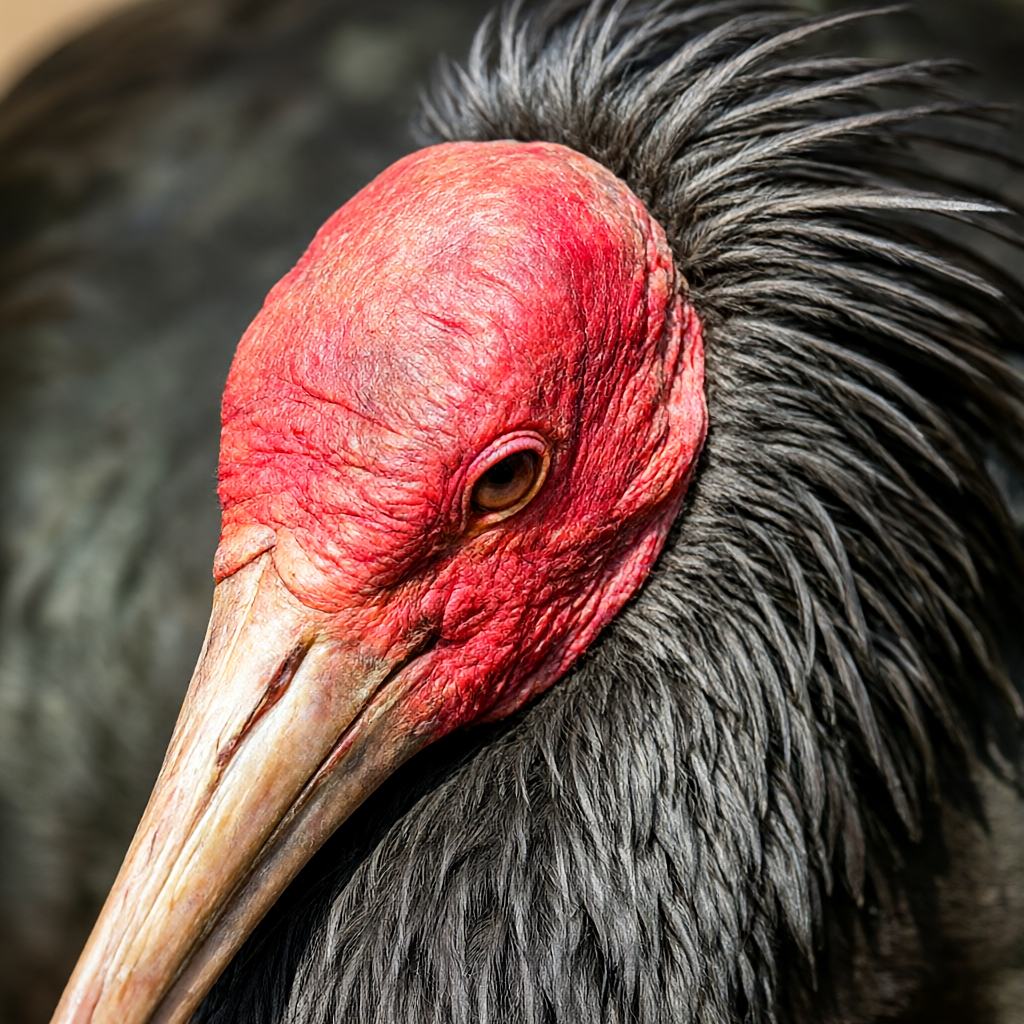
Adults reach 80 cm from bill to tail tip. Weight falls between 1 and 1.3 kg. Its face stays bare and red, and the skin darkens in the breeding season.
A long curved bill runs thin at the tip, and it works like tweezers. Because the plumage carries a metallic sheen, the bird looks green at one angle and black at another. Wings run broad, and the tips spread into fingered ends.
Legs stay short and dark red, and the toes grip a ledge. Its neck carries a ruff of long feathers, and the ruff rises when the bird calls.
1
2
3
Cliffs and dry ground
Where it lives
Arid coastal cliff and dry river valley hold the species. Morocco carries the wild population, and it numbers a few hundred birds. The bird feeds on dry ground inland, and it returns to the cliff at night.
Because the species needs both cliff and short turf, few sites suit it. A Eurasian Spoonbill sweeps the same kind of wet field, and both birds probe soft ground. Wadis matter in the dry season, since insects gather at the damp edges.
Larvae and beetles
What it eats
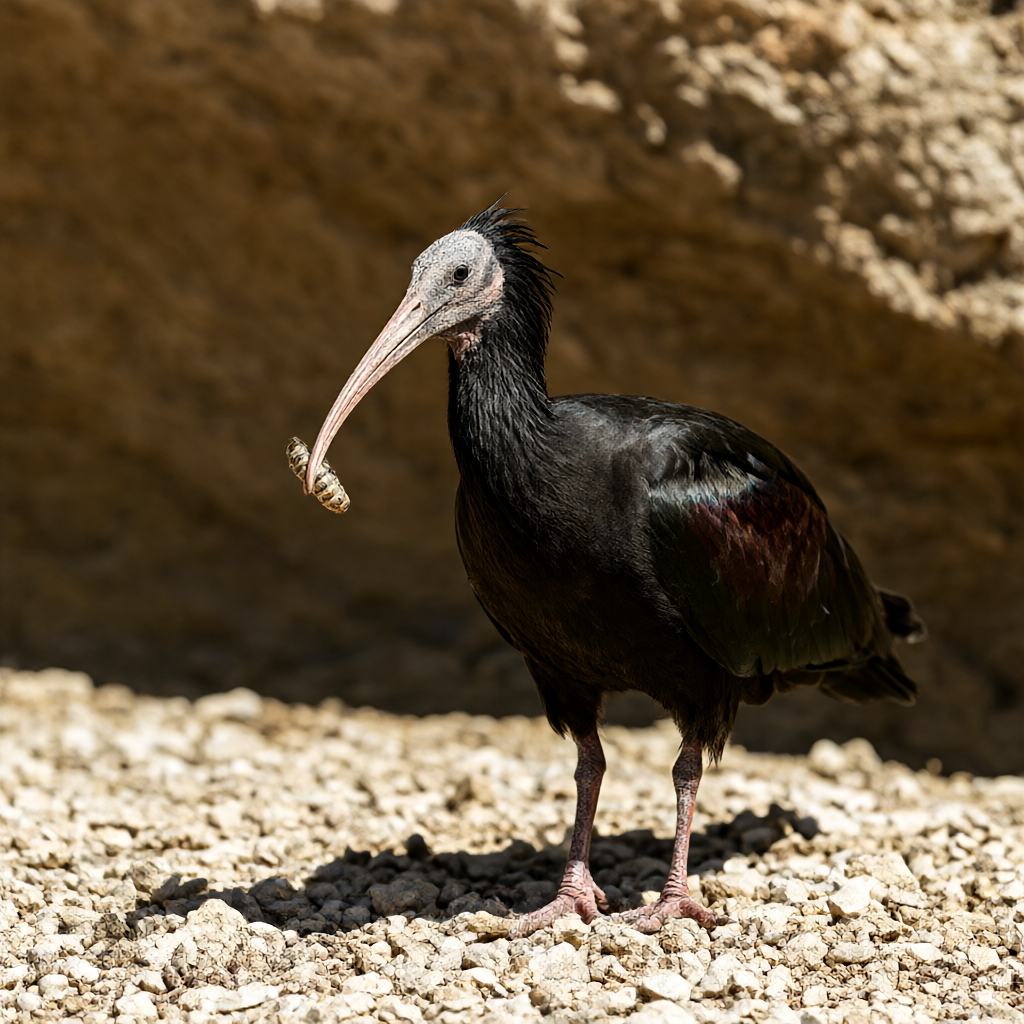
Insects make up most of the food. The bird takes beetles, grasshoppers and larvae from bare ground. Lizards and frogs get eaten when the chance comes. Because the bill works like a probe, the bird feeds in stubble and in dry turf.
Birds walk forward in a line, and each one stabs at the ground. Because the bird probes dry turf, it takes prey that a stork would miss, and a field grazed short suits it best. Chicks take soft insects for the first weeks.
A small colony
The breeding cycle
A pair nests on a cliff ledge, and several pairs gather in a colony. The female lays two to four eggs on a bed of sticks. Both parents feed the chicks, and they brood in turns. Because the colony stays small, one bad season costs many chicks.
Young birds fledge after about seven weeks. Birds breed at three years, and they may live past twenty. A chick that falls from the ledge dies, and because the nest sits on bare rock, the parents cannot build a rim to stop it.
Down to hundreds
Conservation
The Red List calls the species Endangered. Hunting and habitat loss removed the European and Turkish groups. Because the bird nests on cliffs, disturbance at one site can end a colony.
Hand-reared birds now follow a microlight south, and the route is taught by people. Nothing suggests the wild group has grown on its own. Protected cliffs and managed grazing hold the remaining birds.
Side by side
How It Compares
| Trait | Northern Bald Ibis | Scarlet Ibis |
|---|---|---|
| Length | 80 cm | 55-63 cm |
| Weight | 1-1.3 kg | 600-800 g |
| Colour | glossy black green | scarlet red |
| Head | bare and red | feathered |
| Nest | a cliff ledge | a mangrove branch |
| Status | Endangered | Least Concern |
Common misreadings
What People Get Wrong
- Not a marsh bird. This one feeds on dry ground. The bird takes larvae and beetles from steppe and field, and because it avoids standing water it nests on cliffs well away from any marsh.
- Not a tropical bird. Its old range ran through Europe. Bones from Alpine caves show the species once bred across the continent, and the remaining wild birds hold on in a handful of sites.
- Not a large colony. Wild numbers stay small. Several pairs gather on one ledge, and because the group is tiny a single bad season can remove most of the chicks produced that year.
Going further
Sources and Further Reading
Quick hits
Five things to remember
- Its head stays bare.
- It nests on cliffs.
- Pilots teach young birds the route.
- Its plumage looks green in sun.
- Only a few hundred remain wild.