 By Iris
Nanger granti | Grant’s Gazelle
Species Profile · Bovidae
Grant’s Gazelle
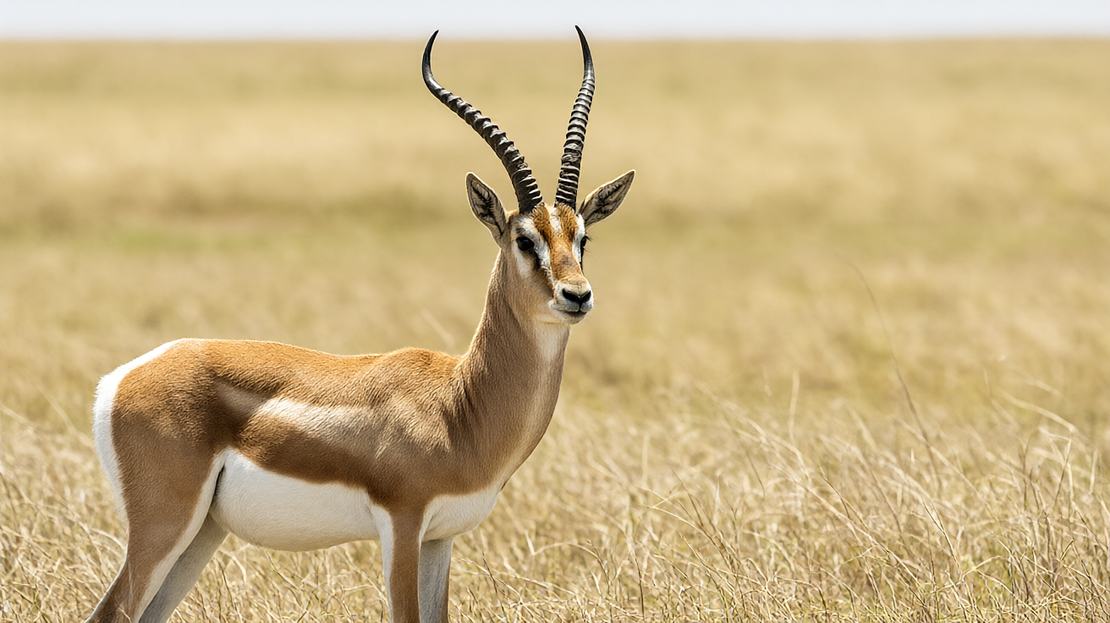
A slim antelope stands in dry grass, and its horns curve out and back like a lyre.
Least Concern
Shoulder
Weight
Horns
Fawn
Belly
Rating
The Grant’s Gazelle
The gazelle that needs no water
A slender gazelle stands in dry grass and turns its head to watch. Long horns sweep back and out, and the tips turn forward again. That lyre shape belongs to the male, and it reads as a clear sign at distance.
A white patch covers the rump, and it spreads above the tail. Because the animal can live without drinking, it holds ground that other antelopes leave. Herds spread across the plain in loose lines, and each animal keeps a body length from the next.
Family tree
Bovidae, the gazelle branch
Its proper name is Nanger granti, one of three species in its genus. The genus once sat inside Gazella, and the split came after genetic work. A Saiga Antelope shares the same dry range, and both animals survive on plants that hold water.
Because the two families split early, their faces differ more than their bodies do. Five subspecies are named, and they differ in size and in horn length. Early collectors confused this species with the smaller Thomson’s gazelle, and the confusion persists in old books.
Horns, stripe and rump
How to tell one
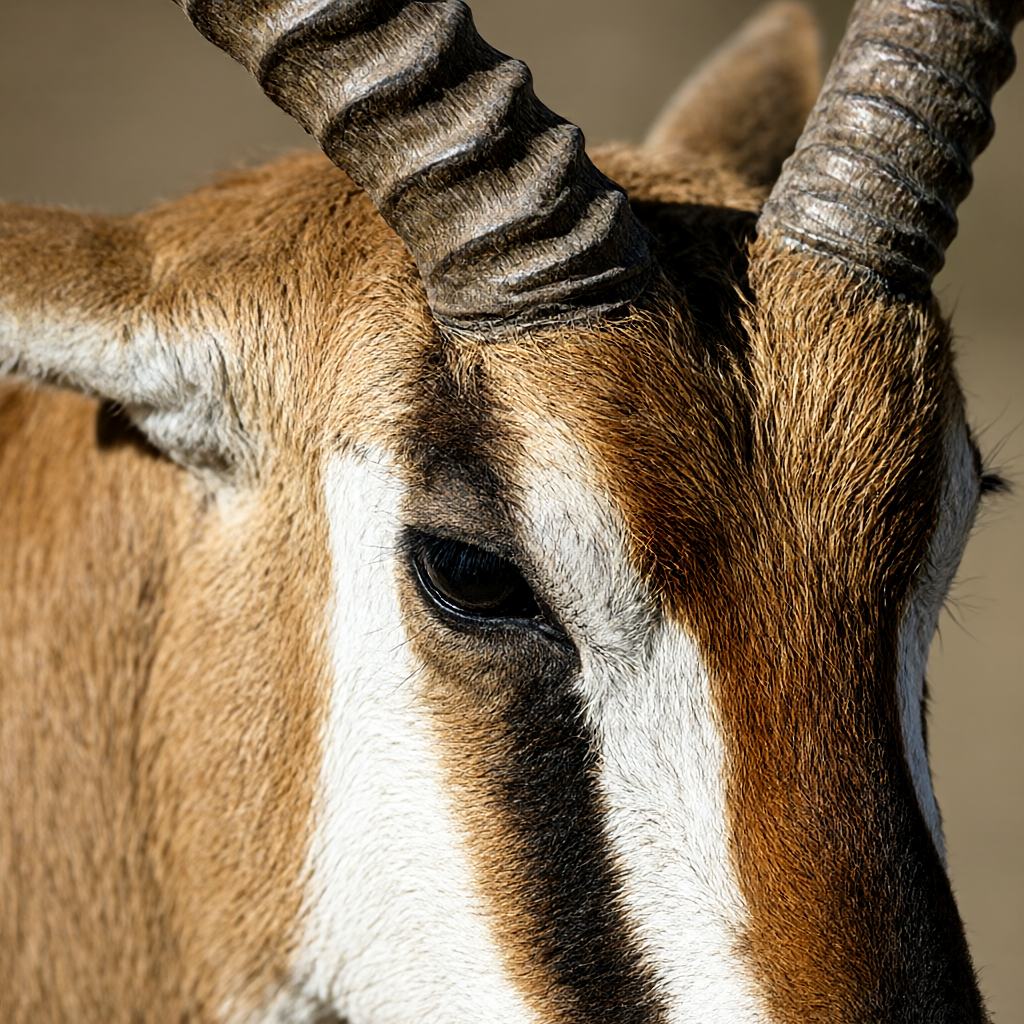
Adults stand 75 to 90 cm at the shoulder. Weight falls between 45 and 80 kg, and males run heavier than females. Horns reach 80 cm on a male, and they stay thinner on a female. Its tail ends in a black tuft.
It flicks without rest, and the herd reads that signal. Because the coat carries a pale flank stripe, the animal shows against dark scrub. Teeth suit browsing, and the incisors work like a comb. A gazelle that meets a cheetah runs in zigzags rather than straight, and because it turns faster, it often escapes.
Its ears run long and narrow, and they turn toward a sound before the head moves. Females carry four teats, which suits a single fawn.
1
2
3
Short grass plains
Where it lives
Open grassland and dry bush hold the species. Kenya, Tanzania and southern Ethiopia make up most of the range. Open ground gives the herd a clear view.
It avoids dense cover, and it keeps to the short grass. Because the gazelle can go without water, it uses plains that dry out each year. Herds follow the rains, and they gather where fresh grass appears.
When the rains fail, a herd splits into small groups, and each group drifts toward the last patch of green. A Blue Wildebeest crosses the same plains in huge herds, and both animals move with the green flush.
Grass and browse
What it eats
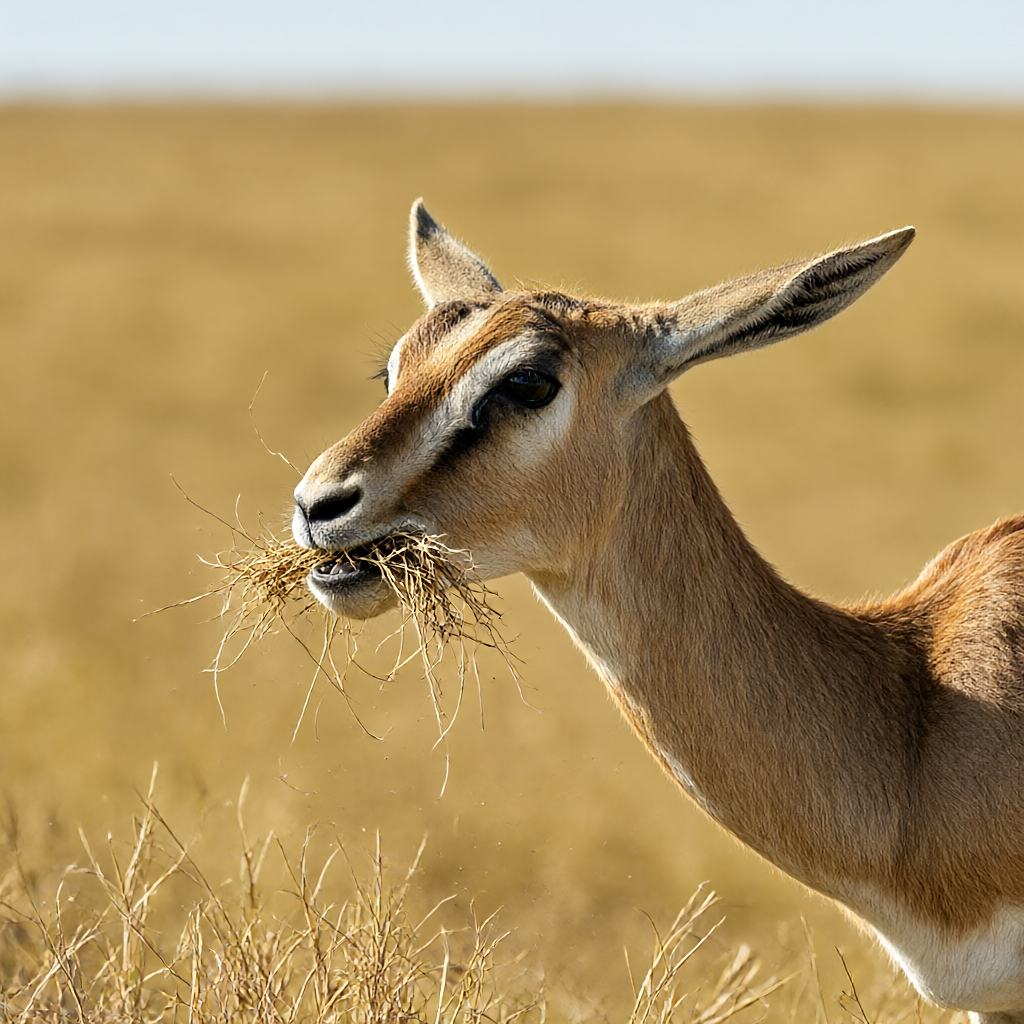
Grass makes up most of the food in the wet season. Browse carries the animal through the dry months, and it takes leaves and pods. Because leaves hold water, the gazelle can skip drinking for weeks. Feeding runs through the cool hours.
It rests in shade, and it chews while the sun climbs. Browse carries the animal through months without rain. Because the leaves hold water, a gazelle rarely walks to a pool. Herds spread while feeding, and each animal keeps watch in turn.
Grass gets plucked with the front teeth. It never wraps the tongue around a stem.
One fawn, hidden
The breeding cycle
Males hold a small territory and defend it against neighbours. A female bears one fawn after about six months. The newborn lies flat for the first days, and the mother visits to feed it.
Because a fawn hides rather than follows, the mother keeps her distance. Young males form bachelor groups, and they hold no territory until they mature. Does breed again within weeks of giving birth.
Stable across the range
Conservation
The Red List calls the species Least Concern. Rangeland fencing blocks the routes that herds follow. Because the animal tolerates dry ground, it survives where cattle struggle.
Hunting takes animals for meat, though the pressure stays local. Cheetah and wild dog take adults, and eagles take fawns. Nothing suggests a rapid decline across the range.
Side by side
How It Compares
| Trait | Grant’s Gazelle | Thomson’s Gazelle |
|---|---|---|
| Shoulder | 75-90 cm | 60-70 cm |
| Weight | 45-80 kg | 15-25 kg |
| Horns | 80 cm, lyre shaped | 25-43 cm, ringed |
| Belly | white | white with a dark band |
| Water | rarely drinks | drinks when it can |
| Rating | Least Concern | Least Concern |
Common misreadings
What People Get Wrong
- Not the smaller one. The size difference shows at a distance. A Grant’s gazelle stands a head taller than a Thomson’s, and because the two herds often feed side by side the difference is easy to see.
- Not a water drinker. Weeks pass without a drink. Dry grass and browse carry enough moisture, and the herd moves across open plains that hold no pool at all through the dry season.
- Not a sprinter only. Browse matters too. Grass matters most, though the gazelle takes leaves and shoots when the plain dries, and it will stand on the hind legs to reach them.
Going further
Sources and Further Reading
Quick hits
Five things to remember
- It can live without water.
- Its horns curve like a lyre.
- Only males carry long horns.
- Its rump patch shows white.
- A fawn hides for its first days.