 By Iris
Carettochelys insculpta | Fly River Turtle
Species Profile · Carettochelyidae
Fly River Turtle
A turtle swims with flippers instead of paddles.
Endangered
Shell
Weight
Limbs
Clutch
Snout
Rating
The Fly River Turtle
A sea turtle in a river
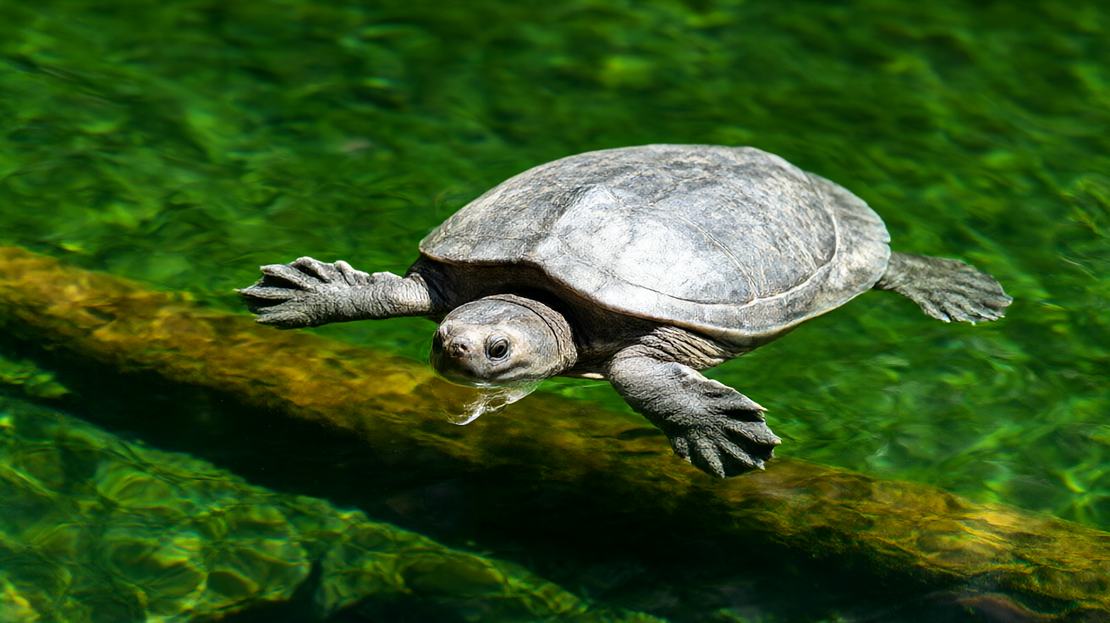
A turtle swims with flippers instead of paddles. Its shell feels like rubber. No hard plates cover it.
The Fly River turtle looks like a sea turtle that moved inland. It lives in rivers and lagoons of southern New Guinea and northern Australia. Only one species survives in its family, and this is it.
Because the shell has no scutes, a predator can grip it far more easily than it could grip a hard-shelled turtle. That soft covering made the species famous, and it also made the species easy to catch.
Family tree
Carettochelyidae, one species left
Its proper name is Carettochelys insculpta, and it stands alone in the family Carettochelyidae. Fossil relatives once lived across much of the world, and only this line remains. Nothing close to it survives.
A Matamata Turtle sits at the other end of the turtle spectrum, since its shell carries hard plates and rough ridges. A Leatherback Sea Turtle also gives up hard plates, though it never enters a river. Both traded armour for something else, and the trade cost each of them.
Skin, not plates
How to tell one
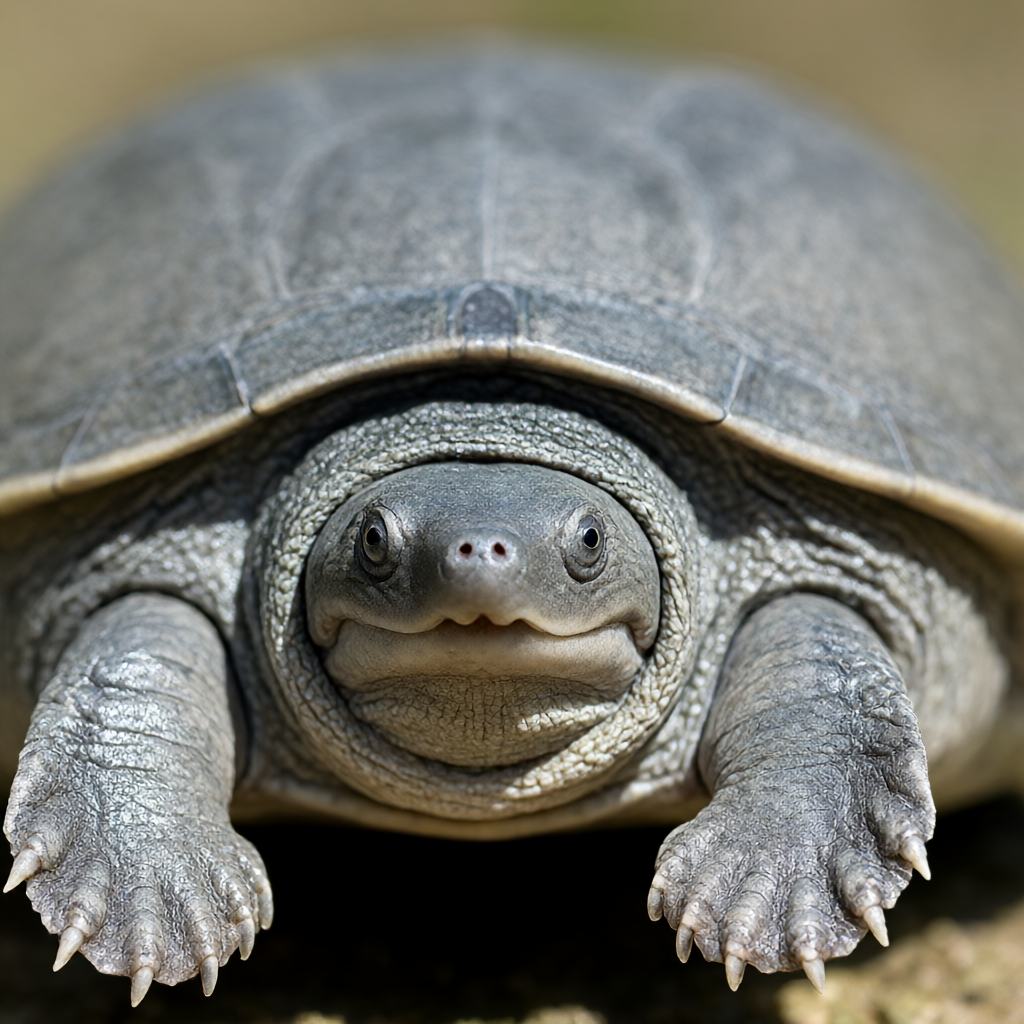
The shell runs 60 to 70 cm long. Weight reaches 22 kg, and large males go further. Skin covers the carapace, and the surface looks and feels like wet rubber.
Forelimbs are flippers, not the clawed paddles most freshwater turtles carry. Because the flippers push water backward in one stroke, it swims faster than a hard-shelled turtle. Its snout is fleshy and tubular, and it looks remarkably like a pig’s.
The nostrils sit at the tip. The tail stays short.
1
2
3
Warm rivers and lagoons
Where it lives
River systems in southern New Guinea hold most of the population. Northern Australia holds a smaller share, in the Daly and Alligator rivers. Slow reaches with sandy banks and plenty of cover suit it. Because the water stays warm all year, the turtle never needs to slow down for winter.
Lagoons and backwaters matter for juveniles. Warm water matters most. Mining runoff and feral pigs have damaged some of the nesting banks.
Fruit and molluscs
What it eats
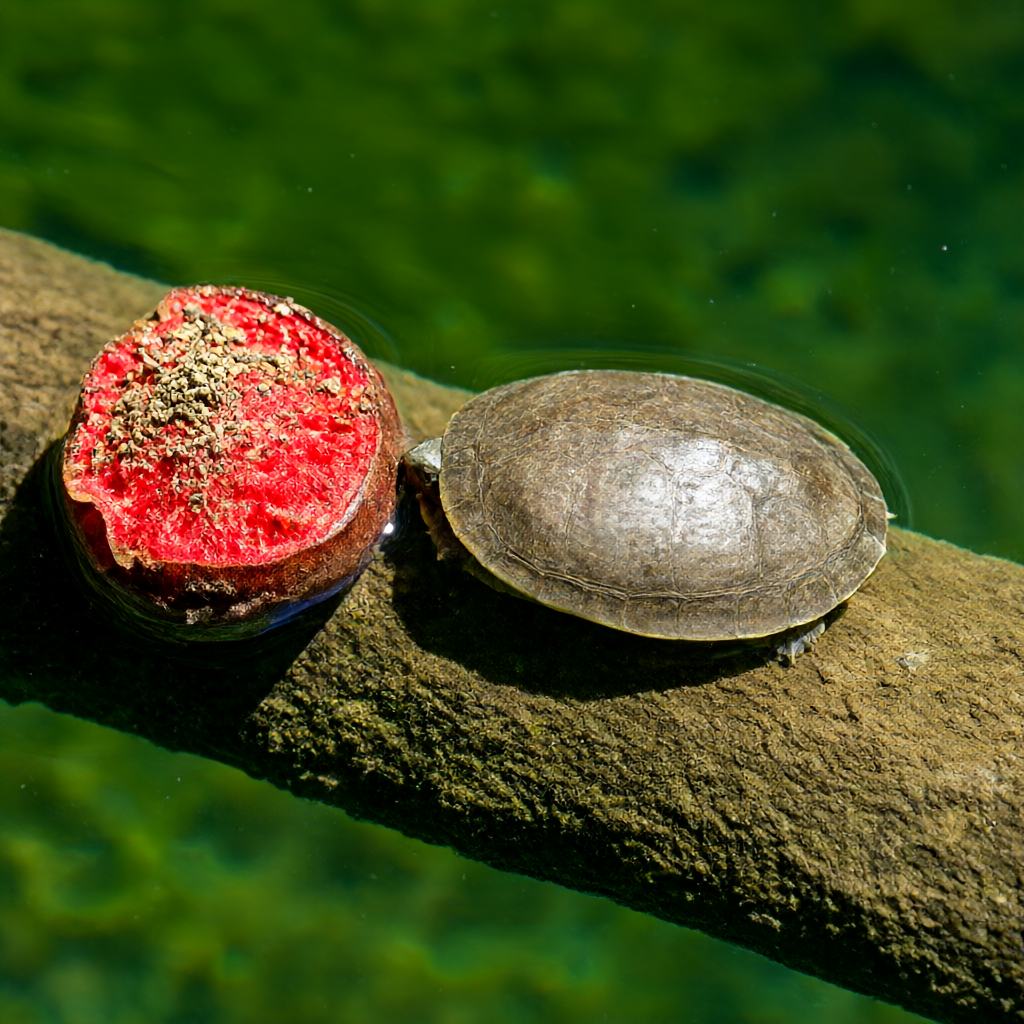
Fruit, leaves and molluscs make up much of the diet. Insects, crustaceans and small fish fill out the rest. It feeds at night, and it takes food from the bottom as well as from the surface.
Because the snout works like a short tube, the turtle can grab food in murky water. It also eats fruit that falls into the river, and it spreads the seeds downstream. Adults graze on aquatic plants in quiet water.
Seven to twenty eggs
The breeding cycle
A female comes ashore to dig a nest in sand. Seven to twenty eggs go into the hole. She may nest twice in a season.
Because the eggs sit in warm sand for about two months, the whole clutch depends on the bank staying dry. Hatchlings dig out at night and head straight for water. Few survive their first year.
The pet trade
Conservation
Red List status is Endangered. The pet trade takes large numbers, and the species is popular in Asia. Eggs get collected for food, and adults are caught for meat.
Because the turtle breeds slowly, a market that takes adults can empty a river within a few years. Mining silt smothers the plants it eats. Feral pigs dig out nests on the sandbanks.
Protected areas cover part of the range, though enforcement is thin. Numbers, however, keep falling.
Side by side
How It Compares
| Trait | Fly River Turtle | Matamata Turtle |
|---|---|---|
| Family | Carettochelyidae | Chelidae |
| Shell | skin over bone | hard keeled plates |
| Limbs | flippers | clawed paddles |
| Snout | short and pig-like | long snorkel |
| Weight | up to 22 kg | up to 12 kg |
| Rating | Endangered | Least Concern |
Common misreadings
What People Get Wrong
- Not a sea turtle that lost its way. Rivers hold the species. The flippers look marine and it never crosses open sea, since the whole group sits inside fresh water.
- Not a hard-shelled turtle at all. Skin covers the bone. No horny scute appears anywhere on the carapace, which makes the shell flexible and leaves the species without the armour its relatives carry.
- Not a herbivore in the strict sense. Fruit and animals both go down. Leaves and fallen fruit form the bulk, and molluscs and insects fill the rest depending on what the river offers that week.
Going further
Sources and Further Reading
Quick hits
Five things to remember
- The shell has no horny plates, which makes it unique among freshwater turtles.
- Its flippers move the way a sea turtle’s do, which no other river turtle manages.
- The animal can take oxygen through the skin of its throat while it rests on the bottom.
- A hatchling looks like a miniature adult from the moment it digs out of the sand.
- Its snout resembles a pig’s so closely that many people call the species the pig-nosed turtle.