 By Iris
Chiroxiphia linearis | Long-tailed Manakin
Species Profile · Pipridae
Long-tailed Manakin
Two small black birds face each other on a branch above a forest track.
Least Concern
Length
Tail
Weight
Clutch
Incubation
Rating
The Long-tailed Manakin
Two birds, one routine
Two small black birds face each other on a branch above a forest track. One jumps, the other follows, and both call in turn. The sound carries as a clear to-le-do.
Local people named the bird after that call. Because the pair performs the same routine for months, the display looks rehearsed. In a way it is, since the two males practise together for years.
Family tree
Pipridae, manakins and their stages
Its scientific name is Chiroxiphia linearis, and it belongs to the manakin family. Pipridae holds about fifty species, all small and all confined to the tropics. Manakins sit close to the cotingas, though the two families differ in size and habit.
A Superb Lyrebird also builds an elaborate courtship routine, yet it does so alone on a forest floor. A Raggiana Bird-of-paradise gathers males at a shared site, which is closer to the manakin plan. Its genus holds four species, spread from Mexico into Brazil.
Streamers and a red crown
How to tell one
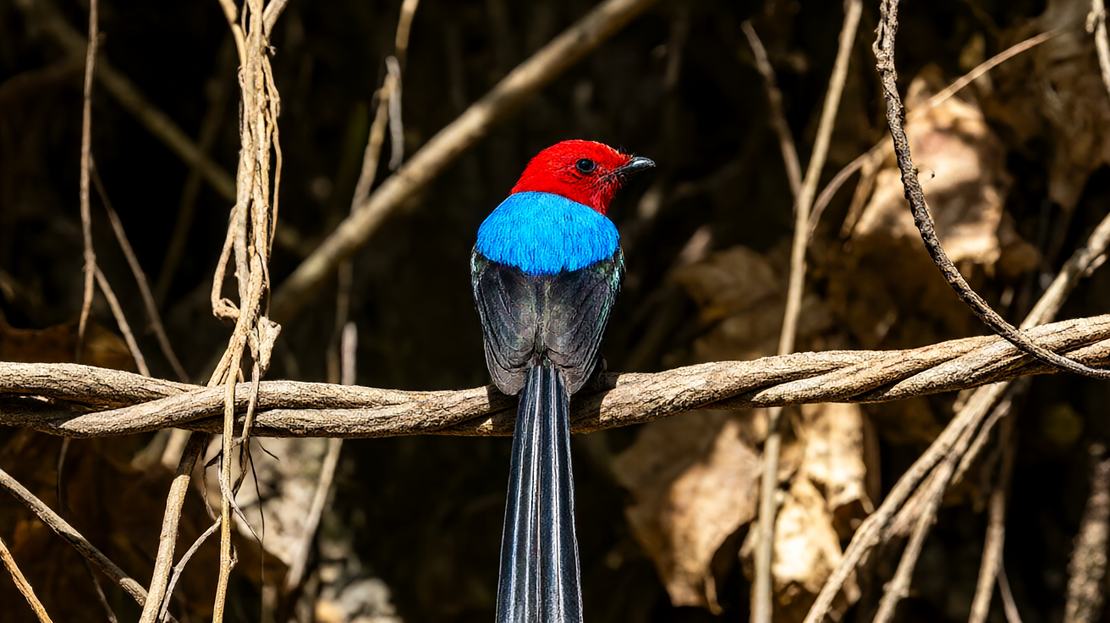
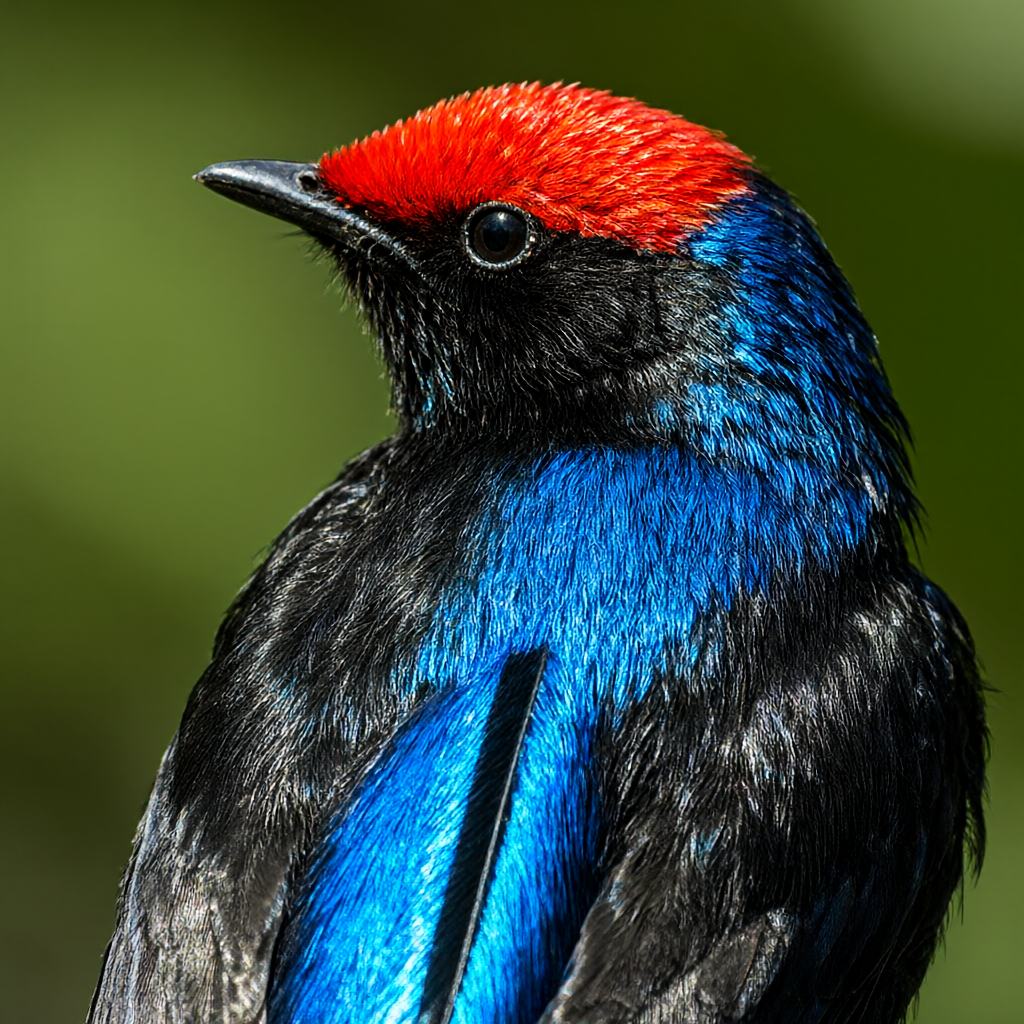
Body length runs 10 to 12 cm, and the central tail plumes add up to 10 cm more. Weight sits near 18 g. Males carry a sky-blue back, a red crown and a black body.
Two central tail plumes grow into long thin streamers. Females stay olive-green, with a shorter tail. Because the streamers trail behind, the male looks larger in flight than he is.
Its legs are short and its feet grip well. Its bill is small and broad, which suits soft fruit.
1
2
3
Understory, not canopy
Where it lives
Dry forest and scrub along the Pacific slope hold the species. The range runs from southern Mexico into Costa Rica. It favours the cover, where light reaches the ground. Because the bird needs open flight lanes, it avoids deep shade.
Regrowth and forest edge suit it well. Display perches sit one to three metres up, with clear space around them. It stays below about 1,500 m.
Small fruit
What it eats
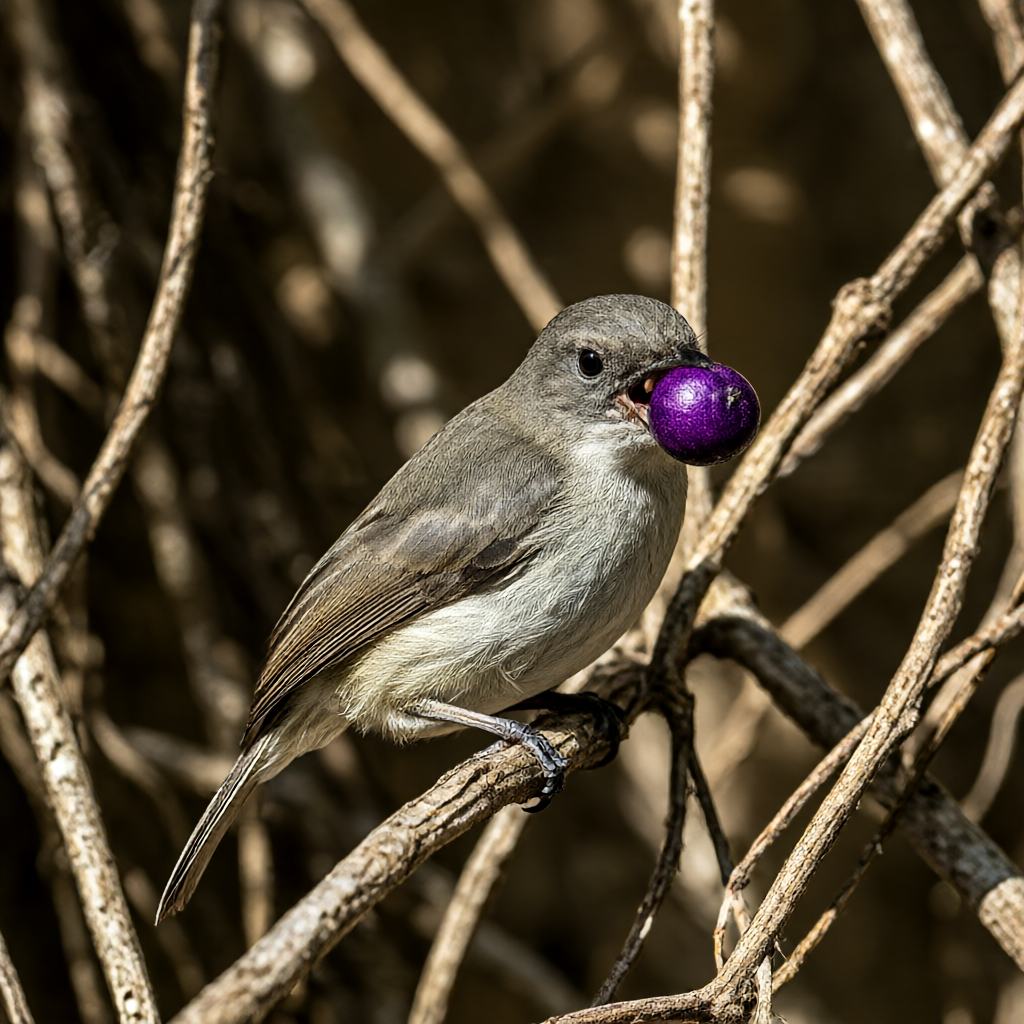
Small fruits make up most of the food. Bugs supply the rest, mainly taken from leaves. Because the bird swallows fruit whole, the seed passes through intact. A male leaves his perch, plucks a berry, and returns within seconds.
That short trip keeps the display going. The diet shifts toward bugs when chicks are growing. Nothing large is taken, and nothing comes from the ground.
Two males, one perch
The breeding cycle
Two males form a pairing that lasts for years, and the pair stays together at the same perch. They display side by side, and one jumps over the other in turn. Only the senior bird mates, and he does so with almost every female that arrives. Because the junior bird waits so long for his turn, most of his adult life passes without a single mating.
A female builds a small cup of fibre in a fork, well away from the display perch. Two eggs go into it. She sits alone for about 20 days, then feeds the chicks alone as well.
Least Concern
Conservation
Red List status is Least Concern. Its range stays large and the numbers appears stable. Because the bird bears dry scrub, it handles some clearing.
Cattle pasture removes the cover it needs. Forest fires in the dry season destroy display sites. Trapping for the cage trade takes a number, though the law now limits it.
Long-term study sites in Costa Rica show steady numbers. The pairing system makes the species slow to recover, since a display site can lose both birds at once.
Side by side
How It Compares
| Trait | Long-tailed Manakin | Superb Lyrebird |
|---|---|---|
| Family | Pipridae | Menuridae |
| Display | two males in tandem | one male on a mound |
| Tail | two long streamers | lyre shaped |
| Voice | a duet in strict turn | mimicry of the forest |
| Range | Mexico to Costa Rica | southeastern Australia |
| Rating | Least Concern | Least Concern |
Common misreadings
What People Get Wrong
- Not a solo performer. Two birds run it. The junior male jumps and calls in turn, and he may wait a decade before he inherits the perch and mates.
- Not a long-distance migrant. It stays on one site. Display perches are cleared and reused for years, so the bird holds the same patch of understory through every season.
- Not a bird that eats much insect food. Fruit carries the diet. Berries go down whole and the seed passes intact, which makes the species a useful mover of forest plants.
Going further
Sources and Further Reading
Quick hits
Five things to remember
- The junior male may wait more than ten years before he gains a display perch.
- Both birds call in strict turn, so the duet sounds like a single voice.
- The streamers on the tail grow to roughly the length of the body.
- Display perches are cleared of leaves, and the same branch is reused for years.
- The to-le-do call is so regular that local people set their watches by it in the dry season.
[…] requires dense ground vegetation that provides cover and supports its insect prey. Unlike the European hedgehog, pygmy shrews cannot hibernate and remain active year-round. They often occur in the same habitats […]
[…] to challenging environments, from high-altitude foraging to seasonal hibernation or migration. the European hedgehog, the European robin, and the common blackbird frequently coexist with the sorex araneus across […]