 By Iris
Tenrec ecaudatus | Tailless Tenrec
Species Profile · Tenrecidae
Tailless Tenrec
A spiny animal the size of a rabbit roots through leaf litter after dark.
Least Concern
Length
Weight
Litter
Teats
Spines
Rating
The Tailless Tenrec
The tenrec that looks like a hedgehog
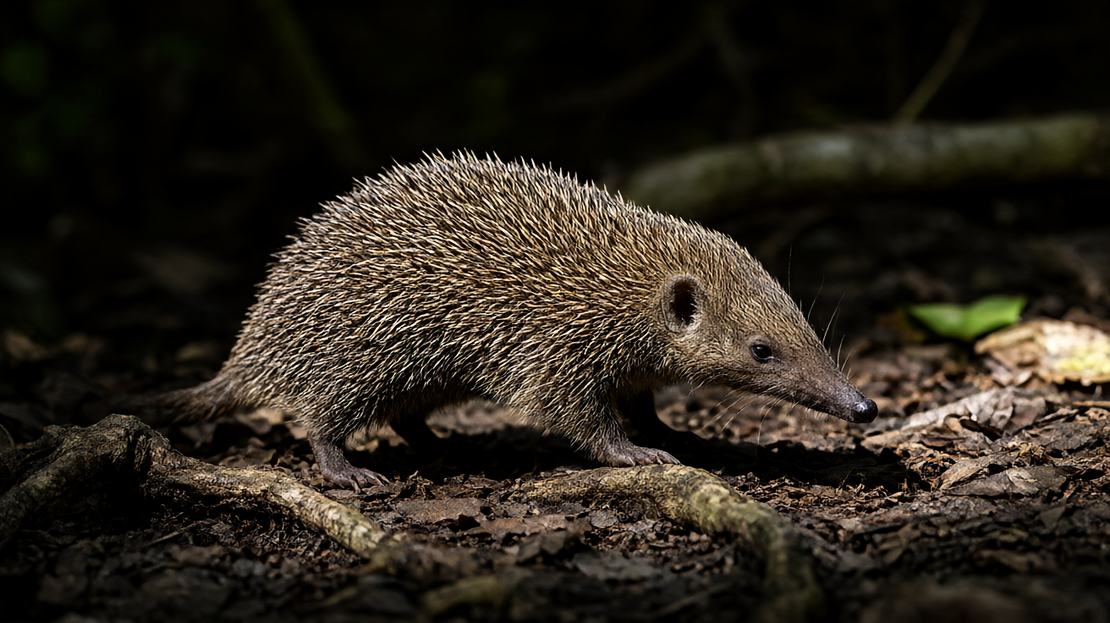
A spiny animal the size of a rabbit roots through leaf litter after dark. It grunts, and the sound carries across the forest floor. Long spines cover the back, and they rattle when the tenrec is alarmed. No tail shows behind it.
That missing tail gave the species its proper name. Madagascar holds the tenrec across most of the island, and people also carried it to other islands, where it settled easily. Because the female can raise a huge litter, the count grows fast.
Family tree
Tenrecidae, an old African line
Its proper name is Tenrec ecaudatus, the largest of about thirty tenrecs, and the family lives only on Madagascar apart from arrivals elsewhere. Tenrecs belong with golden moles and elephant shrews in an old African line. Because that line split early, the tenrecs look nothing like shrews.
Early writers grouped them with hedgehogs, which was a mistake. Introduced tenrecs now live on the Comoros and on some Mascarene islands. Those island groups likely came from Madagascar with settlers.
Spines and snout
How to tell one
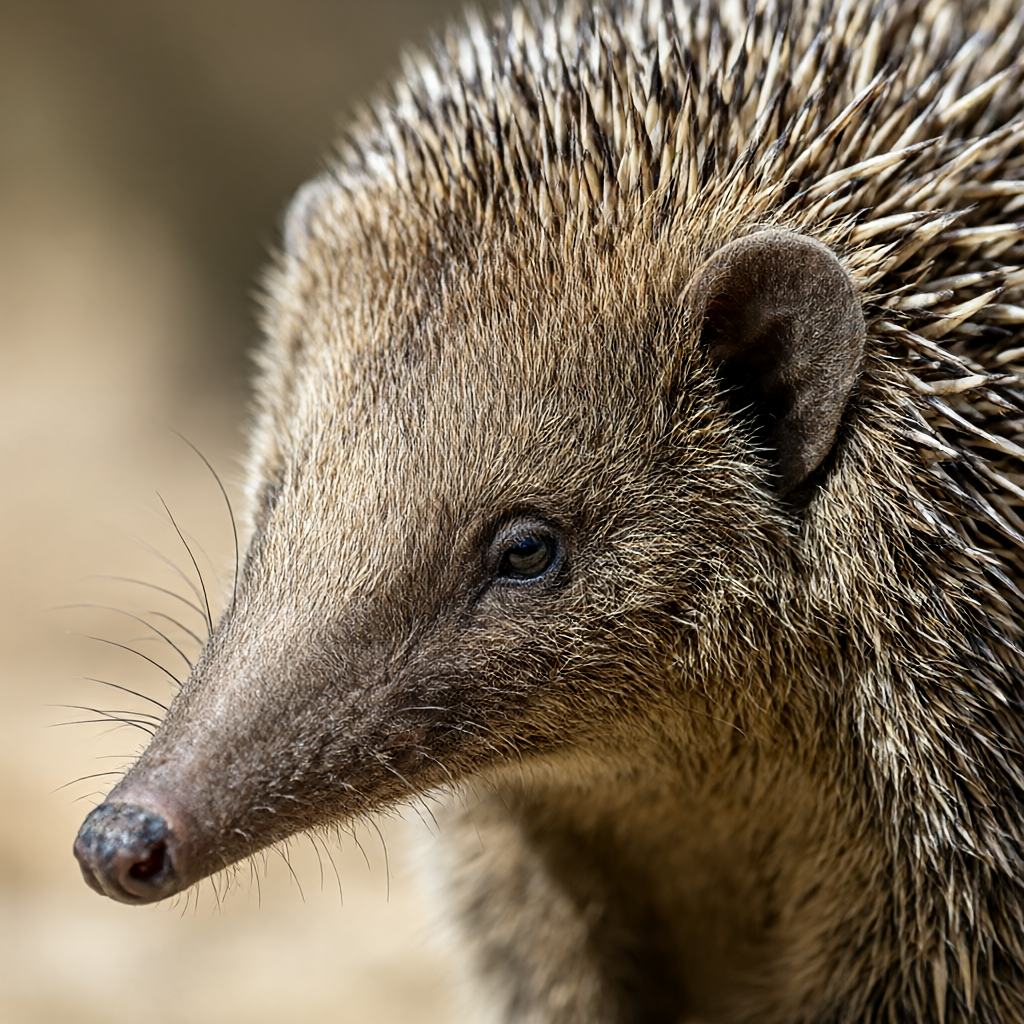
Adults run 26 to 39 cm from nose to rump. Weight falls between 1.5 and 2.5 kg, which is heavy for an insect eater. Coarse spines cover the neck, back and flanks. Long guard hairs mix with the spines, and both stand up when the tenrec is angry.
The snout runs long and pointed, and it ends in a mobile nose. Eyes stay small, and the ears barely show through the fur. Because the body warmth drops with the air, the tenrec saves fuel at night. Front claws are strong, and they turn over litter with ease.
Males carry a small scent gland on the neck. The rump ends bluntly, since no tail grows there at all.
1
2
3
Forest floor to gardens
Where it lives
Forest floor, scrub and farmland all suit the tenrec. It bears dry country as well as wet forest. Because the species digs well, it lives in gardens and waste heaps, and daytime shelter comes from a burrow or a hollow log.
Night brings the tenrec out, and it covers a wide area on the search for food. Villages attract it, since kitchen waste offers an easy meal. A millipede shares that litter, and both animals hunt the same damp layer of soil.
Anything it meets
What it eats
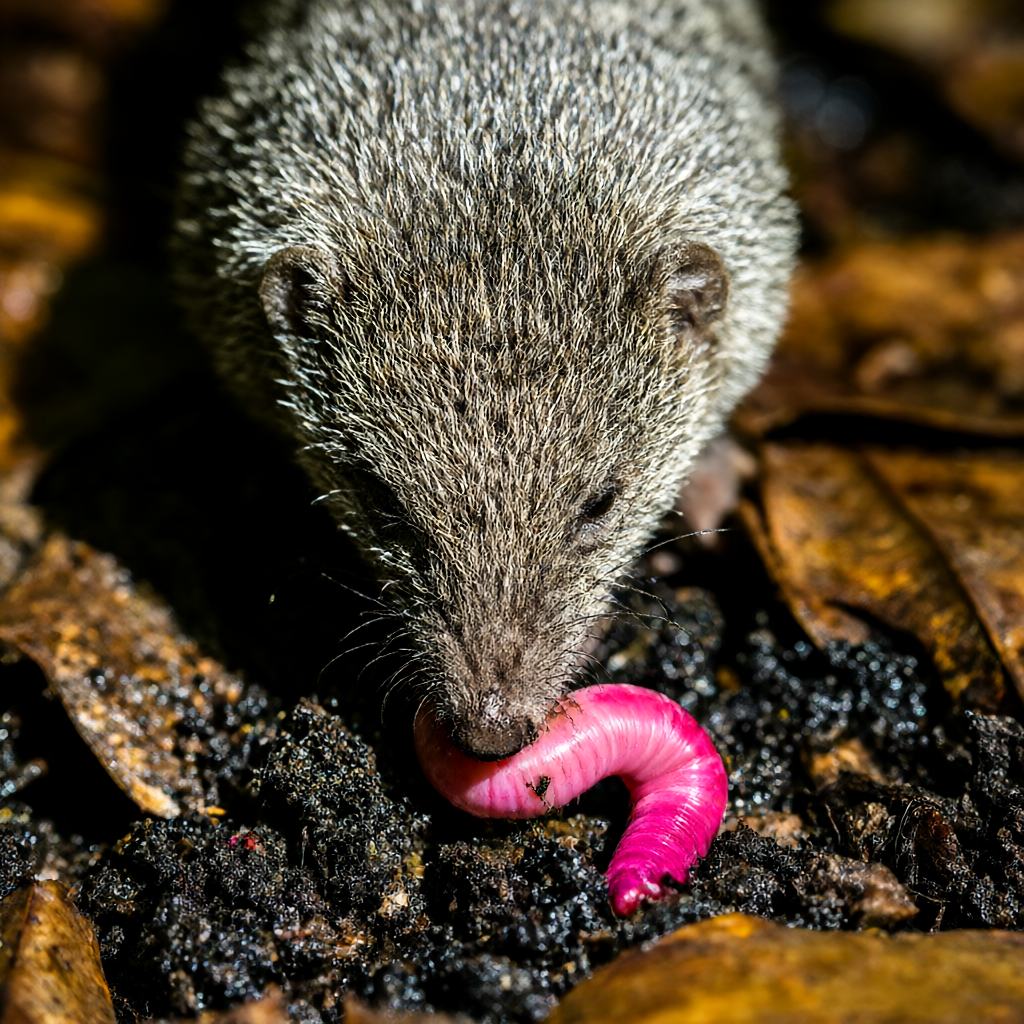
Small prey make up most of the food. Earthworms, beetles, larvae and snails all get eaten. The tenrec also takes carrion, which few insect eaters manage, and because it can eat almost anything it thrives near people.
Fruit and small prey get taken on occasion. Food is found by smell, since the eyes do very little. A hungry tenrec turns over a whole patch of litter in minutes.
Thirty-two young
The breeding cycle
Breeding follows the rains, when food is common. One litter can hold up to 32 young, which is the largest known for any mammal. The female carries 12 to 16 nipples, and every one may be used. Because the young grow fast, they leave the nest within a month.
Males and females meet only briefly, and no pair bond forms. Young animals then scatter across the forest floor. Mortality runs high, and few reach their second year.
Bushmeat and clearing
Conservation
The Red List calls the species Least Concern across Madagascar. Forest clearing takes cover, though the tenrec adapts well. Because it raids rubbish, it lives where other species vanish.
Hunting happens in some areas, since the meat is eaten locally. Introduced groups cause damage on islands without native mammals. Nothing suggests a sharp decline at present.
Side by side
How It Compares
| Trait | Tailless Tenrec | Hedgehog |
|---|---|---|
| Family | Tenrecidae | Erinaceidae |
| Length | 26-39 cm | 20-30 cm |
| Spines | neck, back and flanks | whole upper body |
| Defence | spines raise and rattle | rolls into a ball |
| Litter | up to 32 young | 4-6 young |
| Rating | Least Concern | Least Concern |
Common misreadings
What People Get Wrong
- Not a hedgehog. Both carry spines, and the two are not related at all. The tenrec belongs to an old African line that reached Madagascar once, and the hedgehog sits in a family of its own across Europe and Asia.
- Not a record litter. Thirty-two young is the largest known among mammals. The female carries twelve to sixteen teats, and a full litter means every one of them is in use at once.
- Barely a year. Few tenrecs survive a second dry season. Most die before their first birthday, and because the animals grow fast they leave the nest within a month of birth.
Going further
Sources and Further Reading
Quick hits
Five things to remember
- It can raise 32 young at once.
- It has no tail at all.
- Its spines rattle when it is angry.
- Its body warmth rises and falls.
- People carried it to other islands.
[…] family holds about thirty species, and they vary more than any other mammal group of that size. A Tailless Tenrec grows far larger on the same island, and both animals share one ancient […]