 By st20113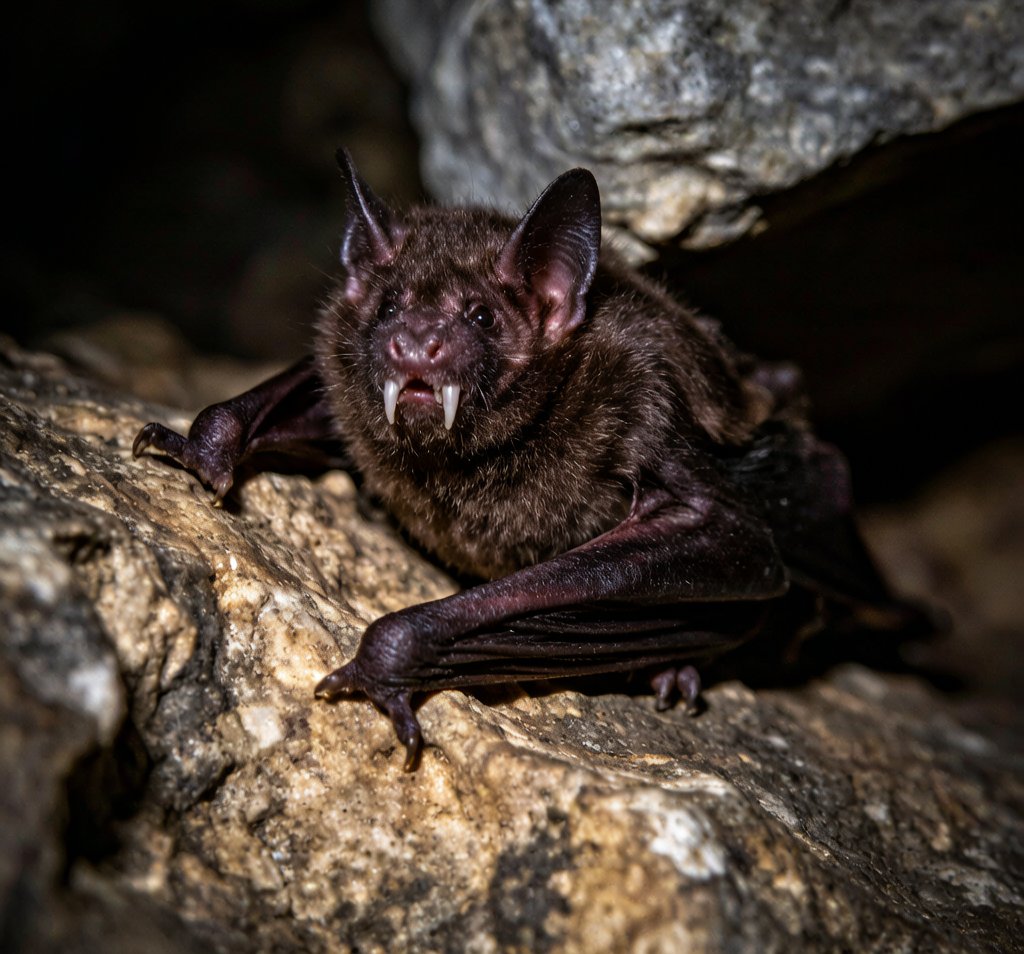
Introduction
The vampire bat (Desmodus rotundus) is one of the most specialized and socially complex mammals on Earth. Weighing just 40 grams, this small flying creature is one of only three true blood-feeding bat species. Found throughout Central and South America, the vampire bat has extraordinary adaptations: heat-sensing organs to locate blood vessels near the skin surface, anticoagulant saliva, and the ability to run and hop along the ground to approach sleeping prey undetected. Far from the monsters of folklore, vampire bats are highly intelligent animals that form deep cooperative bonds and demonstrate remarkable reciprocal altruism within their colonies.
Taxonomy
Desmodus rotundus belongs to the family Phyllostomidae, the New World leaf-nosed bats, within the order Chiroptera. First formally described in 1828, its closest relatives are fruit-eating leaf-nosed bats, from which its blood-feeding ancestors diverged millions of years ago. Within the genus Desmodus, several extinct species existed during the Pleistocene, but D. rotundus is the sole surviving member today. Like the red fox and other successful predators, it has diversified across its range, filling a unique ecological niche as the dominant blood-feeding bat in the Americas.
Physical Characteristics
The vampire bat measures 7–9 cm in body length with a wingspan of 18–35 cm. Its most distinctive feature is the naked nose leaf atop the snout, housing heat-sensitive receptors that detect the warmth of blood-filled capillaries near a host’s skin. The fur is dark brownish-gray above and lighter below. Its razor-sharp upper incisors pierce skin with minimal discomfort, aided by anticoagulant saliva. Unlike most bats, vampire bats can run and hop on the ground using their large thumbs—an ability that helps them silently approach prey undetected, much as the cheetah uses stealth before a high-speed chase.
Habitat
Vampire bats range from northern Mexico through Central America to central Chile, Argentina, and Uruguay, occupying tropical, subtropical, and semi-arid environments. Roosting sites are critical: colonies shelter in caves, abandoned mines, tunnels, hollow trees, and sometimes old buildings, where stable temperature and humidity support their energy-intensive lifestyle. Colonies range from a handful of individuals to more than 2,000 bats. Their increasing adaptation to human-modified landscapes has brought them into closer contact with livestock, expanding both their range and their significance as disease vectors in rural communities.
Diet
The vampire bat feeds exclusively on the blood of other animals—a diet called hematophagy. Preferring livestock such as cattle and horses, they also target wild birds and brown bears. A single bat consumes roughly half its body weight in blood during a 20–30 minute feeding session. The saliva contains draculin, a powerful anticoagulant researched for treating strokes in humans. After feeding, the bat becomes so heavy it must rest before flying, making it vulnerable to great white shark and other predators during this post-feeding period.
Reproduction
Vampire bats are polygynous, with females giving birth to a single pup each year after a six to seven month gestation. Births coincide with the wet season when prey is abundant. The mother nurses her pup for approximately three months, gradually introducing solid food through regurgitation. Mothers can recognize their pups’ calls among hundreds of others in a crowded roost. Females reach sexual maturity at nine to ten months, and the matriarchal social structure is reinforced by long-term reciprocal food-sharing relationships. When a bat fails to feed for two consecutive nights, it begs for food from a successful roost-mate, which will invariably share a blood meal.
Conservation
The Desmodus rotundus is listed as a species of Least Concern, with wide distribution and large, stable populations. However, significant threats include habitat loss, targeted culling programs, and rabies transmission. As the primary rabies reservoir in Latin America, vampire bats are responsible for thousands of livestock deaths and occasional human fatalities each year. Modern conservation strategies now emphasize livestock vaccination and public education over mass extermination, recognizing that vampire bats also provide ecological services including pest control and pollination of certain plant species.
Fun Facts
Vampire bats are among the most socially cooperative mammals in the world, engaging in reciprocal altruism that scientists have studied for decades. Like the humpback whale, they remember individual relationships and preferentially cooperate with generous partners. A vampire bat colony was documented flying up to 24 kilometers in a single night to reach feeding grounds. These bats can survive up to 72 hours without feeding, and a single shared meal can bring a starving bat back from the brink of starvation.