 By st20113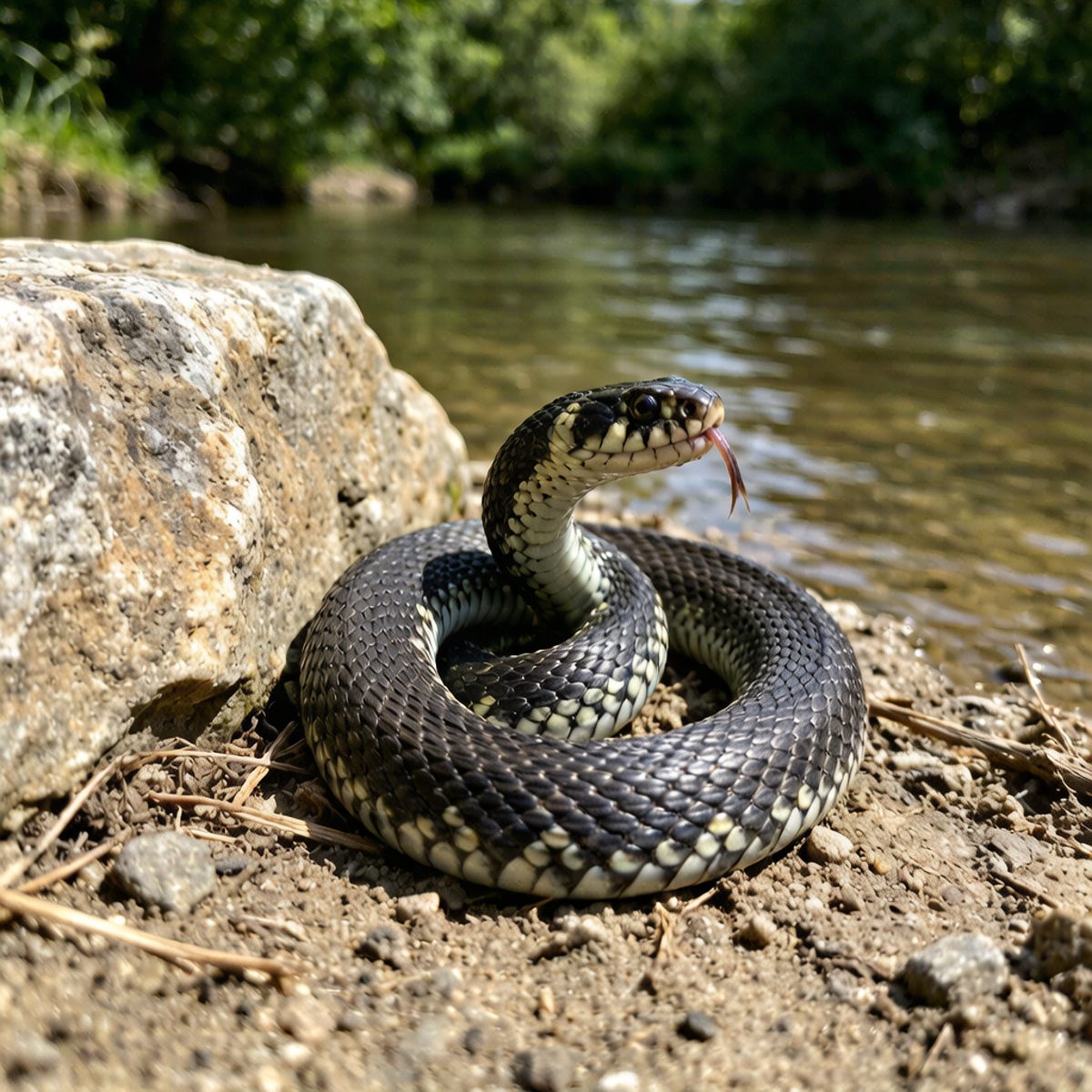
Introduction
The dice snake, scientifically Natrix tessellata, is a slender, largely aquatic snake of southern and central Europe and western Asia. It lives along rivers, lakes, and streams, where it hunts almost entirely in the water. Named for the checkered pattern on its body, it is a shy reptile that slips into the current at the first sign of danger. Though often mistaken for the grass snake, it is a distinct species with a strong preference for fish as food. Across southern Europe it can be remarkably abundant along quiet rivers, where dozens may bask on the same warm bank at dawn. Local people once feared it as a water spirit, but the snake is completely harmless to humans and flees at the first shadow. Its dependence on clean fish stocks makes it a quiet signal of river health in the regions where it lives.
Taxonomy
The dice snake belongs to the family Colubridae, the typical snakes, within the genus Natrix, which also includes the grass snake. It is well adapted to an aquatic life and is more tied to water than most European snakes. It shares riverbanks with generalist predators such as the red fox, though the snake relies on speed and swimming to escape rather than fighting.
Physical Characteristics
Adults reach 80 to 120 centimeters in length, with a slender body and a long tail. The back is grey, olive, or brown with a net-like or checkered pattern of dark spots, while the belly is pale yellow or whitish marked with dark rectangles. The head is narrow with large eyes set high, an adaptation that lets the snake watch for prey while mostly submerged. Keeled scales give the skin a rough texture, and the pupils are round.
Habitat
Dice snakes favor clear or slow-moving water with rocky or sandy shores where they can bask and dive. They occur along rivers, canals, lakes, reservoirs, and coastal lagoons, often in open or lightly vegetated banks. They are strong swimmers and may stay underwater for several minutes when hunting or hiding. In cooler regions they hibernate in burrows or rock crevices near the water from late autumn until spring.
Diet
Fish make up the great majority of the dice snake’s diet, supplemented occasionally by amphibians and small aquatic invertebrates. It hunts by stalking fish in shallow water, seizing them with a quick strike and swallowing them head-first. Because it depends so heavily on healthy fish populations, the snake is a good indicator of clean, productive waterways. It rarely takes warm-blooded prey and poses no danger to people, being non-venomous and timid. Fishermen sometimes catch it by accident and release it unharmed, for the snake does no harm to nets or catches and soon slips back into the current.
Reproduction
Mating takes place in spring after the snakes emerge from hibernation. Females lay clutches of ten to thirty eggs in warm, hidden spots such as rotting vegetation, loose soil, or under stones near water. The eggs hatch after six to ten weeks, and the young are independent from birth, immediately taking to the water to feed on small fish and tadpoles. Sexual maturity is reached at two to three years of age.
Conservation
The dice snake is currently classified as Least Concern, with broad distribution across its range. However, dam construction, water pollution, and the loss of natural banks have reduced local populations, and it is protected in many countries. Maintaining undeveloped shorelines and clean rivers is key to its survival. Where waterways remain healthy, the species can still be remarkably abundant along quiet stretches of river.
Fun Facts
When threatened, a dice snake may release a foul-smelling secretion from its cloaca to deter predators. Its high-set eyes allow it to glide with only the top of its head above the surface, like a tiny periscope. Hatchlings are expert swimmers within hours of leaving the egg. Unlike many snakes, it rarely leaves the vicinity of water and is almost always found within a few meters of a river or lake.