 By Iris
Dromiciops gliroides | Monito del Monte
Species Profile · Microbiotheriidae
Monito del Monte
A marsupial whose closest relatives live an ocean away in Australia.
Near Threatened
Body
Tail
Weight
Young
Sleep
Rating
Thirty grams of old lineage
A living fossil of the marsupials
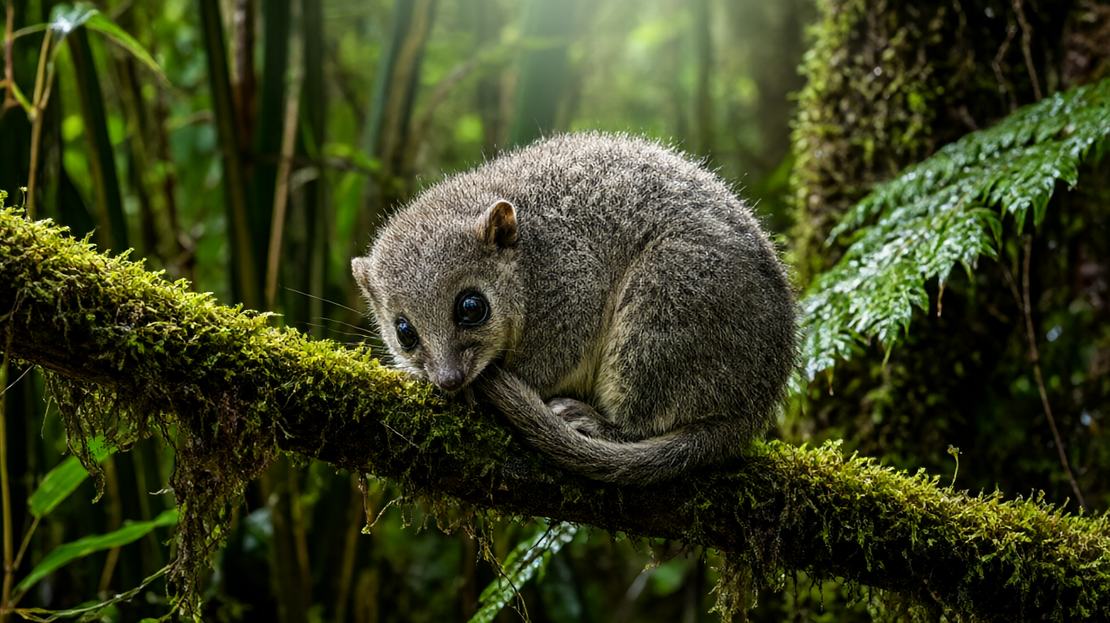
A small grey animal climbs through a bamboo thicket and stops on a mossy branch. Its tail wraps around the stem. Monito del monte means little monkey of the mountain, although the animal is no monkey at all. Bodies run 8 to 13 cm long, and the tail adds another 12 cm. Weight stays between 16 and 31 g.
Dense fur covers the body, and black rings surround the eyes. Those rings make the face easy to know in torchlight. The animal lives in the cool rainforests of southern Chile and Argentina. Nights belong to it. Days pass inside a nest of leaves.
Cold weather sends it into a deep sleep, and the body slows almost to nothing. Nobody sees one easily, since the forest stays dense and wet. A few people know it as the living fossil of the marsupial line, since the group is older than any other.
Family tree
Microbiotheriidae, the last of its line
Microbiotheriidae holds this animal alone, and the family has one living member. An Opossum belongs to the American marsupials, yet this animal sits closer to the Australian ones. That link looks odd on a map, since the two land masses parted long ago and never met again. Gene work places the split deep in the past, when Antarctica still carried forest.
Fossils from Antarctica support that story, and they show that similar animals once lived there before the ice. The genus crossed a warmer continent before the ice arrived. Its nearest living relatives today sit in Australia, which is why biologists call it a relic. Names shifted several times, and older books use different labels.
Two forms have been described, although most workers treat them as one species. Skull shape and teeth carry the useful detail. Field notes remain thin because the animal hides so well. Every new find adds to a small pile of knowledge.
Kin in Australia, home in Chile
How to tell one
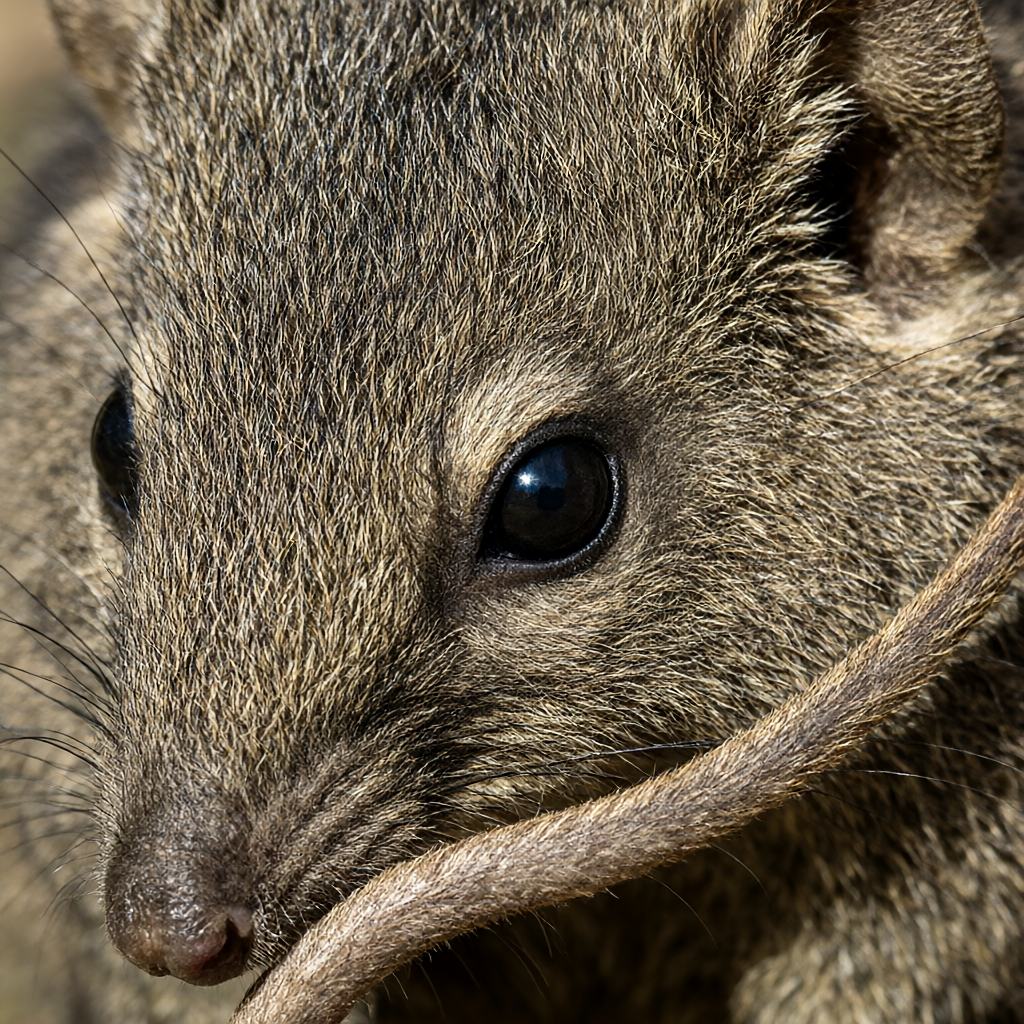
Fur looks dense and soft, with grey brown above and paler below. Black rings circle each eye and run toward the nose. Ears stand short and rounded, and they barely show above the fur. A prehensile tail curls around stems, and the underside carries bare skin for grip. Fingers end in small sharp claws.
Hind feet carry an opposable toe that works like a thumb. Inside the pouch, four teats wait for young. Males carry no pouch. They grow only slightly larger than females. Body heat falls at night, and the animal saves fuel that way.
Muscle stays small for the size of the body, which suits a slow, careful climber. Teeth cut through insect shell without much grinding. A thick fat layer builds under the skin before winter arrives.
1
2
3
Eye rings and a gripping tail
Where it lives
Valdivian rainforest covers the coastal strip of southern Chile, and the animal keeps to the thickest parts. Bamboo grows in dense stands here, and the stems give cover at every height. Moss and ferns cover the ground, which stays wet through the year, so a careless step leaves a mark. Rain falls often, and the air holds a chill even in summer.
Nests sit inside bamboo clumps and under loose bark. Winter brings cold and short days, so the animal then sleeps for weeks. Snow falls on the higher ground, although the forest below stays green. Clearing for pasture removes the thickets, and regrowth takes decades, which is why the loss keeps growing.
Plantations of pine and eucalyptus hold almost nothing. Strips of forest along streams link one patch to another. Those strips matter, since animals cannot cross open ground. Volcanoes and fire shape the region, and the forest returns slowly after both.
Wet Valdivian rainforest
What it eats
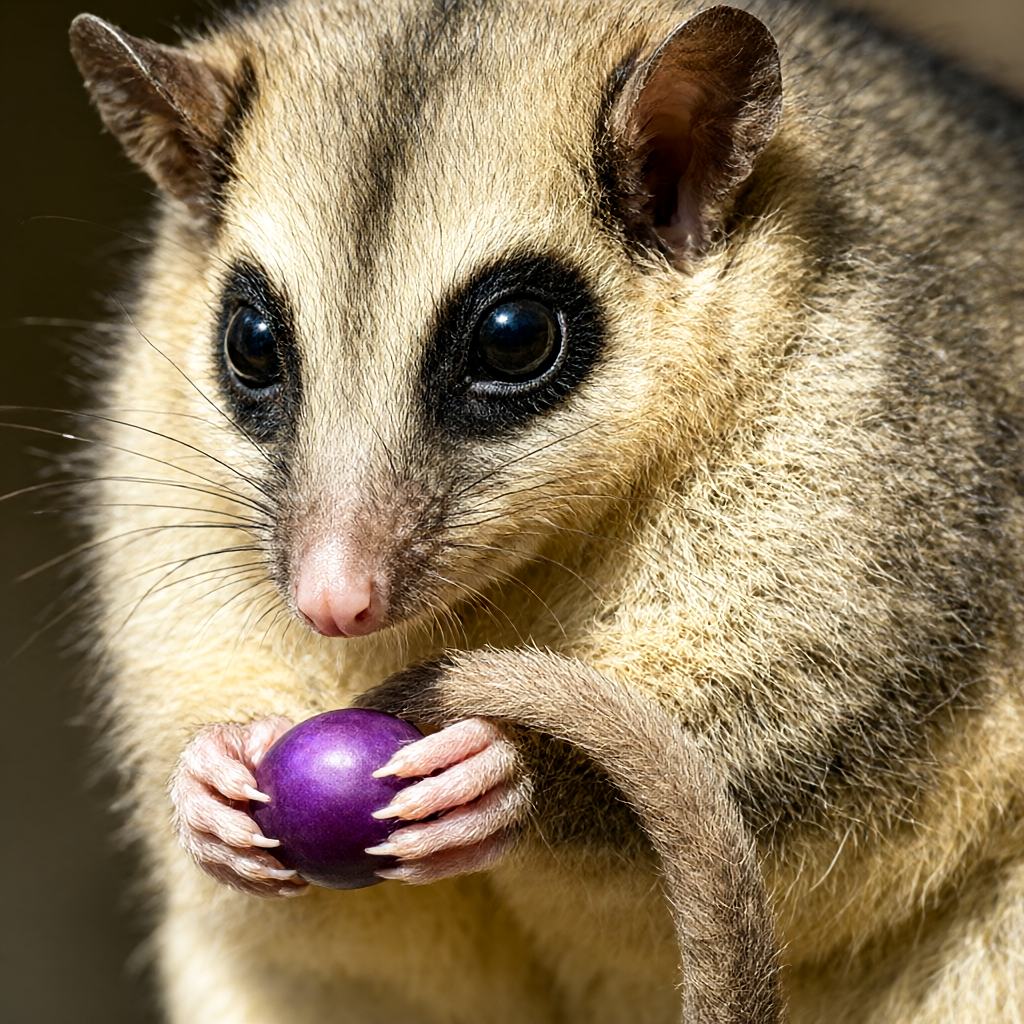
Insects form most of the diet, and moths and beetles rank first. Fruit also gets eaten, and one mistletoe plant supplies a large share. That plant grows on trees, and its berries ripen in the cool months. Seeds pass through the animal intact, which helps the mistletoe spread to new branches high in the canopy.
Feeding happens in short bursts through the night. An animal may travel a long way between mouthfuls, since food sits scattered. Hunting means searching bark and leaves, since prey never runs far. Prey gets held in both front paws, then bitten while it still struggles.
Water comes from fruit and from dew. Captive animals take insects readily, yet they refuse many fruits. Food runs short in winter, and stored fat carries the animal through, although a long cold spell still kills. A warm night in winter wakes the animal, and it then feeds again.
Insects and mistletoe fruit
The breeding cycle
Females build a nest of leaves and bamboo before the young arrive. One to four young are born after a short wait. The newborn stays in the pouch for weeks, then rides on the mother’s back. Weaning comes at about two months, when the young start hunting.
Young animals stay near the nest for a while, then scatter into the thickets. Males take no part in raising the young. Breeding happens in spring, when insects return. Females may raise one litter a year, and many lose the whole litter to cold or to rain.
Captive animals have lived three years, and wild ones probably manage less. A long winter costs energy, and small animals often fail to survive it. Two young a year cannot replace a heavy loss, since most of them never reach adulthood. Slow breeding makes the animal a poor settler of new forest, since a cleared patch stays empty for years.
Near Threatened, and forest bound
Conservation
IUCN lists the species as Near Threatened. Forest loss drives the decline, since the Valdivian forest has shrunk for a century. Pine farms replace native trees, and the animal cannot use them. Fire removes thickets, and burnt ground stays bare for years.
Free ranging dogs and cats add to the strain near towns. Climate change may shorten the wet season, which hurts both bamboo and mistletoe. Parks cover part of the range, yet many animals live on private land. Landowners now keep strips of native forest when they clear ground.
Research has grown, and radio tracking now shows how far animals travel. Long term survival depends on the mistletoe and the bamboo, since the animal needs both. A single dry summer can stop the fruit from ripening. Safety here means keeping the forest wet and connected.
Side by side
How It Compares
| Trait | Monito del Monte | Virginia Opossum |
|---|---|---|
| Length | 8 to 13 cm body, 12 cm tail | 33 to 55 cm body |
| Weight | 16 to 31 g | 2 to 5.5 kg |
| Home | bamboo and moss forest in Chile and Argentina | woods and suburbs in North America |
| Diet | insects, fruit and small vertebrates | almost anything edible |
| Habit | curls into a ball through winter | plays dead when threatened |
| Rating | Near Threatened | Least Concern |
Common misreadings
What People Get Wrong
- Most people assume all marsupials belong to Australia, yet this small animal lives in Chile.
- Popular accounts call it a mouse, although the pouch and the teeth say otherwise.
- Some guides treat it as a living fossil, though the lineage simply split very early.
Going further
Sources and Further Reading
Quick hits
Five things to remember
- Closest living relatives sit in Australia.
- Black rings circle each eye.
- A mistletoe plant supplies much of the fruit.
- Cold weather sends it into a deep sleep.
- Weight stays between 16 and 31 g.