 By st20113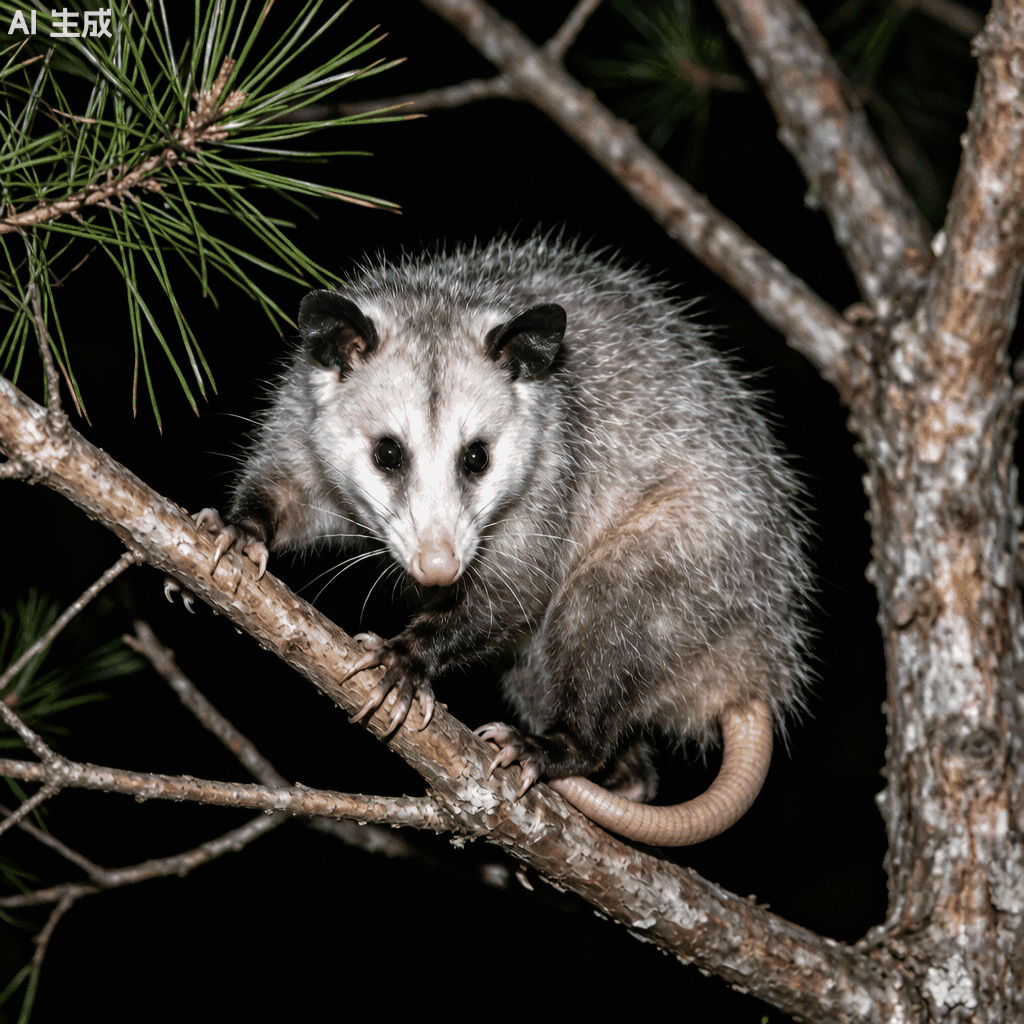
Introduction
The opossum, Didelphis virginiana, is the only marsupial found north of Mexico and the most familiar pouch-bearing mammal of the United States and Canada. Often called the Virginia opossum, it is best known for its habit of playing dead when threatened, a defense so famous that the phrase ‘playing possum’ entered everyday language. A nocturnal, solitary survivor, the opossum thrives at the edges of human civilization as readily as in wild woodlands. Its ancient lineage places it among the oldest surviving mammals on Earth.
Taxonomy
Didelphis virginiana belongs to the order Didelphimorphia, the New World opossums, and the family Didelphidae. It was first described by the German naturalist Johann Christian Erxleben in 1777. The genus Didelphis is the largest among American marsupials, and the Virginia opossum is its most widespread representative. Marsupials evolved separately from placental mammals, making the opossum a distant cousin to kangaroos rather than to rats or dogs.
Physical Characteristics
The Virginia opossum is a medium-sized mammal, measuring roughly 40 to 50 centimeters including its bare, prehensile tail, and weighing between 2 and 6 kilograms. Its fur is coarse and greyish-white, with a pale face and distinctive black, rounded ears. It has fifty teeth, more than any other North American land mammal, and an opposable thumb on each hind foot for climbing. A naked, grasping tail acts as a fifth limb, though adults are too heavy to hang from it for long.
Habitat
Opossums occupy a remarkable variety of habitats, including deciduous forests, woodlands, farmland, wetlands, and suburban neighborhoods. They need tree cover and water nearby but adapt readily to parks and gardens where food is plentiful. They den in hollow logs, rock crevices, abandoned burrows, and even attics or sheds. Their expansion northward has been aided by a warming climate and the shelter offered by human settlements that also attract the red fox and the gray wolf.
Diet
The opossum is an omnivorous scavenger with a strongly beneficial diet. It eats fallen fruit, insects, slugs, snails, small rodents, birds’ eggs, carrion, and household garbage when available. Crucially, it consumes vast numbers of ticks, with a single animal estimated to eat thousands in a season, helping limit the spread of Lyme disease. It also shows a notable resistance to many snake venoms, allowing it to prey on rattlesnakes that would kill other mammals.
Reproduction
Breeding begins in late winter and may continue through autumn, with females producing one or two litters per year. After a very short gestation of only about twelve to thirteen days, tiny, undeveloped young crawl into the mother’s pouch and attach to teats. A litter can include more than twenty babies, though only those that secure a teat survive, as the mother has just thirteen. Young ride on the mother’s back after leaving the pouch and become independent at roughly three to four months of age.
Conservation
The Virginia opossum is listed as Least Concern by the IUCN and remains common across its expanding range. Its adaptability to human-altered landscapes has shielded it from the declines facing many wild species. Nevertheless, individuals suffer heavy mortality from vehicle strikes and persecution despite their ecological value. Because they rarely live more than two or three years in the wild, populations depend on high annual reproduction to remain stable.
Fun Facts
When truly terrified, an opossum can enter a catatonic state with drooling, limp limbs, and a slowed heartbeat that can last for hours, convincing predators the animal is dead. Opossums have a remarkable immunity to rabies compared with most mammals, owing to their lower body temperature. Their prehensile tail helps them balance and carry nesting material, even if it cannot support their full weight. A mother may transport a dozen babies on her back at once, a comical and endearing sight in any backyard.