 By Iris
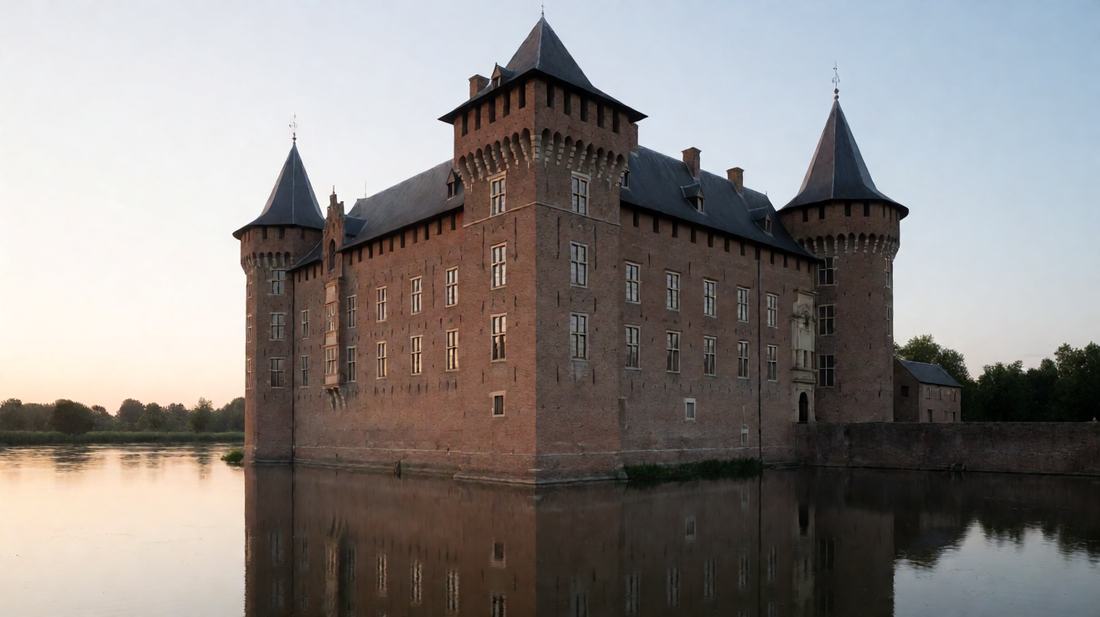
The Teutonic Order | Castles of the Northern Frontier
Historical Profile · The Baltic
The Teutonic Order | Castles of the Northern Frontier
An order of fighting monks built a state out of brick, tolls and grain, held a frontier for three centuries and lost it to a treaty and a change of religion.
AD 1190-1525
Founded
Capital
Route
Shock
End
The big picture
Introduction
One military order built a state on the Baltic shore. It began as a hospital tent at Acre in 1190. Brothers took up arms within a decade. By 1300 their frontier ran three hundred miles.
Brick castles stood at every river crossing, and each one held a garrison through the winter. Such a state was a machine for war, and war needs money. Grunwald broke the army in 1410. In 1525 a treaty ended the order’s rule in Prussia for good.
Trade had filled that sea for centuries before the brothers came, and they taxed it rather than opening it. Money came from grain, tolls and amber, and each one had to be guarded. Castles here look like banks with chapels attached. Every castle on the frontier paid for itself through tolls, mills and farmland, so that war became a business.
Setting
Historical Context
That sea was a trading route before it was a battlefield. Raiders and merchants had used those routes for two hundred years, and both left names behind. Missions followed slowly, since a failed harvest looked like a verdict on the new god. Charlemagne had fought and converted the Saxons on his eastern border. Conquest, baptism and a castle: the model was already old. Poland took that path in 966.
One coast stayed outside, between the Vistula and the Niemen. Its people spoke their own tongue and kept their own gods. Polish dukes raided them for a century and never held the ground. In 1226 a duke of Masovia asked a military order for help, and the order never went home. Land was cheap there, and men were not, so that settlers came from far away. Wood was plentiful, clay was everywhere, and stone had to be shipped in.
Geography shaped every castle built here. Baltic routes carried furs, wax and silver north, and salt and cloth south. Nobody wrote down the local language until the order arrived, and then wrote it badly. Masovia wanted a frontier held cheaply, and the order wanted land. Raiders had come up the rivers for centuries, so that the order built exactly where they had always landed.
Turning points
Key Events
Brothers arrived in 1230. Castles went up first at Chelmno and Torun. Each castle held a garrison, a chapel, a granary and a well. Rivers carried the supplies, so that a siege could last a season. Prussian tribes rose in 1242 and again in 1260, and both revolts cost the order a decade. Winter fighting on the ice stopped the order in the north in 1242. Novgorod held its ground, and the frontier settled there. At the Pregel a fortress rose in 1255, named for a king on crusade.
By 1283 the conquest was complete on paper. Headquarters moved to Marienburg in 1309. That castle became the largest brick building in Europe. Lithuania accepted baptism in 1386, and the order lost its reason to exist. Grunwald followed in 1410. The army was destroyed in an afternoon. War returned in 1454, and the towns joined Poland one by one. Peace in 1466 cut the order in half and made its master a vassal of the Polish crown.
By 1525 the last grand master had turned Lutheran, taken a duchy and dropped his vows. That ended a state that had lasted three hundred years. Each new castle was a new claim, and claims were cheaper than battles. Revolts failed because the order controlled the rivers and the roads. Lithuania grew stronger as the order grew weaker, and the balance tipped after 1386. Towns on the Vistula opened their gates to Poland, so that the order lost its tax base. Each new castle was a new claim, and claims were cheaper than battles, though not cheaper than taxes.
1
2
3
Who held power
People and Powers
Rule sat with a grand master and a chapter of senior brothers. Commanderies ran the farms, the mills and the toll posts. Vows of poverty, chastity and obedience were taken for life, and few brothers broke them. Most brothers were knights or priests. German and Polish settlers filled the new towns, while the countryside stayed local. Merchants from the Hanse brought cloth and salt, and took grain away.
Tolls on that trade paid for the castles. Bishops held a third of the land, and they quarrelled with the master about most things. Cities wanted autonomy, and they got charters first and attitude later. Nobles owed service, and they served for land rather than for love. Nobody in this state agreed on who was in charge, and nobody could settle it. Chroniclers inside the order wrote the story the order preferred.
Copies spread, and the story hardened into fact. Grand masters were elected, not born, and the chapter could remove him. Local Prussians kept their own courts for a while, then lost them. Settlers came from the Rhineland, from Holland and from Poland, and each group kept its own customs.
Everyday world
Daily Life and Society
Grain fed the export trade, and in fact it fed the towns too. Grain grew on flat black soil, and it grew well. Mills turned the rivers into flour and sawed timber for ships. Inland timber gave pitch, tar and board. Amber washed up on the shore, and men gathered it by hand after storms. Amber was declared a monopoly, and licences were sold. Farmers worked long strips and owed labour to the manor.
Salt kept the meat through Lent, because winter killed stock. Towns kept a market square, a church and a row of warehouses. Bread, beer and salted meat fed most families. Plague came in 1349 and returned in later waves. Chronicles counted the dead in thousands, then stopped counting. Guilds paid for funerals, and it paid more for them than for weddings. Dress marked rank here as sharply as it did anywhere in Europe.
Food came from the lagoons, and salt came from the coast. Houses were timber on stone footings, with the fire kept in a central hearth. Bread was baked once a week, and it hardened before the next bake. Markets ran on fixed days, and prices were set before the gates opened. Salt mattered more than silver. Houses were timber on stone footings, with the fire kept in a central hearth, since chimneys came later. Famine came and went, yet the towns kept buying grain.
Craft and ideas
Trade, Technology and Ideas
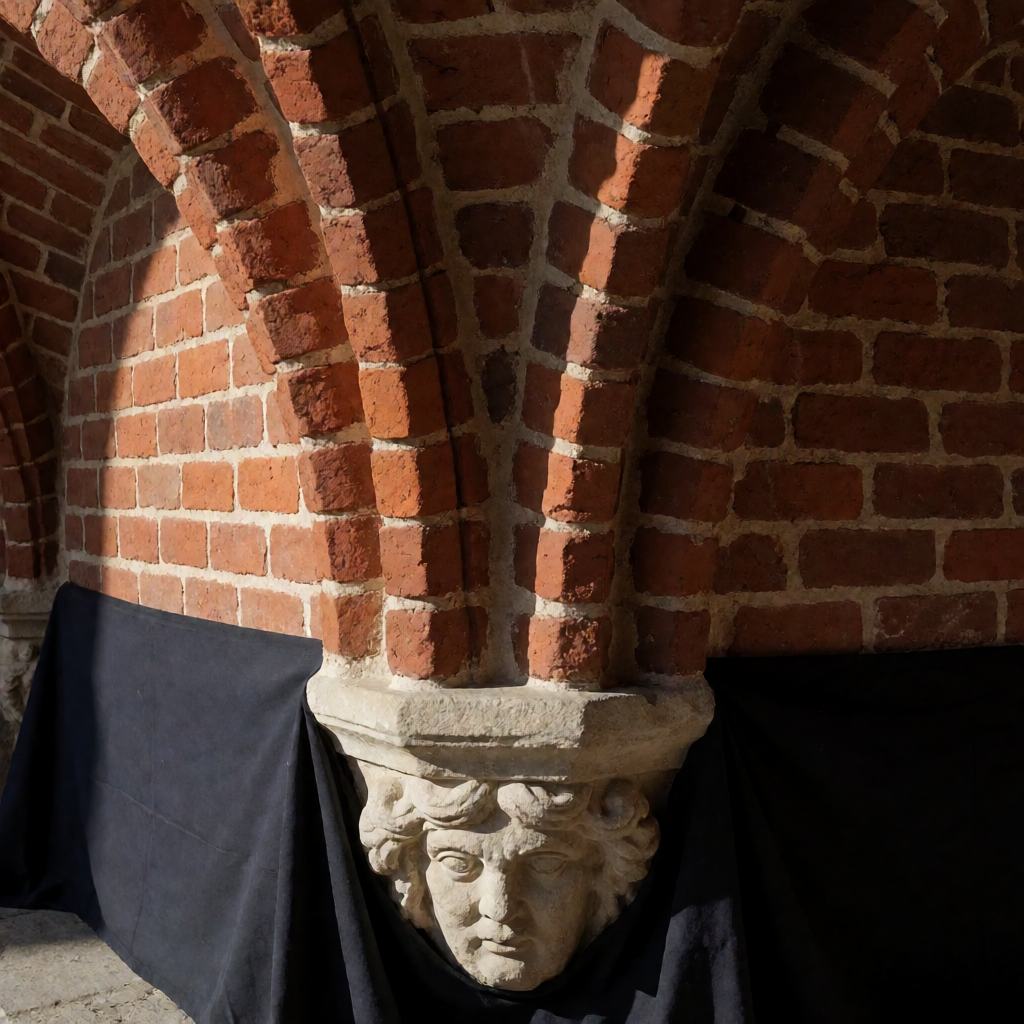
Brick was the great choice here, because stone had to be shipped in. Stone was scarce on the plain, and clay was not. Workshops fired millions of bricks a year, and the kilns burned wood by the ton. Castles rose with pointed arches, thick walls and heated rooms. That design came from the east, and it travelled with the crusades. The Norman Conquest had used castles the same way two centuries earlier.
Conquest, then stone, then law: the sequence repeated across Europe. Hanseatic ships carried the order’s grain to Bruges and London. Credit came with the trade, and debt came with the credit. Books arrived late here, and the first press came after 1500, though a school had existed for a century. Before that, a written page cost more than a week of wages. A Viking Age route had linked this coast to the Black Sea long before, and some of those paths were still in use.
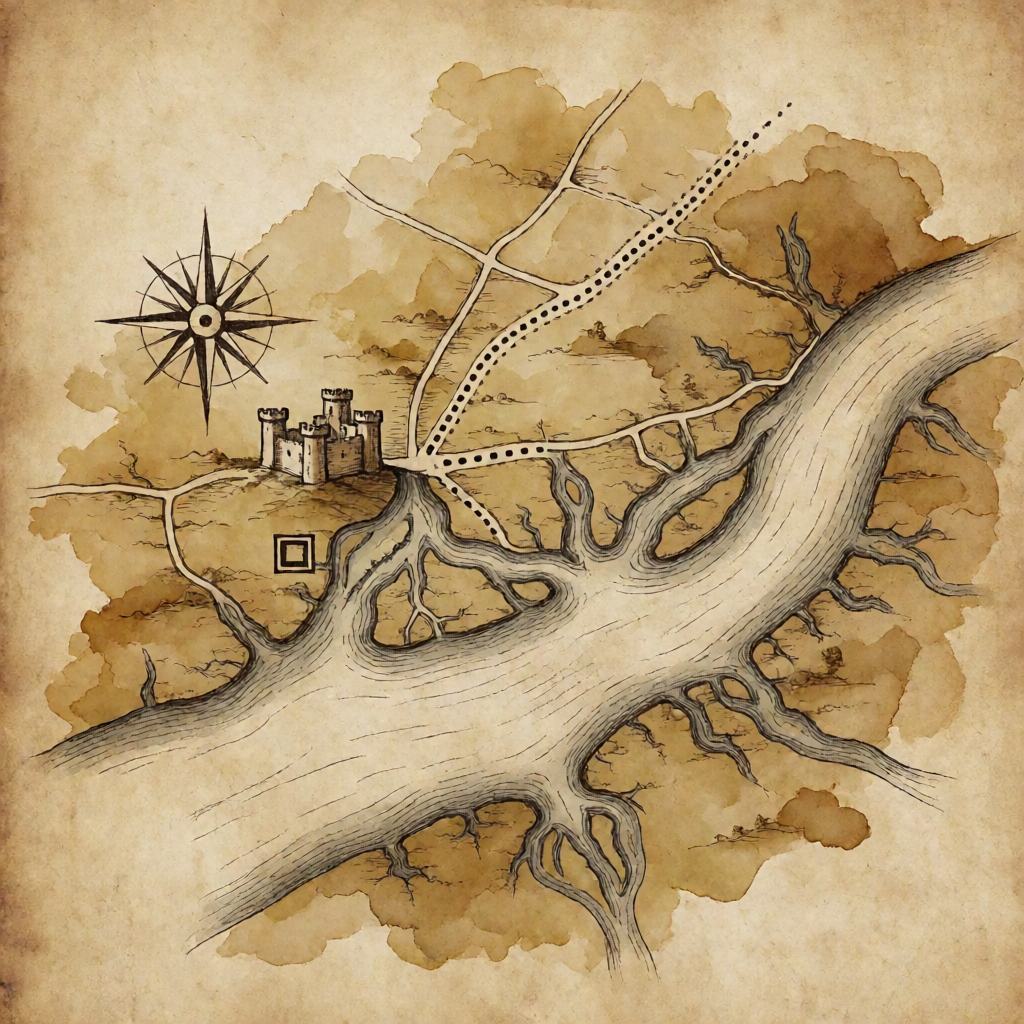
Amber went north, and silver came south. Maps improved slowly, since a pilot kept his notes to himself. Ship design changed faster, and the cog gave way to the carvel hull. A cog was slow but roomy, and it carried bulk cargo cheaply. Accounting improved here as it did everywhere merchants kept two sets of books. Written law arrived late, and custom filled the gap, though custom differed from one town to the next.
What lasted
Legacy
Order survives in Austria as a charitable body. Its castles still stand along the Vistula and the Nogat. Marienburg was rebuilt after 1945 from photographs and old drawings. Prussia took its name from the people the order destroyed. Historians still argue about how much of the conquest was religious. Land, tolls and grain explain more than faith does, though faith was real.
Frontier states that live by conquest must keep conquering. When the frontier closed, the state had nothing left to sell. Such is the pattern, and it repeats. Few states in Europe were built so deliberately, and fewer still were sold so cheaply. Brick Gothic took its name from this coast, and it is still visible in every old town. Castles became museums, and museums became the region’s trade.
The order’s archive ended up in Vienna, and it is still consulted. Brick was cheap. Castles became museums, and museums became the region’s trade, so that the frontier now sells tickets. Even so, the brick outlasted the state.
Side by side
How It Compares
| Point | Teutonic Order | Hanseatic League |
|---|---|---|
| Dates | AD 1190-1525 | AD 1200-1669 |
| Form | A religious order with a state | A league of trading towns |
| Seat | Marienburg | Lubeck |
| Army | Knights and hired troops | Ships and hired troops |
| Money | Tolls, grain and amber | Freight and credit |
| End | Secularised in 1525 | Faded after 1669 |
Common misreadings
What People Get Wrong
- The order is usually called a German state. Most of its subjects were Prussians, Poles and Lithuanians, and few ever saw a German brother.
- Grunwald is usually called the end of the order. It lost an army there and kept its state for another century.
- The castles are usually called fortresses. Most were also warehouses, mills, breweries and banks.
Going further
Sources and Further Reading
- Wikipedia, Teutonic Order
- Encyclopaedia Britannica, Teutonic Order. Encyclopaedia Britannica, Inc.
- Christiansen, E. 1997. The Northern Crusades. Penguin.
- Urban, W. 2003. The Teutonic Knights: A Military History. Greenhill.
Quick hits
Five Things to Remember
- The Teutonic Order began as a hospital at Acre in 1190.
- It moved to Marienburg in 1309, where it built Europe’s largest brick castle.
- Grunwald in 1410 destroyed its army and broke its name.
- Peace in 1466 made the grand master a vassal of Poland.
- In 1525 Prussia became a duchy, and the order lost its state.