 By Iris
The Kara-Khanid Khanate | The First Turkic Muslim State
Historical Profile · Central Asia
The Kara-Khanid Khanate | The First Turkic Muslim State
A Turkic clan took the river valleys of Central Asia, adopted Islam, and made a Turkic tongue the language of courts for the next thousand years.
AD 840-1212
Founded
Seats
Faith
Output
End
The big picture
Introduction
In 840 a Turkic clan took a river valley and called itself a khanate. Within sixty years it held the richest cities of Central Asia, and that changed the language of every court in the region. Its rulers became Muslims, and they made a Turkic tongue official. That tongue had never carried a court before.
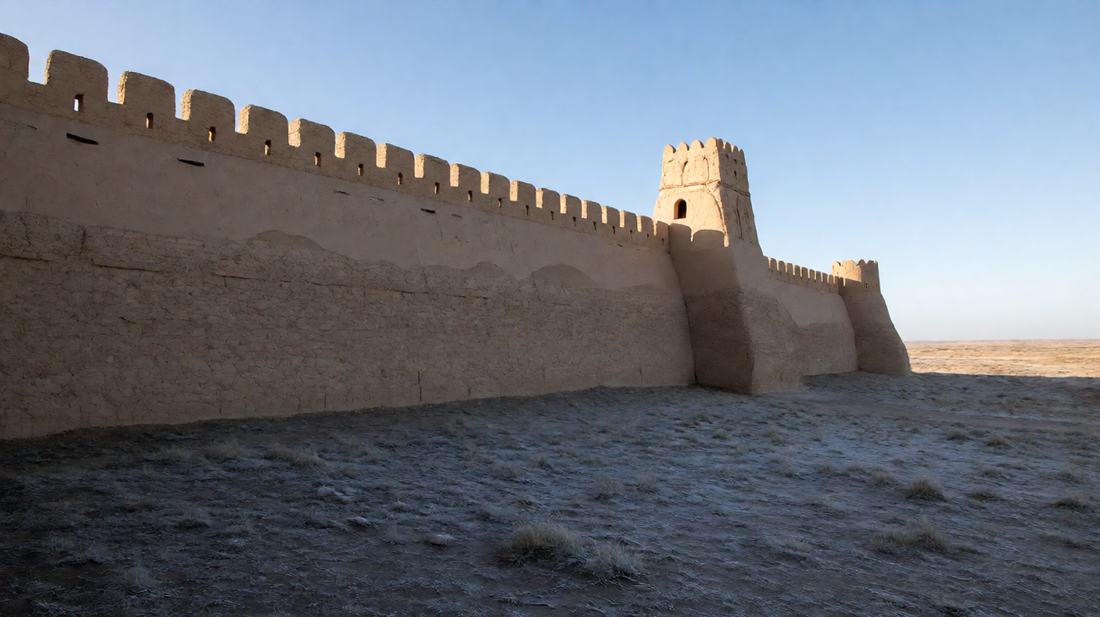
This change outlasted the dynasty by a thousand years. Kashgar was the eastern seat. Samarkand and Bukhara came later, taken from a Persian house. It split in two.
It never reunited. Clerks kept the accounts in Persian long after the khans stopped speaking it, and that habit outlived them all. Roads paid for the state. Even so, the two halves never merged again.
Setting
Historical Context
Central Asia in 800 was a patchwork of oasis cities and open pasture. Trade ran through it, and so did armies, and both paid in silver. Turkic soldiers served every ruler in the region, since they were cheap and mobile. Some of those soldiers took power for themselves. Samanid emirs had ruled from Bukhara, and they fell in 999. Turkic houses took the cities and kept the clerks, and that pattern repeated for two centuries.
Pasture and field met here, and because the border moved with the weather, a bad winter could start a war. Cities paid tribute in coin, and the steppe took payment in goods. Nobody could hold both sides for long. Such a state was an attempt to do exactly that. Grain grew in the oases and stock grew on the steppe, so that each side needed the other and neither could rule alone. Raids settled the argument.
Tribute worked better than war, and it cost less. Nothing here was fixed. A hard winter cut the stock, so families stayed small and the grazing stayed thin. Metal work and leather came off the steppe, and the oases sent grain back the other way.
Turning points
Key Events
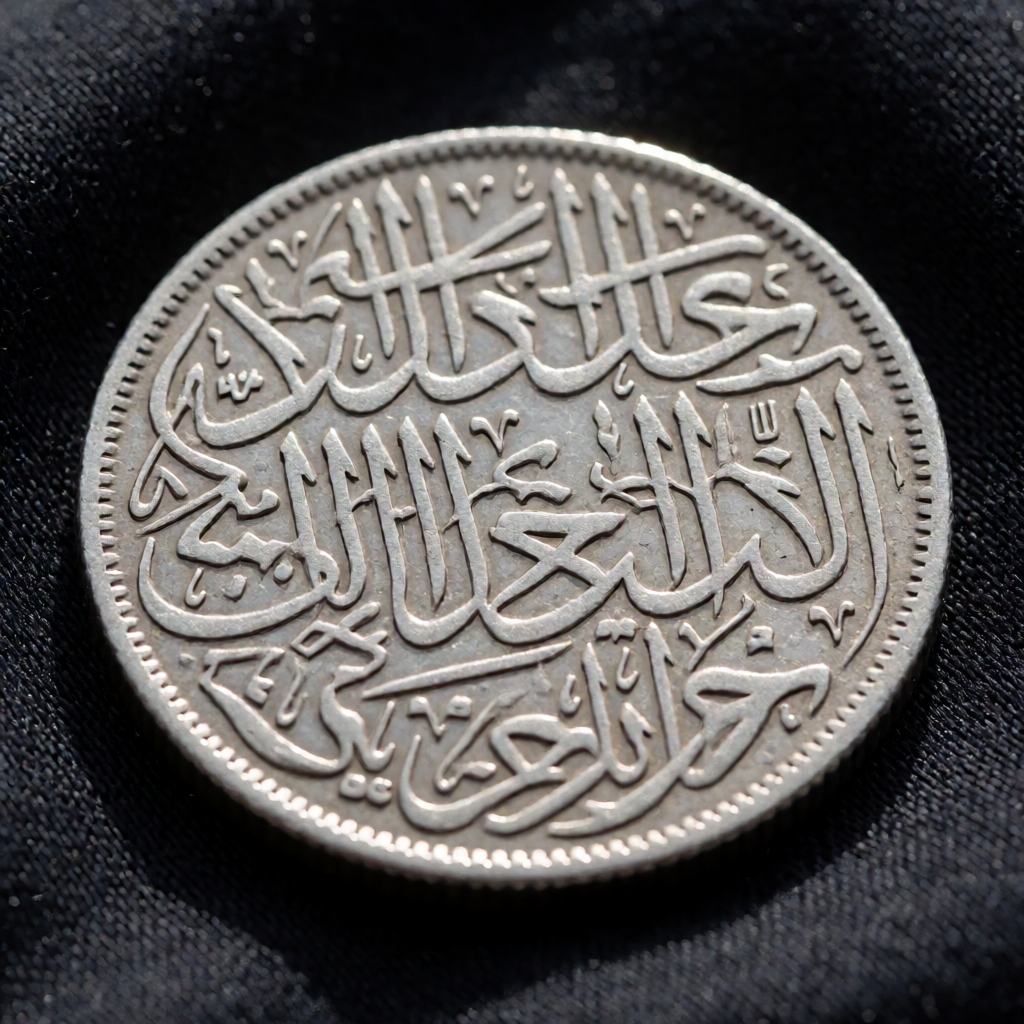
Bilge Kul Qadir Khan took the title around 840. His sons fought each other, as sons did. In 999 the house took Bukhara and ended Samanid rule. Samarkand followed. Another branch held Kashgar and the eastern oases. By 1041 the two halves were separate states, and each struck coins in its own khan’s name.
Seljuk riders took the western cities in the 1040s. Eastern khans survived, though they paid tribute more often than they fought. In 1134 a refugee prince from the north arrived with an army of horsemen, and the khanate could not stop it. That army defeated the khans in 1141. Khans kept their titles and lost their freedom. Khwarezm grew strong to the west and waited.
In 1212 the last khan was executed. Nine years later a Mongol army destroyed the region. In 1141 the khan lost a battle at Qatwan and lost his freedom with it, since the victors kept him as a client. Coins still bore his name. Mongol armies came after, and they ended the story. Khwarezm waited and then struck, since the khans had nothing left to bargain with.
1
2
3
Who held power
People and Powers
Khans ruled with a council of clan leaders, and the council could refuse. That check kept the state stable and slow. Below them sat Persian clerks who ran the taxes. Clerks wrote in Arabic and spoke Persian at home. Soldiers came from the steppe and served for pay rather than land, so that the khan never faced a noble class of his own.
Cities kept their own courts and their own weights. Merchants from Samarkand could sue a khan’s officer and win. Religious scholars held land grants and settled local disputes. No khan here built a standing army, because no khan could pay for one. Any khan who ignored the council found his clans gone by winter, because loyalty here was a bargain rather than an oath.
Custom bound everyone. Courts ran on custom, not on statute, and that made rulings cheap and slow. That bargain held. Scholars argued in the madrasa, yet the argument seldom reached the street. Titles came from the khan, yet land stayed with the clan.
Everyday world
Daily Life and Society
Bread, oil and cheese fed most households. Houses were mud brick, with a flat roof and a courtyard behind a gate. Water came from canals. Canal disputes could last a lifetime, and they often did. Farmers grew grain and fruit, and fruit paid better. Weavers worked in workshops that were taxed by the count of looms, and the count was taken twice a year.
Women ran households and also lent money at interest. Paper was cheap. Markets met daily, and a caravan market met once a year. Winter came early, and it closed the passes for weeks at a time. Bread came from wheat grown under irrigation, and irrigation meant canals that a whole village cleared each spring. Work began at dawn.
Wool, felt and leather clothed the household, since cloth from abroad cost more than most could pay. Rain mattered more than law. Garden plots near the canals grew melons, and melons sold well in the cold months. Bread and salt bound guest to host, and that bond carried legal weight.
Craft and ideas
Trade, Technology and Ideas
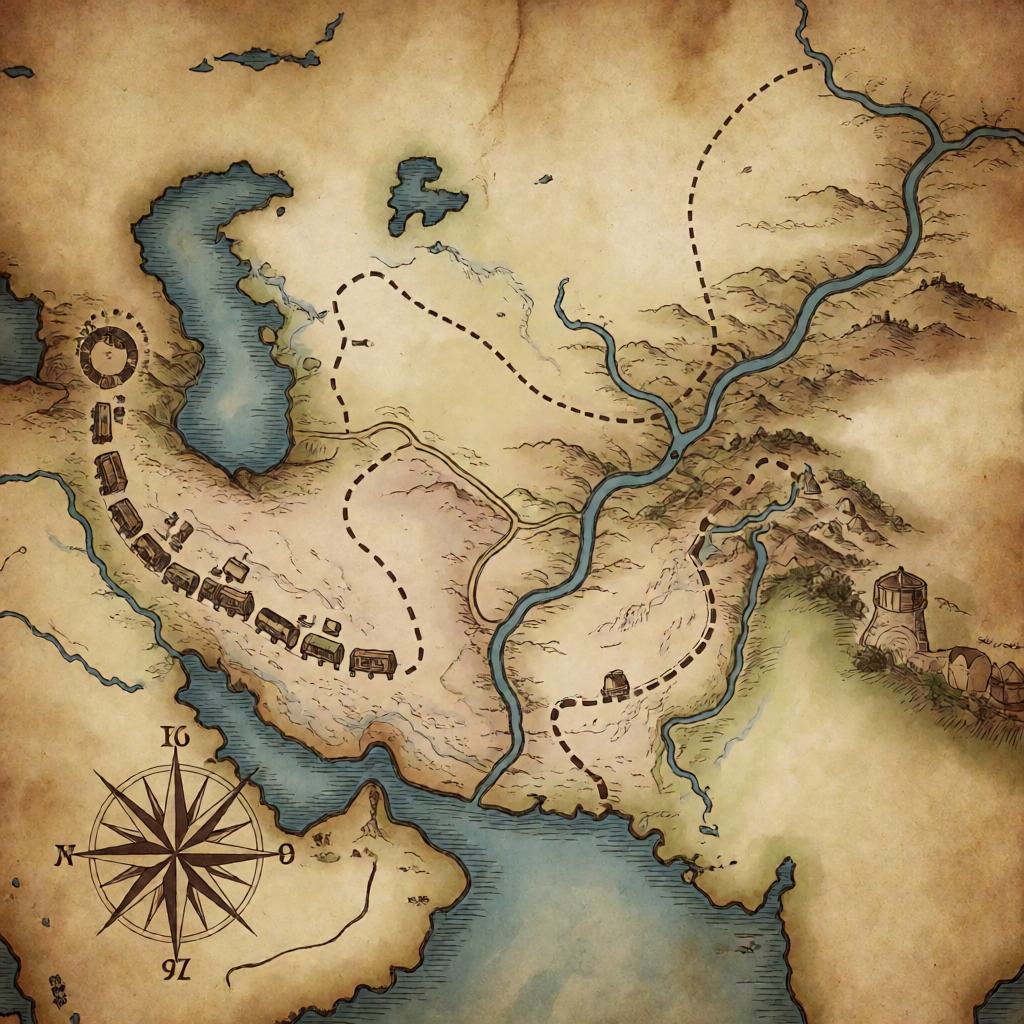
Silk Road traffic ran through the khanate, and the khanate taxed it at every gate. Caravans went east for silk and west for silver. Samarkand made paper, and paper travelled further than any other product of the region. Mills there supplied clerks from Baghdad to Kashgar. Turkic became the language of soldiers and then of poetry. A book written in Kashgar in 1069 set out how a ruler should behave, and it was written for a Turkic prince.
A word list made in 1072 recorded the Turkic tongues for an Arab reader. Both books survive. Scholars translated Greek medicine and Indian mathematics into Arabic here, and that work passed west through Spain. Coins were struck in the name of a khan and a caliph at once. That wording kept the peace with the scholars. Paper reached Europe through this route, and the route paid the khanate in tolls for four hundred years.
Ideas moved with the bales. Medical texts went west, and numbers went with them, while both were copied in Baghdad first. Silver came from the east, and it left again for the steppe. Printing ended the paper trade, though the mills kept running for a while.
What lasted
Legacy
It left a language, a script and two books. Turkic replaced Persian across the open country within three centuries. Timurid Empire princes took the same cities three hundred years later, and their court poets wrote in the same Turkic. Samarkand’s paper trade died when printing arrived. Its own dynasty is barely remembered outside the region.
That seems unfair to a state that lasted almost four centuries. It also misreads the pattern, since steppe states are remembered by their enemies. Enemies wrote the histories here, and they wrote them in Persian. Modern Turkish and Uzbek both descend from the speech that these khans made official, and the link is not in doubt. Names remember them.
Kashgar and Bukhara still carry the marks of the period, though the buildings have been rebuilt many times. Schools taught the new script within two generations, though the old writing survived on coins. Even so, the language outlasted the state.
Side by side
How It Compares
| Point | Kara-Khanid | Samanid |
|---|---|---|
| Dates | AD 840-1212 | AD 819-999 |
| Base | Kashgar and the steppe edge | Bukhara |
| Faith | Islam, adopted at court | Islam, inherited |
| Court language | Turkic and Persian | Persian and Arabic |
| Money | Own coin, own khan’s name | Silver dirhams |
| End | Khwarezm, 1212 | Kara-Khanid, 999 |
Common misreadings
What People Get Wrong
- Chronicles often treat the khanate as a steppe horde that only sacked cities. It kept the clerks, the coin and the canals, and it taxed rather than destroyed.
- Scribes often say the dynasty converted for political reasons alone, and no other. Faith and revenue ran together here, yet the change outlasted the dynasty itself.
- Maps of the period show one state and label the whole thing a khanate. Two halves ruled apart after 1041, and each struck coin in its own khan’s name.
Going further
Sources and Further Reading
- Wikipedia, Kara-Khanid Khanate
- Encyclopaedia Britannica, Karakhanid Dynasty. Encyclopaedia Britannica, Inc.
- Golden, P.B. 1992. An Introduction to the History of the Turkic Peoples. Harrassowitz.
- Pritsak, O. 1955. Die Karachaniden. Der Islam 31.
Quick hits
Five Things to Remember
- It ran from about 840 to 1212.
- No Turkic state had adopted Islam at court before this one.
- Its two halves split by 1041 and never rejoined.
- Paper from Samarkand travelled further than its coins.
- Execution ended the line eleven years before the Mongols came.