 By st20113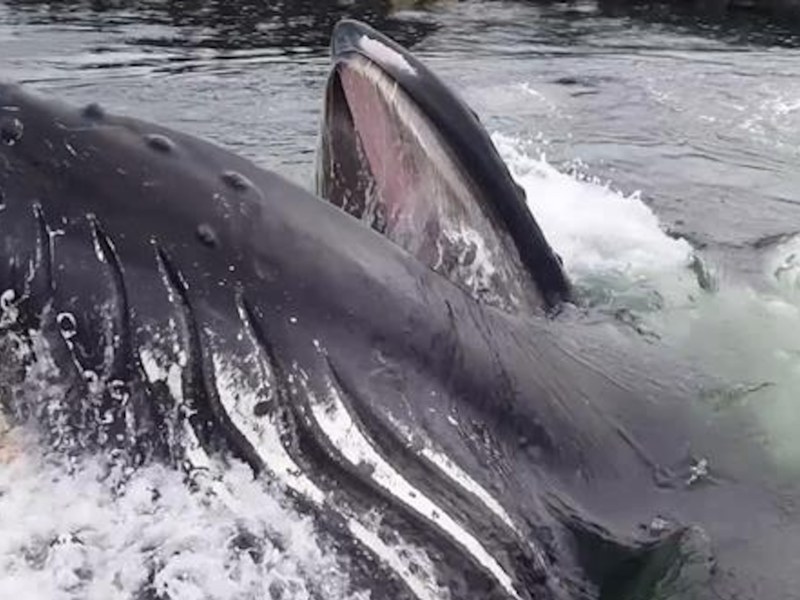
Introduction
The humpback whale (Megaptera novaeangliae) is a species of baleen whale belonging to the family Balaenopteridae. Distinguished by its long pectoral fins (the longest of any cetacean, reaching up to one-third of the body length), distinctive knobbly tubercles on the head, and remarkable songs, the humpback is among the most recognisable and well-studied whales in the world. Found in all major oceans from polar to tropical waters, humpbacks undertake some of the longest migrations of any mammal, with some individuals travelling over 8,000 kilometres between breeding and feeding grounds. Their acrobatic surface behaviour—breaching, spy-hopping, tail-slapping, and flipper-slapping—has made them a flagship species for whale watching and marine conservation worldwide.
Physical Characteristics
Humpback whales are medium-to-large baleen whales, with adults measuring 12–16 metres (39–52 feet) in length and weighing 25–30 tonnes (females slightly larger than males). Their most diagnostic feature is the extraordinarily long, white pectoral fins, which can reach 5 metres (16 feet) in length—roughly one-third of the body—and are thought to aid in thermal regulation, herding fish, and social signalling. The head and lower jaw are covered in distinctive rounded bumps called tubercles, each housing a single hair follicle—sensory structures possibly used to detect water movement and temperature.
The dorsal fin is relatively small and variable in shape, situated on a hump near the tail (from which the common name derives). Coloration is dark grey to black dorsally with varying amounts of white on the ventral surface and pectoral fins; individual whales can be identified by the unique pattern of white and black on the underside of the tail fluke, a technique extensively used in photo-identification studies. Individuals also carry unique patterns of scarring from barnacles, cookiecutter sharks, and orca encounters that serve as natural identity markers.
Migration and Habitat
Humpback whales are highly migratory, moving between high-latitude summer feeding grounds in polar or subpolar waters and low-latitude winter breeding and calving grounds in tropical or subtropical waters. This migration is driven by the seasonal availability of prey (krill in the polar regions; small schooling fish in some populations) and the thermal requirements of newborn calves. Northern and southern hemisphere populations are largely isolated from each other and follow opposite seasonal patterns, with each population subdivided into multiple distinct stocks.
Major populations include the North Atlantic stocks (feeding off Norway, Iceland, Greenland, and Newfoundland; breeding in the Caribbean and West Africa), the North Pacific stocks (feeding off Alaska, California, and British Columbia; breeding off Hawaii, Mexico, and Central America), and multiple Southern Ocean populations. Research using satellite tagging has revealed that humpbacks make much more direct and rapid migrations than previously believed, with some individuals completing north-south trans-oceanic journeys in as little as six weeks.
Song and Social Behaviour
Male humpback whales produce complex, structured songs that can last from 10 to 35 minutes and are repeated for hours, particularly during the breeding season. The song is one of the most elaborate acoustic displays known in the animal kingdom, involving a hierarchy of themes, phrases, and units that are organised into a repetitive structure. All males within a population sing essentially the same song at any given time, but the song evolves gradually over the course of a breeding season, with all singers incorporating the new changes. This cultural transmission of song patterns across an entire population represents one of the most striking examples of animal cultural evolution.
Social structure outside the breeding season is fluid and dynamic; humpbacks are generally solitary or form loose, short-lived groups. On feeding grounds, coordinated bubble-net feeding—a cooperative hunting technique in which groups of whales dive below a school of fish and release columns of bubbles to corral the prey before lunging upward through the bait ball—demonstrates sophisticated group coordination and social learning. Mothers and calves maintain close contact during migration and in breeding grounds, with calves relying entirely on maternal milk for the first 6–12 months of life.
Population Recovery and Conservation
The humpback whale was devastated by commercial whaling. Global populations were reduced to approximately 10–15% of pre-whaling levels, with some regional populations hunted to near-extinction. The species was given full protection under the International Whaling Commission’s moratorium on commercial whaling in 1966, and populations have been recovering in most parts of the world, with some populations now approaching or exceeding pre-exploitation levels.
The IUCN lists the global humpback whale population as Least Concern, though several regional populations remain Endangered or Critically Endangered, including the Arabian Sea population (estimated at fewer than 100 individuals), the Cape Verde Islands breeding stock, and the western North Pacific population. Contemporary threats include ship strikes, entanglement in fishing gear (ghost nets and derelict gear are particularly dangerous), ocean noise (which interferes with communication and navigation), climate-driven changes in prey availability, and the indirect effects of ocean warming and acidification on krill populations.
Cultural and Economic Significance
Humpback whales have profound cultural and economic significance. Indigenous peoples of the Pacific, Atlantic, and Arctic coasts have hunted humpbacks for millennia, and the species features prominently in oral traditions, art, and spiritual practices of coastal communities worldwide. The recovery of humpback populations has made them a cornerstone of the global whale-watching industry, which generates over US$2 billion annually and supports hundreds of thousands of jobs in coastal communities.
The study of humpback whales has contributed significantly to marine biology and conservation science. Photo-identification techniques pioneered with humpbacks have become a model for monitoring wild animal populations; satellite tagging has transformed understanding of cetacean migration; and the study of humpback song has provided foundational insights into animal culture, learning, and acoustic communication. Humpbacks have also inspired major shifts in public attitudes toward marine conservation and have served as ambassadors for ocean protection more broadly.
[…] Giant sequoias grow most vigorously in the fire-adapted ecosystems of the Sierra Nevada, where periodic low-intensity fires clear competing conifers and enrich the soil with nutrients. The trees are remarkably fire-adapted: their thick bark protects the living cambium layer from the intense heat of surface fires, and fire stimulates cone opening and seed release, while fire-created mineral soil beds provide ideal conditions for germination. Paradoxically, fire suppression – a standard forestry practice throughout the 20th century – actually threatened giant sequoia recruitment, demonstrating the importance of natural disturbance processes in maintaining healthy forest ecosystems. […]
[…] killer, and ultimately recognized as a keystone predator whose presence cascades through entire ecosystems to maintain biodiversity and ecological balance. Once ranging across virtually all of the Northern […]
[…] forests across the Northern Hemisphere, providing critical ecological functions that sustain forest ecosystems. The dense canopy of mature Sugar Maple and Red Maple forests creates the cool, shaded understory […]
[…] fast runner on land and a powerful swimmer. As a keystone species, it plays a unique role in its ecosystem by transferring nutrients between water and […]
[…] The zebra is an African equine mammal belonging to the genus Equus, the same group that includes horses and donkeys. Best known for their vivid black-and-white striped coats, zebras roam the grasslands and savannas of eastern and southern Africa. They are highly social animals whose herds contribute to the structure and resilience of their ecosystem. […]
[…] The snowy owl (Bubo scandiacus) is a large, white owl of the Arctic tundra, instantly recognizable by its pale plumage and brilliant yellow eyes. A powerful raptor built for cold, it is one of the few birds that remain on the tundra through the long northern winter and a striking presence in the circumpolar ecosystem. […]
[…] Within this range, the species exploits an extraordinary diversity of habitats, from tropical rainforest and cloud forest to dry deciduous forest, thorn scrub, semi-desert margins, and even agricultural […]
Most chameleon species are found in Africa south of the Sahara and on the island of Madagascar, which is a major center of chameleon diversity with over 70 species found nowhere else. Other species occur in the Middle East, India, Sri Lanka, and a few species have naturalized in Hawaii, California, and Florida. Their distribution is strongly linked to warm tropical and subtropical environments.
the cerrado ecosystem, the maned wolf plays an important role as both a predator and a seed disperser. By consuming large
as warming ocean temperatures and ocean acidification affect the coral reef and coastal marine habitats on which many pufferfish species depend. Conservation efforts focus on improving the
[…] human agriculture, sunflowers support diverse ecological communities and their ecosystem communities. Their pollen and nectar provide food for bees, butterflies, and other insects […]
[…] Penguins are a group of flightless seabirds belonging to the family Spheniscidae, almost exclusively found in the Southern Hemisphere. Ranging from the Galápagos Islands on the equator to the frozen shores of Antarctica, penguins have evolved streamlined bodies, flipper-like wings, and dense waterproof feathers for an aquatic lifestyle. They are a keystone presence in the polar and subpolar marine ecosystem. […]
[…] Parana, Essequibo, and Orinoco basins. Within these river systems, they occupy a wide range of aquatic habitats including main river channels, floodplain lakes, oxbows, marginal lagoons, swamps, and flooded […]
most species are docile, secretive creatures that play important roles as predators in their native ecosystems. Tarantulas are among the longest-lived spiders, with some females living 20-30 years or