 By st20113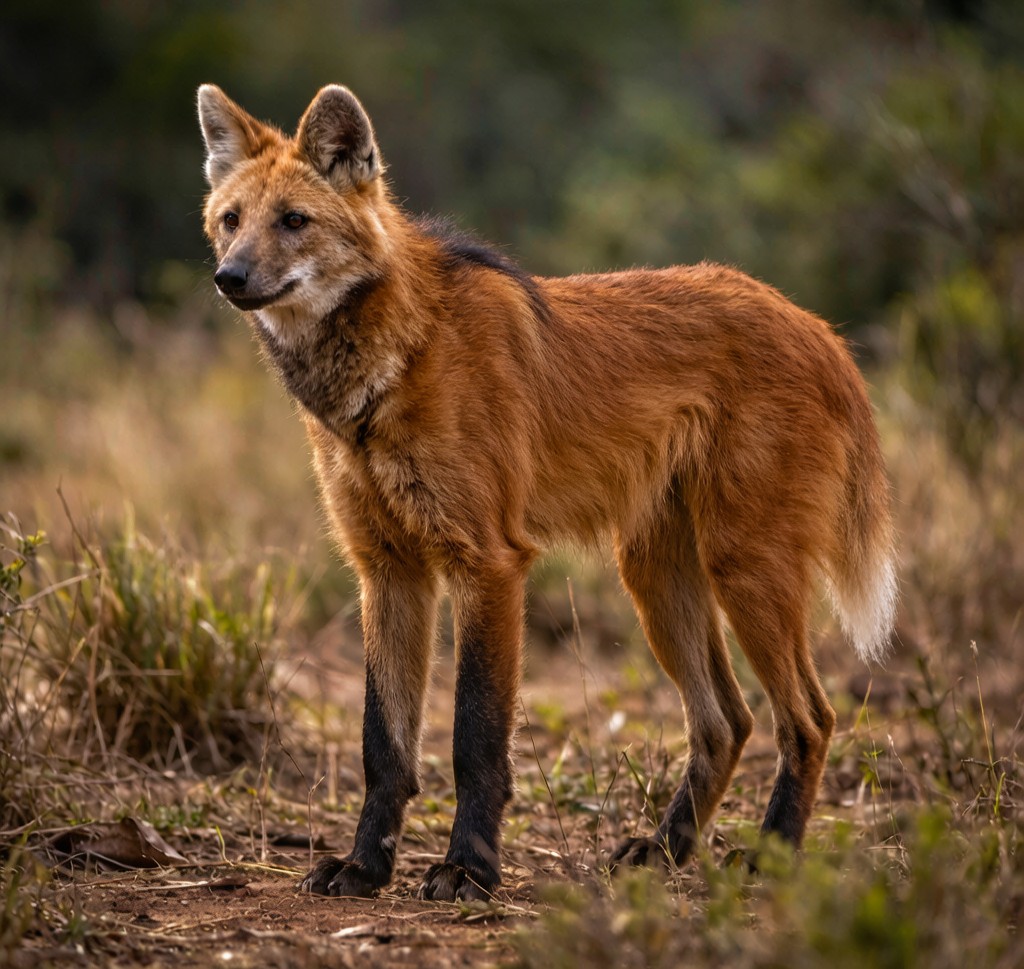
The Maned Wolf (Chrysocyon brachyurus) is one of the most distinctive and unusual canids in the world – a tall, lanky, fox-like animal of the South American grasslands that stands nearly 90 centimeters at the shoulder, giving it the appearance of a fox on stilts, and whose long, slender legs, massive ears, and shaggy, reddish-orange coat make it one of the most unmistakable carnivores in the world.
Overview
The Maned Wolf (Chrysocyon brachyurus) is one of the most distinctive and unusual canids in the world – a tall, lanky, fox-like animal of the South American grasslands that stands nearly 90 centimeters at the shoulder, giving it the appearance of a fox on stilts, and whose long, slender legs, massive ears, and shaggy, reddish-orange coat make it one of the most unmistakable carnivores in the world. Despite its name and its fox-like appearance, the maned wolf is not a wolf or a fox but the sole living member of the genus Chrysocyon – a lineage that diverged from the other South American canids approximately 7 million years ago and has no close living relatives. The species is endemic to the cerrado, or savanna-forest mosaic, of central South America, particularly in Brazil, Bolivia, and Paraguay.
The maned wolf’s most distinctive feature is its remarkable leg-to-body ratio: its legs are disproportionately long – the longest of any canid relative to body size – an adaptation that allows the animal to see over the tall grass of its grassland habitat. The coat is a striking reddish-orange to golden, with black legs and muzzle, large black ears, and a distinctive black ruff or mane of longer hairs along the neck and back that can be erected when the animal is threatened or displaying. The mane is thought to serve a dual function: as a threat display that makes the animal appear larger, and as a visual communication signal between individuals.
Habitat and Diet
The Maned Wolf is found in the cerrado biome of central South America – a vast, diverse landscape of tropical savanna, grassland, wetlands, and dry forest that covers approximately 2 million square kilometers of Brazil, Bolivia, and Paraguay. The species is strongly associated with open habitats: cerrado savanna, marshland, and the edges of forest patches, and avoids dense forest and truly open grassland. The maned wolf’s distribution is closely tied to the availability of the fruits and small animals that constitute its diet, and the species’ home range can cover 50 to 100 square kilometers or more, depending on habitat quality and the availability of resources.
The maned wolf’s diet is remarkably omnivorous – more so than any other large canid. Approximately 50 percent of the species’ diet consists of fruits and vegetables, including a specialized fruit called the wolf apple (Solanum lycocarpum) – a tomato-like fruit that is a critical food source and which the maned wolf is so dependent on that it has been called the “wolf apple wolf.” The remaining 50 percent of the diet consists of small mammals (particularly rodents), birds, reptiles, insects, and other invertebrates. The maned wolf is a solitary hunter that does not form packs and typically hunts alone at night, using its keen hearing to locate prey moving through the tall grass of the cerrado.
Behavior and Ecology
The maned wolf is a predominantly solitary animal – one of the most solitary of all canids – with pairs coming together only briefly during the breeding season. Unlike wolves and other social canids, the maned wolf does not form packs, and adults maintain large, overlapping home ranges that are marked with a distinctive scent: a chemical signal produced by glands in the footpads that communicates individual identity, reproductive status, and territorial boundaries to other maned wolves in the area. The species communicates using a distinctive “roar-bark” call – a low-frequency vocalization that carries across the open savanna and is used to maintain contact with mates and to advertise territorial boundaries.
In the cerrado ecosystem, the maned wolf plays an important role as both a predator and a seed disperser. By consuming large quantities of wolf apples and other fruits, the maned wolf is one of the most important seed dispersers in the cerrado, helping to maintain the diversity of plant communities across the landscape. The species’ diet of small rodents also helps regulate populations of agricultural pests, providing an important ecosystem service to farmers in rural Brazil. However, the maned wolf rarely attacks livestock – despite its fearsome appearance – and is more often a victim of persecution based on unfounded fears about its impact on agriculture.
Conservation
The Maned Wolf is listed as Vulnerable on the IUCN Red List, reflecting population declines driven by the dramatic loss and fragmentation of its cerrado habitat. The cerrado – one of the world’s most biodiverse savannas, with more plant species than any other savanna in the world – has been heavily converted to agriculture, particularly soybean and sugarcane production, and is now one of the most threatened biomes in the Americas. It is estimated that only 20 to 50 percent of the original cerrado vegetation remains, and the species’ populations are now highly fragmented into isolated patches surrounded by agricultural land.
Beyond habitat loss, the maned wolf is also threatened by vehicle strikes (the species’ habit of walking along roads makes it particularly vulnerable to collisions with vehicles), persecution by farmers (who sometimes kill the animal in the mistaken belief that it attacks livestock), and hybridization with domestic dogs, which has been documented in several areas and represents a genetic threat to the integrity of wild populations. Conservation efforts focus on protecting remaining patches of cerrado habitat, establishing wildlife corridors between isolated populations, reducing human-wildlife conflict through community-based conservation programs, and monitoring populations through field surveys and camera trapping.