 By st20113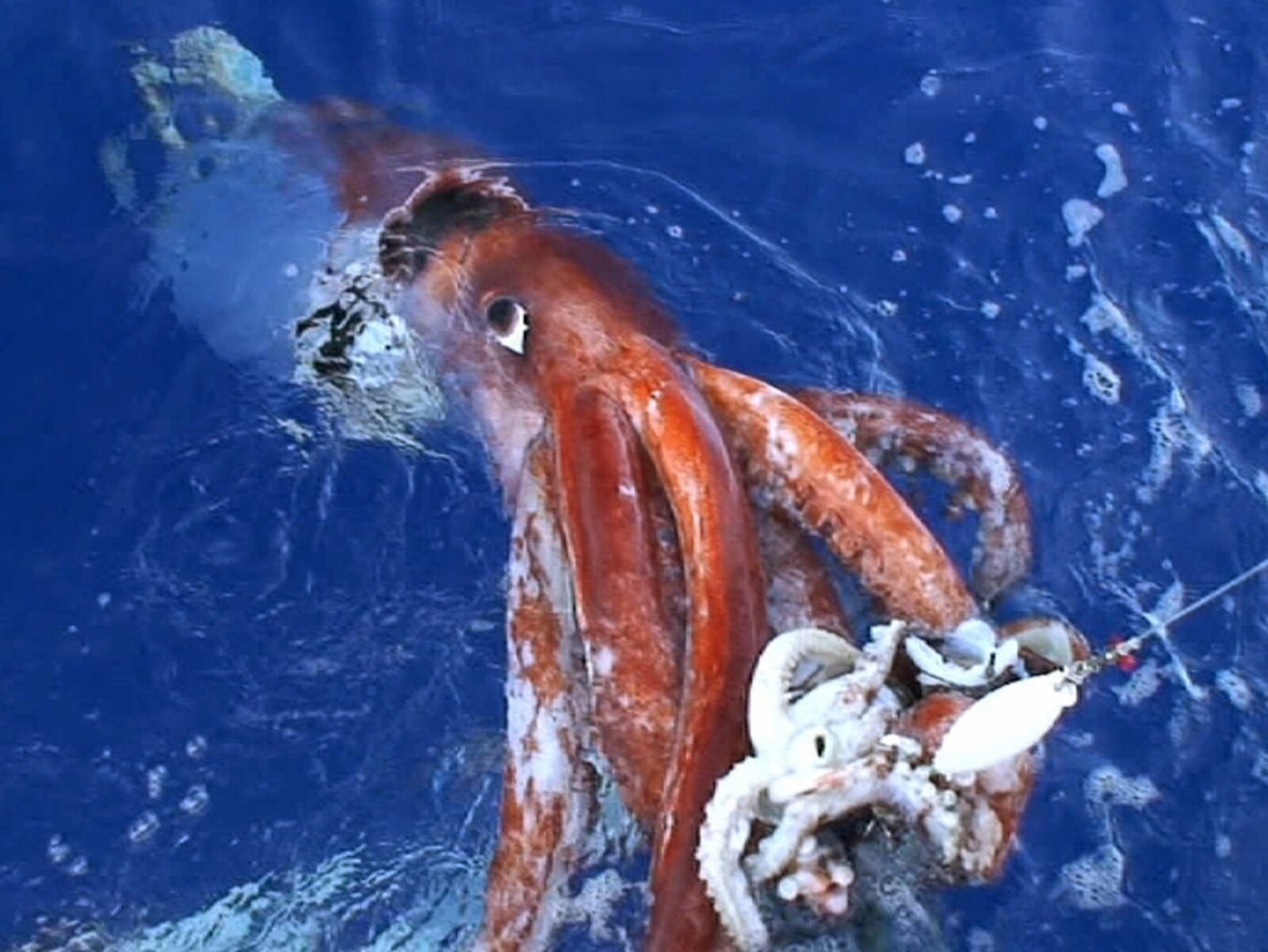
Introduction
The giant squid (Architeuthis dux) is one of the largest invertebrate animals on Earth, surpassed in size only by the colossal squid (Mesonychoteuthis hamiltoni). Reaching estimated mantle lengths of 12–13 metres (39–43 feet) and total lengths (including tentacles) of up to 18–20 metres (59–66 feet), it is among the most massive living invertebrates. For centuries, this deep-sea giant was known only from dead or dying specimens washing ashore, dead specimens found in sperm whale stomachs, and from the scars left on sperm whales—their primary predator. The species remained one of the most elusive animals in the ocean until 2004, when researchers from the National Museum of Marine Biology and Aquarium in Taiwan obtained the first footage of a giant squid in its natural deep-sea habitat.
Physical Characteristics
The giant squid’s body (mantle) is a muscular, streamlined cylinder that can reach 2–3 metres (6.5–10 feet) in length in adults. The mantle tapers to two large, triangular fins at the rear, which are used for locomotion and steering. The most visually striking features are the eight relatively short arms and two extraordinarily long tentacles, which together can extend a substantial distance from the body. Each arm and tentacle is lined with two rows of powerful, inward-facing suction cups equipped with sharp, chitinous rings that help grip prey.
The giant squid’s eyes are among the largest in the animal kingdom—up to 27 centimetres (11 inches) in diameter—larger than a dinner plate, enabling the animal to detect bioluminescence and faint light cues in the pitch-black deep ocean. The beak, located at the centre of the arms where they converge, is a hard, parrot-like structure made of chitin that can cut and tear prey into manageable pieces before ingestion. The digestive system leads to the radula, a toothed ribbon inside the mouth used for further processing food. Like all squid, the giant squid has three hearts and blue copper-based blood (haemocyanin).
Habitat and Distribution
The giant squid has a near-global oceanic distribution, found in all the world’s oceans except the polar regions, with records most concentrated in the North Atlantic, the North Pacific (particularly around Japan and New Zealand), and the South Atlantic. It inhabits the deep ocean, primarily the mesopelagic (200–1,000 metres) and bathypelagic (1,000–4,000 metres) zones, though juveniles are thought to spend more time in shallower waters. The species’ vertical distribution and horizontal range suggest it is an opportunistic inhabitant of continental shelf edges, seamounts, and open ocean areas.
What little is known of giant squid behaviour comes largely from deep-sea footage, strandings, and evidence from predator interactions. Sperm whales, their principal natural predator, carry distinctive sucker scars that provide a record of individual encounters and suggest that giant squid are aggressive prey that fight back using their arms and hooks. The species is presumed to be a solitary, active predator, though the possibility of group behaviour has been hypothesised.
Behaviour and Life Cycle
The giant squid is an active predator capable of rapid movement through jet propulsion—drawing water into the mantle cavity and forcibly expelling it through a funnel to propel the body in the opposite direction. Its two elongated tentacles are used to capture prey at a distance, while the eight shorter arms manipulate and transport prey to the beak. The diet consists of deep-sea fish, smaller squid species, and possibly crustaceans, though direct observations are extremely rare.
The life cycle of the giant squid remains incompletely understood. Like other squid, they are presumed to be semelparous (reproducing once and then dying). A single female can produce millions of eggs, which are released into the water column in a single massive spawning event and develop into planktonic paralarvae that drift in the upper ocean before descending to deeper waters as they grow. Growth rates are rapid; individuals can reach several metres in length within a few years. Maximum lifespan is estimated at around five years based on statolith (balance organ) analysis of captured specimens.
The Giant Squid in Culture and Science
The giant squid has captured human imagination for centuries and appears prominently in maritime folklore, most famously as the Kraken—the legendary sea monster of Scandinavian mythology said to rise from the depths to devour ships. This image, though scientifically inaccurate (giant squid pose no threat to large vessels), reflects the genuine awe inspired by an animal that was, for most of history, known only by incomplete remains. Herman Melville’s Moby-Dick (1851) includes a famous depiction of a giant squid, and Jules Verne’s Twenty Thousand Leagues Under the Seas (1870) features encounters with a colossal squid-like creature.
Modern science has progressively demystified the giant squid. In 2004, Japanese researchers Tsunemi Kubodera and Kyoichi Mori obtained the first photographs of a wild giant squid in its natural environment, capturing images at a depth of 900 metres off the Ogasawara Islands. In 2012, the same team achieved the first video footage of an adult giant squid in the wild. In 2019, researchers from the NOAA and other institutions published the complete genome of Architeuthis dux, providing new insights into the genetic basis of gigantism, large eyes, and deep-sea adaptation in this extraordinary animal.
Conservation Status
The giant squid is classified as Data Deficient on the IUCN Red List. Its deep-sea existence and near-global distribution make population assessment extremely difficult with current survey methods. It is not targeted by commercial fisheries but is captured as bycatch in deep-sea trawl, longline, and purse seine fisheries, particularly in the North Pacific. Sperm whale predation is a significant source of natural mortality. Climate change and ocean deoxygenation may affect the availability of preferred prey species and the suitability of deep-sea habitat, though the effects remain poorly quantified.
The giant squid plays an important ecological role as both predator and prey in deep-sea food webs, linking mesopelagic and bathypelagic trophic levels. Its status as one of the largest invertebrate predators in the ocean makes it a significant indicator of deep-sea ecosystem health, and monitoring programmes are increasingly incorporating giant squid strandings and bycatch data as indicators of deep-sea environmental conditions.