 By st20113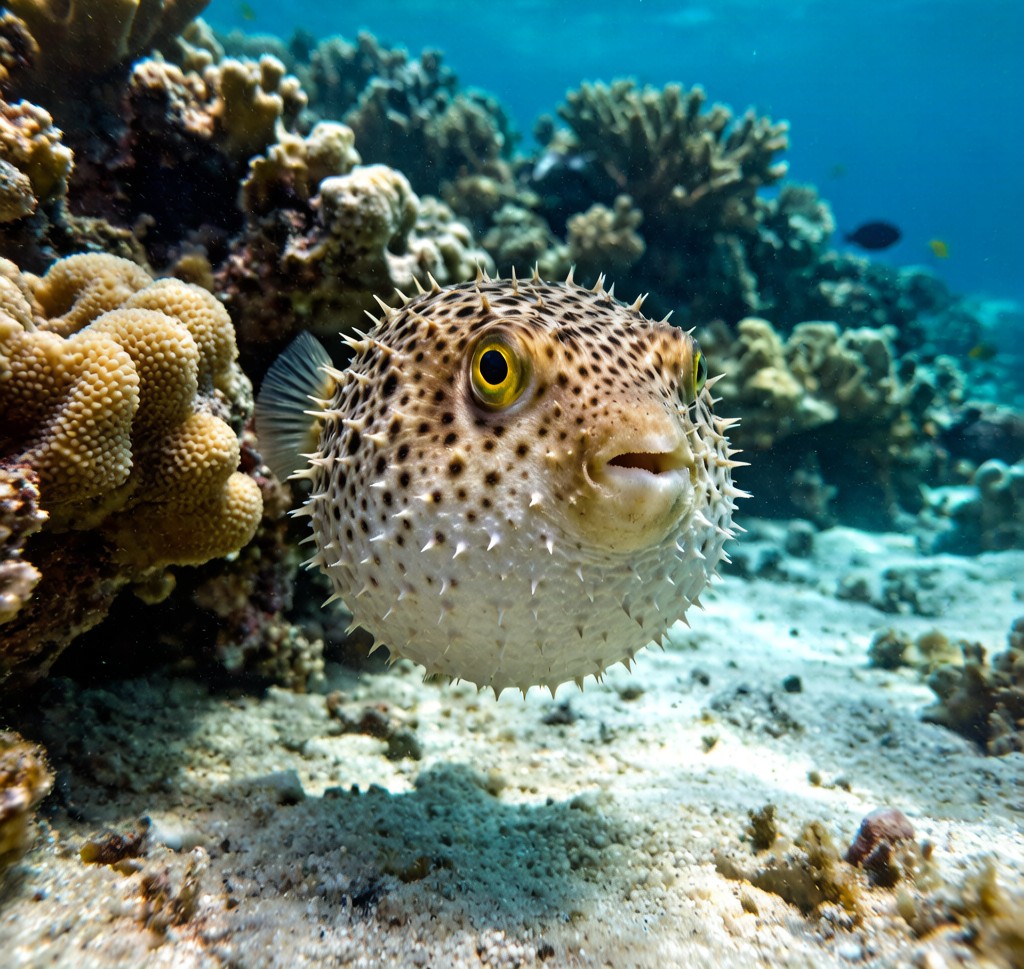
Overview
The Pufferfish (family Tetrodontidae) are among the most bizarre and fascinating fish in the ocean – a group of approximately 200 species found in tropical and temperate waters worldwide, characterized by their ability to inflate their bodies into a large, nearly inedible ball when threatened. This inflation mechanism – which involves the rapid ingestion of water or air into a highly elastic stomach that can expand to many times its normal volume – is one of the most dramatic defensive adaptations in the animal kingdom. A fish that moments before was a normal-sized, sleek swimmer suddenly becomes a round, spiny ball that is too large for most predators to swallow and covered in spines that point outward in all directions.
Pufferfish are also remarkable for containing one of the most potent natural toxins known to science: tetrodotoxin (TTX), a powerful neurotoxin that blocks sodium channels in nerve cells, causing paralysis and death from respiratory failure in vertebrates including humans. A single pufferfish contains enough tetrodotoxin to kill 30 adult humans, and there is no known antidote. Despite this, pufferfish – known as fugu in Japan – is considered a delicacy in Japan, China, and Korea, where specially trained chefs are licensed to prepare it in ways that remove the most toxic organs while leaving the flesh safe to eat. In Japan, fugu consumption is associated with approximately 50 poisoning cases per year, approximately 5 of which are fatal – making it one of the most dangerous foods in the world.
Defense Mechanisms
The pufferfish’s primary defense mechanism – inflation – is a dramatic but energetically costly response that is triggered only as a last resort when other defensive options (fleeing or hiding) have failed. When threatened, the pufferfish rapidly ingests water (or air if at the surface) into its highly elastic stomach, which can expand to accommodate many times the fish’s normal stomach volume. Simultaneously, the pufferfish raises its spines – which are modified scales that are normally flat against the body – outward to create a spiny, impenetrable sphere. The whole process takes only a few seconds, and the inflated fish floats in the water column like a large, unappetizing balloon. Most predators quickly learn to avoid pufferfish – both inflated and deflated – after one unpleasant encounter.
The tetrodotoxin in pufferfish is not produced by the fish itself but by bacteria in the genus Pseudoalteromonas that live in the pufferfish’s gut and various tissues. The pufferfish is immune to its own toxin through genetic modifications to its sodium channel proteins that prevent the tetrodotoxin from binding. Research suggests that tetrodotoxin may serve multiple functions for the pufferfish: as a potent chemical defense against predators, as an antimicrobial agent that keeps the gut microbiome healthy, and possibly as a chemical cue in social communication between individuals.
Intelligence and Behavior
Despite their comical appearance, pufferfish are considered among the most intelligent of all fish species – with cognitive abilities that rival those of some birds and mammals. In laboratory tests, pufferfish have demonstrated the ability to learn complex tasks, remember learned information for extended periods, and distinguish between different human faces. Some researchers have described pufferfish as the “geniuses” of the fish world – an assessment based on their relatively large brain-to-body size ratio, their complex social behavior, and their sophisticated problem-solving abilities.
Perhaps the most remarkable evidence of pufferfish intelligence is found in their mating behavior. Several species of pufferfish – most famously the male white-spotted pufferfish (Torquigener albomaculosus) of Japan – create elaborate geometric sand sculptures on the seafloor to attract females. The male constructs a precise, circular structure up to 2 meters in diameter by swimming in spiraling patterns along the seafloor and disturbing the sand to create a series of raised ridges and valleys. Research has shown that female pufferfish evaluate the quality of these structures and preferentially mate with males that have constructed the most symmetrical and complex designs. The time and energy invested in these structures – combined with the precision and consistency of the construction – represents a form of cognitive display that is unique among fish.
Conservation
Pufferfish populations are generally considered to be relatively stable and the group is listed as Least Concern on the IUCN Red List overall. However, individual species vary significantly in their conservation status, and several species are listed as threatened or near-threatened due to overfishing, habitat loss, and climate change. Pufferfish are targeted by both commercial and recreational fisheries throughout their range, and several species – including the well-known fugu species of Japan – have experienced significant population declines due to overfishing and habitat degradation.
The blowfish or pufferfish trade poses particular challenges for conservation: the high market value of fugu creates strong economic incentives for overfishing, and the difficulty of identifying different pufferfish species in the market makes enforcement of fishing quotas and size limits challenging. Climate change is emerging as an additional threat to pufferfish populations, as warming ocean temperatures and ocean acidification affect the coral reef and coastal marine habitats on which many pufferfish species depend. Conservation efforts focus on improving the sustainability of pufferfish fisheries through better catch monitoring, species-specific management, and the development of aquaculture programs to reduce pressure on wild populations.