 By st20113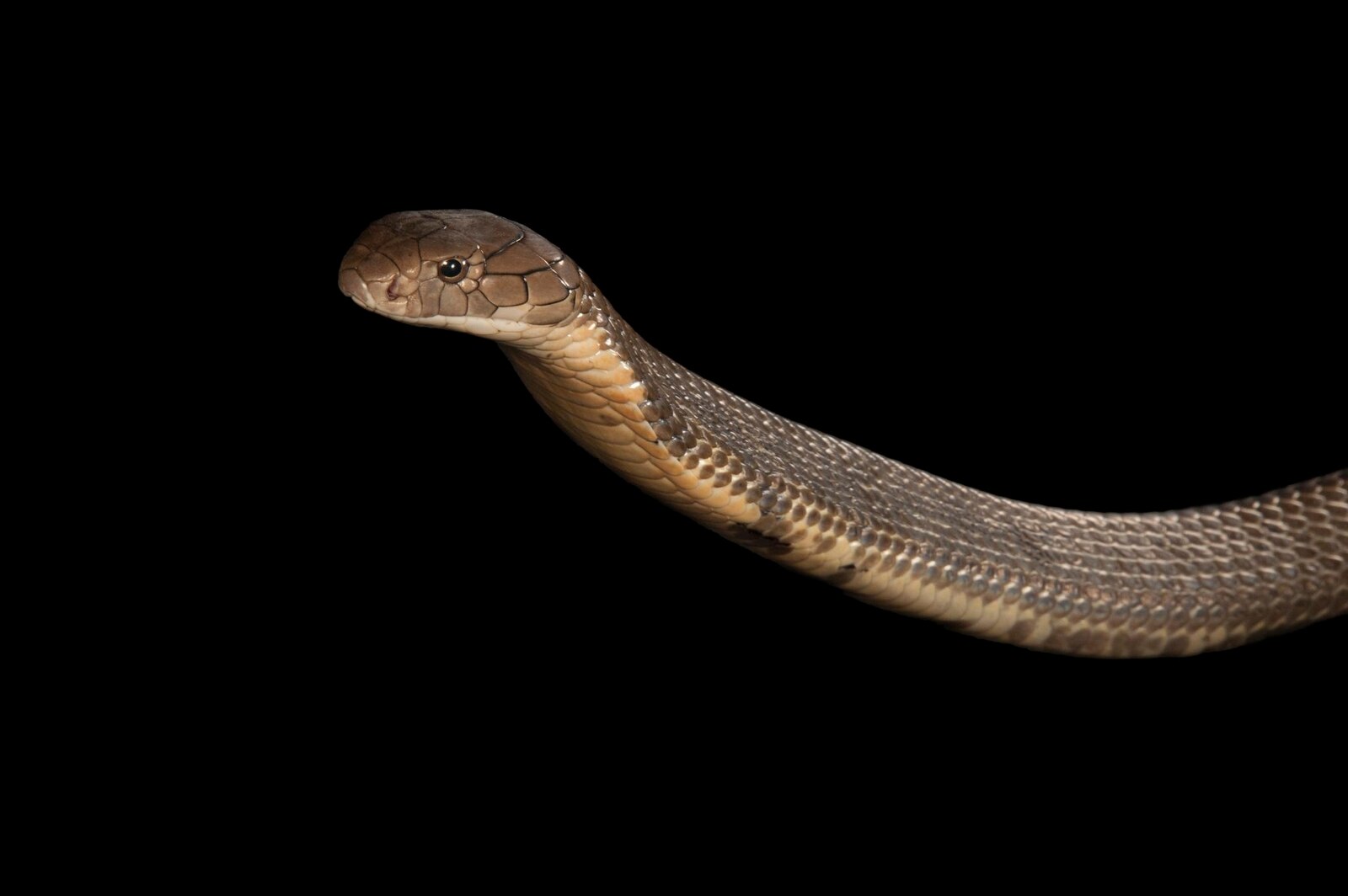
Introduction
The king cobra (Ophiophagus hannah)—from the Greek ophiophagos (‘snake-eater’)—is the world’s longest venomous snake, with confirmed records of individuals reaching 5.85 metres (19.2 feet) in length, though individuals of 3–4 metres are more typical. Native to the forests and agricultural landscapes of South and Southeast Asia, the king cobra is a keystone predator that plays a critical role in regulating reptile and amphibian populations, particularly other snakes. Despite its fearsome reputation and potent venom, the king cobra is generally shy and avoids human contact, typically retreating when possible rather than engaging defensively. The species is listed as Vulnerable on the IUCN Red List, facing significant population declines across much of its range due to habitat loss, persecution, and exploitation for traditional medicine and the pet trade.
Physical Characteristics
The king cobra’s most distinctive physical feature is its size: as the world’s longest venomous snake, it is considerably larger than any other elapid species. Its body is slender but muscular, covered in smooth, iridescent scales that range from olive green and black to dark brown, with pale yellow or cream-coloured transverse bands that are most visible in juveniles and fade with age. The head is relatively small and distinct from the neck, bearing large, round pupils and 11–13 longitudinal scale rows. When threatened, the king cobra can flatten the neck into a distinctive ‘hood’—not as dramatic as the hood of an Indian cobra, but nonetheless impressive—raising the anterior third of its body off the ground to present a formidable defensive posture.
The venom is primarily neurotoxic, delivered through fixed, short fangs at the front of the mouth. The venom glands produce a potent cocktail of neurotoxins, cardiotoxins, and enzymes that cause rapid onset of symptoms including paralysis, cardiovascular collapse, and severe pain. A single bite can deliver 200–500 milligrams of venom, making it lethal to large mammals including elephants and, in rare cases, humans if left untreated. Despite its potency, the king cobra’s bite is generally not considered aggressively delivered to humans, and it will typically issue a warning hiss and display before striking if given the opportunity to retreat.
Habitat and Distribution
The king cobra occupies a broad geographic range across South Asia and Southeast Asia, from northeastern India and southern China through Bangladesh, Myanmar, Thailand, Cambodia, Vietnam, Malaysia, Indonesia, and the Philippines. Its habitat includes tropical and subtropical moist broadleaf forests, mangrove swamps, agricultural areas (particularly rice paddies and tea estates), and open woodland with rocky outcrops. It is most commonly found in areas with permanent water bodies such as streams, ponds, and swamps, and is a capable swimmer that will readily enter water to cross rivers or escape threats.
The species is primarily terrestrial but is an excellent climber and has been documented at heights of up to 10 metres in trees and on rock faces. During the breeding season, both males and females will search for mates across considerable distances, and a single female may travel several kilometres in search of a suitable nest site. In cooler climates and at higher elevations (above approximately 2,000 metres), king cobras may become seasonally inactive during the coldest months, sheltering in mammal burrows, rock crevices, or other insulated sites.
Diet and Predation
As its scientific name suggests, the king cobra is an ophiophagous species—the majority of its diet consists of other snakes, including rat snakes, pythons, other cobras, kraits, and even other king cobras. However, it is not exclusively snake-eating: when other prey is available, it will also consume monitor lizards, small mammals, and occasionally birds and eggs. Its hunting strategy involves chemical (vomeronasal) and visual detection of prey, followed by a rapid, accurate strike. Unlike many vipers that strike and release, king cobras often hold and inject venom while restraining prey with body coils.
The king cobra is at the apex of the terrestrial snake food web in its range, with few natural predators. Adults may fall prey to large mongooses (which are partially immune to cobra venom), birds of prey such as the crested serpent eagle, and, very occasionally, larger mammals. Juveniles and eggs face predation from a broader suite of predators including rats, mongoose species, and larger reptiles including reticulated pythons. The species’ own venom is highly effective against its primary prey and most predators, providing substantial competitive advantage.
Breeding and Nesting
King cobra breeding is seasonal, typically occurring from January to March in most of its range. Males engage in ritualised combat tournaments in which they rear up, intertwine, and attempt to push each other to the ground—a behaviour that resembles a dancing duel—without biting. The victorious male then mates with the female, who is capable of storing sperm for extended periods before ovulation and fertilisation.
Uniquely among snakes, the female king cobra constructs a nest—a substantial structure of twigs, leaves, and grass—on the forest floor, typically at the base of a tree or in dense vegetation. She deposits 20–50 eggs inside the nest and, remarkably, remains with the clutch throughout the incubation period of approximately 60–80 days, coiling around the eggs and defending them aggressively against potential predators. Body temperature is elevated during incubation through muscular thermogenesis, a form of shivering thermogenesis that raises the female’s body temperature above ambient, protecting the eggs from temperature extremes. She departs before the eggs hatch, leaving the hatchlings to fend for themselves.
Conservation Status
The king cobra is classified as Vulnerable by the IUCN, with populations declining across much of its range. Major threats include habitat loss and fragmentation through agricultural expansion, logging, and infrastructure development; direct persecution driven by fear; and collection for the international pet trade and traditional medicine (skin, bile, and meat are used in Asian traditional medicine). In some parts of its range, the king cobra is protected by law, but enforcement is inconsistent.
Conservation measures include habitat protection in forest reserves and national parks, public education programmes to reduce fear-driven killing, and targeted anti-poaching enforcement. The species is listed in CITES Appendix II, requiring export permits, though illegal trade in king cobras persists. In some Southeast Asian countries, community-based monitoring programmes and corridor conservation initiatives are being implemented to maintain connectivity between subpopulations in increasingly fragmented landscapes.
[…] who makes all major decisions, including daily movement routes and responses to threats. The King Cobra and other large snakes represent some of the few natural predators capable of threatening young […]