 By Iris
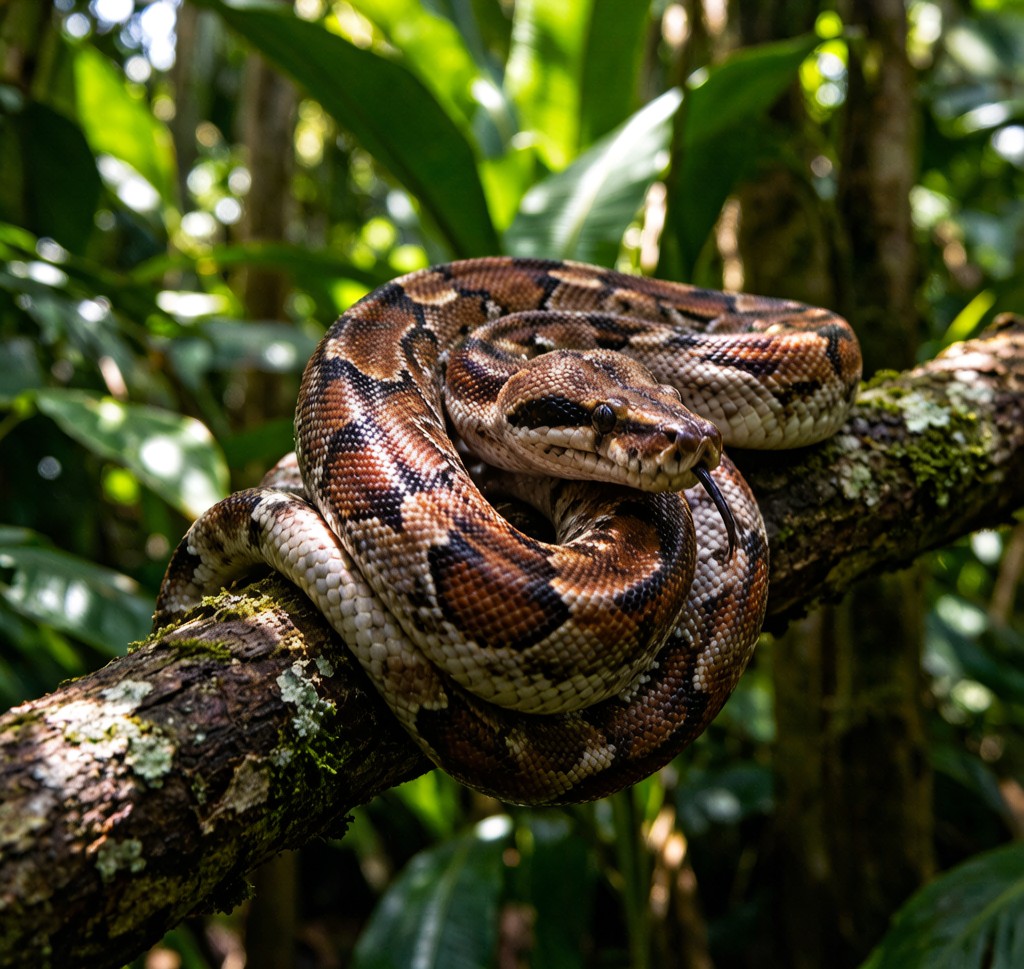
Boa constrictor | Boa Constrictor
Species Profile · Boidae
Boa Constrictor
A heavy ambush snake that waits beside a trail and kills without venom.
Not globally threatened
Length
Longest
Weight
Litter
Maturity
Trade
Dark saddles in the shade
The snake that waits by the trail
A heavy snake with dark saddles lies still beside a game trail. The snake waits. It strikes only when something warm passes within easy reach of the coil.
One of the largest harmless snakes in the Americas lives this way. Its range runs from Argentina north through Central America to southern Mexico. Two islands in the Lesser Antilles hold separate populations, and the mainland animals spread across 27 degrees of latitude.
Dark saddles edged in black sit on a pale tan or grey ground. Such a pattern breaks the outline, so a coiled snake looks like a root. Few reptiles are as widely known as this one.
One family, many forms
Where the boa sits
The snake belongs to the boa family, and it carries the name Boa constrictor. Boas kill by squeezing, and none of them carries venom of any kind. A Green Anaconda shares the habit but spends most of its life in water. Both rank among the heaviest snakes.
The anaconda grows longer, though the boa holds far more ground. Subspecies take separate ranges across the continent, and each island group stands apart. Its name describes the method rather than the size of the snake. No boa carries a venom gland anywhere in the head.
Colour varies across the range. So does the size of the adults.
Saddles, scales and bulk
What the body is like
Adults average 1.5 to 2.5 m in length, and the males stay smaller than the females. Females in some populations reach 3 to 4 m. One specimen measured 5.5 m. A big female may pass 30 kg, and that weight lets her take prey as large as a capybara.
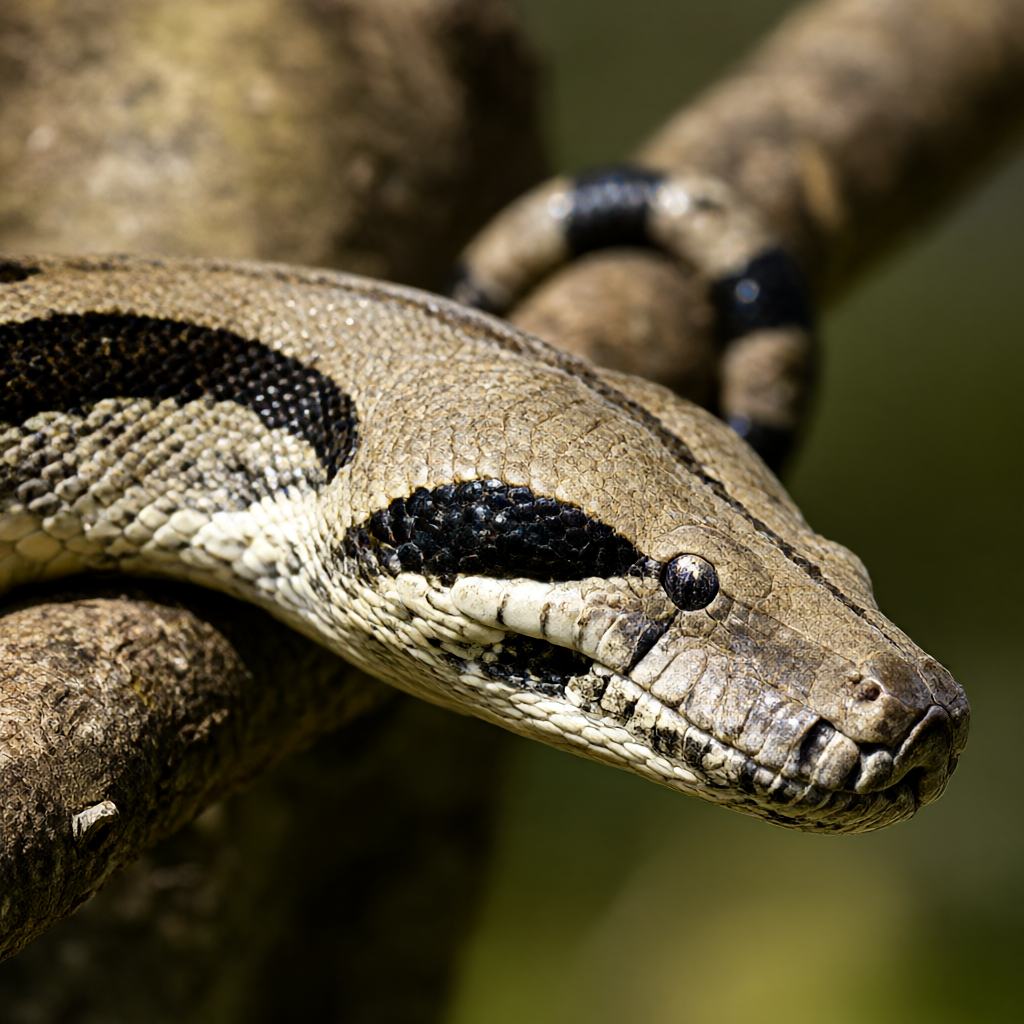
Pale tan, grey or cream forms the ground beneath every one of the saddles. Scales feel smooth to the hand, and the body carries real weight. A wide head sits on a thick neck, with no narrowing between the two. Eyes carry a vertical pupil, which suits a hunter that works at night.
Short and powerful, the tail coil grips the branch. Because the snake is heavy, it moves slowly across open ground and needs cover.
1
2
3
Forest, scrub and water
Where it lives
The species uses rainforest, cloud forest, dry forest, thorn scrub and farmland. Primary forest holds the most animals, and old trees give the best cover. A range this wide covers 27 degrees of latitude or more. Ground suits adults, while young animals spend much of their time in trees.
Boas swim well, and a river opens new ground that dry land never offers. Most hunting happens at night. The snake also moves around dusk, when the air cools. Cool weather can make the snake active in daylight instead.
Hollow logs, animal burrows and rock cracks give shelter through the long day. Tree buttresses hide a resting snake, and the roots also block the view from above, which matters where big raptors hunt.
Pressure, not poison
What it eats
This snake eats nothing but meat. Young animals take lizards and rodents, while the adults aim far higher. Opossums, agoutis, pacas, capybaras and monkeys all fall to a very large boa. Birds join the list, and the occasional caiman does as well.
Coiled near a trail or a water hole, the snake simply waits. Strikes come fast, and the coils close before the prey can react. Pressure stops the heart at once, so the prey dies within seconds or minutes of the first coil. Suffocation gets the blame, yet the heart fails first.
Flexible jaws let the snake swallow prey far wider than its own head. Digestion can take a week, and the snake rests until the work is done. A Ball Python takes mice, while the boa takes animals far bigger.
Live young, no care
The breeding cycle
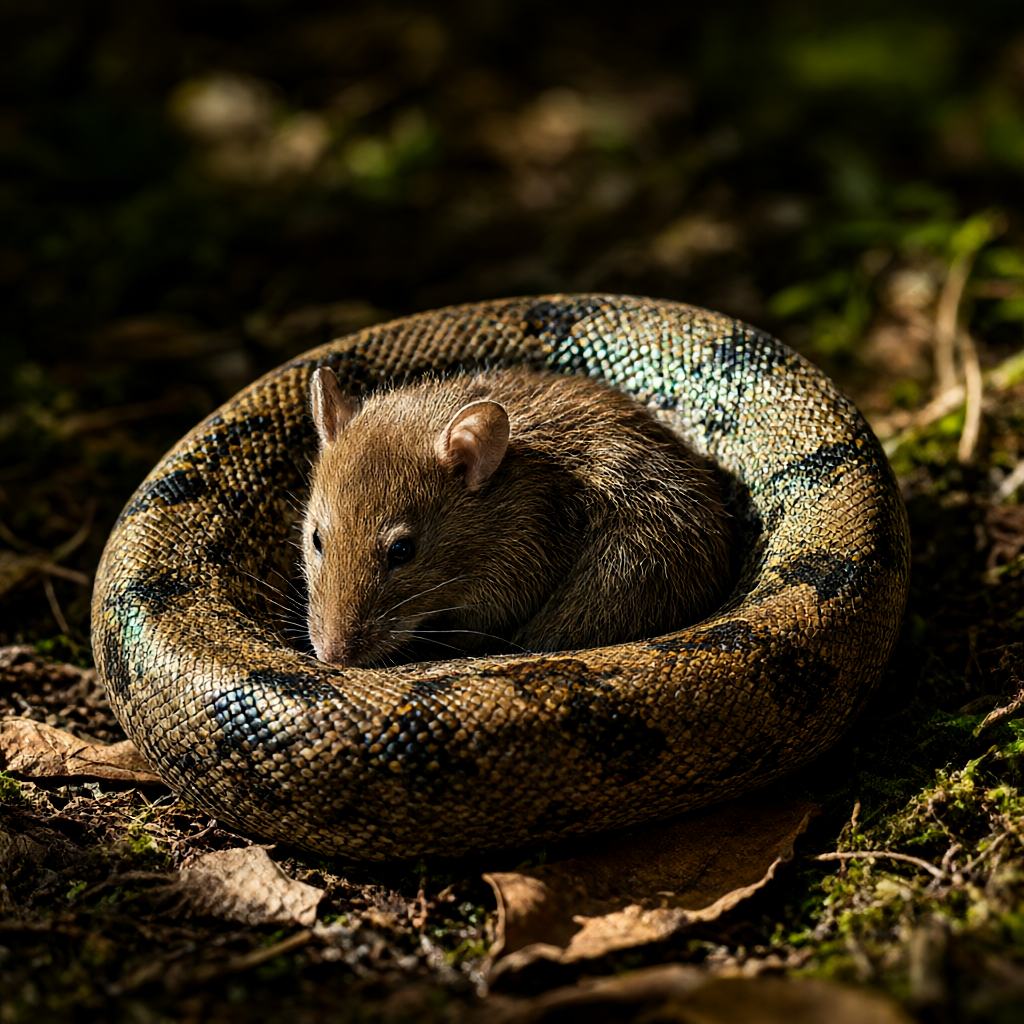
The eggs hatch inside the female, so the young arrive live. Litters run 20 to 50 young, and large ones are not rare. Very large females have produced more than 60 at once. Newborns measure 40 to 50 cm and need no care at all.
Young colour looks brighter, and it fades as the snake grows. Males mature at 3 to 4 years, and females need 4 to 5. Rival males wrestle in the breeding season, twisting and forcing heads down. Winners mate with any receptive female.
Pregnant females stop feeding late in term, since the body limits movement. A female may go without food for several months, and the young arrive only after that long fast.
Widespread but hunted
Conservation
The IUCN list calls the snake Not globally threatened, and the wide range explains that verdict. Jaguars, cougars, big raptors and caiman take adults and young. People matter more, because skins and meat carry a price.
Farmers kill snakes found near poultry, while forest clearance brings more contact. Island groups suffer most, since escape is impossible. CITES Appendix II controls the world trade in skins and pets.
Several range countries list the snake in national red books. Range alone keeps the species safe for now. Skins still leave the continent in numbers, although the trade is now regulated, watched and reported by the exporting countries each year.
Side by side
How It Compares
| Trait | Boa Constrictor | Green Anaconda |
|---|---|---|
| Length | 1.5-2.5 m, to 5.5 m | up to 6 m |
| Weight | up to 30 kg | up to 70 kg |
| Home | forest floor and trees | rivers and marshes |
| Pattern | dark saddles on tan | olive with black blotches |
| Kill | pressure stops the heart | drowning, then pressure |
| Young | 20-50 live young | 20-40 live young |
Common misreadings
What People Get Wrong
- Many films show a boa crushing bones, yet the kill works through the heart. Pressure cuts the blood flow to the brain, and the prey goes down within minutes.
- Keepers often expect a venomous bite, but boas carry no venom at all. A bite can still hurt, and the teeth leave a row of small cuts.
- Some accounts call every big snake a man eater, while this one stays well below that size. Large females reach 4 m, and most adults stay far shorter than that mark.
Going further
Sources and Further Reading
Five things to remember
Quick hits
- Females grow far larger than the males do.
- The heaviest females carry more than 30 kg.
- Only one animal has measured 5.5 m.
- A newborn is ready to hunt on day one.
- Squeezing stops the heart, not the air.
species was described by Carl Linnaeus in 1758. As boas, anacondas are more closely related to the boa constrictor than to pythons, from which they differ in giving birth to live young and in possessing small