 By st20113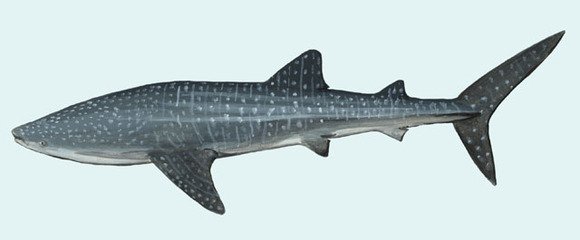
Introduction
The Whale Shark is the largest fish in the world, reaching lengths of over 40 feet and weights exceeding 20 tons. Despite its massive size and membership in the shark family, this gentle giant poses no threat to humans. Whale Sharks are filter feeders that cruise through tropical oceans with their enormous mouths open, filtering plankton and small fish from the water. Their distinctive pattern of white spots and stripes on a dark background makes them one of the most easily recognized marine animals. Found in warm waters around the globe, Whale Sharks attract divers and tourists who seek the unforgettable experience of swimming alongside these magnificent creatures. They represent the pinnacle of filter-feeding evolution in cartilaginous fish.
Taxonomy
The Whale Shark belongs to the family Rhincodontidae and is the only member of its genus, Rhincodon. Its scientific name, Rhincodon typus, was assigned in 1828 based on a specimen from South Africa. Despite being a shark, it is only distantly related to predatory species like the tiger shark. The Whale Shark represents an ancient lineage that evolved filter feeding independently from other filter-feeding sharks and rays. Genetic studies have revealed that Whale Sharks are more closely related to nurse sharks and wobbegongs than to other large sharks. Fossil teeth suggest their lineage has existed for at least 60 million years.
Physical Characteristics
Whale Sharks are enormous, with adults typically measuring 30 to 40 feet in length, though individuals over 60 feet have been reported. Their most distinctive feature is the unique pattern of pale spots and vertical stripes on a dark gray or brown background, which is as individual as a human fingerprint. The mouth can be up to 5 feet wide and contains hundreds of tiny teeth that play no role in feeding. Unlike the fearsome great white shark, Whale Sharks have small eyes positioned far forward on their broad, flattened head. Five large gill slits filter water as it exits the mouth after feeding. Two dorsal fins and a massive tail propel them through the water at surprisingly slow speeds for such large animals.
Habitat
Whale Sharks inhabit warm tropical and temperate oceans worldwide, typically between 30 degrees north and 35 degrees south latitude. They prefer water temperatures between 70 and 80 degrees Fahrenheit and are rarely found in waters cooler than 70 degrees. Whale Sharks spend most of their time near the surface, where plankton is most abundant, but can dive to depths of over 6,000 feet. They are highly migratory, traveling thousands of miles between feeding aggregations and possibly breeding areas. Major aggregation sites include the coasts of Australia, Mexico, the Philippines, and Tanzania. These areas often host sperm whale populations as well, though the two species have different feeding strategies.
Diet
Whale Sharks are filter feeders that consume enormous quantities of tiny organisms. Their diet consists primarily of plankton, including copepods, krill, fish eggs, and crab larvae. They also eat small fish, jellyfish, and coral spawn when available. Whale Sharks feed by swimming forward with their mouth open, passively filtering prey from the water, or by actively suction feeding when prey is concentrated. A large Whale Shark can filter over 1,500 gallons of water per hour. Their feeding strategy differs from the ocean sunfish, which targets gelatinous prey individually. Despite their size, Whale Sharks feed low on the food chain, making them important indicators of ocean health.
Reproduction
Whale Shark reproduction remains poorly understood due to the difficulty of studying such large, migratory animals. They are ovoviviparous, meaning females produce eggs that hatch inside their bodies, and they give birth to live young. A pregnant female captured in Taiwan contained over 300 embryos at various stages of development, suggesting that Whale Sharks can store sperm and fertilize eggs over time. Pups are about 2 feet long at birth. Scientists believe females give birth in deep water, possibly at specific sites that have not yet been identified. Mating has rarely been observed, and juvenile Whale Sharks are seldom seen, remaining a mystery to researchers. The orangutan also has slow reproduction, though through very different mechanisms.
Conservation
Whale Sharks are classified as Endangered on the IUCN Red List due to population declines from fishing, vessel strikes, and habitat degradation. They have been protected in many countries since the 1990s, and international trade in Whale Shark products is regulated under CITES. However, illegal fishing continues in some areas, and Whale Shark fins remain valuable in the shark fin trade. Tourism provides economic incentive for protection in many countries, though irresponsible tourism can disturb feeding and resting sharks. Climate change may affect plankton distribution, potentially impacting Whale Shark feeding grounds. Satellite tagging programs have improved understanding of Whale Shark movements and identified important habitat areas for protection.
Fun Facts
Whale Sharks can live for over 100 years, making them one of the longest-lived animals in the ocean. Despite their enormous size, they are among the gentlest creatures in the sea and often allow divers to swim alongside them. Each Whale Shark has a unique spot pattern that scientists use like a fingerprint to identify individuals. Their liver can weigh over 600 pounds and helps them maintain buoyancy. Whale Sharks process over 400 gallons of water through their gills every minute when feeding. They have been observed “coughing” to clear their gills of accumulated debris. These magnificent fish have swum the world’s oceans for millions of years, surviving mass extinctions that wiped out other marine giants.
[…] shark whale shark shares comparable ocean habitats with this […]
years and females at 7 to 33 years, reflecting their slow growth and low metabolic rate. Like the whale shark, Atlantic sturgeon are suction-feeding specialists that rely on this technique rather than
[…] to blackish-gray, providing effective camouflage in the dimly lit deep-sea environment. Like the whale shark, the frilled shark has a soft, flexible body that bends and maneuvers through complex seafloor […]