 By st20113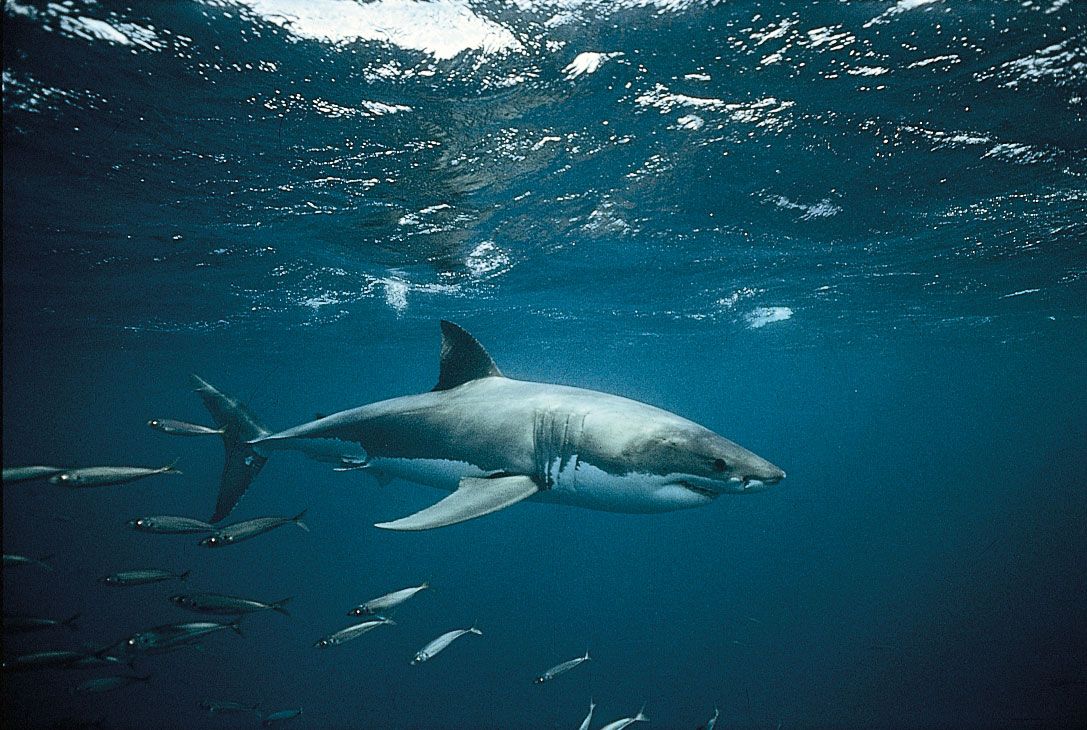
The great white shark (Carcharodon carcharias) is the world’s largest known predatory fish, reaching lengths over 6 meters. Found in coastal surface waters of all major oceans, this apex predator has a conical snout, powerful tail, and rows of serrated triangular teeth. As the top predator in the marine ecosystem, it regulates prey populations and maintains ocean health.
Physical Characteristics
Great whites are robustly built, with a streamlined body that can reach 2.5 tonnes. Their coloration is countershaded-gray above and white below-providing camouflage from above and below. Their sense of smell is extraordinary, detecting one drop of blood in 100 liters of water. Their jaws are not fused to the skull, allowing them to protrude forward to bite larger prey.
Hunting and Diet
Young great whites feed on fish and rays. Adults primarily hunt marine mammals: seals, sea lions, and small cetaceans. They employ a hunting strategy called “breaching”-launching from below at high speed to strike prey near the surface, sometimes leaping completely out of the water. Like the orca, they are apex predators with few natural enemies.
Behavior and Intelligence
Research shows great whites are highly intelligent, displaying complex social behaviors and possibly individual personalities. They migrate thousands of kilometers annually, following warm currents and prey movements. Their eyesight is well adapted for low-light conditions, and they have keen electroreception to detect prey’s heartbeat.
Reproduction
Great whites are ovoviviparous-embryos develop inside eggs that hatch within the mother’s body, and she gives birth to live pups. A litter typically contains two to ten pups, each about 1.2 meters long. The gestation period is believed to be around 12 months.
Conservation Status
The great white shark is listed as Vulnerable globally and in some regions as Endangered. Overfishing, bycatch in commercial fisheries, and the demand for shark fins have severely reduced populations. They are now protected in Australia, South Africa, the United States, and many other countries.
[…] small and gentle, seahorses are part of the same marine world ruled by giants such as the great white shark, which patrols coastal waters where seahorses drift, though the two never interact directly given […]
white shark great white shark shares comparable ocean habitats with this
[…] bull shark belongs to the requiem shark family Carcharhinidae, the same group that includes the great white shark‘s smaller cousins and the tiger shark. Its genus name Carcharhinus means “sharp […]
[…] relative is the leafy seadragon, which is even more extravagantly adorned. Unlike the fast pelagic great white shark, the seadragon is a slow, drifting ambush feeder that depends on stealth rather than speed to […]
[…] and regeneration. It is a key prey species for large fish such as cod and for sharks including the great white shark, and it shares the coastal ecosystem with smaller creatures such as the seahorse. Despite its name, […]
[…] The diet consists primarily of benthic invertebrates and small demersal fish. Crabs, shrimps, and amphipods form the staple in most locations, while small fish including gobies and flatfish are consumed opportunistically. Molluscs with thin shells are crushed with the powerful jaws. Prey is located using electroreception through the ampullae of Lorenzini, chemosensory cues, and visual detection. The stingray is primarily nocturnal, foraging across the seafloor while remaining partially buried in sand or mud during the day to avoid predators including the great white shark. […]
[…] of rays, fish, and other sharks throughout tropical seas. It is closely related to the better-known great white shark only in the broad sense of being a large mackerel shark […]
[…] Mature Atlantic Bluefin Tuna typically reach 2 to 2.5 meters in length and weigh between 250 and 600 kilograms, though exceptional specimens exceeding 680 kilograms have been recorded. Their bodies are elegantly streamlined, built for sustained high-speed cruising. A distinctive feature is their warm-blooded physiology — achieved through a specialized vascular counter-current heat exchange system called the rete mirabile. This allows them to maintain body temperatures up to 10°C above the surrounding water, granting them exceptional metabolic power and the ability to hunt in cold deep waters alongside predators such as the great white shark. […]
[…] The Atlantic salmon (Salmo salar) is an iconic migratory fish of the North Atlantic, celebrated for its epic lifecycle in which it hatches in freshwater rivers, migrates to the open ocean to feed and grow, and returns years later to spawn in the exact stream of its birth. Prized by anglers and crucial to both ecology and culture, it supports major wild fisheries and aquaculture industries. Once abundant from New England to Europe, many wild populations have declined due to dams, pollution, and overfishing, though conservation and restoration efforts offer hope across its range, alongside other apex predators such as the great white shark. […]
[…] Great White Shark (great-white-shark-carcharodon-carcharias) is the iconic apex marine predator that the Northern […]