 By st20113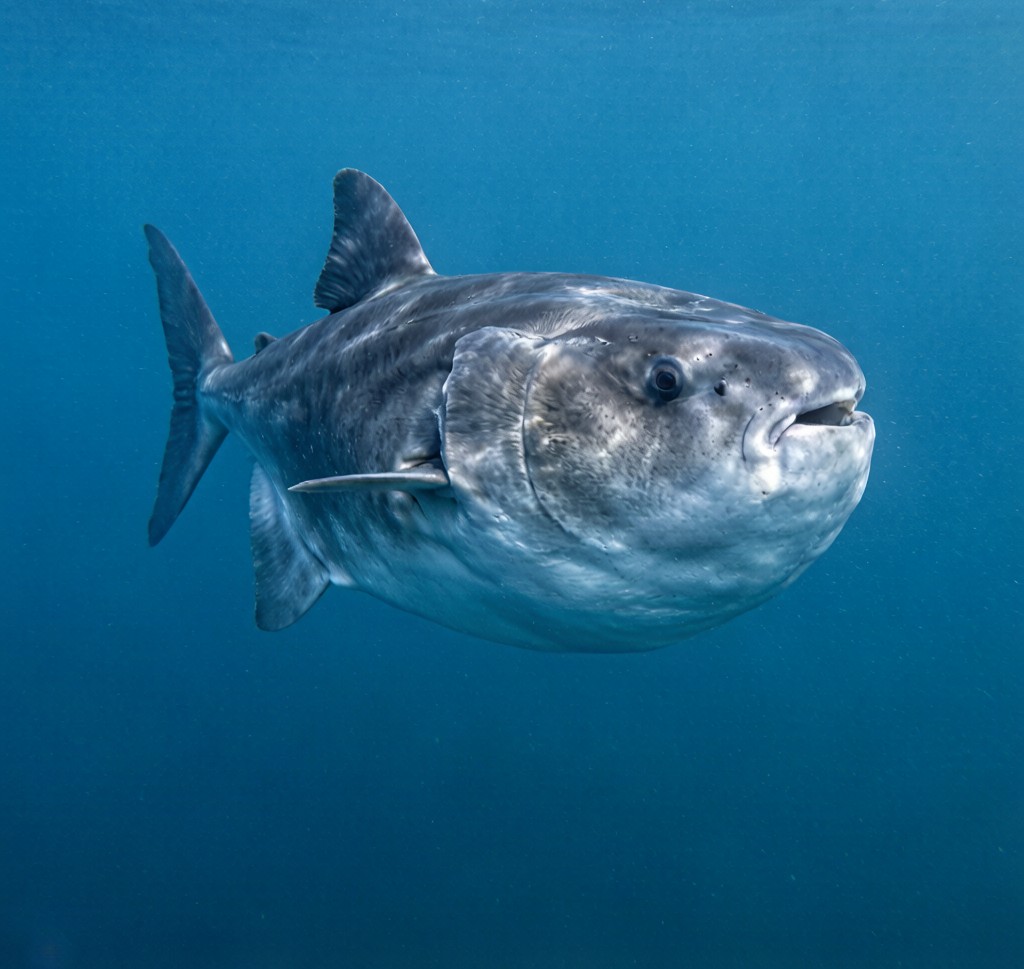
An Ocean Sunfish (Mola mola) swimming in open ocean blue water, displaying its distinctive flattened disc-shaped body
Overview
The Ocean Sunfish (Mola mola) is one of the most extraordinary fish in the ocean – a bizarre, flattened, nearly circular creature that looks less like a fish than like a giant fish head that has lost its tail. Found in temperate and tropical oceans worldwide, the Ocean Sunfish is the heaviest bony fish on Earth, with adults weighing between 250 and 1,000 kilograms and reaching sizes of up to 3.3 meters from fin tip to fin tip. Despite its enormous size, the Ocean Sunfish is a gentle giant that feeds almost entirely on jellyfish and other soft-bodied marine organisms, spending much of its time drifting passively in the open ocean.
The Ocean Sunfish’s body shape – a flattened, almost circular disc with a truncated posterior end where the tail should be – is unique among fish and has made it the subject of scientific curiosity and popular fascination for centuries. Its scientific name Mola mola comes from the Latin word for millstone, a reference to its grey, rough-textured skin and circular shape. The Sunfish has a small mouth at the front of its body and prominent dorsal and anal fins that can reach heights of 3 to 5 meters in large individuals, giving it a distinctive silhouette when viewed from the side. It is a remarkable swimmer capable of diving to depths of over 800 meters and migrating thousands of kilometers across ocean basins.
Habitat and Distribution
The Ocean Sunfish has a global distribution in temperate and tropical waters, occurring in the Atlantic, Pacific, and Indian Oceans and their associated seas. The species is most commonly observed in surface waters near the coast during the summer months, when it basks near the surface – a behavior that is thought to assist with thermoregulation and may also attract seabirds that pick parasites from its skin. Sunfish are found from the surface waters of the open ocean to depths of approximately 844 meters, where they feed on deep-sea jellyfish and other gelatinous zooplankton.
Sunfish populations are most concentrated in upwelling zones where cold, nutrient-rich water rises from the deep ocean, creating productive conditions that support abundant jellyfish populations. The species is seasonally abundant in areas such as the Monterey Bay in California, the Galapagos Islands, and off the coast of Japan during these upwelling periods. While Sunfish are not considered threatened globally, they face significant incidental mortality from fisheries bycatch – particularly in pelagic longline and drift net fisheries – where they are caught while feeding near the surface at the same depths as target species like swordfish and tuna.
Biology and Feeding
The Ocean Sunfish’s most unusual feature – apart from its extraordinary body shape – is its diet. Despite weighing up to a tonne, the Sunfish feeds almost entirely on jellyfish and other soft-bodied gelatinous zooplankton including salps, ctenophores, and comb jellies. Jellyfish have very low nutritional value – they are approximately 95 percent water with minimal protein and fat – and the Sunfish must consume enormous quantities to meet its energy requirements. Research suggests that a large Ocean Sunfish may need to consume hundreds of kilograms of jellyfish per day to sustain itself.
The Sunfish’s small, beak-like mouth – which cannot be closed fully due to its unique jaw structure – is adapted for capturing soft-bodied prey. The fish’s teeth are fused into two tooth plates, one in each jaw, creating a parrot-like beak that can crush jellyfish and other soft organisms. The Sunfish’s digestive system is relatively simple, reflecting its low-nutrition diet – food passes through the gut quickly, with minimal time for nutrient absorption. The species is also host to an extraordinary number of parasites – over 50 different species of parasites have been recorded on individual Sunfish – which is one of the reasons why they frequently approach the surface to solicit cleaning services from seabirds, fish, and even marine mammals.
Reproduction and Conservation
The Ocean Sunfish produces more eggs than any other vertebrate on Earth – a single female may produce up to 300 million eggs in a single spawning event, more than 10 times the number produced by the largest fish, the whale shark. The eggs are fertilized externally in the open ocean and the larvae – which are only 2 to 3 millimeters in length – hatch after approximately 3 to 4 days. The larvae develop rapidly, growing from a tiny, fully formed fish to a juvenile that already shows the characteristic sunfish body shape, and then to an adult over a period of several years.
The Ocean Sunfish is listed as Vulnerable on the IUCN Red List, reflecting concerns about population declines driven primarily by fisheries bycatch. Sunfish are particularly vulnerable to incidental capture in pelagic fisheries because they are slow-moving, surface-dwelling, and often found in the same areas as commercially important fish species. When caught in nets or on longlines, Sunfish are usually too large and powerful to retrieve and are typically discarded, though most die as a result of the capture trauma. Conservation efforts focus on improving bycatch mitigation measures, reducing the use of surface nets that entangle Sunfish, and increasing monitoring of Sunfish populations through dedicated surveys and citizen science programs.
within the genus. Other large marine invertebrates sharing similar coastal habitats include the ocean sunfish, the world’s heaviest bony fish, which feeds on zooplankton in the same waters as the moon
[…] fish shares the family with the Ocean Sunfish. That fish grows to about 2 to 3 m across. It looks like a huge flat disc. Our fish is far slimmer […]