 By st20113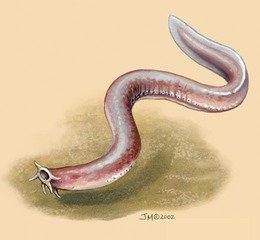
Introduction
Hagfish, classified within the family Myxinidae, are the most primitive living vertebrates on Earth, representing a lineage that diverged before the split between jawed and jawless vertebrates over 300 million years ago. Despite their name, they are jawless, finless, and largely scaleless creatures found in cold, deep marine waters worldwide. Hagfish are renowned for their extraordinary slime-producing ability, which allows them to escape predators by transforming seawater into a thick, fibrous gel within seconds. As major scavengers of the deep seafloor, they play a critical role in recycling nutrients from dead marine organisms.
Taxonomy
The family Myxinidae comprises two genera: Eptatretus (the five- or six-gilled hagfish) and Myxine (the three-gilled or common hagfish), together encompassing approximately 70 recognized species. Eptatretus species are distinguished by multiple pairs of external gill apertures. Phylogenetic analyses using nuclear and mitochondrial sequences confirm that hagfish represent the sister group to all other living vertebrates. Fossil evidence from the Carboniferous period demonstrates that the hagfish body plan has remained essentially unchanged for at least 300 million years.
Physical Characteristics
Hagfish possess an elongated, cylindrical body that lacks scales, paired fins, and a vertebral column, making them the only known vertebrates without a backbone. They range from 15 to 100 centimeters. Along each side of the body run rows of slime glands connected to 4 to 16 external slime pores, capable of producing massive quantities of mucus within milliseconds. A single hagfish can transform liters of seawater into a thick, fibrous gel. They are the only vertebrate with four hearts and the only animal known to tie its own body into a true knot, using this ability to gain leverage when feeding.
Habitat
whale shark whale shark shares comparable ocean habitats with this species.
octopus octopus shares comparable ocean habitats with this species.
Eptatretus species are predominantly deep-sea inhabitants, found on continental shelves and slopes at depths from 20 to over 1,500 meters in cold, stable environments. They prefer soft, muddy, or sandy substrates where they burrow during daylight hours and emerge at night to scavenge. Large aggregations, sometimes numbering hundreds of individuals sharing burrows, are documented in several regions. Their broad global distribution spans the North Atlantic, South Pacific, and polar seas. Like the giant squid, hagfish are deep-sea specialists that thrive in cold, stable environments far from sunlight.
Diet
Hagfish are opportunistic scavengers feeding primarily on dying or dead marine organisms. Using keratinous dental plates arranged in circular rows, they burrow into carcasses and consume flesh from the inside out, leaving only skin and bone. A single hagfish can reduce a large fish carcass within hours. They can also prey on slow-moving invertebrates. Their low metabolic rate allows them to survive for months between meals, an adaptation to the unpredictability of carrion availability in the deep sea. The knot-tying ability is used to anchor their body while rasping flesh from prey. Like the great white shark, hagfish are efficient scavengers that help maintain the health of marine ecosystems by quickly consuming carrion.
Reproduction
Hagfish reproduction is poorly understood. They are egg-laying vertebrates, with females producing small clutches of large, yolk-rich eggs enclosed in keratinous cases equipped with terminal hooks for substrate attachment. Fecundity ranges from 1 to approximately 30 eggs per clutch. Internal fertilization is believed to occur. Some hagfish may be hermaphroditic, potentially producing both eggs and sperm as an adaptation to low population densities. Embryonic development is estimated to last several months to over a year, and hatchlings emerge as miniature adults requiring no parental care.
Conservation
The IUCN has assessed most hagfish species as Data Deficient due to a profound lack of population data. Targeted fisheries in East Asia harvest hagfish for food and leather, with significant trade in eel-skin products. Bycatch in bottom trawl and gillnet fisheries causes substantial mortality, especially given their slow recovery from depletion due to low fecundity. Deep-sea mining activities represent an emerging threat. Regional fisheries management plans incorporating species-specific quotas and habitat protections are needed to ensure sustainable populations.
Fun Facts
Hagfish are the only living vertebrates with a true skull but no vertebral column. When attacked, a single hagfish can release enough slime to turn a bucket of seawater into a thick gel in a fraction of a second. The glycoprotein fibers in hagfish slime have mechanical properties similar to spider silk and are being investigated for biodegradable materials and medical adhesives. Hagfish show negligible senescence—their risk of dying does not appear to increase with age. Their four hearts beat in sequence, an ancestral cardiovascular system that predates the multi-chambered hearts of mammals and birds. Like the seahorse, hagfish have intrigued scientists for centuries because their biology challenges conventional categories and blurs the boundaries we typically use to classify vertebrate and invertebrate animals.