 By st20113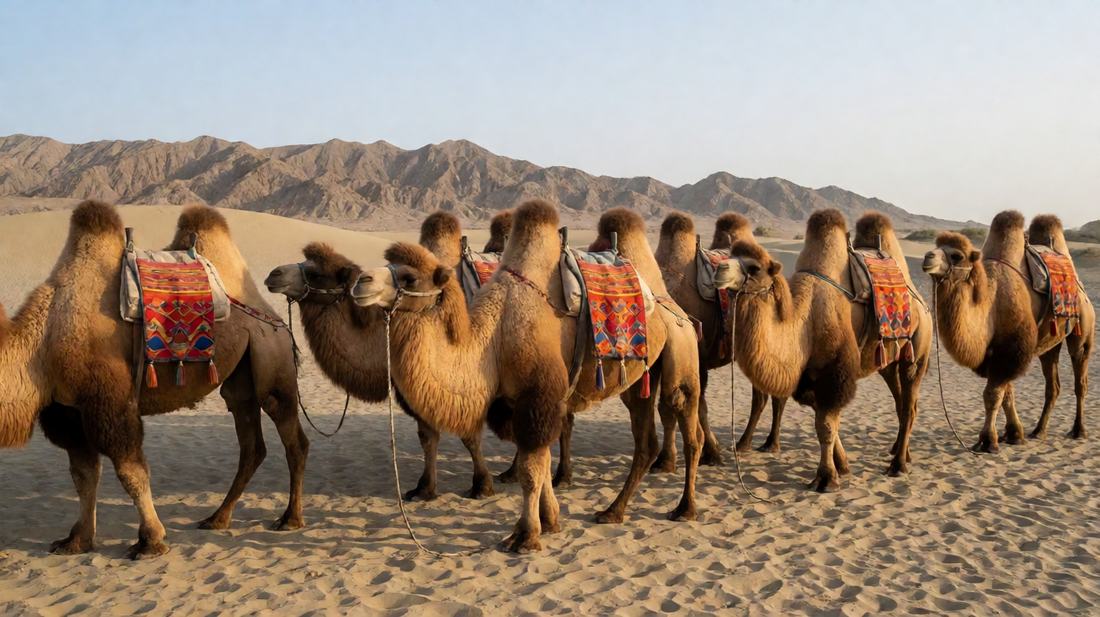
The Silk Road | The Ancient Trade Route
Historical Profile · Eurasia
The Silk Road | The Ancient Trade Route
For more than a thousand years, a loose web of desert roads and sea lanes moved silk, horses, glass, paper, faiths and plagues between China and the Mediterranean.
c. 130 BC-AD 1450
Period
Length
Name coined
Key hub
Pack animal
The big picture
Introduction
The Silk Road was not a road. It was a web of land and sea routes. They linked China, Central Asia, Persia, India and Arabia.
For well over 1000 years, goods moved along them. Silk, horses, glass, spices, paper, faiths and diseases all moved too. Many peoples carried them in stages.
No trader went the whole way. No empire ruled the whole network.
Setting
Historical Context
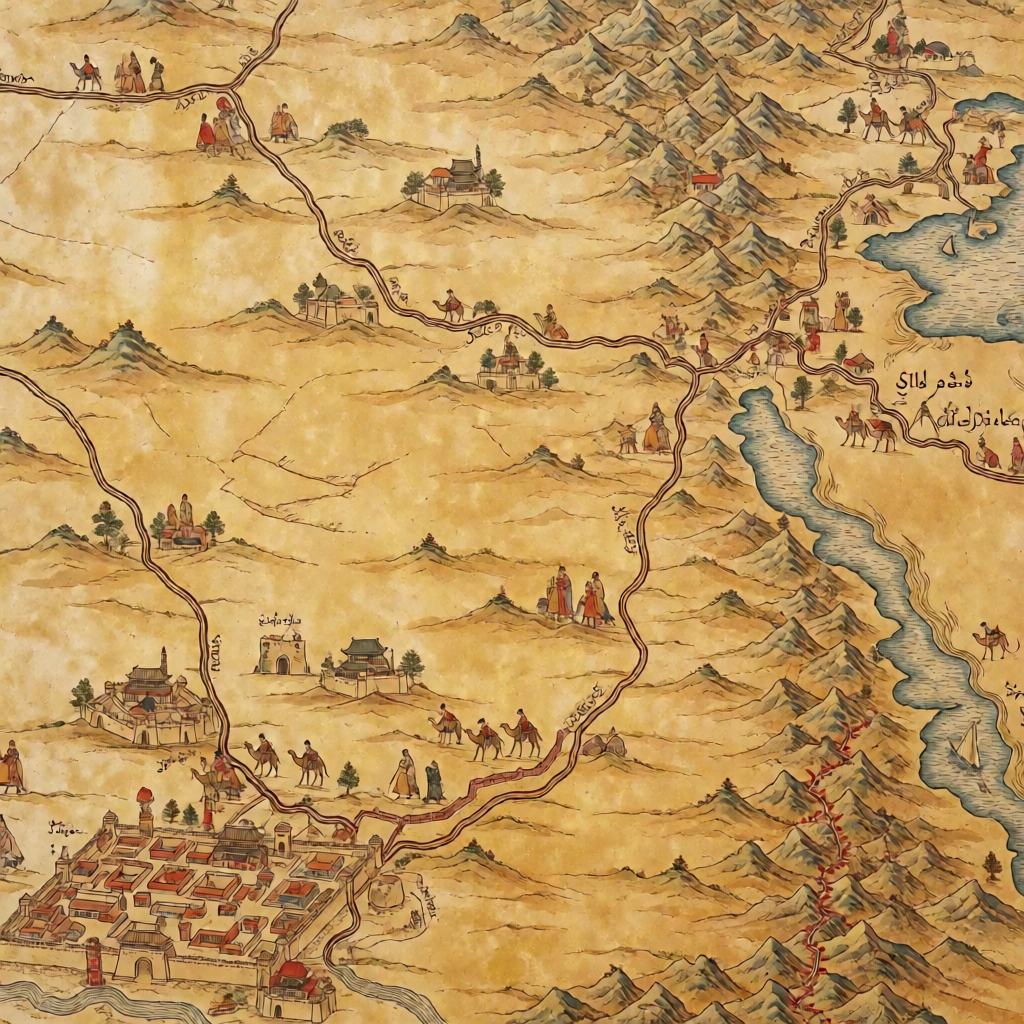
The name is modern. A German geographer, Ferdinand von Richthofen, coined it in 1877. That was long after the routes fell out of use. The people who used the network named the roads after the cities they reached. The land routes ran about 6400 km. They began at Chang’an, today’s Xi’an, in China. They ended at Antioch and the ports of the eastern sea.
Between those ends lay hard country. There was the Gobi desert and the Taklamakan. There were the Pamir mountains and the plateau of Iran. Traders moved from oasis to oasis. The oases grew into rich cities. Samarkand, Bukhara, Merv, Kashgar and Dunhuang all grew fat on the traffic. Walled inns stood a day’s journey apart.
They offered water, fodder and shelter. The network grew busy under the Han dynasty after 130 BC. The emperor sent an envoy west to look for allies. It faded only in the 1450s. The Ottoman state took the western end. European sailors began to look for sea routes instead.
Turning points
Key Events
Zhang Qian set out around 138 BC. He did not come back for 13 years. He never found the alliance he wanted. He did bring back reports on the kingdoms of Central Asia. Chinese silk then began to move west in bulk. Chinese armies pushed garrisons into the Tarim Basin to guard the road. Goods went with ideas.
Buddhism entered China from India along these roads. Chinese pilgrims went west in the 7th century for scripture. Paper reached the Islamic world after the Battle of Talas in AD 751. From there it spread slowly towards Europe. In the 13th century the Mongol conquests made the corridor safer. Marco Polo crossed it. A generation later, so did Ibn Battuta.
The sea routes mattered just as much. Ships sailed from Guangzhou through South-East Asia to India. From there they reached the Persian Gulf and the Red Sea. Those lanes carried far more tonnage than any camel train. In the end they outlived the land roads.
1
2
3
Who held power
People and Powers
Middlemen ran the Silk Road, not a single state. Sogdian traders from around Samarkand led the trade for a long time. Their language became a common tongue of trade. Armenian, Jewish, Arab and Indian traders took over parts of the network later. Empires taxed the traffic and guarded it. The Han, the Tang, the Sassanids and the Mongols all took a share.
Nomad groups such as the Xiongnu held the steppe corridor. They could open or close it at will. When a strong power held the centre, caravans moved cheaply. When it fell, costs rose and volumes dropped. Trade ran on contracts, not on companies. Two or more merchants pooled money for a single journey.
One went with the goods. The others waited at home. They split the profit by an agreed formula. A round trip could take years. Trust counted for more than written law. Merchant families built networks that lasted for many years.
Everyday world
Daily Life and Society
Life on the road was slow and hard. A caravan might cover only 30 km in a day. The crossing from China to Persia could take 8 months. Traders kept together for safety. They carried water, dried food and spare pack beasts. Dust storms, bandits, broken bridges and fever were normal risks. The oasis cities were the real society of the road.
They were crowded and mixed in faith. Buddhist temples, mosques and churches stood a few streets apart. Their wealth came from stores, food, beasts, guides and taxes. They made very little themselves. A merchant might wait all winter for a caravan to form. Pack beasts drove the whole system. Horses were fast but thirsty.
They could not cross dry deserts. The two-humped Bactrian camel was slower. It could carry around 200 kg and go days without drinking. It became the standard freight beast of the Central Asian routes. Sogdian traders bred and sold them by the thousand.
Craft and ideas
Trade, Technology and Ideas
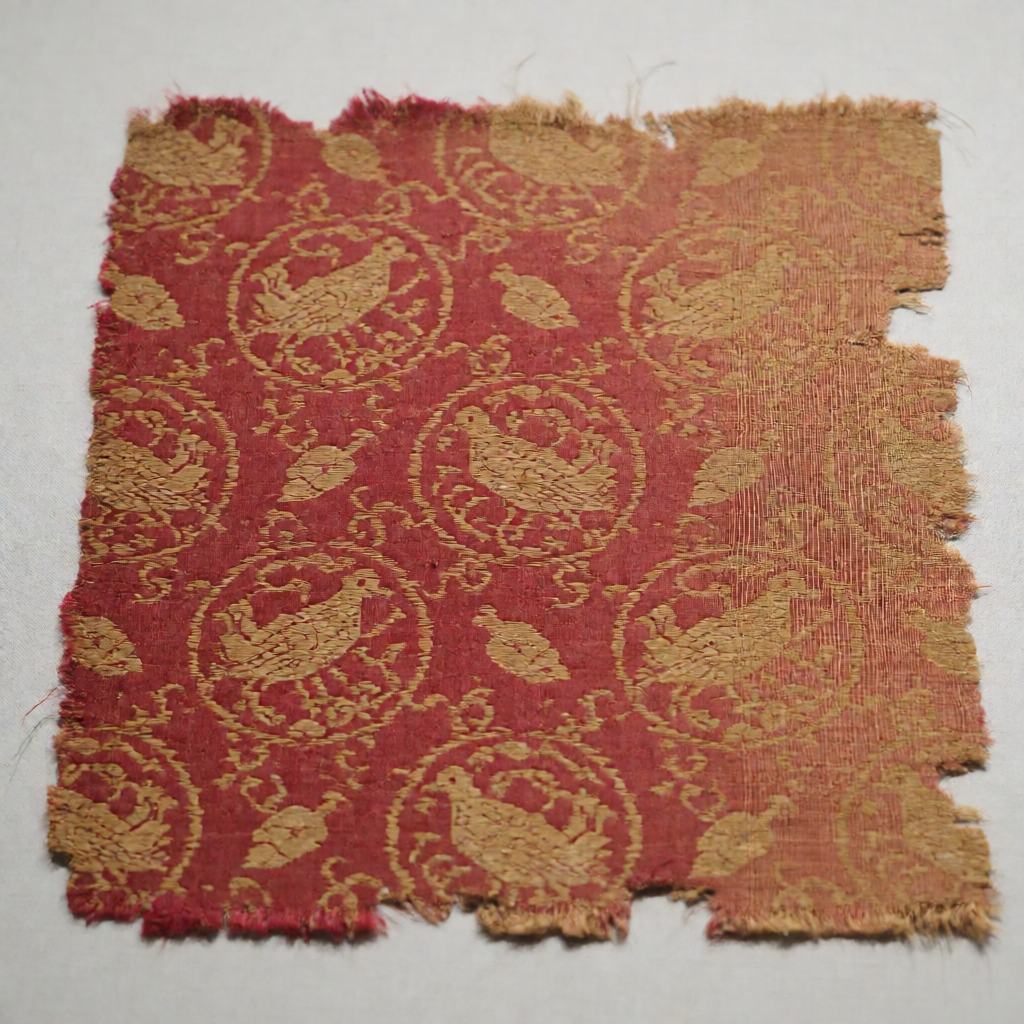
Silk was the most famous export. China guarded the secret of making it for a long time. Silk was light, dear and hard to destroy. China also sent porcelain, tea, lacquerware, paper and gunpowder west. In return it got horses from the steppe. It got glass, wool, cotton, spices and silver too.
Silk was dear enough to use as money. In Tang China it paid taxes and soldiers’ wages. Bolts of silk served as a unit of account along the whole route. So the traffic never stopped. The goods carried their own worth. One bale could change hands many times before it reached the sea.
New skills went both ways. Paper, printing and the compass went west from China. Glass-making and metalwork went east. Buddhism, Nestorian Christianity and Islam went with them. Each left a mark in the oasis towns.
What lasted
Legacy
The Silk Road reshaped Eurasia long after the trade ended. It spread crops, crafts, scripts and faiths across a quarter of the globe. It made the oasis cities rich for a while. It also moved disease. The plague that reached Europe in 1347 likely rode the same routes and ships.
A second legacy is the idea. Rail links, pipes and roads across Eurasia are still called a new Silk Road. The old one left a vision of a joined-up continent. UNESCO listed a long stretch of the route as a World Heritage site in 2014. The routes left a habit of exchange behind them.
Central Asia, Iran and western China still share recipes. They share tunes and building styles too. All of it ran along the same corridors.
Quick hits
Five Things to Remember
- The name Silk Road was invented only in 1877.
- The land routes ran about 6400 km west from Chang’an.
- A Bactrian camel could carry around 200 kg and go days without water.
- Paper and printing moved west along these roads.
- Most traders never went the whole way; goods passed through many hands.
[…] roads were later joined into the routes called the Silk Road. Samarkand sat near the middle of them. The town was the chief city of a district called Sogdiana. […]
[…] He joined up the walls in the north. He built straight roads out from his capital. Some of those roads ran west. They later carried the trade of the Silk Road. […]