 By st20113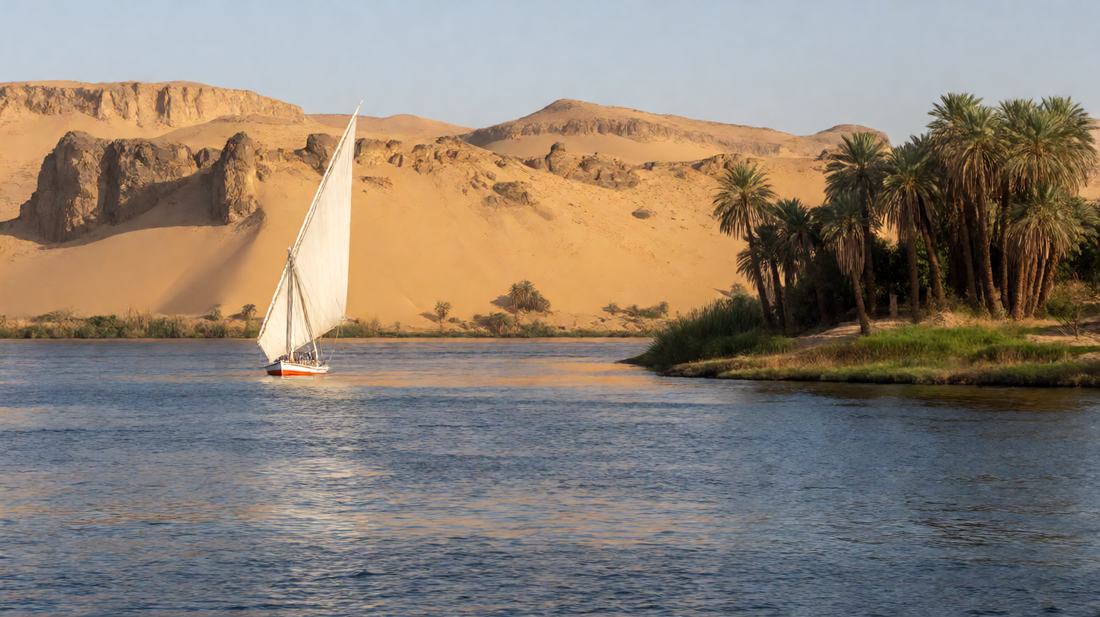
Ancient Egypt | The Land of the Pharaohs
Historical Profile · Nile Valley
Ancient Egypt | The Land of the Pharaohs
For about 3000 years, one of the world’s longest-lived civilisations grew along a single river, and almost everything it built rested on the flood that arrived every summer.
c. 3100-30 BC
Period
River
Capital
Peak
Great Pyramid
The big picture
Introduction
Ancient Egypt lasted about 3000 years. It grew up along the lower Nile in north-east Africa. Its people built the pyramids at Giza. They wrote in hieroglyphs and worshipped many gods.
Almost everything they did rested on one thing. The Nile flooded every summer. The flood left fresh soil behind.
Setting
Historical Context
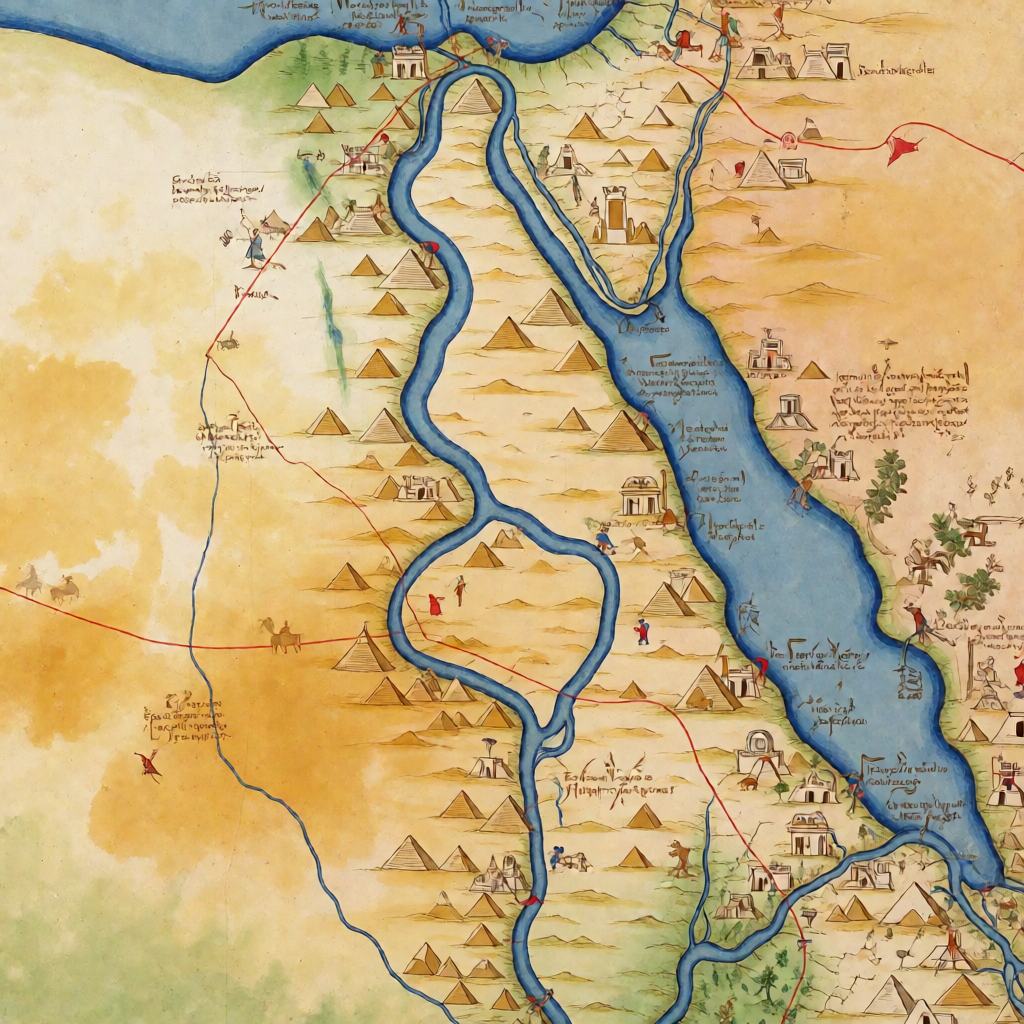
The Nile is about 6650 km long. It runs north from the highlands of east Africa. It crosses desert that gets almost no rain. Without the river, Egypt would be part of the Sahara. With it, the country is a green ribbon of farmland. That ribbon is roughly 1000 km long. Deserts press in on both sides.
The flood came each year from July to October. It covered the fields for weeks. Then it left a layer of dark silt. Farmers planted emmer wheat, barley and flax in it. They sowed as soon as the ground was dry. Historians split the story into three great ages. The Old Kingdom began around 2686 BC.
That is when the great pyramids went up. The Middle Kingdom followed about 2055 BC. The capital moved south to Thebes. The New Kingdom began about 1550 BC. Its rulers drove out foreign kings. They built an empire from Nubia to the Euphrates. Between these ages came weak spells.
Turning points
Key Events
Upper and Lower Egypt were united about 3100 BC. A ruler called Narmer appears on a carved slate palette. He wears the white crown of the south. He also wears the red crown of the north. After that, one king ruled the whole valley. People called him pharaoh. They treated the office as divine.
The Great Pyramid at Giza was built for Khufu. It went up around 2560 BC. It stood about 146.6 metres high. It used roughly 2.3 million blocks of stone. Some blocks weighed as much as 15 tonnes. It stayed the tallest building in the world for nearly 4000 years. The New Kingdom grew largest under Thutmose III.
Ramesses II fought the Hittites at Kadesh. That battle came around 1274 BC. The two sides then signed an early peace treaty. The last native dynasty ended with Cleopatra VII. She died in 30 BC. Egypt then became a province of Rome.
1
2
3
Who held power
People and Powers
Pharaoh sat at the top of a steep social order. Below him came priests, scribes and soldiers. Then came craftsmen and traders. At the bottom were the farmers. They made up most of the people. Scribes were few but powerful. Writing was slow and hard. Only a small share of people could read hieroglyphs. A vizier ran the state for the king. He ran the granaries and the courts too.
Neighbours shaped the land as well. Nubia lay to the south. Libya lay to the west. The peoples of the Near East lay to the north-east. Egypt traded with all of them. It also fought with all of them. Foreigners sometimes ruled Egypt too. The Hyksos held the north for about a century. They were driven out in the end. Later, Nubian and Persian kings took the throne.
Egypt taxed people using written records. That was rare at the time. Scribes measured the flood each year. They used stone gauges called nilometers. The height of the flood set the area to sow. It also set the grain tax. A low flood meant hunger and unrest. A very high flood drowned villages. It could smash the dykes as well.
Everyday world
Daily Life and Society
Most Egyptians were farmers. Their year followed the river, not the state. First came the flood. Then came sowing. Then came the harvest. Taxes were paid in grain. Bread and beer made from barley fed everyone. Rich and poor ate the same staples. The Nile gave fish in huge numbers. The marshes gave wild birds. People netted the birds and ate them.
They dried them for storage too. Houses were made of mud brick. Brick was cheap and kept rooms cool. Ordinary people owned few objects. Even so, modest graves hold amulets and beads. They hold small figurines as well. Ideas about the afterlife reached beyond the elite. The river was the main highway. Boats carried grain, stone and people. They were far cheaper than carts. The wind blew south.
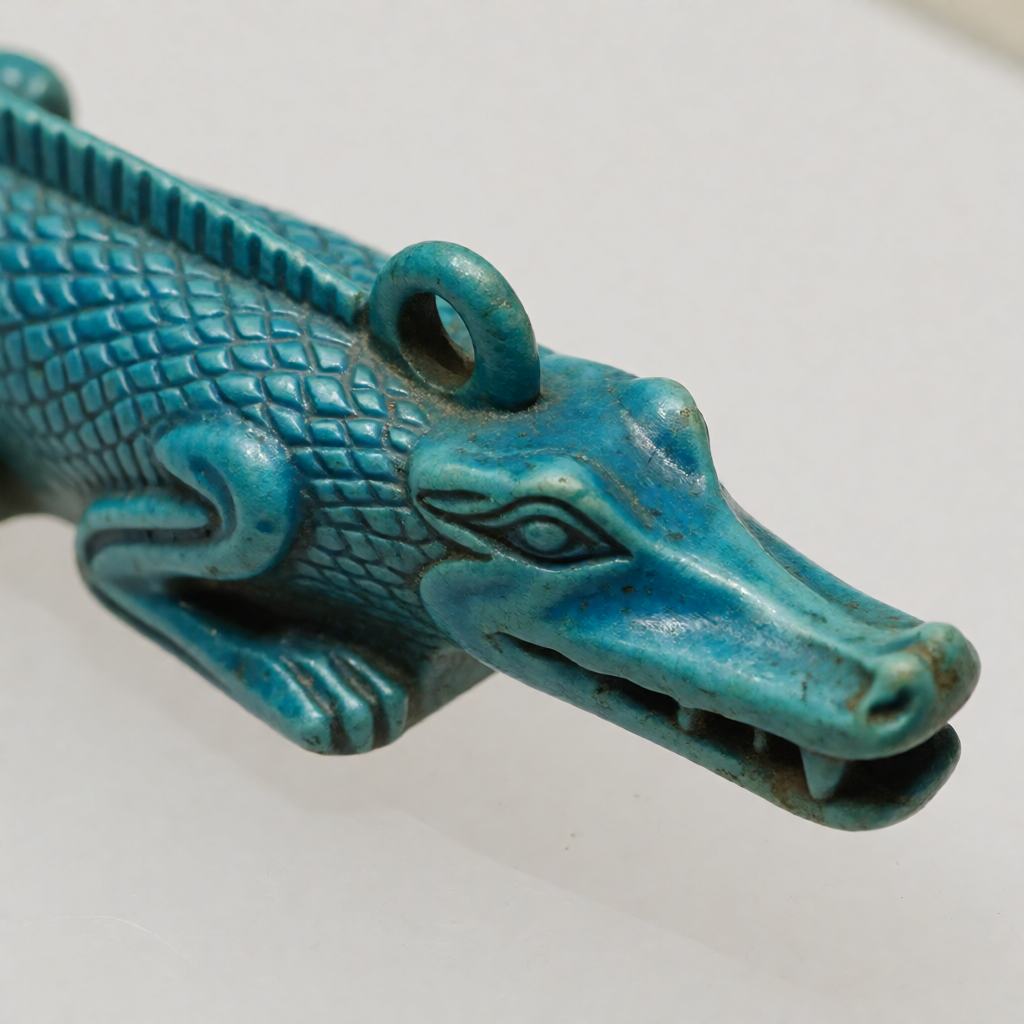
The current carried boats north. Wild animals were part of daily life. The river held hippos and crocodiles. One predator was feared and honoured at once. It was worshipped as the god Sobek. Sobek had the head of the Nile crocodile. His body was that of a man. Temples kept live crocodiles in pools. They hung jewellery on the animals. They fed them by hand.
Craft and ideas
Trade, Technology and Ideas
Egypt did not invent everything alone. It took the potter’s wheel from its neighbours. It took the chariot as well. Later it took alphabetic writing. In return it sent grain, gold, papyrus and linen. Papyrus was made from river reeds.
Workers pressed the strips into sheets. It was the cheapest writing material in the Mediterranean. Its name became the word for paper in Europe. Doctors in Egypt were famous abroad. The maths of Egypt was practical, not abstract. It measured fields and grain rations.
It set the slope of a pyramid. The 365-day calendar came from Egypt too. It was built around the yearly flood. Rome later copied it.
What lasted
Legacy
The monuments of Egypt outlived its institutions. The pyramids still stand. So do the temples at Luxor and Karnak. So do the rock-cut tombs of the Valley of the Kings. Visitors still come from every continent. The Rosetta Stone was carved in 196 BC.
It carries one decree in three scripts. They are hieroglyphs, demotic script and Greek. Jean-Francois Champollion cracked the code in 1822. He opened the whole civilisation to modern reading. Modern Egypt still lives on the same strip of land. A great dam in the south ended the yearly flood.
Controlled irrigation now runs all year. The old rhythm of the river is gone. The geography itself has not changed. The Nile still carries almost the whole population. Deserts still watch from both sides.
Quick hits
Five Things to Remember
- The yearly Nile flood, not rain, made farming possible.
- The Great Pyramid stood about 146.6 metres high and used about 2.3 million blocks.
- No one could read hieroglyphs until Champollion cracked the code in 1822.
- Egypt was united around 3100 BC and became a Roman province in 30 BC.
- The society was a steep pyramid. Farmers sat at the base and pharaoh at the top.
[…] Its kings took the title of pharaoh. They built in the Egyptian style. They drew on the skills of Ancient Egypt. The kingdom outlived Egypt as an independent state by 300 […]