 By Iris
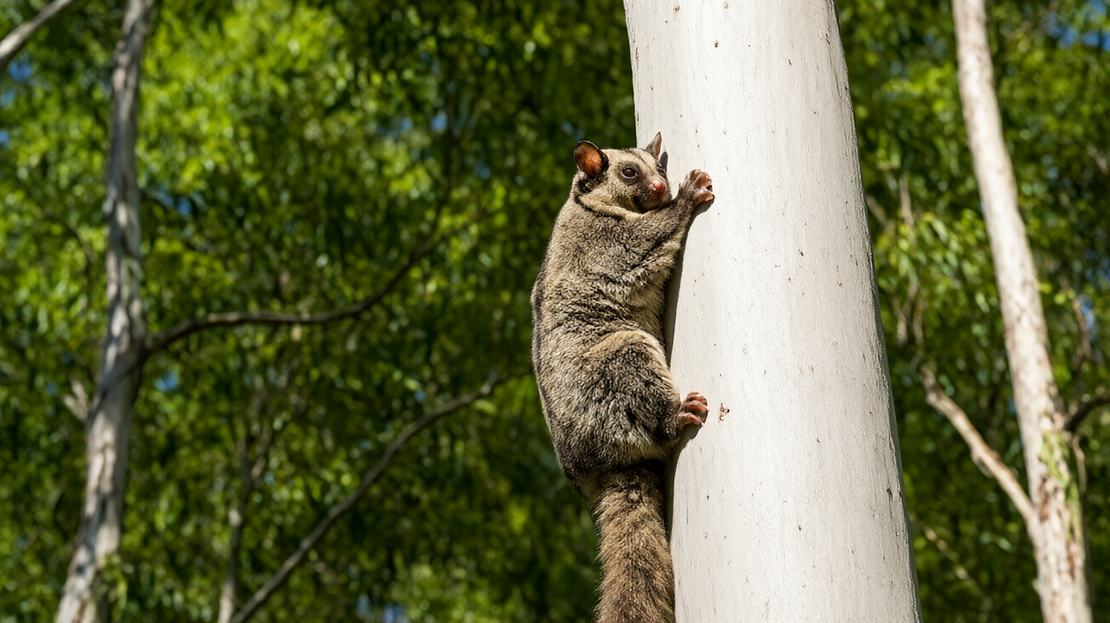
Petauroides volans | Greater Glider
Species Profile · Pseudocheiridae
Greater Glider
A glider the size of a cat launches from a gum tree and lands 100 m away.
Vulnerable
Length
Tail
Weight
Young
Glide
Rating
The Greater Glider
The glider that never comes down
A grey shape leaves a tall trunk and crosses the gap between trees. It glides without a sound, and the membrane between elbow and ankle does the work. Skin stretches flat, and the glider steers with its long tail.
Few mammals glide this far, and this one is the largest of them. Gum tree leaves make up almost the whole diet. A single animal may use a dozen hollows inside one home range.
Because old trees supply both food and dens, clearfell logging takes all at once. The species has vanished from much of its former range in twenty years.
Family tree
Pseudocheiridae, the ringtail possums
Its proper name is Petauroides volans, one of the ringtail possums, and two close forms were split off as separate species in 2020. This family carries possums of Australia and New Guinea. Because the glider looks like a flying squirrel, early settlers gave it that name.
Nothing links it to squirrels, since it is a marsupial with a pouch. Gliding evolved at least three times among Australian mammals. Only these large gliders fill the genus.
Fur, tail and membrane
How to tell one
Adults run 35 to 45 cm from nose to rump. The tail adds 45 to 60 cm, and it ends in a brush rather than a grip. Weight falls between 900 and 1,600 g.
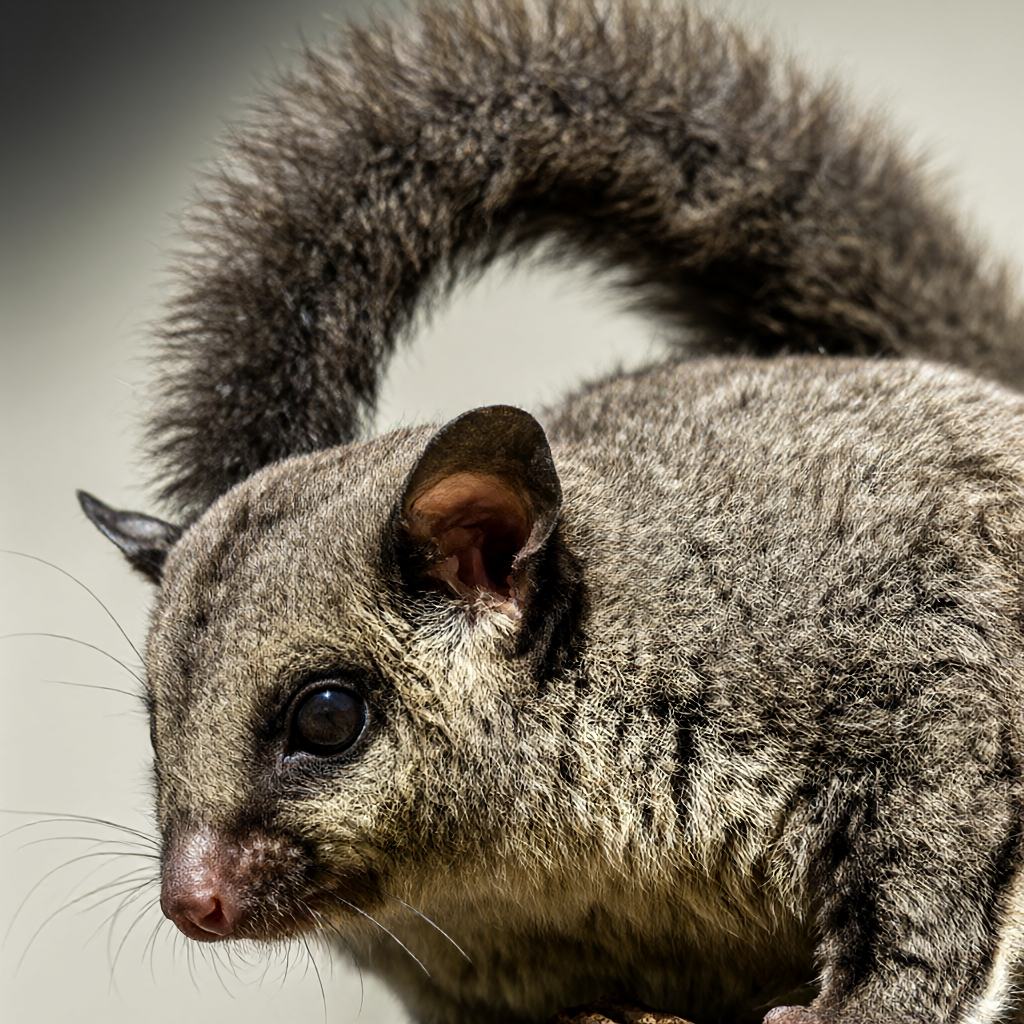
Fur runs long and soft, and it varies from cream to almost black. A membrane stretches from the fifth finger to the ankle, and it opens into a wide sail. Because the tail acts as a rudder, the glider changes course in mid air.
Glides of 100 m have been measured between tall trees, and the ears stay small and rounded while the eyes run large. Front teeth are sharp and cut leaves into small pieces, while females carry a pouch with two teats, though only one young lives.
1
2
3
Tall gum forest
Where it lives
Tall gum tree forest is the only home. Old trees with hollows matter more than any other feature. Because the glider needs a high canopy, regrowth stands stay empty for decades. Forest with dense undergrowth holds fewer animals than open woodland.
Fires kill gliders outright, since they cannot escape a crowning fire. Fires in 2019 removed a third of the habitat in one season. A sloth lives on leaves in a New World forest, and both animals accept a diet of very low energy.
Leaves, and only leaves
What it eats
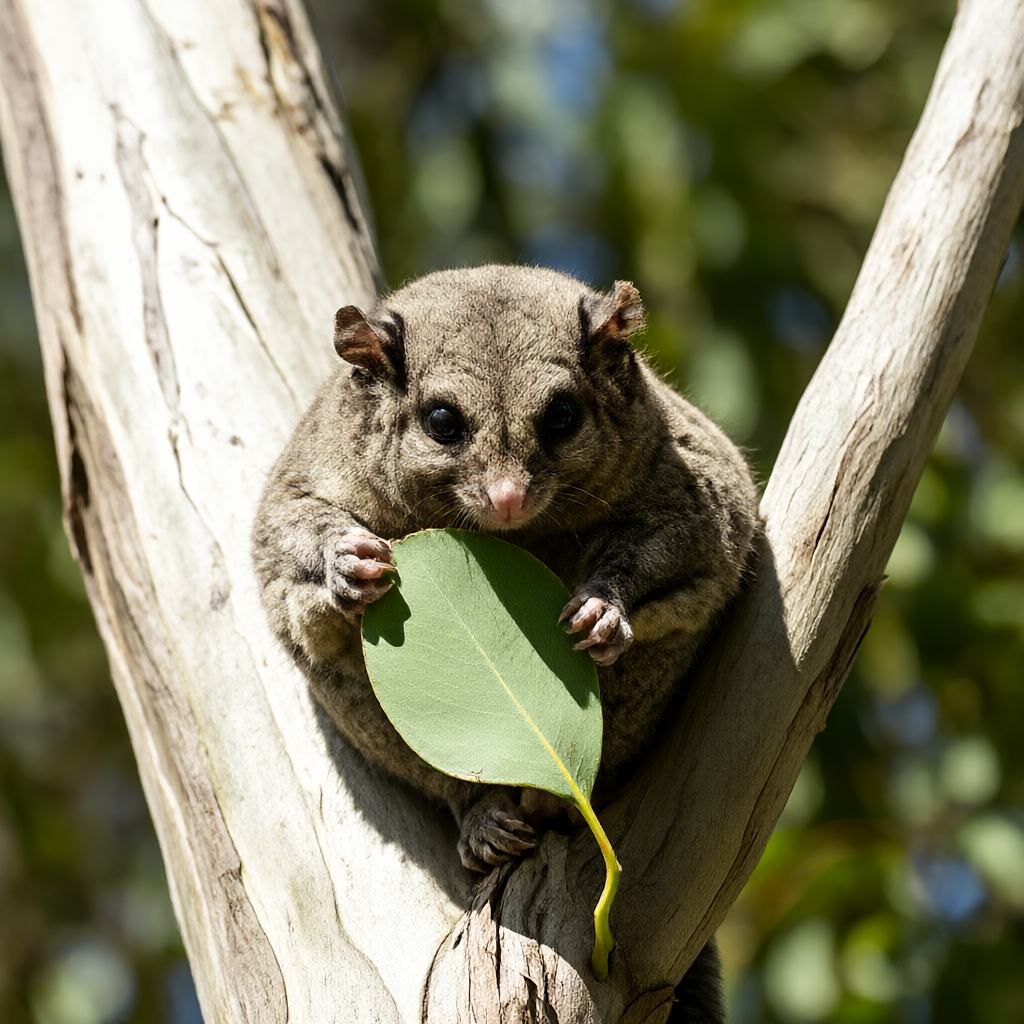
Gum tree leaves make up the diet almost entirely. Young leaves get chosen, and the glider avoids the oldest growth. Because the leaves carry toxins, the glider feeds for hours and rests for longer. Each animal selects a few favoured trees within its range.
Flowers and buds get eaten in season, though they add little. Water comes from the leaves, so the glider rarely drinks. The redwood grows just as tall in California, though no gliding mammal lives in its canopy.
One young a year
The breeding cycle
A single young is born each year. The female raises it in the pouch for four months. Because the young stays with her for another six, she breeds slowly. Births cluster in autumn, and the young leaves the pouch in winter.
Then the juvenile rides on her back for weeks. Independence comes at about a year old. Females stay close to their birth area, and males disperse further.
Fires and logging
Conservation
The Red List calls the species Vulnerable, and Australian law lists it as Endangered. Numbers fell by 80 percent in some forests within two decades. Because the glider needs hollows in very old trees, logging hits it twice over.
Climate change brings hotter nights, and the glider cannot cool itself easily. That same season killed an estimated third of all animals. Protection now covers some forest, though logging continues elsewhere.
Side by side
How It Compares
| Trait | Greater Glider | Koala |
|---|---|---|
| Family | Pseudocheiridae | Phascolarctidae |
| Length | 35-45 cm | 60-85 cm |
| Food | gum leaves, almost only | gum leaves, almost only |
| Moving | glides up to 100 m | climbs slowly |
| Young | one a year | one a year |
| Rating | Vulnerable | Vulnerable |
Common misreadings
What People Get Wrong
- Not a possum family pet. The animal glides, and it never grips with its tail. The tail ends in a brush, so it steers in the air but cannot hold a branch, and the animal needs tall trees to move at all.
- Not one species. Two close forms got split off in 2020. What used to be a single widespread glider is now three, and each one lives in its own band of eastern forest.
- Not a fire survivor. A third of the home went in one season. Fires in 2019 removed forest the animal cannot cross, and logged regrowth stays too short for a glide between crowns.
Going further
Sources and Further Reading
Quick hits
Five things to remember
- It glides up to 100 m.
- It eats only gum tree leaves.
- It cannot live without tree hollows.
- It was split into three species in 2020.
- Fires wiped out a third of its range.
[…] (Nymphalidae) rich in species across Asia and North America. It is unrelated to the familiar Small White, despite the shared word “admiral,” and sits among the rainforest queens and conquerors […]
[…] genus Argynnis within the brush-footed butterfly family Nymphalidae. It is distinct from the pierid Small White and from the Peacock Butterfly, though all share the broad nymphalid kinship. Its closest relatives […]
[…] butterflies. It belongs to the family Nymphalidae, close to the meadow browns and the Small White in the broader butterfly community of flowery habitats. The Gatekeeper’s nearest relative is […]
[…] includes the Essex Skipper. Its life style and grassland niche overlap closely with that of the Pieris rapae and other meadow butterflies that share the same flower-rich […]