 By Iris
Sequoia sempervirens | Redwood
Species Profile · Cupressaceae
Redwood
A tree that drinks fog, lives for two thousand years, and still stands taller than any other.
Endangered
Height
Trunk
Bark
Roots
Age
Status
A strip of coastal fog
The tallest tree on Earth
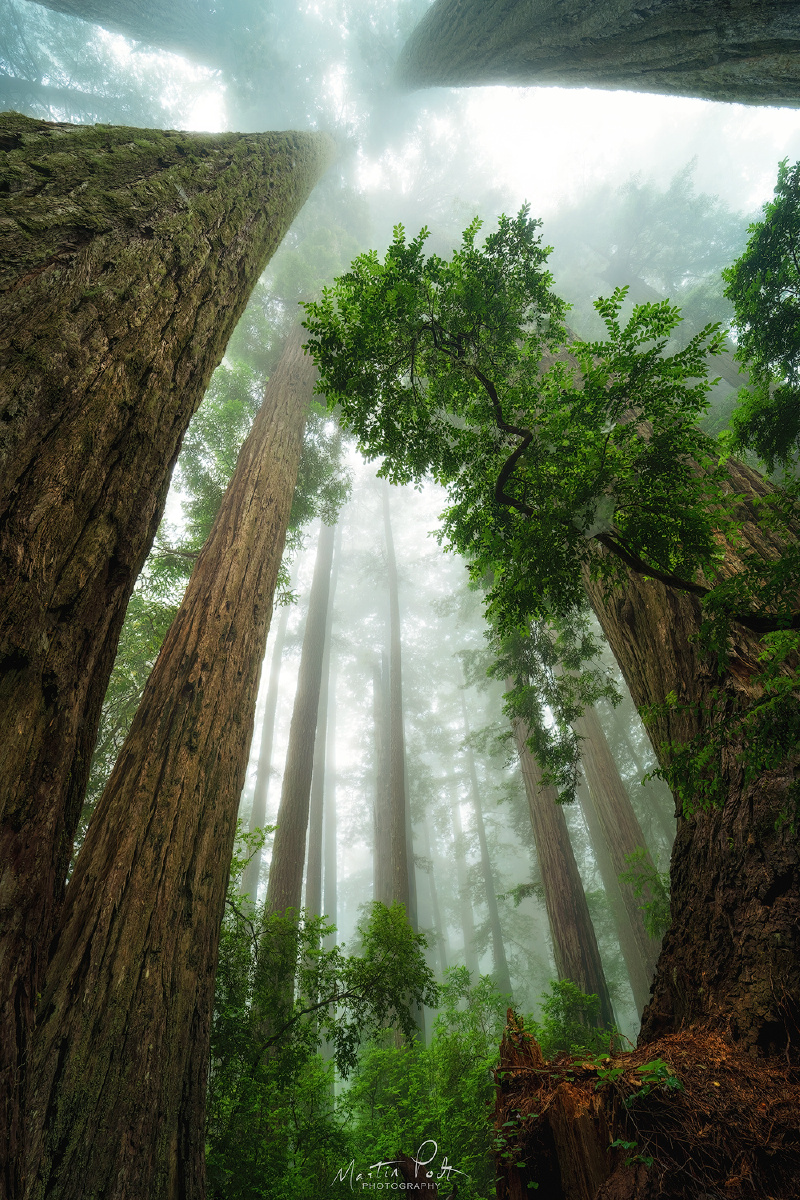
Earth’s tallest living tree grows in a narrow strip of fog. Coast redwoods can pass 100 meters in height. No other living tree matches them, and the record keeps edging up. A single trunk can reach eight meters across.
Few plants build on this scale. Its home is a fog belt along the Pacific coast. That belt runs through northern California and southern Oregon, and it is not wide. Outside the strip the tree does not grow wild.
These forests count among the most productive temperate woods anywhere. Fog, tall trunks and deep shade make the place unlike any other forest.
One genus, one species
Where the redwood sits
Its genus holds one living species, and the full name is Sequoia sempervirens. That genus sits in the cypress family. Its closest famous relative is the Giant Sequoia of the Sierra Nevada. Both trees carry soft red bark and both live for millennia, yet they hold different records.
One wins on height, while the other wins on bulk. Botanists put the two in one subfamily, though the genera differ. Loggers used a single name for both trees, although only one grows near the sea. Modern workers keep one species in the genus, and no split is accepted.
That view is settled. No second living species has turned up.
Bark, roots and a ring of clones
Reading a giant trunk
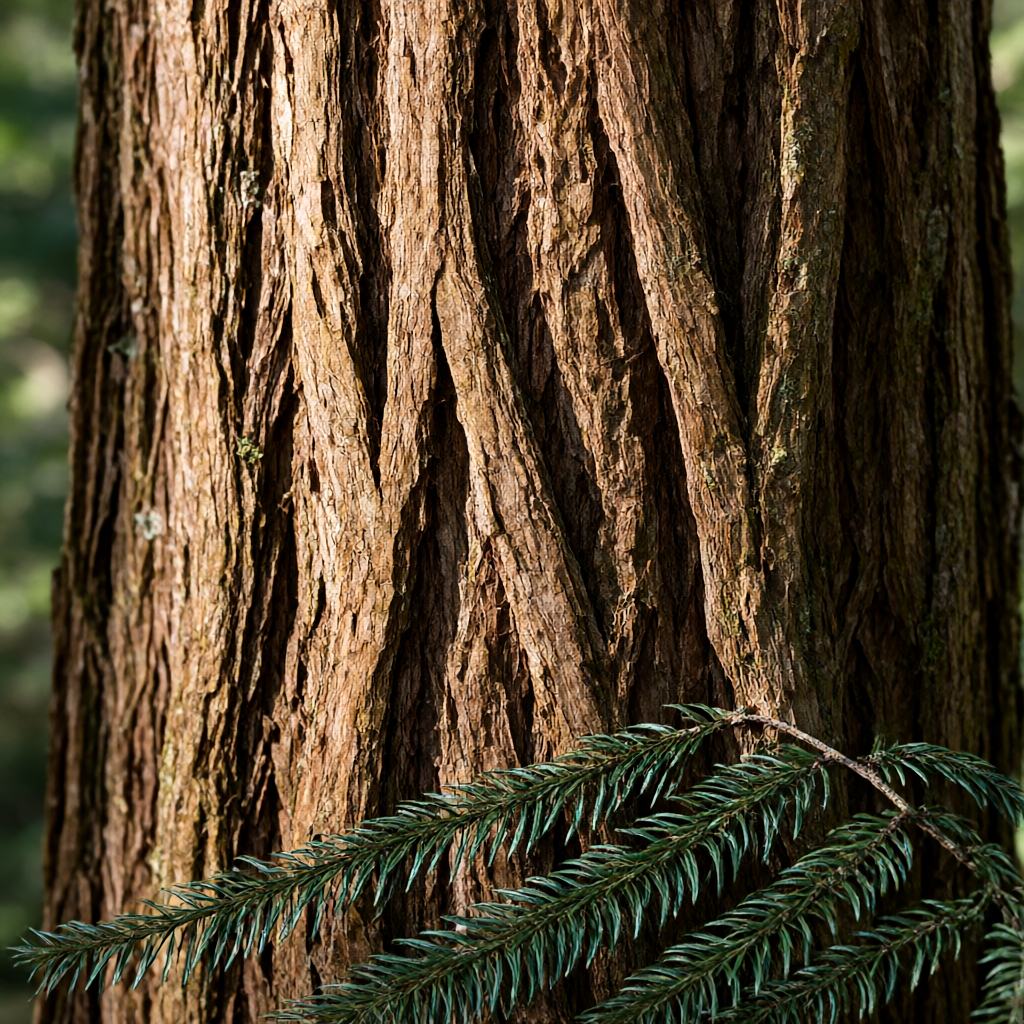
Hyperion, the record trunk, reaches 115.92 meters into the fog, and no other tree is known to match it. Thick, fibrous bark is hard to burn, and it can build to 30 cm thick on an old trunk. That bark saves the tree when fire runs through a grove. Crowns of mature trees are narrow and columnar, with branches that sweep upward.
Roots spread wide instead of deep, and most sit only 3 to 6 meters down. Neighbouring roots lock together underground, so a whole group holds itself up against strong wind. Age is the other extreme, since the oldest known trunk passed 2,200 years while many others pass 2,000. Old trunks keep adding wood the whole time.
Few trees come close. Cut stumps push up new shoots, and each shoot is a clone.
1
2
3
Fog that doubles the rain
Where it grows
Wild trees grow in one narrow band of coast, and nowhere else. That band follows the Pacific from southern Oregon into northern California, and fog fills it in summer. Summer rain almost stops there, yet fog condenses on the needles and drips down to the ground.
In some places that drip doubles the rainfall, and it carries the trees through dry months. Fog matters most when rain is negligible. Canopy, fern and fallen logs stack in layers from the treetops down to the dark floor of the grove.
Fallen giants become nurseries, since seedlings root along their length. Northern Spotted Owls nest only in old growth forest of this kind, because the structure matters. Logging removes that structure, and the gap lasts for centuries before the canopy closes over the floor.
Water from air and soil
How the tree feeds
These trees feed themselves, and water is the limit here. Roots take water from the soil, and needles take more from fog that settles on them at night. Sunlight drives the work. Unlike the Dawn Redwood, this tree can take much of its summer water from fog.
Fallen leaves and logs break down on the floor, and the roots take the nutrients back before the next dry season. Nothing about the tree is fast. Growth takes centuries. Young trunks add wood slowly, though the payoff lasts for ages.
Shade below the canopy stays deep, so the understory fills with ferns. Every part of the system runs on fog and time.
Seeds and sprouts
The breeding cycle
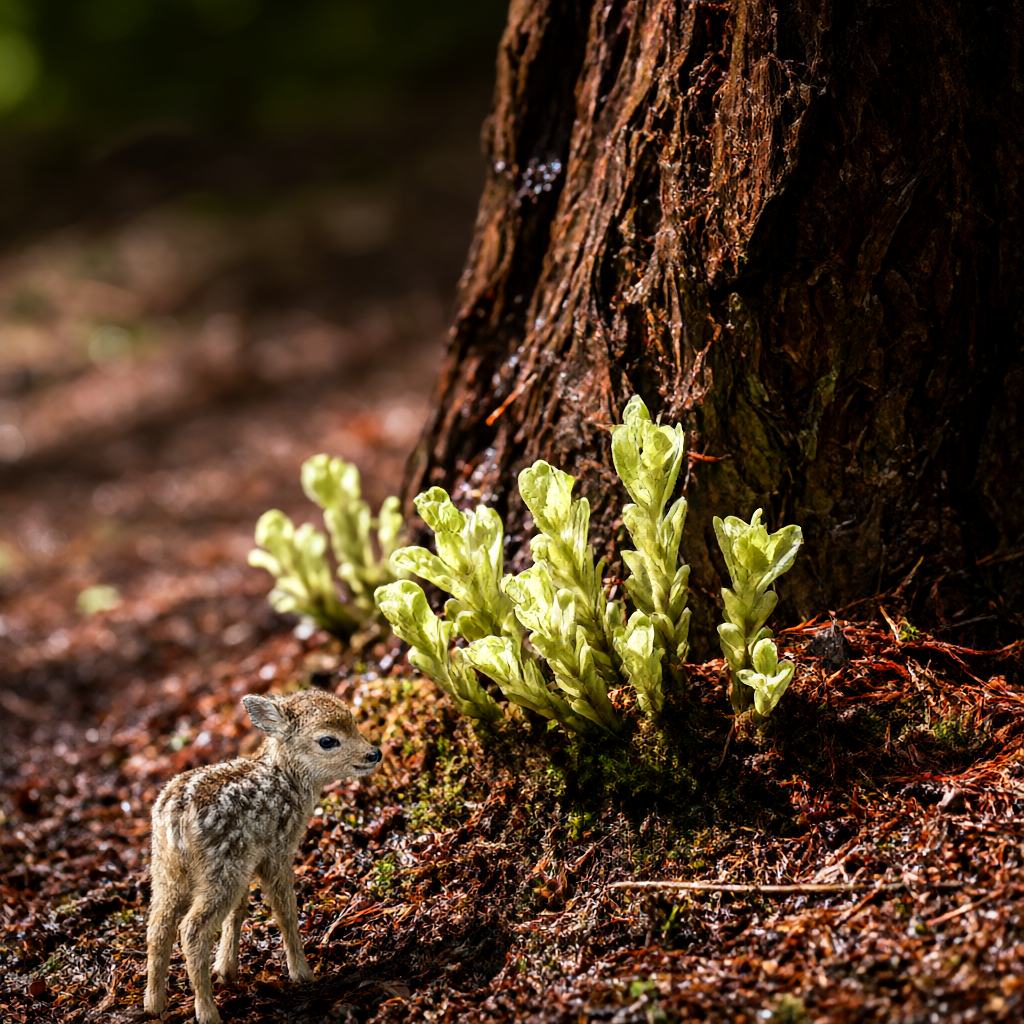
Two kinds of offspring come from this tree, seeds and sprouts. Fire or a falling neighbour can break a trunk, and new shoots rise from the stump. Shoots from one stump share a single set of genes, so the cluster is a clone.
Rings of trees may all be one plant, and the original may be thousands of years old. Seeds carry the line to new ground, while sprouts hold the old site. Sprouting wins after a fire, since the root survives underground.
Burnt groves often come back from the same roots. Clones may look young, though the root below is ancient. Fire does not kill it.
Under 5 percent left
Conservation
Old growth once covered about 800,000 hectares along this coast. Logging cut that forest to less than 5 percent of its former range. Most of what survives stands in fragments on private land.
Redwood National and State Parks protect some of the best remaining stands. Officially the species is listed as Endangered, since the old growth has gone and the rest is cut over. New trees are planted on logged ground, though the cover returns slowly and the old structure does not come back.
Planted groves are not old growth, though they hold soil and shade. Protection now means guarding what is left and replanting what was lost. The coming decades decide whether the old forest returns.
Side by side
How It Compares
| Trait | Redwood | Giant Sequoia |
|---|---|---|
| Height | up to 115.92 m | up to about 95 m |
| Trunk | up to 8 m across | up to 11 m across |
| Bark | 30 cm, fibrous | up to 60 cm, spongy |
| Range | coast fog belt | Sierra Nevada groves |
| Regrowth | seed and sprout | seed, rarely sprouts |
| Standing | Endangered | Endangered |
Common misreadings
What People Get Wrong
- Field guides often say redwoods grow from seed alone, yet most groves spread by sprouting. A burnt stump sends up shoots that share the genes of the parent tree.
- Gardeners assume the tree needs deep soil to stand, but its roots run wide and shallow. A grove survives a gale because the roots of neighbours grip one another.
- Travel sites repeat that logging left half the old forest, though less than 5 percent remains. Second growth covers much of the coast, and it is far younger than the giants.
Going further
Sources and Further Reading
Five things to remember
Quick hits
- Hyperion is the name of the tallest known tree.
- Bark can reach 30 cm in thickness.
- Roots stay shallow, often only 3 to 6 meters deep.
- One ring of trunks can be a single plant.
- Logging left less than 5 percent of the old growth.
[…] would be too dry for such massive organisms in any other region. As a foundation species of the temperate rainforest ecosystem, the coast redwood supports an extraordinary web of life found nowhere else on Earth, and […]