 By st20113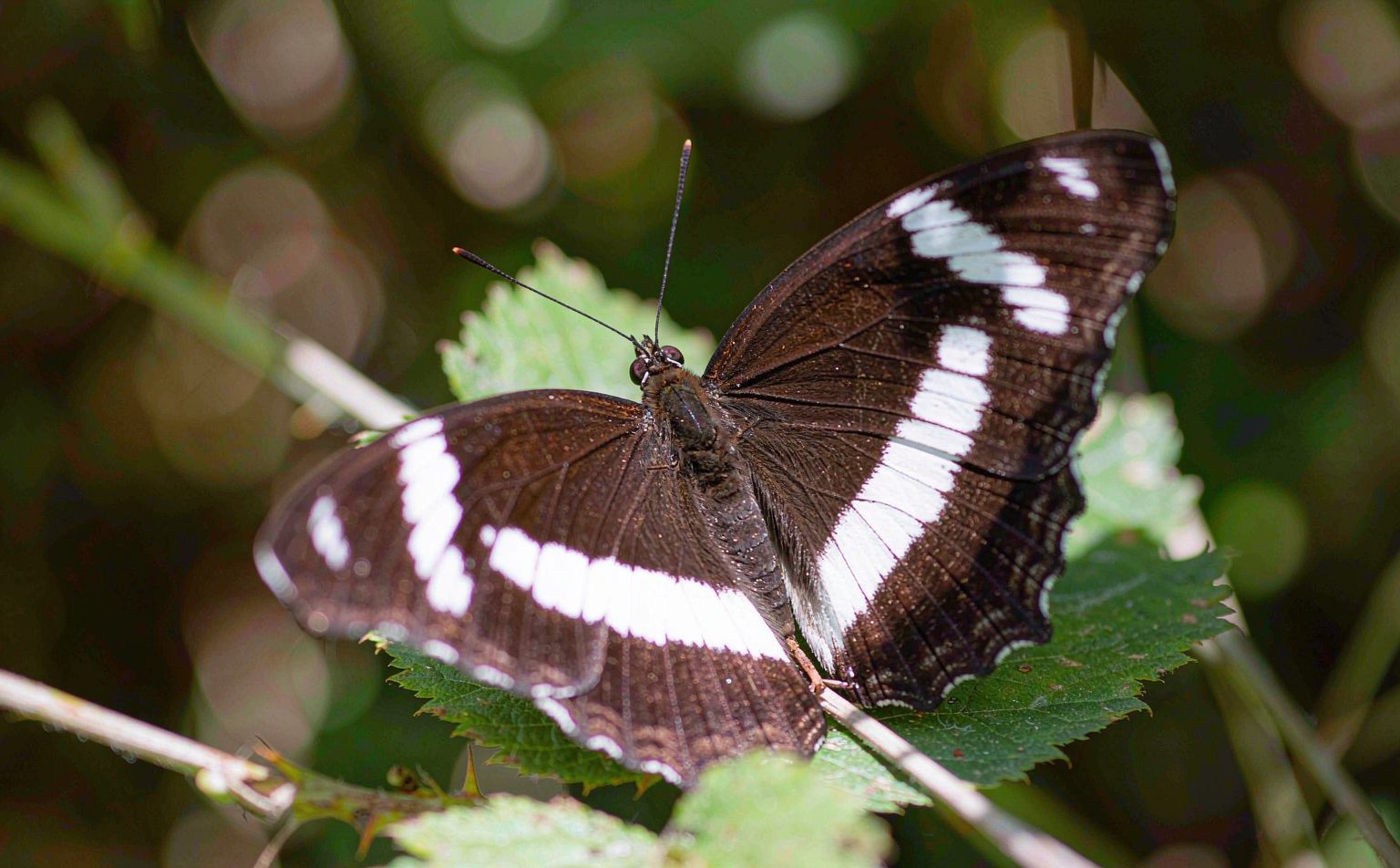
Limenitis camilla | White Admiral
Introduction
The White Admiral (Limenitis camilla) is one of the most elegant butterflies of the European woodland, a gliding, black-and-white woodland specialist whose flight is more like that of a moth than a flitting cabbage white. Its broad white bands across deep velvet-brown wings make it unmistakable as it sails along sunny rides and along the edges of honeysuckle thickets. Once local and declining, it has expanded across much of its range as coppiced woodland and ride management have improved. It is a butterfly of dappled shade rather than open meadow.
Taxonomy
Limenitis camilla was described by the Danish entomologist Johan Christian Fabricius in 1775 and is the sole European representative of the genus Limenitis, a group of brush-footed butterflies (Nymphalidae) rich in species across Asia and North America. It is unrelated to the familiar Small White, despite the shared word “admiral,” and sits among the rainforest queens and conquerors rather than the pierids. Its closest European relatives include the rarer southern Limenitis species of the Mediterranean fringe.
Physical Characteristics
With a wingspan of 5 to 6 centimetres, the White Admiral is a medium-large butterfly. The upperside is dark chocolate-brown with a broad, clean white band crossing both fore- and hindwings, and a row of white spots near the wing tips. The underside is brown with a white band and a dusting of orange near the body, helping it vanish against dappled leaf litter when at rest. The wings are rounded and the flight powerful and gliding. Males and females are similar, though females are slightly larger and paler. Freshly emerged adults have a slight sheen to the dark scales.
Habitat
White Admirals are butterflies of broad-leaved woodland—especially coppiced hazel and oak woods—with sunny, sheltered rides and glades where the larval food plant, honeysuckle (Lonicera), grows in hedges and tangles. They need both shade for shelter and sun for basking and nectar, a balance found in well-managed coppice. They also visit gardens and orchards adjacent to woodland. They avoid dense, dark plantation and treeless farmland.
Diet
Adults feed mainly on nectar from bramble, honeysuckle and other woodland flowers, and they frequently visit damp mud, animal droppings and even carrion for minerals—a habit shared with many woodland nymphalids. The caterpillars are strictly tied to honeysuckle, folding a leaf into a shelter in which they rest by day and feed at night on the leaves. This single-food-plant reliance makes the presence of honeysuckle the limiting factor for local colonies.
Reproduction
Females lay single pale-green eggs on the upper surface of honeysuckle leaves, usually in shady spots. The caterpillar that hatches builds a leaf shelter and, after several moults, hibernates as a half-grown larva rolled in a leaf tied with silk. It resumes feeding the following spring and pupates on a stem or leaf. The chrysalis is angular and camouflaged like a dead leaf. Adults fly from late June through August, timing their emergence to peak honeysuckle flowering.
Conservation
The White Admiral has recovered strongly in Britain and parts of Europe thanks to coppice restoration and ride management, and is not of global concern, though it remains locally scarce. It is sensitive to the loss of honeysuckle and to over-shading of woodland rides. Conservation that maintains a mosaic of light and shade, and that spares honeysuckle tangles, underpins healthy colonies. It is monitored by butterfly recording schemes as an indicator of wooded habitat quality.
Fun Facts
- Its flight is a distinctive glide-and-flap, more moth-like than the jittery fluttering of a cabbage white.
- The caterpillar spends winter rolled inside a silk-tied leaf, like a tiny sleeping bag.
- Males often patrol regular circuits along a ride, revisiting the same perches each day.
- It will settle on the ground to sip minerals from mud and dung, behaviour unusual among woodland butterflies.
- Despite the name, it is no relative of the “red admiral” beyond sharing the nymphalid family.