 By st20113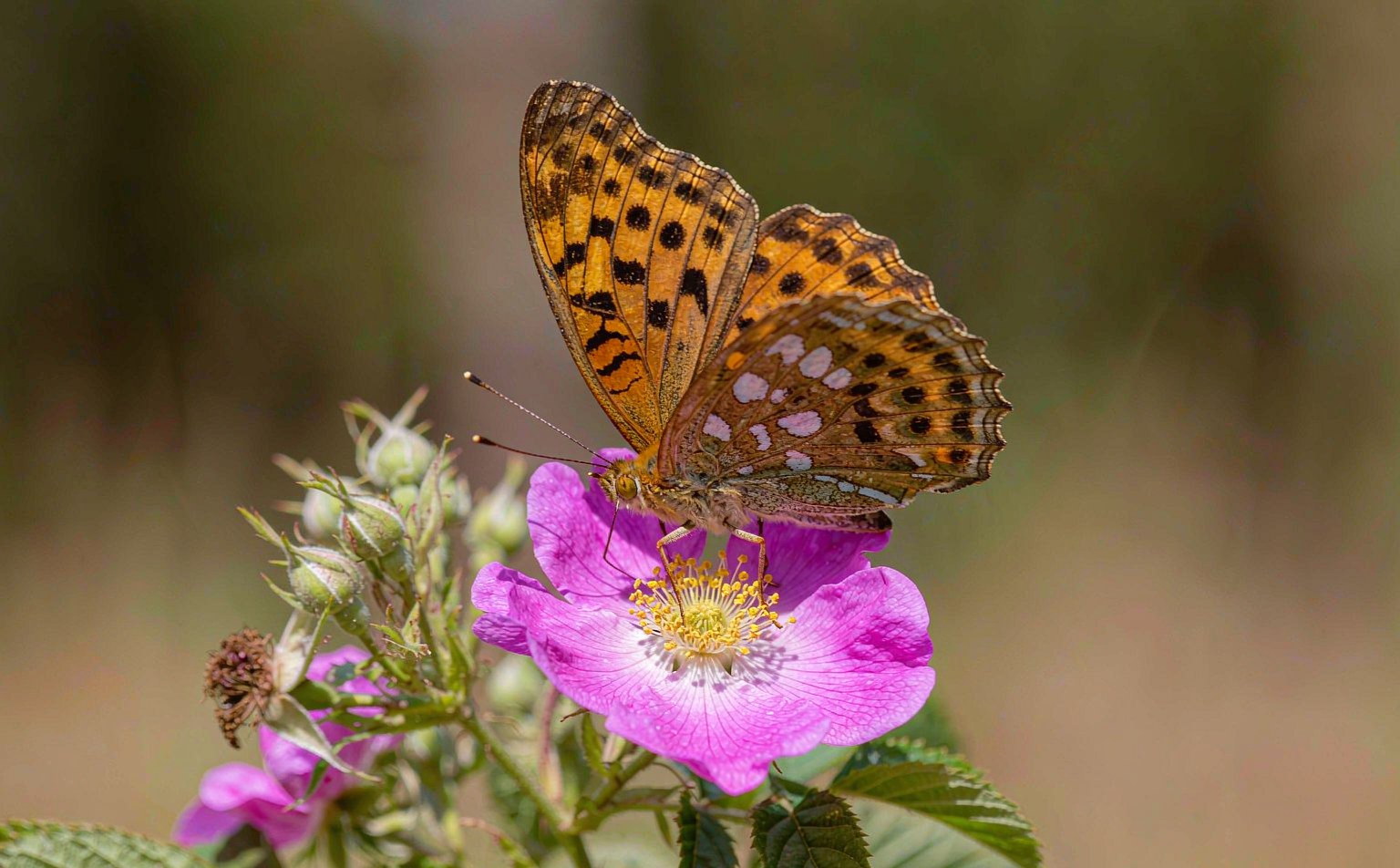
Argynnis paphia | Silver-washed Fritillary
Introduction
The Silver-washed Fritillary (Argynnis paphia) is the largest and one of the most magnificent fritillaries of European woodlands, a strong-flying butterfly whose golden-orange wings are etched with black chequering and whose underside shimmers with silvery streaks. It patrols sunlit woodland rides and ridesides with a purposeful, sailing flight, settling on bramble flowers to feed. A creature of mature broad-leaved forest, it is a hopeful sign of healthy, flower-rich woodland edge and is among the most watched butterflies of high summer.
Taxonomy
Argynnis paphia was described by Linnaeus in 1758 and is the type species of the fritillary genus Argynnis within the brush-footed butterfly family Nymphalidae. It is distinct from the pierid Small White and from the Peacock Butterfly, though all share the broad nymphalid kinship. Its closest relatives are the other Argynnis and Speyeria fritillaries of the northern hemisphere. A striking dark form of the female, valesina, is greenish-black rather than orange and is common in some woods.
Physical Characteristics
With a wingspan of 6 to 7 centimetres, the Silver-washed Fritillary is a large, powerful butterfly. The upperside is bright orange with a network of black spots and wavy black markings along the margins; males carry a narrow, scent-producing band of black scales on the forewing. The underside of the hindwing is the source of the name: a wash of silvery-white streaks over greenish-gold, camouflaging the resting butterfly against dappled leaf litter. Females are a little larger, and the valesina form is dark olive-green above with silver underside. The flight is fast and direct, typically low along rides.
Habitat
This is a butterfly of sunny, flower-rich rides, glades and woodland edges in mature deciduous and mixed forest, especially oak and beech. It needs abundant violets on the woodland floor for the caterpillars and prolific bramble and thistle flowers for the adults. It also strays into orchards, hedgerows and gardens bordering woods. It avoids dense, dark plantation and open treeless farmland, requiring the light-and-shade mosaic that coppiced or naturally varied woodland provides.
Diet
Adults feed chiefly on nectar from bramble, thistles, knapweed and other tall flowers, and like many fritillaries they also visit dung and damp mud for minerals. The caterpillar feeds exclusively on violets (Viola species), mining the leaf initially then eating it openly. The female scatters eggs singly among the leaf litter near violets rather than on the plant itself, and the tiny larva must find a violet after hatching—a remarkable feat that links the butterfly to the hidden floor of the wood.
Reproduction
Eggs are laid in midsummer, dropped loosely into leaf litter close to violet patches. The larva hatches, feeds briefly, then hibernates without further feeding through the winter. It resumes on violets the next spring, grows through several moults, and pupates low in vegetation. Adults emerge from late June to August, timed to the peak of bramble blossom. A single generation flies each year across most of the range.
Conservation
The Silver-washed Fritillary is widespread and not globally threatened, and in many woods it has benefited from ride management and coppicing that increase flowers and flight space. Locally it declines where woodland is darkened by coniferisation or where ride flowering is suppressed. It is a valued indicator species in woodland butterfly monitoring. Maintaining sunny rides, violets and bramble thickets together sustains thriving colonies.
Fun Facts
- The female’s dark *valesina* form can make up a third of some woodland populations.
- The silvery underside markings are not pigment but structural scales that catch the light.
- Males patrol fixed routes along rides, chasing off rivals and rival butterflies alike.
- The caterpillar’s only food is violets, yet the egg is laid on the ground, not on the plant.
- It is among the largest butterflies to glide rather than flutter through European woods.