 By st20113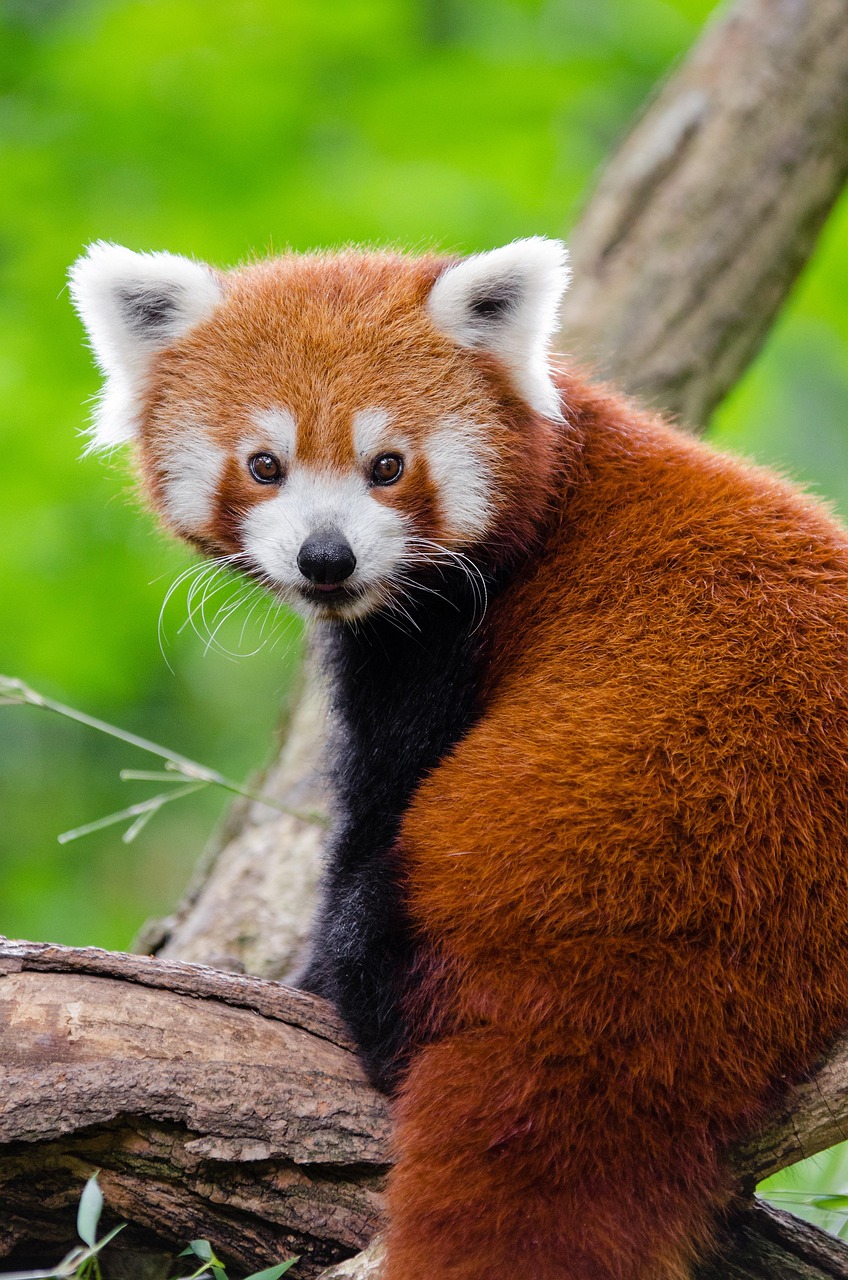
The red panda (Ailurus fulgens) is a small arboreal mammal native to the eastern Himalayas and southwestern China. It is the only living species of the genus Ailurus and the family Ailuridae. Despite its name and some shared habitat with the giant panda (Ailuropoda melanoleuca), the red panda is not closely related to bears at all—it represents an ancient evolutionary lineage that diverged from other carnivores millions of years ago. With its striking reddish-brown fur, masked face, and ringed tail, the red panda is one of the most distinctive and charming animals in the natural world.
Scientific Classification
For many years, taxonomists debated the red panda’s true relatives. It was once classified with raccoons in the family Procyonidae, and later placed alongside bears in the family Ursidae. However, modern molecular research has confirmed that the red panda belongs in its own unique family—Ailuridae—and genus Ailurus. Its closest extinct relatives are known from fossil records dating back several million years.
Two subspecies have traditionally been recognized: the Himalayan red panda (A. f. fulgens) and the Chinese red panda (A. f. refulgens). Recent genetic studies suggest these populations may actually represent two separate species, with the Chinese red panda being slightly larger and displaying more distinct ring patterns on its fluffy tail. The red panda’s scientific name translates roughly to “fire-colored cat” or “fire fox,” a reference to its vivid coat and fox-like features.
Physical Description
The red panda measures approximately 50 to 65 centimeters in body length, with an additional 30 to 50 centimeters accounted for by its long, bushy tail. Adults typically weigh between 3 to 6 kilograms. Its coat is primarily a rich reddish-brown, with lighter-colored faces, white ears, and distinctive black markings around the eyes that resemble a mask. The underparts are dark, almost black, while the legs are short and dark as well.
One of the red panda’s most remarkable features is its semi-retractable claws, which are perfectly adapted for gripping branches in its forest canopy home. Like the giant panda, the red panda possesses an enlarged wrist bone that functions like a thumb, greatly aiding its ability to grip and manipulate bamboo stalks. Its tail—long, fluffy, and marked with alternating reddish and cream-colored rings—serves as a balance aid while climbing and can be wrapped around the body like a blanket during cold mountain nights.
Habitat and Distribution
Red pandas inhabit the temperate forests of the eastern Himalayas, ranging across Nepal, India, Bhutan, northern Myanmar, and central China. They are strongly associated with old-growth forests dominated by bamboo, preferring elevations between 2,200 and 4,800 meters where the climate is cool and humid year-round.
These animals spend roughly 90 percent of their lives in trees, rarely descending to the ground except to forage or when nesting. Their forest habitat provides them not only with food but also with effective camouflage: their coats closely match the color of moss and lichens that grow on tree bark, making them remarkably difficult for predators—including snow leopards and jackals—to spot.
Diet and Feeding Behavior
Despite belonging to the order Carnivora, the red panda’s diet is overwhelmingly herbivorous. Bamboo constitutes approximately 95 percent of its food intake, and an adult red panda may consume up to two kilograms of bamboo leaves, shoots, and stems every single day. Beyond bamboo, red pandas occasionally eat berries, blossoms, maple leaves, bird eggs, small rodents, and insects, supplementing their nutrition where available.
Red pandas are crepuscular and nocturnal foragers, meaning they are most active during the twilight hours of dawn and dusk. During the day, they rest in tree hollows or on branches, often curling up with their tail draped over their face for warmth and concealment. Their powerful molars are well-suited to grinding tough bamboo fibers, though they lack the specialized jaw structure of ruminants.
Behavior and Social Life
Red pandas are largely solitary animals, with each individual maintaining a territory that rarely overlaps with others except during the breeding season. Communication between individuals involves a range of vocalizations and body language, including tailarching, head bobbing, and a distinctive “huff-quack” sound—a curious blend of a duck’s quack and a pig’s snort that is unique among land mammals.
When threatened, a red panda may stand on its hind legs to appear larger and deliver a barking warning call. It also possesses scent glands at the base of its tail that produce a pungent liquid used both for communication and territorial marking, particularly during the winter breeding season.
Reproduction
Red pandas breed between January and March, with females entering estrus for only one to three days each year—making successful reproduction a relatively rare event. After a gestation period of about 135 days, the female gives birth to one to four cubs in a tree hollow nest she has prepared with moss and leaves. Newborn cubs are blind and weigh only about 110 grams at birth. They begin to open their eyes at around 18 days old and are fully weaned by around five to six months, though they may remain with the mother for nearly a year.
Conservation Status
The red panda is currently classified as Endangered on the IUCN Red List, with its wild population estimated at fewer than 10,000 individuals and continuing to decline. The primary threats it faces include habitat loss and fragmentation driven by deforestation, poaching for the illegal pet trade and fur, and accidental trapping in snares set for other animals.
International trade in red pandas is prohibited under Appendix I of the Convention on International Trade in Endangered Species (CITES), and the species is legally protected in all of its range countries. Conservation efforts include habitat preservation, community-based anti-poaching initiatives, and captive breeding programs in zoos worldwide. Organizations such as the Red Panda Network work with local communities in Nepal and beyond to monitor wild populations and reduce human-wildlife conflict.
Fun Facts
- The red panda was the original “panda” discovered by Western scientists in 1821, nearly 50 years before the giant panda was described.
- Red pandas can rotate their ankles nearly 180 degrees, allowing them to climb down trees headfirst—a rare ability among mammals.
- They have two layers of fur: a dense, soft undercoat for insulation and a coarser outer layer for protection against moisture and cold.
- Red pandas produce a waxy orange-red secretion from their anal glands that they use to mark their territory.
Whether swinging through the misty bamboo forests of the Himalayas or curled up asleep on a high branch, the red panda remains one of nature’s most fascinating and endearing creatures—a living reminder of the incredible diversity of life on our planet.
may also be interested in the Red Panda (Ailurus fulgens) — a smaller, reddish cousin that shares its name but belongs to a completely different
you are interested in high-altitude Himalayan wildlife, you may also enjoy reading about the Red Panda (Ailurus fulgens), another endangered species native to the same mountain
Savanna Elephant Snow Leopard | Panthera uncia Giant Panda | Ailuropoda melanoleuca Red Panda | Ailurus fulgens 2 Jul 2026
medicine. The tiger faces particular challenges shared with other endangered species like the Red Panda and Snow Leopard: small, fragmented populations that are vulnerable to genetic inbreeding
— can be particularly important. The Snow Leopard in Central Asian mountain ecosystems, the Red Panda in Himalayan bamboo forests, and the African Elephant in savanna ecosystems are all keystone
large carnivore populations can be restored, offering hope for other threatened species like the Red Panda and Snow
of small, isolated groups to inbreeding, disease, and stochastic demographic events. Like the Red Panda and Tiger, orangutans face an extinction risk that is fundamentally linked to human activity and
Komodo Dragon egg development and nesting success. As with all island-endemic species — the Red Panda in the Himalayas, the Orangutan in Borneo’s shrinking forests — the Komodo Dragon’s