 By Iris
Panthera uncia | Snow Leopard
Species Profile · Felidae
Snow Leopard
Above 3,000 m in 12 Asian countries, a pale cat hunts sheep across cliffs and snow.
Vulnerable
Weight
Length
Tail
Range
Prey
Rating
A ghost of the high ridges
The cat that lives above the snow line
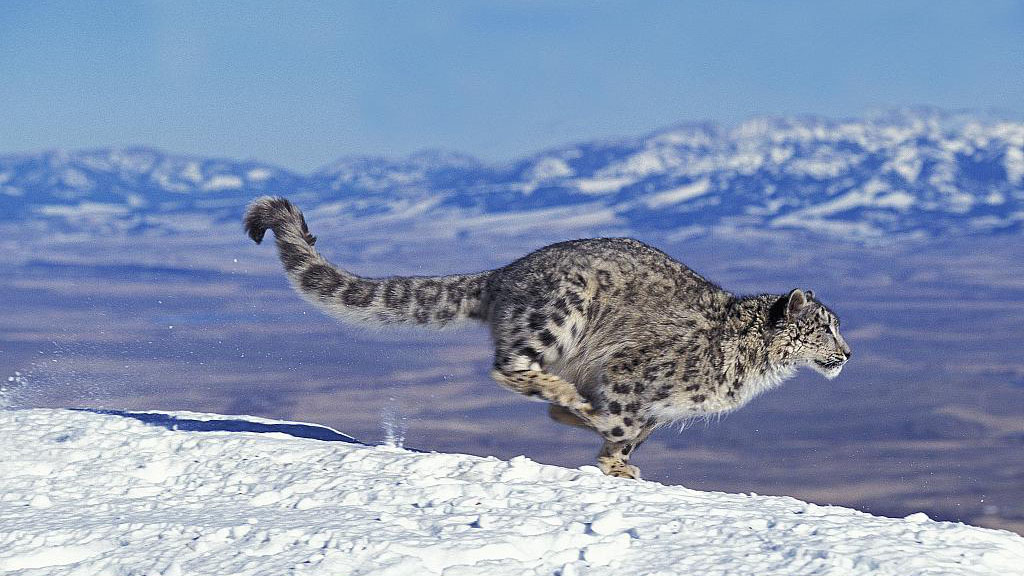
A pale grey cat works a ridge in Central Asia. Few people ever see it. Herdsmen call it the ghost of the mountains, because it vanishes against rock and snow.
Its range covers about 1.8 million sq km of alpine ground. Most sightings fall between 3,000 and 4,500 m. One animal was seen at 5,859 m near Mount Everest.
Snow leopards rank among the least studied of the big cats, since they slip away long before a person gets close. Field work has settled some questions, though others stay wide open.
One genus, an old split
Where it sits among the big cats
The cat sits in the genus Panthera, beside lions, tigers, jaguars and the other big cats. Genetic work puts the split at 4.6 to 4.1 million years ago. Some researchers argued for a separate genus, Uncia. Most now accept Panthera uncia as the valid name.
Its closest relative is the tiger. The lineage split because the cat adapted to cold, high ground, and that single move explains most of its odd traits. Unlike the roaring cats in the genus, it cannot roar at all. Disturbed animals give a high yowl and a puffing sound.
Females in season and mothers with cubs use a short chuffle. It shares the genus with the Leopard, yet the two occupy very different ground.
Fur, tail and paws
How to tell one from a leopard
Adults weigh 22 to 55 kg. Body length runs 75 to 130 cm, and the tail adds another 80 to 100 cm. A thick tail stores fat for the hardest weeks of winter. Coat colour runs pale grey to cream, although the rosettes stay dark.
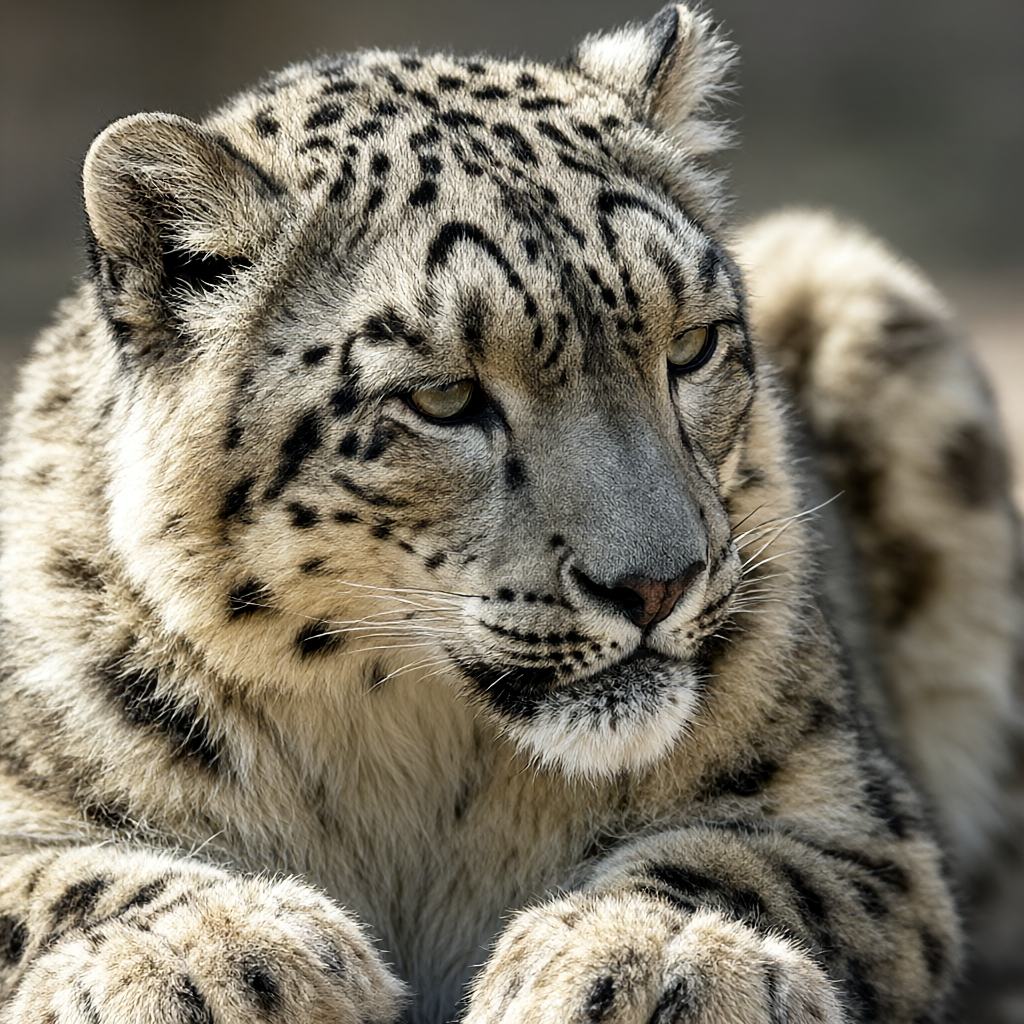
Markings copy the ground, because rock and snow break them up. Dense fur holds heat when the air drops below minus 40 C. Hair counts reach 26,000 per sq cm, possibly the densest of any cat. Small rounded ears sit inside long cheek ruffs that steer wind and snow away from the face.
Broad, heavily furred paws spread the weight like snowshoes and guard the pads from sharp ice. Large nasal passages and a bigger chest pull more oxygen from thin air, although the gain is hard to measure. Green or grey eyes stand out among big cats.
1
2
3
Cliffs and thin air
The ground it cannot do without
Alpine meadow, subalpine forest and bare rock above the tree line make up the range. Cliffs and rocky outcrops matter most, because they hold den sites and clear views. Twelve countries hold the species.
Afghanistan, Bhutan, China, India, Kazakhstan, Kyrgyzstan, Mongolia, Nepal, Pakistan, Russia, Tajikistan and Uzbekistan all report animals. Steep country is the one requirement the cat cannot trade away. Warmer air pushes the tree line uphill, which squeezes the cat into a thinner band of ground.
Herds follow the grass upward, and contact between cats and people grows. Because the range is remote and the ground is hard, counts stay rough at best.
Blue sheep and small prey
What it eats
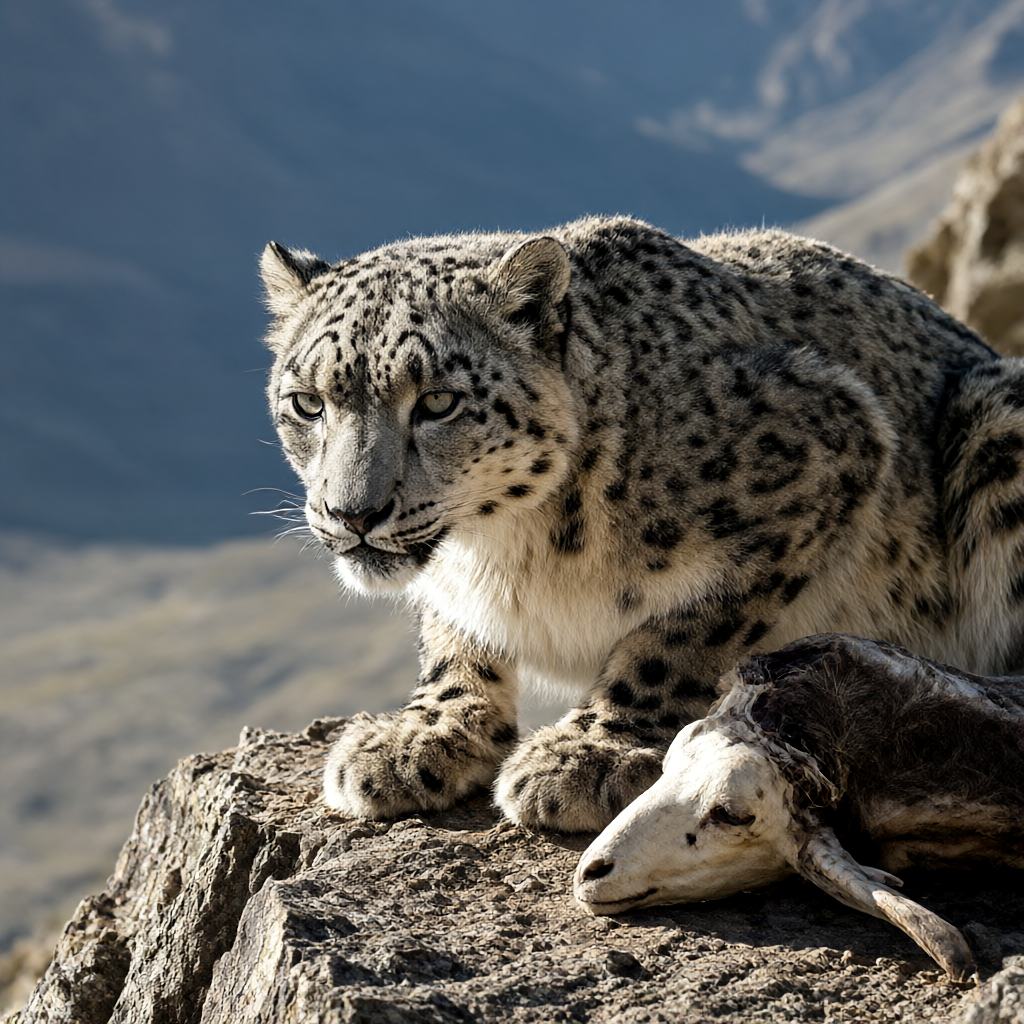
Blue sheep form the staple, with tahr, argali, ibex and marmots taken as well. Small rodents fill the gaps between larger kills. A big cat can pull down prey three or four times its weight. Hunting runs on surprise, because the cat cannot hold a long chase.
Powerful hind legs throw it 15 m across a gap and 6 m up a cliff. Kills get dragged to a quiet ledge, and the cat returns to the carcass for several days. Livestock enters the diet when wild prey thins out. Sheep, goats, horses and yaks all count, and herders notice every loss.
Most hunting happens at dawn and dusk, when prey moves. A large nasal passage helps the cat find carrion in thin air.
A short season
The breeding cycle
Adults live alone for most of the year. Males and females meet only in the breeding season, though the pairing does not last. A female in season chuffles, and mothers use it with cubs. Scent marks and scrapes carry most messages between neighbours.
Hind paws rake the ground after a mark, leaving a scrape that other cats read. Home ranges run 12 to 40 sq km. Males hold ground that overlaps the ranges of two or three females. Cubs stay with the mother for up to two years, because the hunting ground takes that long to learn.
Young animals walk out and look for empty ground. Mothers with cubs form the one lasting pair.
What the Red List says
Conservation
The IUCN Red List puts the cat at Vulnerable. Wild numbers are estimated at 4,000 to 6,500 adults, and the trend runs down. Counting them has never worked. Retaliatory killing is the sharpest threat, because a herder who loses stock takes it out on the cat.
Habitat loss, falling prey numbers, poaching for fur and bone, and a warming climate all press on the same groups. Compensation schemes repay herders for lost stock, and early results look good in several range countries. Groups such as the Snow Leopard Trust and WWF work with mountain communities on both sides of the problem. Trade in skins and bones is banned under CITES Appendix I, yet illegal killing goes on.
Isolated groups carry the highest risk, while poaching presses on those places. Long term survival depends on wild prey and open ground, because a well fed cat takes fewer sheep. Protection works only where herders and cats share the same valley without losing either.
Side by side
How It Compares
| Trait | Snow Leopard | Leopard |
|---|---|---|
| Weight | 22-55 kg | 30-80 kg |
| Coat | pale grey, rosettes wide apart | golden, rosettes close set |
| Tail | 80-100 cm, thick and furred | long but thin |
| Voice | yowl and chuffle, no roar | sawing roar |
| Range | high Asia, 12 countries | Africa and Asia |
| Standing | Vulnerable | Vulnerable |
Common misreadings
What People Get Wrong
- Field guides often give the tail as a mere balance aid, yet it also stores fat. A cat can live on those reserves through the worst weeks of winter.
- Popular films give the cat a full throated roar, though its throat cannot make one. Sound from this species comes as a yowl, a puff and a chuffle.
- Many accounts place the animal in low forest, yet it works open rock above the trees. Cliff edges and broken ground decide where the cat can hunt at all.
Going further
Sources and Further Reading
Five things to remember
Quick hits
- Prints in snow reach 10 cm.
- Nepali speakers say Sah, Ladakhi speakers Shan.
- Green or grey eyes are rare in big cats.
- The tail is nearly as long as the body.
- Fat along the tail feeds it through winter.
lion, Panthera leo, of the savannas. Closer relatives adapted to cold mountain habitats include the snow leopard, Panthera uncia, while the open plains are home to the supremely fast cheetah, Acinonyx