 By st20113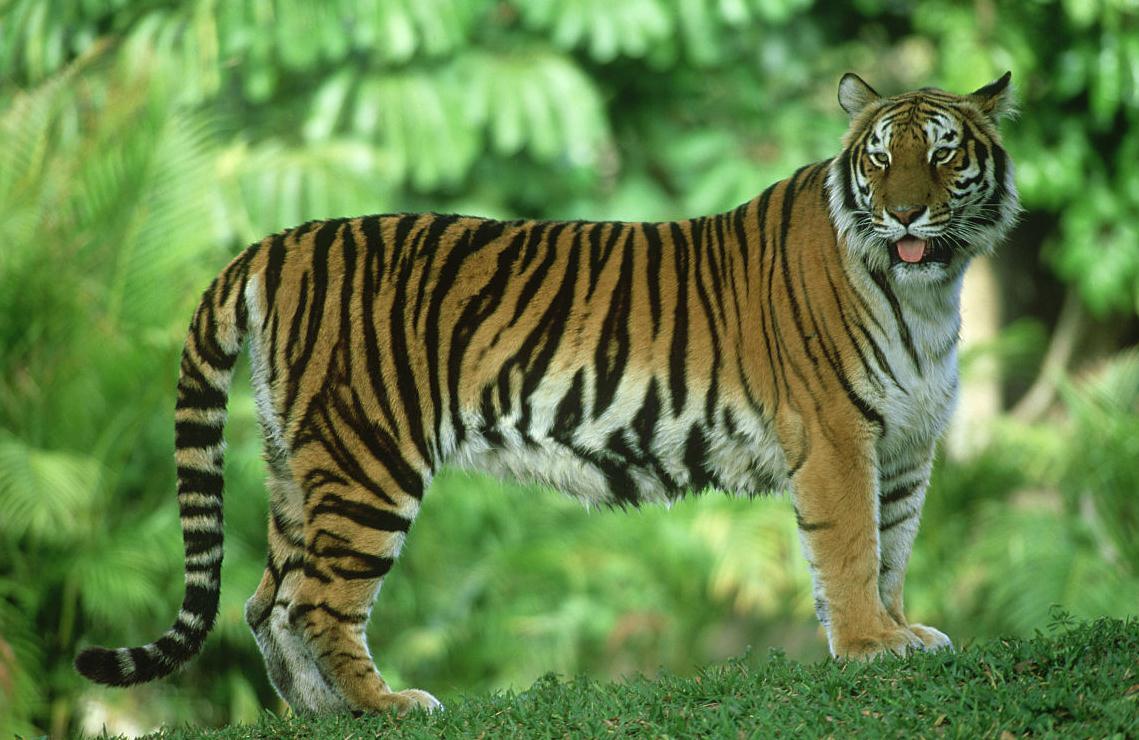
The Tiger (Panthera tigris) is the largest living cat species and one of the most charismatic megafauna on the planet. Native to Asia, the tiger’s striking orange coat with distinctive black stripes, muscular build, and powerful presence have made it a symbol of strength, beauty, and wilderness across cultures from ancient China to British colonialism. Once ranging across the entirety of Asia — from the Turkish highlands to Siberia and from the Russian Far East to Bali — the tiger has been pushed into increasingly isolated and fragmented populations, occupying just 6% of its historical range. Yet despite this catastrophic decline, the tiger remains one of the most fierce and formidable predators on Earth, capable of taking down prey twice its own body weight.
Physical Characteristics
The tiger’s physical adaptations make it one of nature’s most perfectly engineered apex predators. Adult tigers are substantially larger than any other cat species: males typically weigh 90–310 kg (200–680 lbs) and measure 2.4–3.3 meters (8–11 feet) from nose to tail tip, with some Siberian tigers reaching weights of over 380 kg. The characteristic orange coat with black vertical stripes — each tiger’s stripe pattern is unique, like a human fingerprint — provides effective camouflage in the dappled light of forest and tall grass environments. Tigers have exceptionally powerful forelimbs and neck muscles, capable of delivering killing bites with a force exceeding 1,000 PSI and of dragging prey animals weighing over their own body weight.
The tiger’s sensory capabilities are extraordinary. Like all cats, tigers have exceptional night vision — approximately six times more sensitive than human vision — allowing them to hunt effectively in near-darkness. Their hearing is acute enough to detect prey movements from hundreds of meters away. Tigers are also strong swimmers — unlike most other cats — and frequently cool off and even hunt in water, ambushing deer and wild boar at waterholes. Their tongues are covered in rough papillae that help strip meat from bone and groom their coat.
Hunting and Diet
Tigers are solitary hunters that rely on stealth, power, and ambush tactics rather than stamina or speed. They typically stalk prey silently through dense vegetation, using cover to approach within 10–20 meters before launching a sudden, explosive attack aimed at the prey’s throat or neck. Tigers primarily hunt large ungulates — sambar deer, wild boar, chital, and gaur — but their diet is remarkably flexible and opportunistic, including monkeys, birds, fish, and even young elephants and rhinos. A single tiger may consume 18–40 kg (40–88 lbs) of meat at one sitting, then not feed again for several days. Unlike the honey bee which feeds its colony communally, tigers are entirely solitary foragers and consume their kills alone.
Conservation Status
The tiger is classified as Endangered by the IUCN, with wild populations estimated at 5,500–7,500 individuals surviving in isolated pockets across 13 range countries — a devastating decline from the estimated 100,000 tigers that roamed Asia a century ago. Three subspecies — the Bali, Caspian, and Javan tigers — have already been driven to extinction. The primary threats to tiger survival include habitat loss and fragmentation (agricultural expansion, infrastructure development), poaching (both direct hunting for skins and body parts and indirect poaching through prey depletion), human-wildlife conflict, and the illegal wildlife trade in tiger parts for traditional medicine. The tiger faces particular challenges shared with other endangered species like the Red Panda and Snow Leopard: small, fragmented populations that are vulnerable to genetic inbreeding, stochastic events, and demographic collapse.
Conservation efforts for the tiger are among the most ambitious in wildlife protection, including Project Tiger in India (which has established over 50 tiger reserves), the Global Tiger Recovery Program, and transboundary conservation initiatives connecting fragmented tiger habitats across Asia. Tiger-based eco-tourism in countries like India, Nepal, and Bhutan generates significant revenue for local communities and creates powerful incentives for conservation, demonstrating that living tigers are far more valuable than dead ones to local economies.
onca is the largest cat species in the Americas and the third-largest cat in the world, after the Tiger and Lion. Known for its powerful build and distinctive rosette-patterned coat, the Jaguar holds a
[…] logged areas if enough fruit trees remain. They share these forests with large predators such as tigers and clouded leopards, though adults are seldom […]
[…] long distances in search of fruiting trees. These forests are also home to large predators such as tigers and clouded leopards, though hornbills are rarely threatened by […]