 By Iris
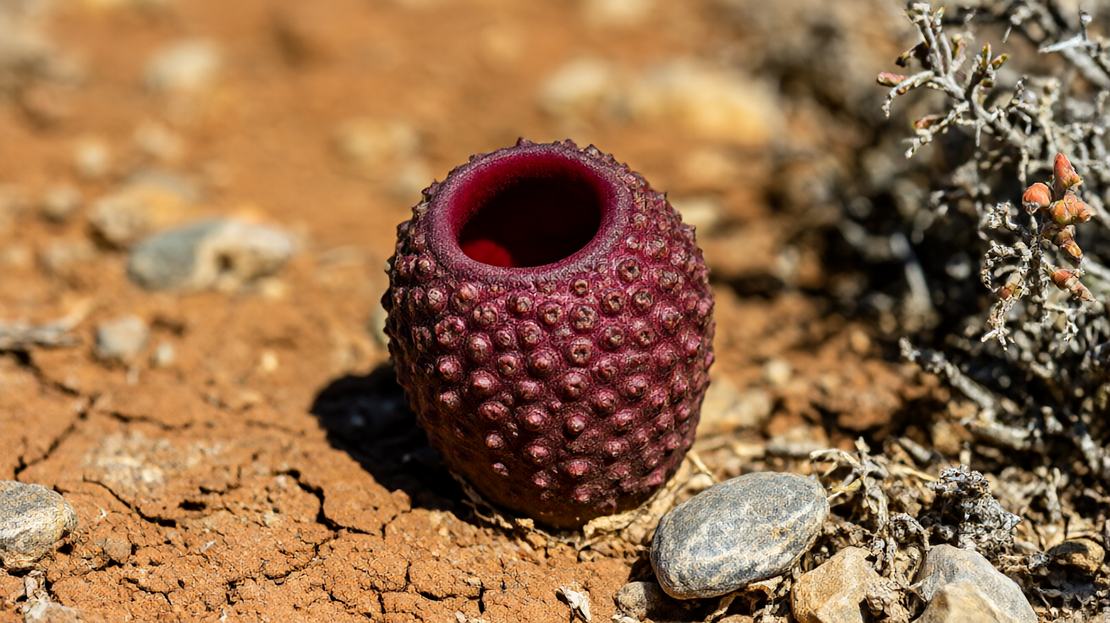
Hydnora africana | Hydnora
Species Profile · Hydnoraceae
Hydnora
A leathery flower pushes up through dry ground.
Least Concern
Flower
Petals
Host
Pollinator
Range
Rating
The Hydnora
A flower with no leaves
A leathery bloom pushes up through dry ground. No leaf shows. No green stem follows. Its colour runs brown, and the surface looks like hide.
The smell carries farther than the sight, and it draws beetles from a distance. Nothing about the plant suggests a bloom, yet the petals open wide within hours. Hydnora africana lives in soil for most of the year, and only the bloom breaks the surface when rain arrives.
Family tree
Hydnoraceae, a parasitic family
Hydnora africana belongs to a family of parasite plants, Hydnoraceae. Its genus holds a handful of species, and all of them live in Africa. Its closest relatives sit in the same order as pipers and lizard tails, which surprised botanists. Chlorophyll never forms, since the plant steals all it needs from a host.
Africana refers to the continent, and the first description came from the Cape. Workers argue about the family placement, though DNA keeps shifting the answer. One lookalike, Rafflesia, grows a bloom a hundred times wider on a vine.
Fleshy dome, no green
How to tell one
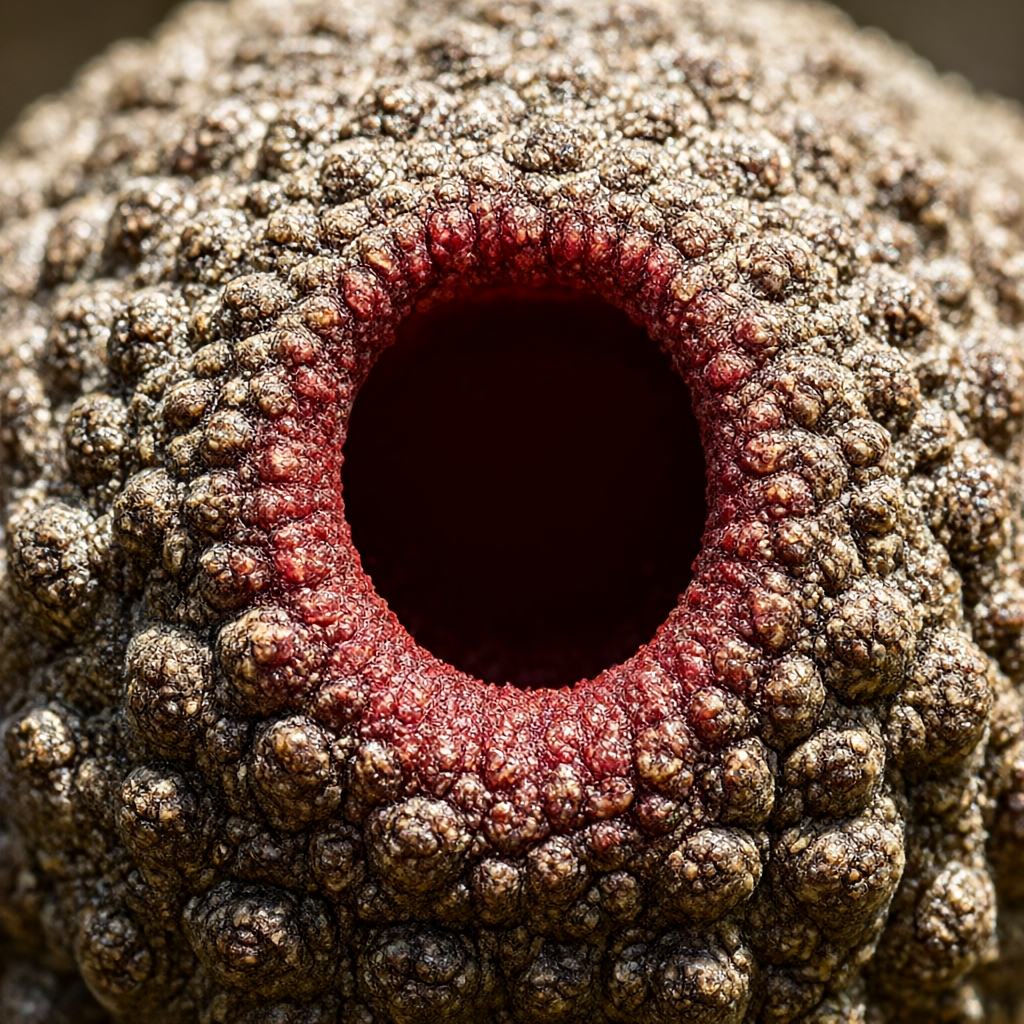
A bloom measures 10 to 15 cm across. The bloom stays thick and fleshy, and it opens like a trap. Four petals fuse into a dome, and a small mouth lets insects in.
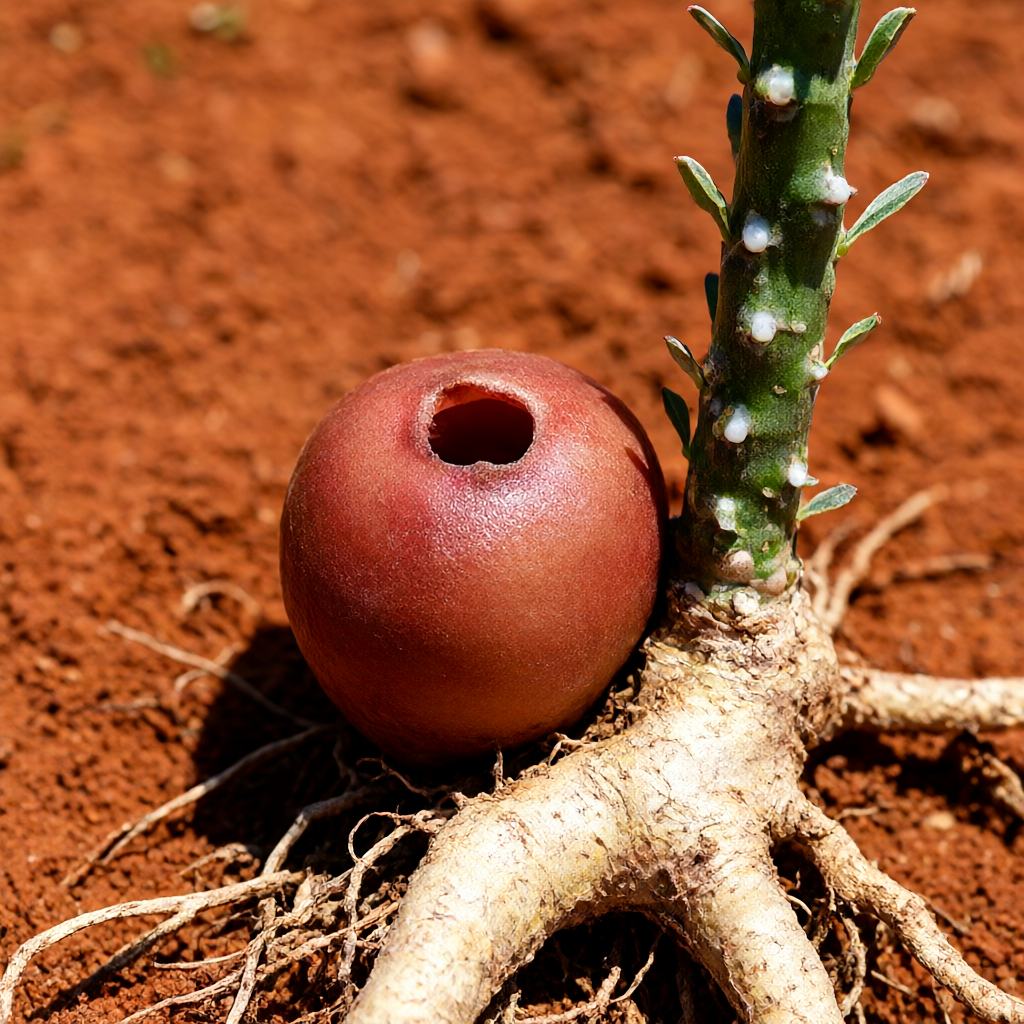
Surface ridges cover the outside, and the texture feels like rough skin. No roots spread through soil, because the plant joins straight to a host root. Growth stays in soil, and the warty mass spreads along the host root.
1
2
3
Where the host grows
Where it lives
Dry scrub holds the species across southern Africa. Its host decides where it grows, since the plant follows Euphorbia roots. Sandy soil suits both, and the pair lives long droughts.
Plants appear after rain. Each bloom lasts days. Because the host stays woody and deep rooted, fire rarely kills the pair, and the plant returns within a season.
Water and sugar from the host
What it eats
Water and sugar come from the host. No sun feeding happens, since it carries no green tissue. Underground tissue taps the host root, and the connection passes nutrients across, so the plant never needs soil water.
Because the bloom offers no nectar, it pays insects in another way. The bloom traps beetles all night, and it frees them the next morning dusted with pollen. Nothing comes from the soil directly, and the plant cannot survive without a host.
Dung beetles carry pollen
The breeding cycle
Dung beetles carry the pollen. The bloom smells of faeces, and that draws the beetles inside. Bristles line the mouth, and they hold visitors until pollen sticks.
Because the trap closes at night, the insect stays put for hours. Fruit ripens in soil, and it holds hundreds of seeds inside a pulp that animals dig for. They dig the fruit out, since it holds a sweet pulp.
Grazing removes the host
Conservation
The Red List calls the species Least Concern. Its range is wide, and the host plant stays common across it. Overgrazing removes the host, because livestock eats Euphorbia down.
Collectors dig plants for gardens, though the species rarely lives transplant. Because the plant hides in soil, surveys miss it and trends stay unclear. Local people eat the fruit, yet the harvest stays small.
Side by side
How It Compares
| Trait | Hydnora | Rafflesia arnoldii |
|---|---|---|
| Family | Hydnoraceae | Rafflesiaceae |
| Flower | 10-15 cm | up to 100 cm |
| Leaves | none | none |
| Host | Euphorbia roots | Tetrastigma vines |
| Pollinator | dung beetles | carrion flies |
| Rating | Least Concern | Vulnerable |
Common misreadings
What People Get Wrong
- Not a fungus. The flower belongs to a plant. Hydnora carries no green tissue at all, and because it steals everything from a host root the body never needs sunlight.
- Not a Rafflesia relative. The two families sit far apart. Both bloom without leaves and both smell of decay, yet the resemblance stops at the strategy and the two live on different continents.
- Not a flower that pays in nectar. The trap offers shelter instead. Beetles stay inside overnight and leave dusted with pollen, so the plant trades a night of lodging for the next flower’s visit.
Going further
Sources and Further Reading
Quick hits
Five things to remember
- The bloom smells of dung, and the smell is the whole advertisement.
- A single fruit can hold hundreds of seeds in a pulp that tastes sweet.
- Its tissue carries no green at all, since the plant never sees sunlight.
- Blooms can stay open for days, though the plant never produces nectar.
- South African children once ate the fruit raw, and the plant earned a nickname.
[…] species. Scientists have debated whether some populations are separate species or subspecies. The Bengal Tiger and Red Deer share similar taxonomic debates about subspecies […]