 By st20113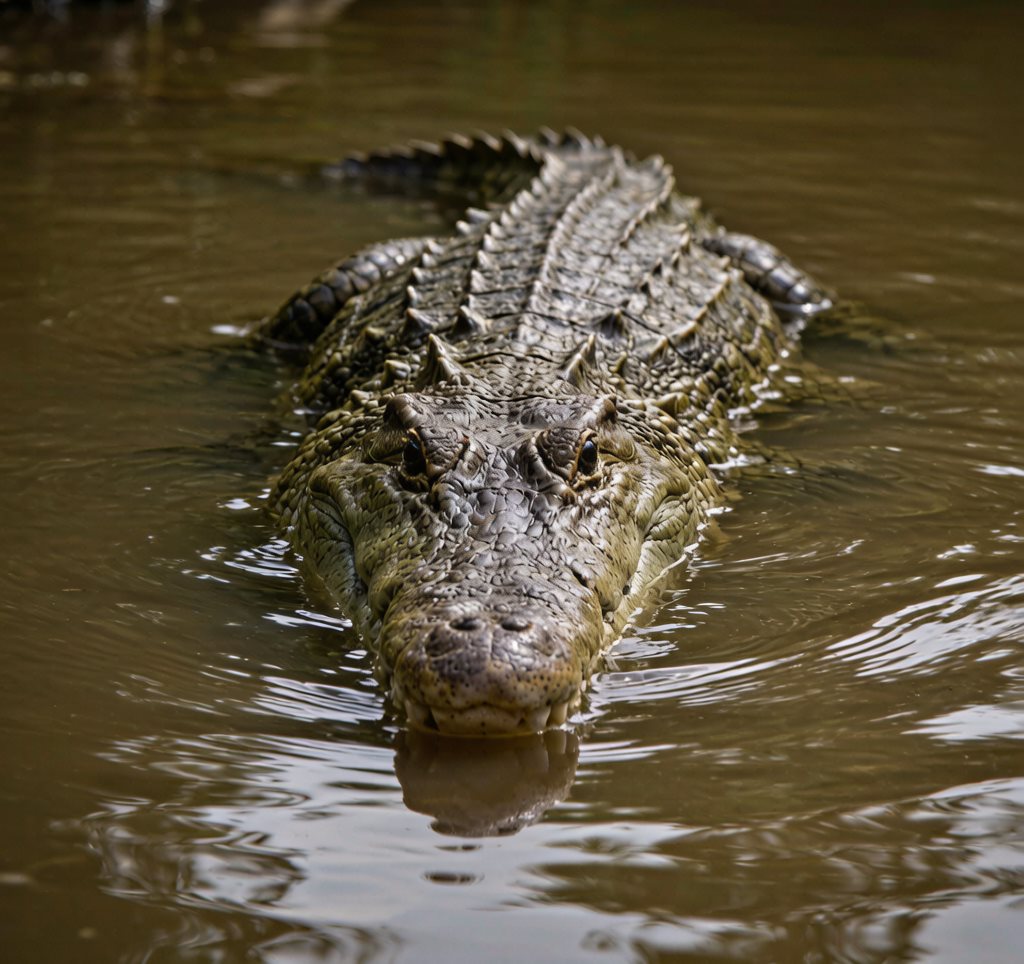
Introduction
The Nile crocodile, Crocodylus niloticus, is a large and powerful reptile that inhabits rivers, lakes, and wetlands across much of sub-Saharan Africa. As an apex predator, it plays a crucial role in regulating the populations of fish, birds, and mammals around it, and it helps keep ecosystems in balance. Ancient, armoured, and formidable, it has changed little in basic form over many millions of years of evolution.
Equally at home in water and on land, the Nile crocodile uses the sun to warm itself and shade or water to cool, a balance that lets it thrive where temperatures swing sharply between day and night. Its patient hunting style and tolerance of long fasting periods make it one of the most successful large predators in Africa. Few animals command as much caution from both wildlife and people who share the riverbanks.
Taxonomy
Nile crocodiles belong to the family Crocodylidae within the order Crocodilia, the group that also includes alligators, caimans, and gharials and that is closely related to birds and to the dinosaurs. Their closest living counterpart in size and habitat is the saltwater crocodile, Crocodylus porosus, of the Indo-Pacific. Sharing African waterways and coasts with them are the green sea turtle along the shoreline and iconic terrestrial mammals such as the African elephant and the dangerous Cape buffalo.
Physical Characteristics
Adult Nile crocodiles commonly reach 3 to 5 metres in length, with very large males exceeding 5 metres and weighing more than 500 kilograms. Their bodies are armoured with bony plates called osteoderms beneath the skin, and their long jaws hold around 60 to 68 conical teeth built for gripping rather than chewing. A powerful, flattened tail propels them through water with surprising speed and acts as a weapon on land.
Habitat
They are adaptable reptiles that occupy freshwater rivers, swamps, lakes, and mangrove estuaries, sometimes venturing into brackish coastal waters where rivers meet the sea. Nile crocodiles bask on exposed riverbanks to raise their body temperature and slip silently into the water at the first sign of danger. As human settlement has expanded along waterways, they have been brought into frequent, and sometimes dangerous, contact with people who fish and wash at the water’s edge.
Diet
Young crocodiles feed on insects, crustaceans, and small fish, while adults take larger prey including big fish, waterbirds, antelope, and occasionally livestock or humans. They are classic ambush hunters, lying partly submerged with only eyes and nostrils above the surface before launching a sudden strike and dragging prey underwater to drown it. Their bite is among the strongest forces measured of any living animal, capable of crushing bone.
After a large meal a Nile crocodile can survive for months without eating, living off stored fat while it waits for the next opportunity. This ability to fast lets it endure the dry season, when shrinking pools concentrate both prey and competition along the remaining water.
Reproduction
Females build mound nests of vegetation and mud above the high-water line, laying 25 to 80 eggs that they guard fiercely for around three months. The temperature during incubation determines the sex of the hatchlings, with warmer nests tending to produce more males. Mothers help their young break out of the eggs and may carry them gently to water, though many fall prey to birds and other predators in their first vulnerable weeks.
Conservation
The Nile crocodile is listed as Least Concern, having recovered strongly in many areas after past overhunting for its valuable skin. Managed, regulated trade and protected habitats have aided its rebound across parts of Africa. Nevertheless, conflict with humans and ongoing habitat degradation still threaten local populations, and education is needed to reduce dangerous encounters near villages and cattle crossings.
Fun Facts
Nile crocodiles can hold their breath underwater for more than an hour while waiting motionless for prey to approach. They possess a special valve in the throat that lets them open their jaws underwater to catch food without drowning. Ancient Egyptians revered the crocodile, and some temples once kept them as living representations of the god Sobek, reflecting a respect that mixed fear with reverence.
A crocodile’s teeth are constantly replaced throughout its life, with old ones falling out and new ones growing in to keep the grip deadly. Their eyes, set high on the head, give them a wide field of view while almost fully submerged, the perfect design for a patient ambush hunter.
[…] hippopotamus shares these protected rivers with many other iconic African species, including the Nile crocodile and the African […]
[…] tall grass, or abandoned burrows near water. Like the young of many wetland species, including the Nile crocodile, fishing cat kittens develop rapidly, beginning to take solid food by two months and accompanying […]
[…] bleeding and, without treatment, death, so it is respected alongside larger reptiles such as the Nile crocodile and the Komodo dragon. Large mammals including the lion occasionally share its dry habitats, though […]
[…] all restricted to Central and South America. Its closest relatives within Crocodylia include the Nile crocodile and the American alligator, both belonging to different families within the broader Crocodylia […]
[…] relatives with adhesive toe pads. This reptile radiation also includes far larger forms such as the Nile crocodile of African […]
[…] The western diamondback rattlesnake (Crotalus atrox) is a robust, venomous pit viper of the southwestern United States and northern Mexico, named for the distinctive diamond-shaped patterns along its back and the warning rattle at the tip of its tail. As one of the most iconic North American rattlesnakes, it plays a key role as a mid-level predator controlling rodent populations. Though feared for its potent venom, it is generally defensive rather than aggressive, rattling loudly to warn intruders before striking. Its adaptability to arid and semi-arid landscapes has made it one of the most successful rattlesnakes of the region, alongside other desert reptiles such as the crocodile. […]
[…] was feared and honoured at once. It was worshipped as the god Sobek. Sobek had the head of the Nile crocodile. His body was that of a man. Temples kept live crocodiles in pools. They hung jewellery on the […]