 By st20113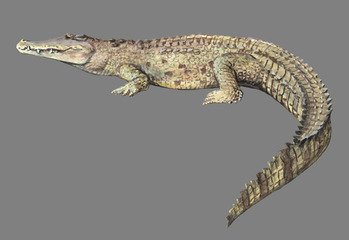
Introduction
Nile Crocodile (Crocodylus niloticus) is Africa’s most fearsome apex predator, a relic dominating the continent’s rivers, lakes, and wetlands for millions of years. Growing to lengths of up to 5.5 meters and weights exceeding 900 kilograms, this powerful reptilian hunter commands both fear and fascination. Its reputation as a predator capable of taking down large mammals at the water’s edge has been immortalized in countless accounts of African exploration and wildlife documentaries.
Taxonomy
The Nile Crocodile was first scientifically described in 1794 by the German naturalist Johann Friedrich Blumenbach, who assigned it to the genus Crocodylus — derived from the Greek krokodeilos, meaning “pebble-worm” — with the species epithet niloticus meaning “of the Nile.” Within the genus Crocodylus, the Nile Crocodile is closely related to the Saltwater Crocodile of Southeast Asia and the Orinoco Crocodile of South America, forming a clade sharing a common ancestor dating to 15 to 20 million years ago.
Physical Characteristics
The Nile Crocodile is Africa’s largest crocodilian, with males typically measuring 4 meters and weighing 200 to 500 kilograms. Exceptional individuals can exceed 5.5 meters and surpass 900 kilograms. The body is heavily built and laterally compressed, with a powerful, muscular tail serving as the primary propulsion organ in water. The dorsal surface is armored by rows of osteoderms — bony plates embedded in the skin. The head is elongated and triangular, with the eyes, ears, and nostrils positioned on top of the skull, allowing the animal to see, hear, and breathe while almost entirely submerged. Like the gharial, it possesses a specialized skull morphology suited to its diet.
Habitat
The Nile Crocodile is found across sub-Saharan Africa, from Egypt in the north to South Africa’s Orange River system in the south, and from Senegal in the west to Ethiopia, Kenya, and Tanzania in the east. It also occurs on Madagascar. Its habitat requirements include permanent bodies of freshwater — rivers, lakes, marshes, swamps, and estuaries — and it is particularly associated with slow-moving rivers, floodplain wetlands, and coastal lagoons. The species requires basking sites for thermoregulation and suitable nesting sites near the water’s edge. The spectacled caiman occupies similar wetland habitats in Central and South America.
Diet
The Nile Crocodile is an apex predator with a diet encompassing a wide range of prey. Hatchlings and juveniles feed primarily on insects, small fish, amphibians, and crustaceans, gradually transitioning to larger prey as they grow. Adults are capable of taking antelopes, zebras, wildebeest, buffalo, and young hippos at the water’s edge. Fish form a consistent dietary component throughout life. It employs a sit-and-wait ambush strategy, positioning itself just below the surface with only eyes and nostrils above water. A technique known as the “death roll” — spinning the body rapidly while holding prey — is used to subdue large prey and tear manageable pieces from carcasses. Like the green sea turtle, crocodiles share overlapping coastal and estuarine habitats with diverse prey species.
Reproduction
Nile Crocodiles reach sexual maturity at 10 to 12 years of age. Males engage in dramatic territorial displays during the breeding season, including head-slap displays, water-chunting, and physical combat. The mating system is polygynous, with dominant males gaining access to multiple females. The female lays a clutch of 25 to 95 eggs in a nest concealed with sand or vegetation and guards it vigilantly throughout the 90-day incubation period. When the young are ready to emerge, their chirping sounds stimulate the mother to excavate the nest and carry hatchlings to the water in her jaws. The mother remains protective of her brood for two months after hatching.
Conservation
The Nile Crocodile is classified as Least Concern on the IUCN Red List, reflecting its wide distribution and large overall population, but declines have occurred in parts of its range, particularly in Rwanda, Uganda, and Madagascar, where it is considered Endangered. Historical hunting for its valuable skin devastated populations during the 20th century, but the species has recovered substantially following the establishment of national protection laws and the development of crocodile farming. Contemporary threats include habitat loss due to dam construction, water pollution, and deliberate persecution. International trade is regulated under CITES Appendix II.
Fun Facts
The Nile Crocodile can exert a bite force exceeding 3,600 pounds per square inch (psi), one of the strongest measured in any animal. Despite this, the muscles for opening the jaws are remarkably weak — an adult human can hold a crocodile’s mouth shut with bare hands. The species can live to 45 to 70 years in the wild, with captive individuals documented living well beyond 80 years. Female Nile Crocodiles produce infrasonic vocalizations from within the egg to synchronize hatching and call their young to the water after birth — a level of parental investment rare among reptiles. Like the great white shark, the crocodile sits at the apex of its respective food web.
[…] its size, it is generally shy and avoids humans when possible. Like other reptiles such as the crocodile, it is a patient ambush hunter that relies on stealth and strength rather than […]