 By st20113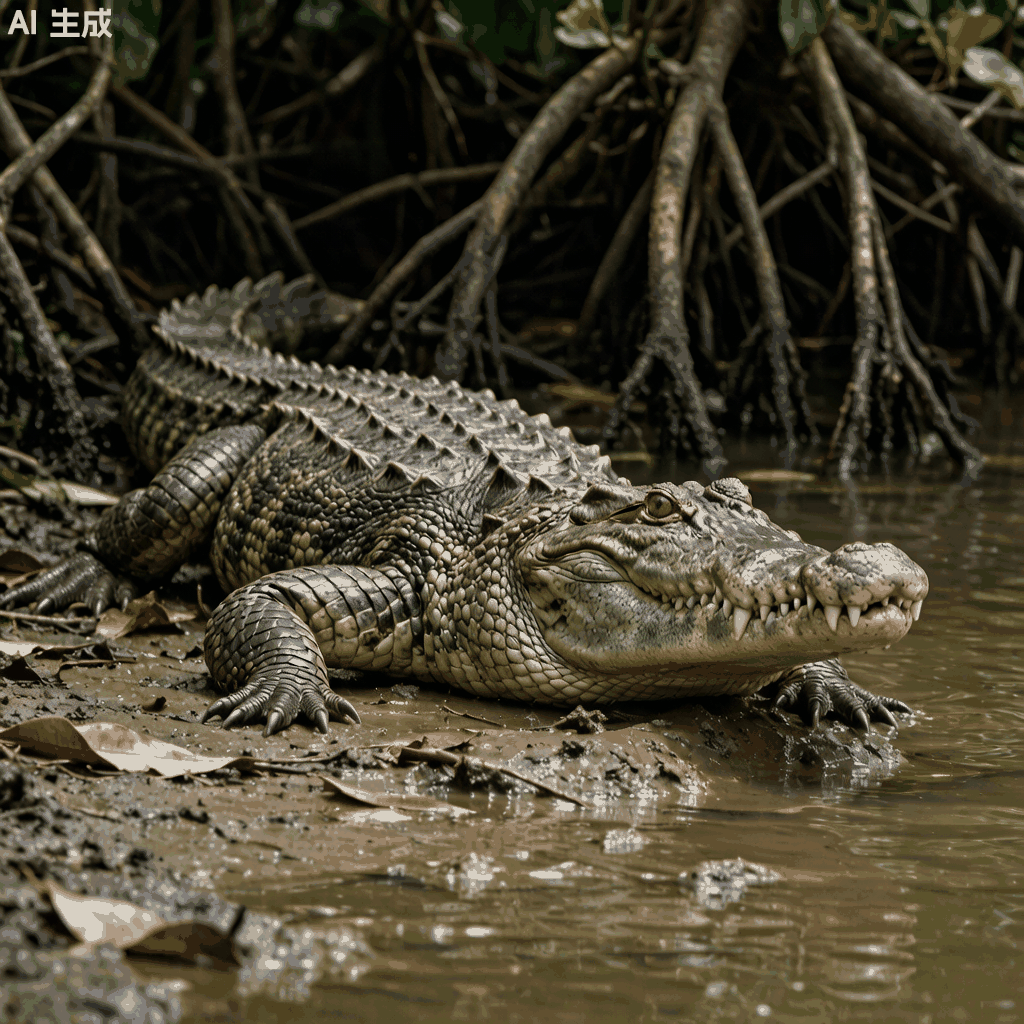
Introduction
The saltwater crocodile, Crocodylus porosus, is the largest living reptile on Earth and one of the most formidable predators in the world’s tropical waters. Often called the estuarine or Indo-Pacific crocodile, it commands rivers, mangrove coasts, and open seas across a vast range from eastern India to northern Australia. An apex predator with few equals, the saltwater crocodile embodies both ancient lineage and raw predatory efficiency. Its reputation as a man-eater is well earned, yet in undisturbed ecosystems it plays a crucial role in maintaining ecological balance.
Taxonomy
Crocodylus porosus belongs to the family Crocodylidae within the order Crocodilia, a group whose basic body plan has changed little in more than eighty million years. It was first formally described by the French naturalist Georges Cuvier in 1807. The species sits within the genus Crocodylus, which includes many of the world’s large true crocodiles. Its closest relative among commonly documented species is the Nile crocodile, with which it shares many behavioral and anatomical traits.
Physical Characteristics
Adult male saltwater crocodiles routinely exceed five meters in length and can weigh more than a ton, though most individuals are smaller. Females are considerably shorter, rarely surpassing three meters. The body is armored with bony osteoderms, and the snout is broad and powerful, lined with up to sixty-eight sharply conical teeth. Salt glands on the tongue allow the animal to tolerate seawater for extended periods, a rare ability among reptiles of its size.
Habitat
True to its name, this crocodile frequents brackish estuaries, mangrove swamps, coastal lagoons, and river mouths, but it also ventures far out to sea. It is known to traverse open ocean between islands, using currents to travel dozens of kilometers from shore. Inland, it occupies freshwater rivers and billabongs during the wet season. Its range overlaps with marine travelers such as the humpback whale only in the broadest sense, as the crocodile stays near coasts while the whale roams the open ocean.
Diet
The saltwater crocodile is an opportunistic apex predator whose diet expands with size. Juveniles eat insects, crustaceans, small fish, and amphibians, while adults take monkeys, wild pigs, deer, buffalo, and even sharks. It employs the classic ambush tactic of lurking submerged before exploding upward to seize prey at the water’s edge. Large specimens may also scavenge and can dispatch a tiger shark encountered in coastal shallows.
Reproduction
Breeding coincides with the dry season, when females construct mound nests of vegetation and mud above the high-water line. A clutch of forty to sixty eggs incubates for roughly eighty to ninety days, with temperature determining the sex of the hatchlings. The mother guards the nest fiercely and assists hatchlings to water, where she may protect them for several months. Despite this care, most young fall prey to birds, fish, and larger crocodiles in their first year.
Conservation
Once hunted to the brink across much of its range for its valuable hide, the saltwater crocodile has rebounded strongly under legal protection and farming programs. The IUCN lists it as Least Concern, with stable or growing populations in Australia, Papua New Guinea, and parts of Southeast Asia. Conflicts with humans remain a serious management challenge where people share waterways with large adults. Sustainable use programs that value living crocodiles have proven central to its ongoing recovery.
Fun Facts
The saltwater crocodile possesses the strongest bite force ever recorded in the animal kingdom, measured at over 3,600 pounds per square inch. Its heart can shunt blood to bypass the lungs during long dives, a feature shared with birds and mammals but rare among reptiles. Hatchlings utter high-pitched calls from inside the egg to signal the mother that it is time to dig them out. Ancient and patient, a large male may claim the same stretch of river for decades.
related to birds and to the dinosaurs. Their closest living counterpart in size and habitat is the saltwater crocodile, Crocodylus porosus, of the Indo-Pacific. Sharing African waterways and coasts with them are the
[…] the Nile.” Within the genus Crocodylus, the Nile Crocodile is closely related to the Saltwater Crocodile of Southeast Asia and the Orinoco Crocodile of South America, forming a clade sharing a common […]